Elevation Changes
Lesson
39
of
49

Lesson by
Suellio Almeida
Lesson by
Suellio Almeida
Mark as Finished
Understanding Elevation Changes and Their Impact on Grip
In racing, elevation changes significantly affect the grip levels available at different parts of the track. The key is understanding that drivers often lose control because they expect a certain level of grip in parts of the track where that grip level doesn't exist. Many spins occur on top of crests because drivers don't understand how grip levels change in these situations.
You must learn to adjust your line depending on elevation changes in the corner, and also modify your steering firmness and steering force based on how much you can force the car in different situations.
Crests and Reduced Grip
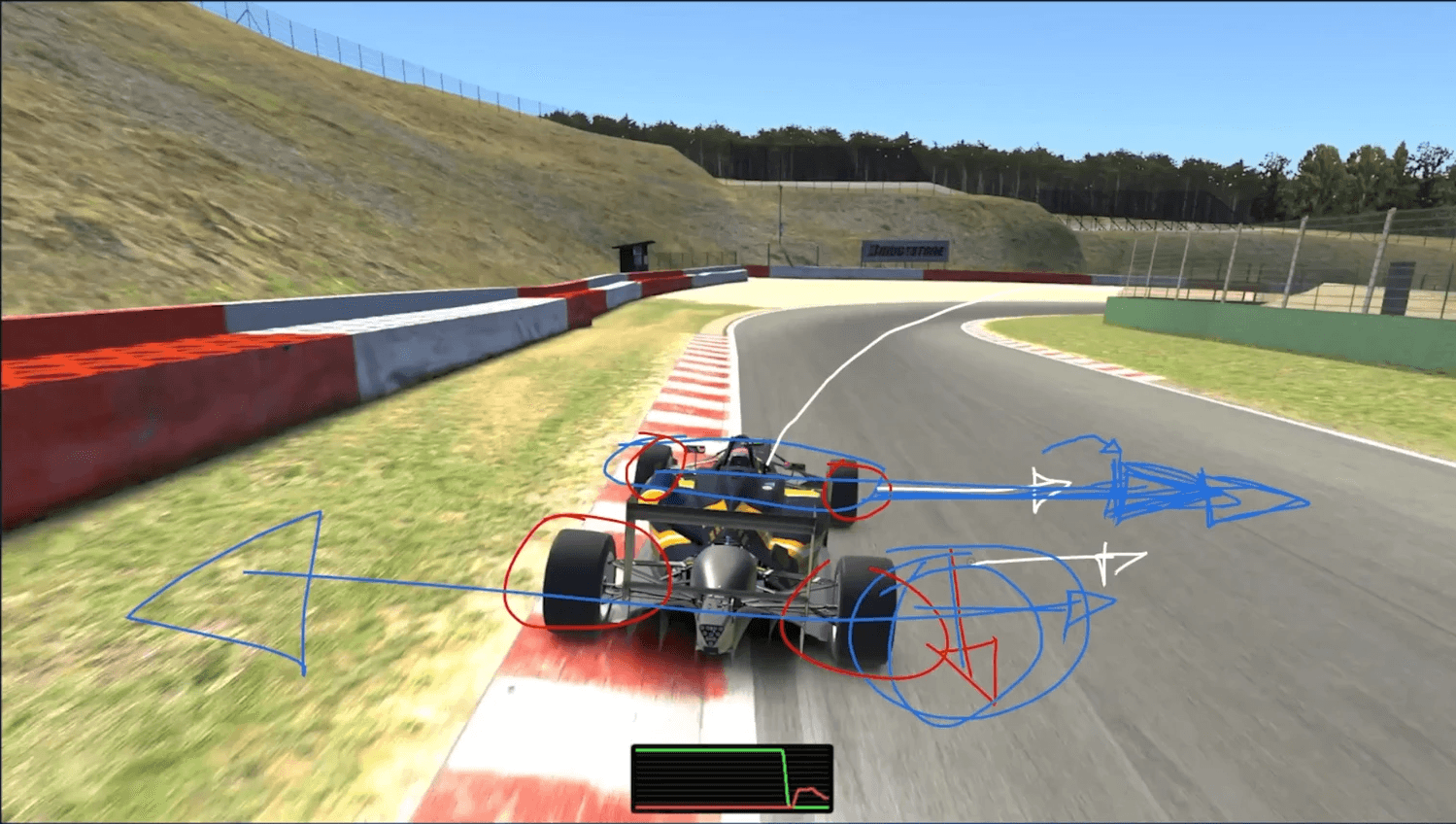
When approaching a corner, you might initially assume a certain racing line will be fastest. However, if you look closely at the exit and cannot see the track, this indicates you're going through a crest. When the car goes over a crest, it becomes light, which means your available grip is going to be cut down by at least 50%.
The Jump Analogy
To understand crests, consider an extreme example: imagine doing a corner with a jump right after the exit. If you take a normal line and jump, your car will land outside the track because by the time you jump, your trajectory will be straight. The shadow of the car jumping will always be straight. As soon as you get into a jump, the car goes straight—it's impossible to turn while airborne.
This is exactly the same effect on a crest. Whenever you have a crest, you go straighter. To go straighter at the crest, you must do more rotation before it.
The Solution for Crests
The solution is to:
Get a wider entry
Align the car to go straight by the time you reach the crest
Concentrate more rotation on entry
Delay MRP slightly
Have the car more pointed so you can maintain a straighter line on exit
Managing Steering Force Through Elevation Changes
Micro Crests on Entry
Even tiny crests on entry affect grip. When you encounter a small moment where the track falls and you can't see the white line, that's a micro crest. However, immediately after, if you can see the track going up, you have a lot of grip available.
Compressions and Increased Grip
In compression areas where there's more grip, several things happen:
There are more forces acting on the front tires
The self-centering force becomes stronger
The passive countersteering force increases
The force feedback gets heavier
You can force more because there's more grip available
You must increase your steering force to use that extra grip
Adjusting Steering Input
On top of a micro crest, the wheels become lighter, so you need lighter steering. The force feedback becomes lighter, and you should take care of the tires by not forcing too much rotation. As soon as you exit the crest and enter compression, the force feedback gets heavier, your hands should turn more, and you add more force.
When you reach a crest where you can't see anything ahead, the car becomes super light. You'll feel it in your force feedback, and you must relax your hands because the force feedback goes down, which means grip is decreasing. Your hands should relax proportionally.
Use firmer hands in compressions, then relax your hands as soon as you reach a crest. Even though the force feedback is weaker at the crest, if you relax enough, it will still act on the balance of the car. On top of the crest, imagine you're falling and sliding sideways because there's less contact with the track.
The Key Principle
The fundamental rule is: The more total grip you have, the more steering force you can add. The less grip you have, the more relaxed your hands have to be. Every time you get on a crest, relax your hands. This allows you to slide neutrally, use all the track, and achieve the fastest exit possible.
Aerodynamic and Mechanical Grip Variations
The steering force principle applies to both aerodynamic and mechanical grip:
Going on top of a crest: wheels get light
Going into compression: wheels get heavier
Lower speeds in a formula car: wheel feels lighter overall
High speeds in a formula car: wheel feels heavier overall
For example, at Road Atlanta turn one, you're at high speeds and in a compression mid corner. The steering becomes super heavy when driving a formula car, which means you have more grip and must steer with more force.
Camber and Off Camber Corners
On Camber (Banking)
Everything discussed about compressions also applies to on camber corners. When the track is tilted toward the direction of the corner, you have more grip available. This means you can:
Brake more
Turn more
Accelerate more
Use more grip overall
Just like in compressions, on camber sections make the force feedback feel heavier, requiring you to use more force and force more rotation because the car can handle it.
Off Camber
Everything that applies to crests also applies to off camber corners. When the corner is tilted away from the direction of turn (inverted tilting), several changes occur:
The car feels different
You have to brake less
You have to rotate less
The force feedback becomes lighter
You must do much less rotation in these places
You may need to adjust your line before or after, or carry less speed
Off camber corners have a brutal effect on available grip. You won't find many that are extremely aggressive, but even subtle off camber angles are enough to significantly reduce grip compared to normal.
Case Study: Mount Panorama (Bathurst)
Mount Panorama provides an excellent example because this track is a roller coaster full of off camber and camber sections, compressions and crests, and uphills and downhills.
Road Crowning Effect
Even on the straight, the car is tilted slightly due to road crowning. To drain water when it rains, the center of the track is the highest point, and it falls toward both edges. This affects grip throughout the lap.
Crown Transitions
As you start turning and cross the middle of the track, the car transitions from off camber to on camber. Because the on camber part is on the inside when turning right, you have more grip on the inside. The amount of grip just before crossing the crown is much lower than after crossing it.
When you turn in on the off camber side, expect less grip because the track is tilted away from your turning direction. The car will be less responsive. But as soon as you jump the crown, you suddenly have twice the grip available, allowing you to force the car and get back on power aggressively.
Exit Grip Changes
As you cross to the outside toward the exit, you'll have less grip again. This is extremely dangerous and causes many spins or wall contacts because drivers don't expect the grip change from not being aware of camber changes. The transition goes: off camber, across the crown, camber with lots of grip, then wide to off camber with even more off camber as you approach the exit.
Combined Effects: Camber Plus Compression
Some sections feature both camber and compression simultaneously, providing double the grip. In these areas, you have both the camber advantage and the compression advantage, allowing you to force the car significantly. Conversely, sections with off camber plus crest combinations provide terrible grip, and this is where many drivers hit walls if they're not aware of the drastic grip changes.
Reading the Track
When you cannot see the track ahead, that indicates a crest where the car will have no grip. Small jumps may occur, and even though corners may not seem huge, many drivers spin in these locations. Each corner has a special amount of grip unique to that corner because it's a combination of:
How much camber the corner has
Whether it's a compression or crest
Whether it's uphill or downhill
Different speeds and their effect depending on the downforce the car has
If you've been driving tracks like this without thinking about these elements, you haven't experienced how much more enjoyable and fast it becomes when you master these concepts.
Understanding Elevation Changes and Their Impact on Grip
In racing, elevation changes significantly affect the grip levels available at different parts of the track. The key is understanding that drivers often lose control because they expect a certain level of grip in parts of the track where that grip level doesn't exist. Many spins occur on top of crests because drivers don't understand how grip levels change in these situations.
You must learn to adjust your line depending on elevation changes in the corner, and also modify your steering firmness and steering force based on how much you can force the car in different situations.
Crests and Reduced Grip
When approaching a corner, you might initially assume a certain racing line will be fastest. However, if you look closely at the exit and cannot see the track, this indicates you're going through a crest. When the car goes over a crest, it becomes light, which means your available grip is going to be cut down by at least 50%.
The Jump Analogy
To understand crests, consider an extreme example: imagine doing a corner with a jump right after the exit. If you take a normal line and jump, your car will land outside the track because by the time you jump, your trajectory will be straight. The shadow of the car jumping will always be straight. As soon as you get into a jump, the car goes straight—it's impossible to turn while airborne.
This is exactly the same effect on a crest. Whenever you have a crest, you go straighter. To go straighter at the crest, you must do more rotation before it.
The Solution for Crests
The solution is to:
Get a wider entry
Align the car to go straight by the time you reach the crest
Concentrate more rotation on entry
Delay MRP slightly
Have the car more pointed so you can maintain a straighter line on exit
Managing Steering Force Through Elevation Changes
Micro Crests on Entry
Even tiny crests on entry affect grip. When you encounter a small moment where the track falls and you can't see the white line, that's a micro crest. However, immediately after, if you can see the track going up, you have a lot of grip available.
Compressions and Increased Grip
In compression areas where there's more grip, several things happen:
There are more forces acting on the front tires
The self-centering force becomes stronger
The passive countersteering force increases
The force feedback gets heavier
You can force more because there's more grip available
You must increase your steering force to use that extra grip
Adjusting Steering Input
On top of a micro crest, the wheels become lighter, so you need lighter steering. The force feedback becomes lighter, and you should take care of the tires by not forcing too much rotation. As soon as you exit the crest and enter compression, the force feedback gets heavier, your hands should turn more, and you add more force.
When you reach a crest where you can't see anything ahead, the car becomes super light. You'll feel it in your force feedback, and you must relax your hands because the force feedback goes down, which means grip is decreasing. Your hands should relax proportionally.
Use firmer hands in compressions, then relax your hands as soon as you reach a crest. Even though the force feedback is weaker at the crest, if you relax enough, it will still act on the balance of the car. On top of the crest, imagine you're falling and sliding sideways because there's less contact with the track.
The Key Principle
The fundamental rule is: The more total grip you have, the more steering force you can add. The less grip you have, the more relaxed your hands have to be. Every time you get on a crest, relax your hands. This allows you to slide neutrally, use all the track, and achieve the fastest exit possible.
Aerodynamic and Mechanical Grip Variations
The steering force principle applies to both aerodynamic and mechanical grip:
Going on top of a crest: wheels get light
Going into compression: wheels get heavier
Lower speeds in a formula car: wheel feels lighter overall
High speeds in a formula car: wheel feels heavier overall
For example, at Road Atlanta turn one, you're at high speeds and in a compression mid corner. The steering becomes super heavy when driving a formula car, which means you have more grip and must steer with more force.
Camber and Off Camber Corners
On Camber (Banking)
Everything discussed about compressions also applies to on camber corners. When the track is tilted toward the direction of the corner, you have more grip available. This means you can:
Brake more
Turn more
Accelerate more
Use more grip overall
Just like in compressions, on camber sections make the force feedback feel heavier, requiring you to use more force and force more rotation because the car can handle it.
Off Camber
Everything that applies to crests also applies to off camber corners. When the corner is tilted away from the direction of turn (inverted tilting), several changes occur:
The car feels different
You have to brake less
You have to rotate less
The force feedback becomes lighter
You must do much less rotation in these places
You may need to adjust your line before or after, or carry less speed
Off camber corners have a brutal effect on available grip. You won't find many that are extremely aggressive, but even subtle off camber angles are enough to significantly reduce grip compared to normal.
Case Study: Mount Panorama (Bathurst)
Mount Panorama provides an excellent example because this track is a roller coaster full of off camber and camber sections, compressions and crests, and uphills and downhills.
Road Crowning Effect
Even on the straight, the car is tilted slightly due to road crowning. To drain water when it rains, the center of the track is the highest point, and it falls toward both edges. This affects grip throughout the lap.
Crown Transitions
As you start turning and cross the middle of the track, the car transitions from off camber to on camber. Because the on camber part is on the inside when turning right, you have more grip on the inside. The amount of grip just before crossing the crown is much lower than after crossing it.
When you turn in on the off camber side, expect less grip because the track is tilted away from your turning direction. The car will be less responsive. But as soon as you jump the crown, you suddenly have twice the grip available, allowing you to force the car and get back on power aggressively.
Exit Grip Changes
As you cross to the outside toward the exit, you'll have less grip again. This is extremely dangerous and causes many spins or wall contacts because drivers don't expect the grip change from not being aware of camber changes. The transition goes: off camber, across the crown, camber with lots of grip, then wide to off camber with even more off camber as you approach the exit.
Combined Effects: Camber Plus Compression
Some sections feature both camber and compression simultaneously, providing double the grip. In these areas, you have both the camber advantage and the compression advantage, allowing you to force the car significantly. Conversely, sections with off camber plus crest combinations provide terrible grip, and this is where many drivers hit walls if they're not aware of the drastic grip changes.
Reading the Track
When you cannot see the track ahead, that indicates a crest where the car will have no grip. Small jumps may occur, and even though corners may not seem huge, many drivers spin in these locations. Each corner has a special amount of grip unique to that corner because it's a combination of:
How much camber the corner has
Whether it's a compression or crest
Whether it's uphill or downhill
Different speeds and their effect depending on the downforce the car has
If you've been driving tracks like this without thinking about these elements, you haven't experienced how much more enjoyable and fast it becomes when you master these concepts.
Understanding Elevation Changes and Their Impact on Grip
In racing, elevation changes significantly affect the grip levels available at different parts of the track. The key is understanding that drivers often lose control because they expect a certain level of grip in parts of the track where that grip level doesn't exist. Many spins occur on top of crests because drivers don't understand how grip levels change in these situations.
You must learn to adjust your line depending on elevation changes in the corner, and also modify your steering firmness and steering force based on how much you can force the car in different situations.
Crests and Reduced Grip
When approaching a corner, you might initially assume a certain racing line will be fastest. However, if you look closely at the exit and cannot see the track, this indicates you're going through a crest. When the car goes over a crest, it becomes light, which means your available grip is going to be cut down by at least 50%.
The Jump Analogy
To understand crests, consider an extreme example: imagine doing a corner with a jump right after the exit. If you take a normal line and jump, your car will land outside the track because by the time you jump, your trajectory will be straight. The shadow of the car jumping will always be straight. As soon as you get into a jump, the car goes straight—it's impossible to turn while airborne.
This is exactly the same effect on a crest. Whenever you have a crest, you go straighter. To go straighter at the crest, you must do more rotation before it.
The Solution for Crests
The solution is to:
Get a wider entry
Align the car to go straight by the time you reach the crest
Concentrate more rotation on entry
Delay MRP slightly
Have the car more pointed so you can maintain a straighter line on exit
Managing Steering Force Through Elevation Changes
Micro Crests on Entry
Even tiny crests on entry affect grip. When you encounter a small moment where the track falls and you can't see the white line, that's a micro crest. However, immediately after, if you can see the track going up, you have a lot of grip available.
Compressions and Increased Grip
In compression areas where there's more grip, several things happen:
There are more forces acting on the front tires
The self-centering force becomes stronger
The passive countersteering force increases
The force feedback gets heavier
You can force more because there's more grip available
You must increase your steering force to use that extra grip
Adjusting Steering Input
On top of a micro crest, the wheels become lighter, so you need lighter steering. The force feedback becomes lighter, and you should take care of the tires by not forcing too much rotation. As soon as you exit the crest and enter compression, the force feedback gets heavier, your hands should turn more, and you add more force.
When you reach a crest where you can't see anything ahead, the car becomes super light. You'll feel it in your force feedback, and you must relax your hands because the force feedback goes down, which means grip is decreasing. Your hands should relax proportionally.
Use firmer hands in compressions, then relax your hands as soon as you reach a crest. Even though the force feedback is weaker at the crest, if you relax enough, it will still act on the balance of the car. On top of the crest, imagine you're falling and sliding sideways because there's less contact with the track.
The Key Principle
The fundamental rule is: The more total grip you have, the more steering force you can add. The less grip you have, the more relaxed your hands have to be. Every time you get on a crest, relax your hands. This allows you to slide neutrally, use all the track, and achieve the fastest exit possible.
Aerodynamic and Mechanical Grip Variations
The steering force principle applies to both aerodynamic and mechanical grip:
Going on top of a crest: wheels get light
Going into compression: wheels get heavier
Lower speeds in a formula car: wheel feels lighter overall
High speeds in a formula car: wheel feels heavier overall
For example, at Road Atlanta turn one, you're at high speeds and in a compression mid corner. The steering becomes super heavy when driving a formula car, which means you have more grip and must steer with more force.
Camber and Off Camber Corners
On Camber (Banking)
Everything discussed about compressions also applies to on camber corners. When the track is tilted toward the direction of the corner, you have more grip available. This means you can:
Brake more
Turn more
Accelerate more
Use more grip overall
Just like in compressions, on camber sections make the force feedback feel heavier, requiring you to use more force and force more rotation because the car can handle it.
Off Camber
Everything that applies to crests also applies to off camber corners. When the corner is tilted away from the direction of turn (inverted tilting), several changes occur:
The car feels different
You have to brake less
You have to rotate less
The force feedback becomes lighter
You must do much less rotation in these places
You may need to adjust your line before or after, or carry less speed
Off camber corners have a brutal effect on available grip. You won't find many that are extremely aggressive, but even subtle off camber angles are enough to significantly reduce grip compared to normal.
Case Study: Mount Panorama (Bathurst)
Mount Panorama provides an excellent example because this track is a roller coaster full of off camber and camber sections, compressions and crests, and uphills and downhills.
Road Crowning Effect
Even on the straight, the car is tilted slightly due to road crowning. To drain water when it rains, the center of the track is the highest point, and it falls toward both edges. This affects grip throughout the lap.
Crown Transitions
As you start turning and cross the middle of the track, the car transitions from off camber to on camber. Because the on camber part is on the inside when turning right, you have more grip on the inside. The amount of grip just before crossing the crown is much lower than after crossing it.
When you turn in on the off camber side, expect less grip because the track is tilted away from your turning direction. The car will be less responsive. But as soon as you jump the crown, you suddenly have twice the grip available, allowing you to force the car and get back on power aggressively.
Exit Grip Changes
As you cross to the outside toward the exit, you'll have less grip again. This is extremely dangerous and causes many spins or wall contacts because drivers don't expect the grip change from not being aware of camber changes. The transition goes: off camber, across the crown, camber with lots of grip, then wide to off camber with even more off camber as you approach the exit.
Combined Effects: Camber Plus Compression
Some sections feature both camber and compression simultaneously, providing double the grip. In these areas, you have both the camber advantage and the compression advantage, allowing you to force the car significantly. Conversely, sections with off camber plus crest combinations provide terrible grip, and this is where many drivers hit walls if they're not aware of the drastic grip changes.
Reading the Track
When you cannot see the track ahead, that indicates a crest where the car will have no grip. Small jumps may occur, and even though corners may not seem huge, many drivers spin in these locations. Each corner has a special amount of grip unique to that corner because it's a combination of:
How much camber the corner has
Whether it's a compression or crest
Whether it's uphill or downhill
Different speeds and their effect depending on the downforce the car has
If you've been driving tracks like this without thinking about these elements, you haven't experienced how much more enjoyable and fast it becomes when you master these concepts.
Consistency & Confidence
Balance & Speed
Mastery
Other Lessons