Driving the Line vs Driving the Car
Lesson
29
of
49

Lesson by
Suellio Almeida
Lesson by
Suellio Almeida
Mark as Finished
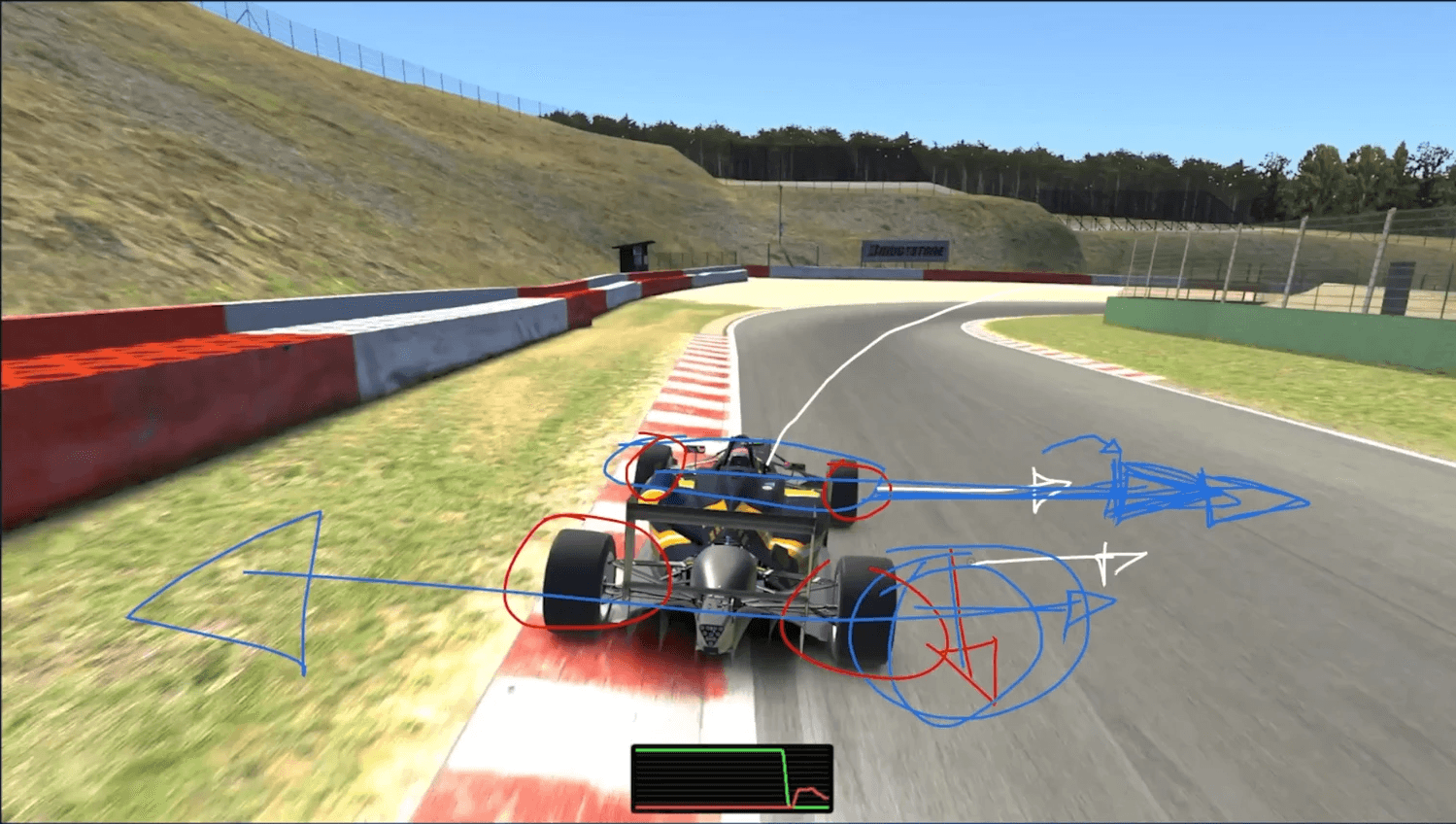
Let's talk about driving the car versus driving the line. We are going to define these two concepts and then we are going to teach you how to combine the both approaches for an optimal driving.
What is Driving the Line?
It's basically using all the track because someone told you to. You're trying to do the line that most drivers do. You use all the track on entry, you cut the apex and then you use all the track on exit. You're driving thinking about having the car on the right line.
You can technically drive the line in any speed as long as you're not over the limit. You can do in first gear pretty much all the perfect line even if you're 50% of the speed. If you're super super slow, you're still able to do that line perfectly.
This is a very common approach when you're learning a track or when you're a beginner. You try to use all the track while being slightly under the limit. There's a problem with that. You don't really know when the limit is going to get to you. When you get to the limit, it might be a little bit of a surprise.
What is Driving the Car?
Driving the car is trying to maximize longitudinal grip and lateral grip regardless of the line you're taking. You can literally drive the car on a centripetal circuit. You can just drive as fast as you can in corner as fast as you can and really feel the limits of the capabilities of each specific car without having to worry about the line.
One very cool thing though is that when you drive the car the limit and when you really find as much rotation as you can, the car will create a line. That line doesn't match a racetrack or a corner or anything. It matches the nature of the car, what the car is capable of doing and this is very important because we are going to combine both approaches so that we find the fastest lap time possible.
Combining Both Approaches
Step 1: Drive the Line at Lower Speeds
First, we drive the line at lower speeds to get an idea of how the corners look like and what is the line that we will eventually trace when we are on the limit.
Step 2: Drive the Car Through Understeer
Then we drive the car through understeer to find at what speeds we can take those lines and this is extremely important. You induce understeer first to find the speed ranges to get an idea of how much grip the car will eventually have when you're actually on the full limit of the four tires.
Step 3: Polish the Speed Ranges Through Understeer and Oversteer
And then we polish the speed ranges through understeer and oversteer. Now we're going to introduce the oversteer trying to get the car to rotate to really feel what is the line that the car is capable of tracing at different speeds. And there is a way to approach that safely.
Step 4: Define the Perfect Line
And finally, we will define the perfect line according to the car's grip, limit and behavior. Now this is the most important part. What you believed was the ideal line for that specific car when you were learning might actually have some differences because maybe now you're going to turn it a little bit earlier or a little bit later or you're going to try a later apex or earlier apex because with each car's specific personality, the lines will actually change a little bit in a subtle way for beginners. But the more advanced you are, the more significant they are.
The Efficient Approach to Finding the Limit
So if you've been driving the line a lot and then finding the limit by going too fast, by accident and then bringing the speed back from there, that's not a very efficient approach. We can actually find the limit and find the speed ranges through controlled limit.
And we're going to be driving the car and then driving the line and then kind of alternating between both, sometimes you start with driving the line to have an idea of the map, then you drive the car to have an idea of the grip, and then you start alternating between both and trying to make sure that you're maximizing both areas of your driving.
Key Takeaways
This might seem like a very simple concept. And this is a very short lesson, but it's really important for you to separate these two things because it's going to give more structure to your practice and will allow you to find the limit way more quickly.
In the next lesson, we are going to talk about spirals, which is one of the most important things about finding the ideal line for each car, depending on its downforce, on its weight, on its suspension, on the tires, and a lot more.
Let's talk about driving the car versus driving the line. We are going to define these two concepts and then we are going to teach you how to combine the both approaches for an optimal driving.
What is Driving the Line?
It's basically using all the track because someone told you to. You're trying to do the line that most drivers do. You use all the track on entry, you cut the apex and then you use all the track on exit. You're driving thinking about having the car on the right line.
You can technically drive the line in any speed as long as you're not over the limit. You can do in first gear pretty much all the perfect line even if you're 50% of the speed. If you're super super slow, you're still able to do that line perfectly.
This is a very common approach when you're learning a track or when you're a beginner. You try to use all the track while being slightly under the limit. There's a problem with that. You don't really know when the limit is going to get to you. When you get to the limit, it might be a little bit of a surprise.
What is Driving the Car?
Driving the car is trying to maximize longitudinal grip and lateral grip regardless of the line you're taking. You can literally drive the car on a centripetal circuit. You can just drive as fast as you can in corner as fast as you can and really feel the limits of the capabilities of each specific car without having to worry about the line.
One very cool thing though is that when you drive the car the limit and when you really find as much rotation as you can, the car will create a line. That line doesn't match a racetrack or a corner or anything. It matches the nature of the car, what the car is capable of doing and this is very important because we are going to combine both approaches so that we find the fastest lap time possible.
Combining Both Approaches
Step 1: Drive the Line at Lower Speeds
First, we drive the line at lower speeds to get an idea of how the corners look like and what is the line that we will eventually trace when we are on the limit.
Step 2: Drive the Car Through Understeer
Then we drive the car through understeer to find at what speeds we can take those lines and this is extremely important. You induce understeer first to find the speed ranges to get an idea of how much grip the car will eventually have when you're actually on the full limit of the four tires.
Step 3: Polish the Speed Ranges Through Understeer and Oversteer
And then we polish the speed ranges through understeer and oversteer. Now we're going to introduce the oversteer trying to get the car to rotate to really feel what is the line that the car is capable of tracing at different speeds. And there is a way to approach that safely.
Step 4: Define the Perfect Line
And finally, we will define the perfect line according to the car's grip, limit and behavior. Now this is the most important part. What you believed was the ideal line for that specific car when you were learning might actually have some differences because maybe now you're going to turn it a little bit earlier or a little bit later or you're going to try a later apex or earlier apex because with each car's specific personality, the lines will actually change a little bit in a subtle way for beginners. But the more advanced you are, the more significant they are.
The Efficient Approach to Finding the Limit
So if you've been driving the line a lot and then finding the limit by going too fast, by accident and then bringing the speed back from there, that's not a very efficient approach. We can actually find the limit and find the speed ranges through controlled limit.
And we're going to be driving the car and then driving the line and then kind of alternating between both, sometimes you start with driving the line to have an idea of the map, then you drive the car to have an idea of the grip, and then you start alternating between both and trying to make sure that you're maximizing both areas of your driving.
Key Takeaways
This might seem like a very simple concept. And this is a very short lesson, but it's really important for you to separate these two things because it's going to give more structure to your practice and will allow you to find the limit way more quickly.
In the next lesson, we are going to talk about spirals, which is one of the most important things about finding the ideal line for each car, depending on its downforce, on its weight, on its suspension, on the tires, and a lot more.
Let's talk about driving the car versus driving the line. We are going to define these two concepts and then we are going to teach you how to combine the both approaches for an optimal driving.
What is Driving the Line?
It's basically using all the track because someone told you to. You're trying to do the line that most drivers do. You use all the track on entry, you cut the apex and then you use all the track on exit. You're driving thinking about having the car on the right line.
You can technically drive the line in any speed as long as you're not over the limit. You can do in first gear pretty much all the perfect line even if you're 50% of the speed. If you're super super slow, you're still able to do that line perfectly.
This is a very common approach when you're learning a track or when you're a beginner. You try to use all the track while being slightly under the limit. There's a problem with that. You don't really know when the limit is going to get to you. When you get to the limit, it might be a little bit of a surprise.
What is Driving the Car?
Driving the car is trying to maximize longitudinal grip and lateral grip regardless of the line you're taking. You can literally drive the car on a centripetal circuit. You can just drive as fast as you can in corner as fast as you can and really feel the limits of the capabilities of each specific car without having to worry about the line.
One very cool thing though is that when you drive the car the limit and when you really find as much rotation as you can, the car will create a line. That line doesn't match a racetrack or a corner or anything. It matches the nature of the car, what the car is capable of doing and this is very important because we are going to combine both approaches so that we find the fastest lap time possible.
Combining Both Approaches
Step 1: Drive the Line at Lower Speeds
First, we drive the line at lower speeds to get an idea of how the corners look like and what is the line that we will eventually trace when we are on the limit.
Step 2: Drive the Car Through Understeer
Then we drive the car through understeer to find at what speeds we can take those lines and this is extremely important. You induce understeer first to find the speed ranges to get an idea of how much grip the car will eventually have when you're actually on the full limit of the four tires.
Step 3: Polish the Speed Ranges Through Understeer and Oversteer
And then we polish the speed ranges through understeer and oversteer. Now we're going to introduce the oversteer trying to get the car to rotate to really feel what is the line that the car is capable of tracing at different speeds. And there is a way to approach that safely.
Step 4: Define the Perfect Line
And finally, we will define the perfect line according to the car's grip, limit and behavior. Now this is the most important part. What you believed was the ideal line for that specific car when you were learning might actually have some differences because maybe now you're going to turn it a little bit earlier or a little bit later or you're going to try a later apex or earlier apex because with each car's specific personality, the lines will actually change a little bit in a subtle way for beginners. But the more advanced you are, the more significant they are.
The Efficient Approach to Finding the Limit
So if you've been driving the line a lot and then finding the limit by going too fast, by accident and then bringing the speed back from there, that's not a very efficient approach. We can actually find the limit and find the speed ranges through controlled limit.
And we're going to be driving the car and then driving the line and then kind of alternating between both, sometimes you start with driving the line to have an idea of the map, then you drive the car to have an idea of the grip, and then you start alternating between both and trying to make sure that you're maximizing both areas of your driving.
Key Takeaways
This might seem like a very simple concept. And this is a very short lesson, but it's really important for you to separate these two things because it's going to give more structure to your practice and will allow you to find the limit way more quickly.
In the next lesson, we are going to talk about spirals, which is one of the most important things about finding the ideal line for each car, depending on its downforce, on its weight, on its suspension, on the tires, and a lot more.
Consistency & Confidence
Balance & Speed
Mastery
Other Lessons