Deceiving Corners
Lesson
37
of
49

Lesson by
Suellio Almeida
Lesson by
Suellio Almeida
Mark as Finished
Deceiving Corners and Checkpoints
The deceiving corner is a simple but critical concept in racing. Consider a scenario where you have a corner with the ideal line breaking right at the apex, followed by a power exit. If you're approaching from a straight line, this is straightforward - you can prepare in advance, assess the corner, and use proper track position and angle. However, the situation becomes more complex when the corner actually comes from a slight turn or kink in the track.
Even if you're coming from a very long straight, it's remarkably easy to get tricked by these subtle sections. You can end up in a position where you're braking while turning, the car feels unstable, and you end up with a compromised line, losing significant time. This can all happen because of something that wasn't even a true corner.
Understanding Deceiving Corners
A deceiving corner is a non-corner - meaning you don't have to be on the limit to navigate it. However, it's a part of the track that will throw you to the wrong side of an actual corner that follows. The solution for deceiving corners is always to see way ahead and plan where you really want to be positioned.
For example, you might need to come slightly more to the left and turn in advance so that you can be fully straight by the time you start braking. Remember that as soon as you start braking, you should be able to drop your hands from the steering wheel because you want the car to be fully straight. You want the car to be 50/50 laterally balanced. This means you need to think about these little non-corners well before the actual braking point.
The Checkpoint Solution
The concept of a checkpoint is the ultimate solution to deceiving corners. A checkpoint allows you to not ignore these subtle sections, but rather go around them in a way that prepares you for where you'll actually be on the limit. There are many deceiving corners like this at various tracks, and understanding how to identify and navigate them is crucial.
Practical Examples of Deceiving Corners
Sebring - Second Sector Complex
At Sebring's second sector, there's a small kink to the right immediately before the braking zone leading into a complex set of three corners. If you're not aware of that kink and how close the breaking zone is afterward, you'll stay too close to the white line. After that kink throws you to the middle of the track, you won't have enough time to bring the car back to the ideal place or checkpoint of the next corner.
Instead, use your planning vision and mind's eye to prepare a line earlier by moving the car to the middle of the track before the kink. Then go around that kink in a way that aligns yourself to the white line after the kink, so you're already in the right spot for braking.
Sebring - Left-to-Right Transition
Immediately after the previous section, there's another deceiving situation. A left-hander leads into a right-hander and naturally throws you to the middle of the track. This corner is incredibly important because there's a huge straight right after it.
The key is to not be deceived and create a checkpoint. You want to:
Bring the car as far right as possible before the left-hander
Maximize the line by bringing the car as far left as possible through the left-hander
Change direction and go over the curb to ensure you land as far right as possible
Use the end of the curb as your checkpoint reference - you want to be as close as possible to the white line at the end of this curb
It's important to understand that if you're on the limit, the line you take through the first corner will determine where you land for the second. If you land too far to the outside, you'll be stuck and unable to hit your checkpoint. You may need to take a later apex on the first corner to get a better line through the center of the track, allowing you to cross properly and land on your checkpoint.
Sebring - Left Kink Before Right Corner
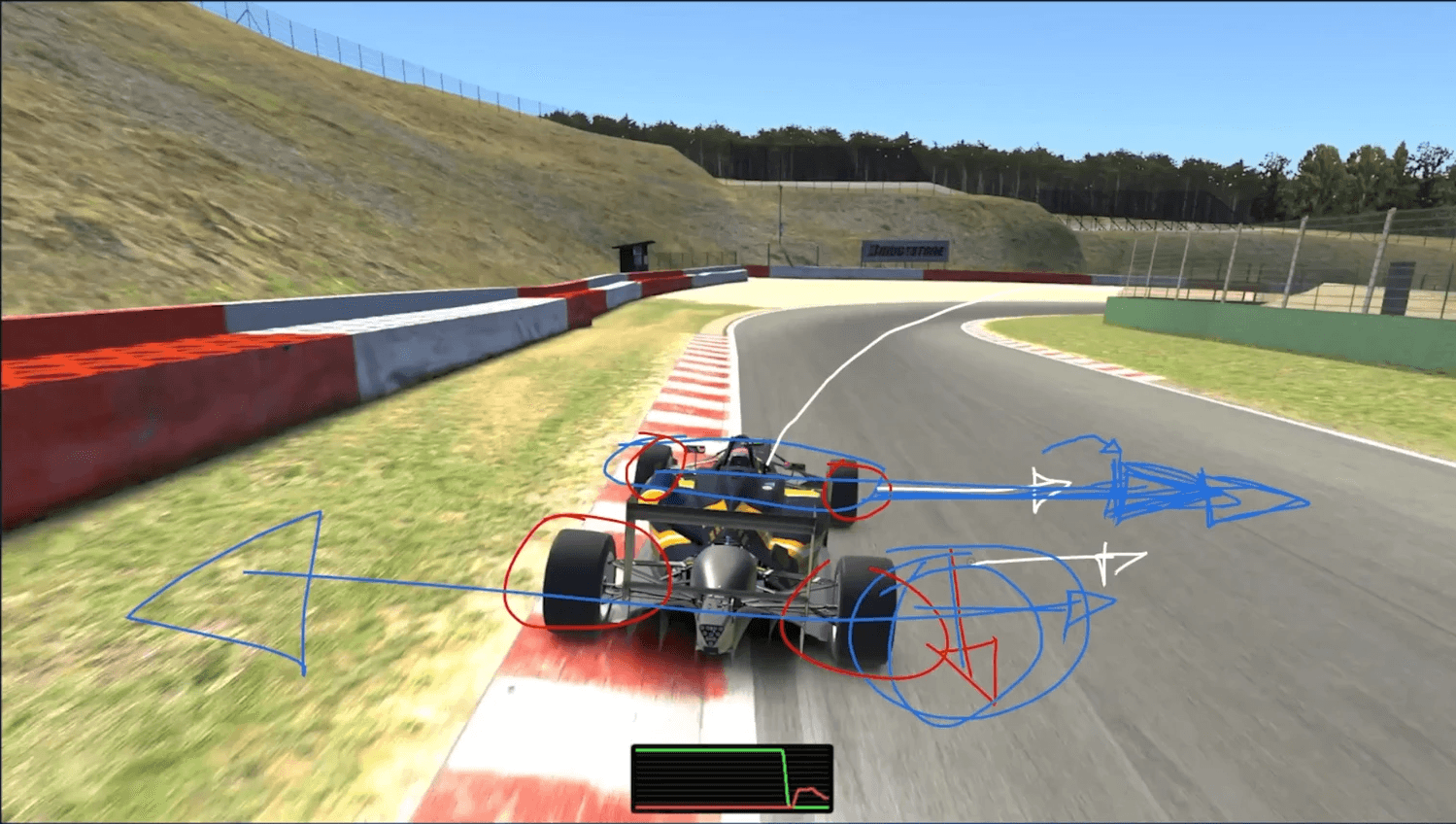
Another problematic section at Sebring features a line that invites you to stay left, throwing you more or less to the middle of the track. Then you want to come back while already braking, which causes you to lock up the tire - the same problem seen at Detroit.
If you lock the left tires because you're turning left slightly while shifting the weight to the right, by the time you start turning into the actual corner, you're using tires that are overheated with significantly less grip. Depending on your level:
Beginner level: You go all the way to one side and have a terrible line for the next corner
Advanced level: You're thinking about it but still moving slightly left, ending up with micro-locking and slight tire overheating
This problem can show up as a major issue or a very subtle one that costs you a tenth or even half a tenth of a second. What you really want to do is make sure you're perfectly aligned to the white line and on a straight line by the time you start your braking. Even experienced drivers can make the subtle mistake of still braking while the car is moving slightly to the left, losing hundredths of a second and potentially missing the apex.
Double Left - Same Direction Kink
The previous examples involved changing direction, but deceiving corners can also occur when kinks go in the same direction as the following corner. Consider a kink to the left that leads into an actual corner to the left.
Drivers can be deceived by a curb at the kink, thinking "it's a curb, I'm going to use it." But then they find themselves in a much more difficult corner that requires proper slowing down. If you think only of the actual corner and ignore what happens before, the ideal position would be all the way to the right and parallel to the white line or curb. Being in the middle of the track and pointing to the outside severely compromises your line.
Instead of being baited into using the first corner's apex, you should focus on the checkpoint. Ignore the first apex on purpose and position yourself perfectly for the actual corner where you need to be on the limit.
Virginia International Raceway - Oak Tree Corner
The oak tree corner at Virginia International Raceway demonstrates the importance of checkpoints for maximizing straight-line speed. Given the long straight that follows, you need the best exit possible from this corner. This corner becomes the full priority of the entire sector.
To achieve the perfect line, you must let the car run all the way to the outside after the preceding corner - this creates your checkpoint. A very common mistake is for drivers to bring the car to the inside because they're going over slowly and afraid of catching the grass. They stay on the inside, and by the time they turn into the corner, they're literally in the middle of the track and not capable of carrying as much speed as possible or getting the best exit.
Barber Motorsports Park - Turn Two
At Barber Motorsports Park turn two, there's a slight kink before the actual corner. The actual checkpoint should be positioned well after the kink. Make sure you go around this kink by moving to the left and then crossing over, so you can find yourself in the perfect position for the actual corner - a very fast left-hander.
Barber Motorsports Park - Fast Double Apex
Also at Barber, there's a very fast double apex section, but before this corner there's a tiny kink that generally makes everyone drift to the middle of the track. By the time you reach the actual corner, you don't have enough time to bring the car back to use all the track at entry.
You should place a checkpoint right on the entry to ensure you can get the best line possible for the double apex, which is one of the most important corners leading into a fairly long straight. Go around the kink by staying to the right and then bringing the car late to the left, so you can have the best line possible. Many drivers simply go straight through and get thrown to the middle of the track, resulting in a terrible line for the actual corner.
The Fundamental Principle
In the end, the key questions you need to ask yourself are:
Am I going to be on the limit in this corner? Yes or no?
Am I going to be on the limit on the next corner? Yes or no?
If the answer is no for the first corner but yes for the second corner, make sure you plan for the next corner. What really matters for lap times is figuring out where you're going to have to be on the limit and where you don't have to, then prioritizing the places where you have to be on the limit as if they're sacred. The fast driver will not leave anything on the table.
Deceiving Corners and Checkpoints
The deceiving corner is a simple but critical concept in racing. Consider a scenario where you have a corner with the ideal line breaking right at the apex, followed by a power exit. If you're approaching from a straight line, this is straightforward - you can prepare in advance, assess the corner, and use proper track position and angle. However, the situation becomes more complex when the corner actually comes from a slight turn or kink in the track.
Even if you're coming from a very long straight, it's remarkably easy to get tricked by these subtle sections. You can end up in a position where you're braking while turning, the car feels unstable, and you end up with a compromised line, losing significant time. This can all happen because of something that wasn't even a true corner.
Understanding Deceiving Corners
A deceiving corner is a non-corner - meaning you don't have to be on the limit to navigate it. However, it's a part of the track that will throw you to the wrong side of an actual corner that follows. The solution for deceiving corners is always to see way ahead and plan where you really want to be positioned.
For example, you might need to come slightly more to the left and turn in advance so that you can be fully straight by the time you start braking. Remember that as soon as you start braking, you should be able to drop your hands from the steering wheel because you want the car to be fully straight. You want the car to be 50/50 laterally balanced. This means you need to think about these little non-corners well before the actual braking point.
The Checkpoint Solution
The concept of a checkpoint is the ultimate solution to deceiving corners. A checkpoint allows you to not ignore these subtle sections, but rather go around them in a way that prepares you for where you'll actually be on the limit. There are many deceiving corners like this at various tracks, and understanding how to identify and navigate them is crucial.
Practical Examples of Deceiving Corners
Sebring - Second Sector Complex
At Sebring's second sector, there's a small kink to the right immediately before the braking zone leading into a complex set of three corners. If you're not aware of that kink and how close the breaking zone is afterward, you'll stay too close to the white line. After that kink throws you to the middle of the track, you won't have enough time to bring the car back to the ideal place or checkpoint of the next corner.
Instead, use your planning vision and mind's eye to prepare a line earlier by moving the car to the middle of the track before the kink. Then go around that kink in a way that aligns yourself to the white line after the kink, so you're already in the right spot for braking.
Sebring - Left-to-Right Transition
Immediately after the previous section, there's another deceiving situation. A left-hander leads into a right-hander and naturally throws you to the middle of the track. This corner is incredibly important because there's a huge straight right after it.
The key is to not be deceived and create a checkpoint. You want to:
Bring the car as far right as possible before the left-hander
Maximize the line by bringing the car as far left as possible through the left-hander
Change direction and go over the curb to ensure you land as far right as possible
Use the end of the curb as your checkpoint reference - you want to be as close as possible to the white line at the end of this curb
It's important to understand that if you're on the limit, the line you take through the first corner will determine where you land for the second. If you land too far to the outside, you'll be stuck and unable to hit your checkpoint. You may need to take a later apex on the first corner to get a better line through the center of the track, allowing you to cross properly and land on your checkpoint.
Sebring - Left Kink Before Right Corner
Another problematic section at Sebring features a line that invites you to stay left, throwing you more or less to the middle of the track. Then you want to come back while already braking, which causes you to lock up the tire - the same problem seen at Detroit.
If you lock the left tires because you're turning left slightly while shifting the weight to the right, by the time you start turning into the actual corner, you're using tires that are overheated with significantly less grip. Depending on your level:
Beginner level: You go all the way to one side and have a terrible line for the next corner
Advanced level: You're thinking about it but still moving slightly left, ending up with micro-locking and slight tire overheating
This problem can show up as a major issue or a very subtle one that costs you a tenth or even half a tenth of a second. What you really want to do is make sure you're perfectly aligned to the white line and on a straight line by the time you start your braking. Even experienced drivers can make the subtle mistake of still braking while the car is moving slightly to the left, losing hundredths of a second and potentially missing the apex.
Double Left - Same Direction Kink
The previous examples involved changing direction, but deceiving corners can also occur when kinks go in the same direction as the following corner. Consider a kink to the left that leads into an actual corner to the left.
Drivers can be deceived by a curb at the kink, thinking "it's a curb, I'm going to use it." But then they find themselves in a much more difficult corner that requires proper slowing down. If you think only of the actual corner and ignore what happens before, the ideal position would be all the way to the right and parallel to the white line or curb. Being in the middle of the track and pointing to the outside severely compromises your line.
Instead of being baited into using the first corner's apex, you should focus on the checkpoint. Ignore the first apex on purpose and position yourself perfectly for the actual corner where you need to be on the limit.
Virginia International Raceway - Oak Tree Corner
The oak tree corner at Virginia International Raceway demonstrates the importance of checkpoints for maximizing straight-line speed. Given the long straight that follows, you need the best exit possible from this corner. This corner becomes the full priority of the entire sector.
To achieve the perfect line, you must let the car run all the way to the outside after the preceding corner - this creates your checkpoint. A very common mistake is for drivers to bring the car to the inside because they're going over slowly and afraid of catching the grass. They stay on the inside, and by the time they turn into the corner, they're literally in the middle of the track and not capable of carrying as much speed as possible or getting the best exit.
Barber Motorsports Park - Turn Two
At Barber Motorsports Park turn two, there's a slight kink before the actual corner. The actual checkpoint should be positioned well after the kink. Make sure you go around this kink by moving to the left and then crossing over, so you can find yourself in the perfect position for the actual corner - a very fast left-hander.
Barber Motorsports Park - Fast Double Apex
Also at Barber, there's a very fast double apex section, but before this corner there's a tiny kink that generally makes everyone drift to the middle of the track. By the time you reach the actual corner, you don't have enough time to bring the car back to use all the track at entry.
You should place a checkpoint right on the entry to ensure you can get the best line possible for the double apex, which is one of the most important corners leading into a fairly long straight. Go around the kink by staying to the right and then bringing the car late to the left, so you can have the best line possible. Many drivers simply go straight through and get thrown to the middle of the track, resulting in a terrible line for the actual corner.
The Fundamental Principle
In the end, the key questions you need to ask yourself are:
Am I going to be on the limit in this corner? Yes or no?
Am I going to be on the limit on the next corner? Yes or no?
If the answer is no for the first corner but yes for the second corner, make sure you plan for the next corner. What really matters for lap times is figuring out where you're going to have to be on the limit and where you don't have to, then prioritizing the places where you have to be on the limit as if they're sacred. The fast driver will not leave anything on the table.
Deceiving Corners and Checkpoints
The deceiving corner is a simple but critical concept in racing. Consider a scenario where you have a corner with the ideal line breaking right at the apex, followed by a power exit. If you're approaching from a straight line, this is straightforward - you can prepare in advance, assess the corner, and use proper track position and angle. However, the situation becomes more complex when the corner actually comes from a slight turn or kink in the track.
Even if you're coming from a very long straight, it's remarkably easy to get tricked by these subtle sections. You can end up in a position where you're braking while turning, the car feels unstable, and you end up with a compromised line, losing significant time. This can all happen because of something that wasn't even a true corner.
Understanding Deceiving Corners
A deceiving corner is a non-corner - meaning you don't have to be on the limit to navigate it. However, it's a part of the track that will throw you to the wrong side of an actual corner that follows. The solution for deceiving corners is always to see way ahead and plan where you really want to be positioned.
For example, you might need to come slightly more to the left and turn in advance so that you can be fully straight by the time you start braking. Remember that as soon as you start braking, you should be able to drop your hands from the steering wheel because you want the car to be fully straight. You want the car to be 50/50 laterally balanced. This means you need to think about these little non-corners well before the actual braking point.
The Checkpoint Solution
The concept of a checkpoint is the ultimate solution to deceiving corners. A checkpoint allows you to not ignore these subtle sections, but rather go around them in a way that prepares you for where you'll actually be on the limit. There are many deceiving corners like this at various tracks, and understanding how to identify and navigate them is crucial.
Practical Examples of Deceiving Corners
Sebring - Second Sector Complex
At Sebring's second sector, there's a small kink to the right immediately before the braking zone leading into a complex set of three corners. If you're not aware of that kink and how close the breaking zone is afterward, you'll stay too close to the white line. After that kink throws you to the middle of the track, you won't have enough time to bring the car back to the ideal place or checkpoint of the next corner.
Instead, use your planning vision and mind's eye to prepare a line earlier by moving the car to the middle of the track before the kink. Then go around that kink in a way that aligns yourself to the white line after the kink, so you're already in the right spot for braking.
Sebring - Left-to-Right Transition
Immediately after the previous section, there's another deceiving situation. A left-hander leads into a right-hander and naturally throws you to the middle of the track. This corner is incredibly important because there's a huge straight right after it.
The key is to not be deceived and create a checkpoint. You want to:
Bring the car as far right as possible before the left-hander
Maximize the line by bringing the car as far left as possible through the left-hander
Change direction and go over the curb to ensure you land as far right as possible
Use the end of the curb as your checkpoint reference - you want to be as close as possible to the white line at the end of this curb
It's important to understand that if you're on the limit, the line you take through the first corner will determine where you land for the second. If you land too far to the outside, you'll be stuck and unable to hit your checkpoint. You may need to take a later apex on the first corner to get a better line through the center of the track, allowing you to cross properly and land on your checkpoint.
Sebring - Left Kink Before Right Corner
Another problematic section at Sebring features a line that invites you to stay left, throwing you more or less to the middle of the track. Then you want to come back while already braking, which causes you to lock up the tire - the same problem seen at Detroit.
If you lock the left tires because you're turning left slightly while shifting the weight to the right, by the time you start turning into the actual corner, you're using tires that are overheated with significantly less grip. Depending on your level:
Beginner level: You go all the way to one side and have a terrible line for the next corner
Advanced level: You're thinking about it but still moving slightly left, ending up with micro-locking and slight tire overheating
This problem can show up as a major issue or a very subtle one that costs you a tenth or even half a tenth of a second. What you really want to do is make sure you're perfectly aligned to the white line and on a straight line by the time you start your braking. Even experienced drivers can make the subtle mistake of still braking while the car is moving slightly to the left, losing hundredths of a second and potentially missing the apex.
Double Left - Same Direction Kink
The previous examples involved changing direction, but deceiving corners can also occur when kinks go in the same direction as the following corner. Consider a kink to the left that leads into an actual corner to the left.
Drivers can be deceived by a curb at the kink, thinking "it's a curb, I'm going to use it." But then they find themselves in a much more difficult corner that requires proper slowing down. If you think only of the actual corner and ignore what happens before, the ideal position would be all the way to the right and parallel to the white line or curb. Being in the middle of the track and pointing to the outside severely compromises your line.
Instead of being baited into using the first corner's apex, you should focus on the checkpoint. Ignore the first apex on purpose and position yourself perfectly for the actual corner where you need to be on the limit.
Virginia International Raceway - Oak Tree Corner
The oak tree corner at Virginia International Raceway demonstrates the importance of checkpoints for maximizing straight-line speed. Given the long straight that follows, you need the best exit possible from this corner. This corner becomes the full priority of the entire sector.
To achieve the perfect line, you must let the car run all the way to the outside after the preceding corner - this creates your checkpoint. A very common mistake is for drivers to bring the car to the inside because they're going over slowly and afraid of catching the grass. They stay on the inside, and by the time they turn into the corner, they're literally in the middle of the track and not capable of carrying as much speed as possible or getting the best exit.
Barber Motorsports Park - Turn Two
At Barber Motorsports Park turn two, there's a slight kink before the actual corner. The actual checkpoint should be positioned well after the kink. Make sure you go around this kink by moving to the left and then crossing over, so you can find yourself in the perfect position for the actual corner - a very fast left-hander.
Barber Motorsports Park - Fast Double Apex
Also at Barber, there's a very fast double apex section, but before this corner there's a tiny kink that generally makes everyone drift to the middle of the track. By the time you reach the actual corner, you don't have enough time to bring the car back to use all the track at entry.
You should place a checkpoint right on the entry to ensure you can get the best line possible for the double apex, which is one of the most important corners leading into a fairly long straight. Go around the kink by staying to the right and then bringing the car late to the left, so you can have the best line possible. Many drivers simply go straight through and get thrown to the middle of the track, resulting in a terrible line for the actual corner.
The Fundamental Principle
In the end, the key questions you need to ask yourself are:
Am I going to be on the limit in this corner? Yes or no?
Am I going to be on the limit on the next corner? Yes or no?
If the answer is no for the first corner but yes for the second corner, make sure you plan for the next corner. What really matters for lap times is figuring out where you're going to have to be on the limit and where you don't have to, then prioritizing the places where you have to be on the limit as if they're sacred. The fast driver will not leave anything on the table.
Consistency & Confidence
Balance & Speed
Mastery
Other Lessons