Blind Corners
Lesson
38
of
49

Lesson by
Suellio Almeida
Lesson by
Suellio Almeida
Mark as Finished
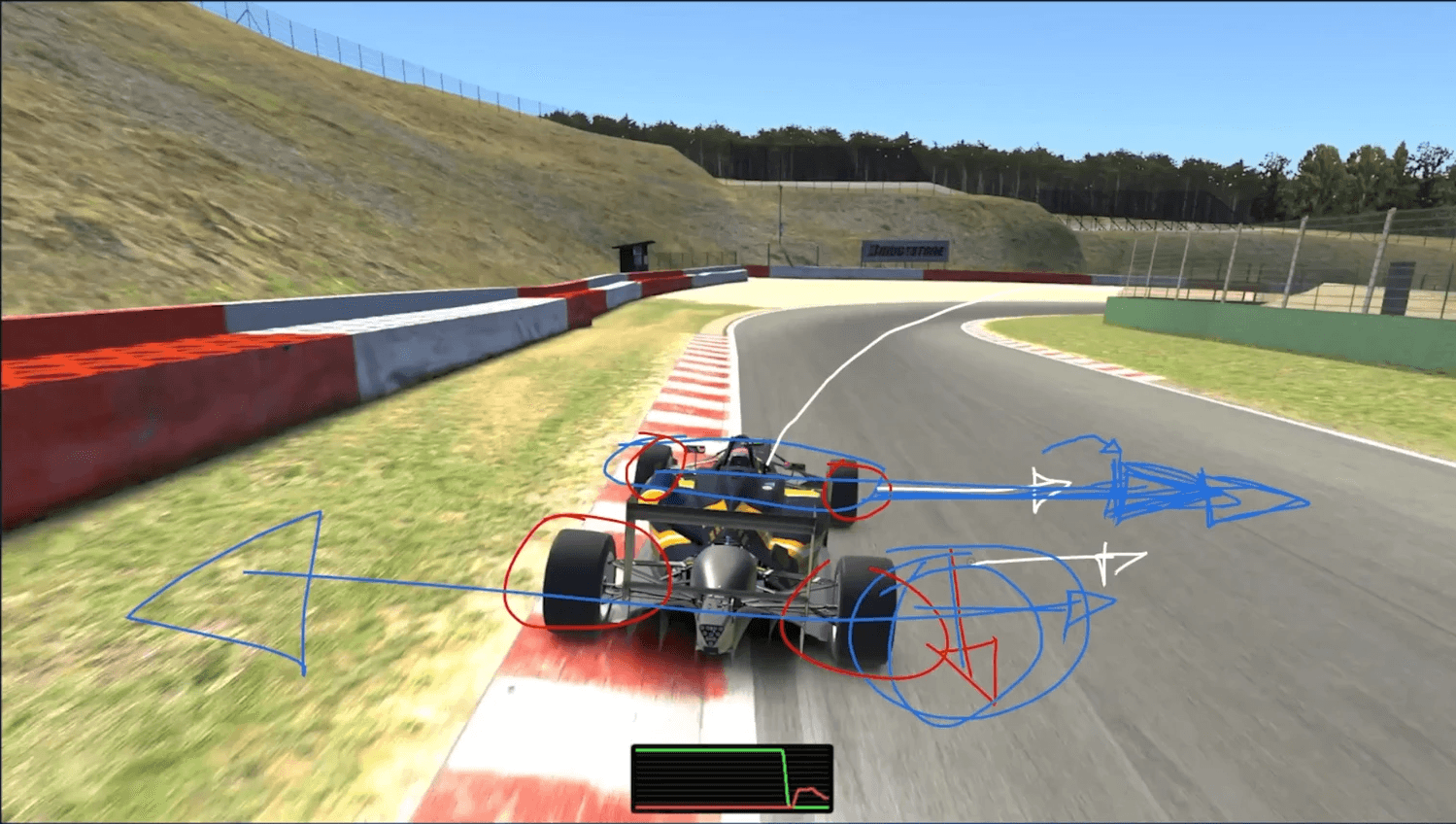
You might have noticed that I don't have a lesson on vision, I don't teach vision directly. I mean, sometimes I do, and most coaches do, and a lot of people say, "Oh, you have to look forward, you have to look forward." That's kind of cool, but if you don't know where to look, then just far away kind of helps, but it's just generic advice. By teaching you the types of corners, and by teaching you what to look for specifically, I don't have to tell you to look forward because you are automatically looking for these references. So that's why I don't necessarily teach vision as a specific thing. I prefer way much to teach what things you should look for, without necessarily having to tell you that you have to look for them. And especially in this lesson, I will tell you, actually the opposite, do not look forward, do not look all the way to the future because you won't be able to see anything in blind corners.
Understanding Blind Corners
So I'm going to show you what to do in blind corners. We're going to go through a bunch of examples right now. Let's go with the first one with a very wide FOV to simulate the situation where you don't have a lot of time to think. Things come very fast at you, and you need to take decisions quickly about when to turn in, when to break, and so on. Especially in blind corners, it's going to be very important.
Example 1: The Left Fast-Hander at Laguna Seca
All right, this is the left fast-hander at Laguna Seca, and as you can see, we don't really have a lot of time to think. We can't really see the apex by the time we start turning in. In this case, what do we do? Let's go back a little bit and look at some references. We have the bridge, then we have the three, then we have the two. By the time we see the apex, which is around now, I'm already turning this theorem. So that means I cannot use the apex as a reference to turn in, because if I look at the apex and then decide to turn, well, your reaction time is two, so a second, right? Two, ten, so a second at that speed, you're going to have traveled some good bit, right? And in this bit, by the time you decide to turn, if you're taking this as a reference, the apex, you will turn here instead of here. And that's, if you're missing the whole apex and you're going off, it's too reactive. You can't trust, you can't rely on it.
Using Available References
So what do we do instead of looking for a traditional, you know, looking forward approach? We look here. You see, more than that, we can go back, look here, then look there and time. This turning point is going to be somewhere between the three and the two. So what are you going to do? You're going to look here. You don't have to look at the apex because you can't look at the apex, right? You look for a place as a turning point. In this case, for me, it's just before the two, I'm starting to turn. Again, I'm looking at the two. I am not looking at the apex. And then after I turn, now I'm going to look at the apex. But then this kind of vision here is not proactive. It's actually, I'm just assessing what I did. I'm just testing if this previous turning point here was good. So you turn first and you test. That's the first thing. You turn then here when we get around here, we check if the two reference was good. And then on the next lap, we retest, but you can't in real time rely on what you can't see because it's too late and it's blind. So use where the car is and more or less what would be a breaking reference, right? You actually use this to turn on blind corners. That's extremely useful. And then you can just retest, retest, retest. Always when you're here, that's already a consequence of what you did with your vision before the blind part around here.
Example 2: The Deceiving Corner at the Corkscrew
Now let's go for one more very, very common here, especially when I have friends over at my simulator driving, they look at this here. They're around here. They have no idea where the corner goes and they just go straight and crash because they were waiting to see something and then react to it. That's extremely dangerous. If you don't know what's coming and it's your first time driving that track, slow down and see what's after. And then on the next lap, you're going to have a better idea. Do not ever drive reactively. Even if you're learning a new track, it's just like a habit. Do not react to what's just in front of you, especially before blind corners.
So what do I do here? I already know that right here, there's going to be a little right hander and then the corkscrew, right? I have 10,000 laps here. But if I didn't know and I was here and I got a little bit pushed, I would be slow enough because I wouldn't go so fast. And then seeing that this next corner is a little turn to the right. Remember this even corner. This is a deceiving corner here. The deceiving braking zone, because if you're here, you're going to have a really bad line. And that's very common. See a lot of beginners doing that line, hugging the curb a little bit too early and then turning in pretty much from the apex and having a really, really bad line.
Planning Before the Blind Section
What do you want to do? You have to plan before, especially because it's a blind deceiving corner. This is really, really tricky. This corner is made for you to make a mistake. So what I do, I stay really to the left here. I turn in and I try to align my car to the curb after the little corner of it. So the corner is like this, and I'm doing this to align myself because then I turn in. And then we turn in, we have the same thing. It's blind again. I'm gonna start turning in when I see this 'cause in this case, we can see the first apex, right? But as soon as we get here, we can't really see the second apex. We can see, we can see, we can see, we can see, we can see, we can see. I decided to change direction probably at the very same time we can see the apex. So clearly I'm not reacting to when the apex is because I would not have enough human reaction time to do that.
Precision in Reference Selection
So what I do is I look at what I have as available references, right? In this case, I really, really like using this little blue square here. The last blue square in the beginning of the red curb there is what I really like using. Some people say, "Oh, you look at the trees." I don't really like the tree because it can change from simulator to simulator. It's a little bit far from where I'm looking. In terms of precision for references, I like things that are extremely close to the car. Even for breaking references, sometimes the board is super far away. I'm gonna look for something that's closer. Not something that's super far away. I would never look at this guy here or this board. Like I always try to look for cracks and rubber and curbs and bumps and stuff that is really close to my field of view because that gives me way more precision in terms of inputs because every fraction of a second is gonna make a difference.
So I look at this square, I try to get my car there and this will give me an idea of what angle I have to the next corner. So if I cross this square a little bit late or I miss it and I'm here, I know I'm gonna go off and I'm gonna have to slow down a little bit more. If I cross it a little bit better, then I know I have a better line for the change of direction. So you try it here and then as soon as you change direction, now we're already at a consequence line. So we're pretty much along for the ride and trying to change direction and see what the entry brought us to. So at this point here, you are just checking the quality of your entry. You can't react anymore, it's too late. So everything at the second half of the corner is a consequence to the first half. Entry is cause, exit is consequence.
Breaking Down the Entry
In this case, the cause is really way here, way back here. Blind crest breaking, deceiving, breaking while turning a little bit, very relaxed hands, then add a little bit more breaks after the little crest. We're gonna talk about that in the next lesson. And then using this as a reference to turn in because it's available, but also using the same curb as a reference to the second corner because we can't see the second corner. And this is an example in real life, same thing. You can see me all the way to the left here and then breaking, relaxing my hands, staying to the right and then turning in, looking for this reference here. I like this bit here cause it's very easy to distinguish the angles and positioning. So I aim on this last square here, but I'm also looking at this little yellow as a reference and even the green helps me. But I'm not looking at the trees, I'm not looking at the apex because I can't see the apex and I change direction, pretty much at the same time I can see the apex and dropping down, you can see here that on this lap, actually I changed direction a little bit too late. I could have used a little bit more. We are both using this curve with the right tire, but we could probably use a little bit more. It is bumpy, so it was not that great of an experience in real life. So most of us were kind of taking care of the car a little bit. There's a little bump here that does this and it's really, really, really bad on the car, but I could have used a little bit more.
Example 3: Fast Flat Corners with Limited References
Next example, super, super fast corner, flat, flat, flat, and the only thing that matters honestly is turning points. So in this case, what do we have? We have the bridge and that's it. We have the bridge, you don't have anything else. You don't have anything else. So I'm gonna turn in slightly before the bridge, probably a fraction of a second before the bridge. I turn in, I'm looking, I'm looking. There's nothing to see, there's nothing to see, there's nothing to see, there's nothing to see. And then we have this little change in the grass here. So the grass cuts down a little bit and this is actually tarmac and we have the black wall true. What I'm doing with this reference is I want the car to be here, but this is just a checking reference. I cannot use this reactively. I cannot use this in real time to decide what I'm gonna do with the car, only to check if the entry was good.
Obviously I can use this in real time to decide if I'm gonna have to do some kind of correction after in case I go a little bit too wide or I get here a little bit too early. But in terms of turning in, you will not ever see this first apex. This is kind of a double apex corner. And the only thing you can do is use something that's very close to the car, which again goes against what people say, "Oh, never looked too close to the car, "look forward, look forward." Well, it really depends because in this case, that's the only reference available we have.
Progressive Reference Comparison
And this track is crazy because we have a lot of blind corners, blind, fast corners. So the next one, same thing. You start turning in. You can't really see the exit. You can't see the exit. You can't see the exit. You can't see the exit. You can't see the exit. You can't see the exit. I'm already on power, right? So I had to decide to get back on power and to reach my maximum rotation point. Somewhere, we're using something that's very close to me because we can't see the exit. In this case, what I'm doing is actually using a little bit of a progression comparison because you can see that this darker patch here starts to get closer and closer and closer to the curb. So I know that by the time this patch ends up meeting the curb, then we're really getting on the exit and the track starts opening up way more. So it meets the curb. That's it. I should be already on power here and from here, the track starts opening and opening and opening. So you can see again, blind corner, you have to use the available references.
The Importance of Proactive Driving
It's very important to know this and try this because it's very easy to get frustrated, trying to look forward. There's nothing to see and you fail and you miss your turning point or you miss your acceleration point. So practice this because it's actually easier when you get used to it. But you have to train a little bit the habit of never trusting the real time information in blind corners and becoming a more proactive driver. Becoming proactive, take some energy, take some practice, take some getting used to, but as soon as you become proactive and not reactive, you're way more relaxed. It's way easier to drive. And again, flat out corner, top speed, only thing we can see is the bridge. So I use the same thing to turn in. In this case, it's a little bit different. I'm crossing it already this way and I wanna be more or less in the middle of the track 'cause I know that the apex is gonna show up right there. See, we get here and then that's the apex quite late which I'm going around because it's almost like a deceiving corner 'cause I really wanna be here and this corner throws me very easily to the middle of the track. So in this case, I'm going around it so I can be more to the left and get a better braking for this hairpin.
Example 4: Road America Chevy Corner
Next up, we have Road America Chevy Corner. After the hairpin, I think it's turn six. We start braking, we have the bridge and we can see anything, anything else, right? I'm gonna brake and I'm gonna use this shadow as a reference. It can be the shadow. The shadow is a little bit sketchy because depending on the time of the day, the shadow will move. So you can also use the end of this little wall here or this one, depending on how late you're going to brake, but just make sure that you're using something that's not the apex because as soon as you see the apex, you should already be turning and it's gonna be too late to react to it. And a lot of people do that, a lot, a lot of people. I'm talking about like 90% of my first-time students are waiting to see this apex to turn. I'm turning in at exactly the same time if not before I can actually discern the apex from here. I'm already turning, the apex is showing up right now. By the time I can clearly see the apex I already turned 25, 30 degrees. So in this case, again, you cannot use the apex as a turn in reference point. You have to use something before that.
Example 5: Double Blind Corners at Rowlett-Lena
Then we have a very, very, very tricky one. This is turn one, two, three at Rowlett-Lena. I turn in, turn one, we can see everything, grades, okay, exit and now, ooh. All right, so this corner is very tricky because it's two blind corners in a row. You have the blind left here that prepares to the blind right. And this blind right is very tricky. A lot of people make a lot of mistakes here all the time. Before anything, you have to even prepare it right. So in this case, what I'm using here, there's a lot of little things. You can use this Marshall post. I do not ever look at it too far. This tree is very, very, very distinct from the other ones, so it's plausible. I also don't use it. A lot of people do, if you like using these references, do it, I don't do it because I'm really used to looking at stuff close to me.
Using Track Cracks as References
In this case, I like looking at these cracks that divide the track in three. So you have these two cracks in the middle and when I'm driving, I look for them, I come back at them. The cracks are doing right, then they go straight, then they go left. Both of them are doing the same thing. So in this case, I'm using this as a reference and then I turn in more or less somewhere here, it really depends on the car, on the power, on the downforce, so there is no fixed reference. But the idea here is to get your car doing this and be careful not to hit this bit because it's really bumpy and it's gonna throw your car and you're gonna lose your entry. So I go around this curb, I join it, and again, look at this, at this point, even at the chase camera, we can't see the apex. So what we're gonna use, we're gonna use this. Very good reference. You can also have this white line is a good reference. That's it. Choose a turning point around here. This side is it here, is it here, is it here? I don't know. Try it, then use the apex. You check if your turning point was good.
Testing and Adjusting
In this case, I missed it. It's really funny, this was just an example up, but you can see that I missed it by this much. So on the next lap, let's see when I turned in. Okay, I turned in around here, I was already turning in. So then what I probably needed to do was maybe break a little bit earlier or turn in just a tiny bit earlier. At this point, this is a good reference, but everything happened so fast that the adjustment that I need to do to change the line just a tiny bit is gonna be microscopic. It's gonna be blink of an eye level change in inputs. But again, this is gonna give you the opportunity. If you try to look for this, oh my God, you're so late. You're gonna miss it and you're gonna go impossible, impossible.
Example 6: Barber Motorsports Park
Another very important one here, barber. This one is very easy to crash in real life if you have a GT car and you're doing a track day 'cause you can't see anything, but it's a flat, easy corner, right? So what you need to do is just chill in a radical, but in other cars, this little kink because it is a crest, it can throw you all the way to the left, especially if you turn in a little bit too early. So in this case, what can you use as a reference? You can't see anything there, right? Okay, good, use this. That's it, the end of the curb. That's a good reference. Boom, fixed. Just use your available references.
Turn 10, 11: Crests and Blind Exits
And then we have turn 10, 11. Super sketchy in real life. You turn in, there's a lot of grip. Then you go here and look at what happened after. The track really throws you all the way to the left and then the exit is a crest. So you have no grip here. So in this case, very important to not react to it. You can see how I'm going a lot to the left here and then I'm changing direction and aiming to be at this curb all the way until the end here. Like around here, I'm really trying to avoid this bit and going around it, but then meeting the end a little bit because I'm late apexing. This is a late apex and this would be an early apex. Early apex here is going to get you to the wall because the track actually closes a little bit but it's blind so you can't know. So you have to go slow to figure out what is going to eventually be your line when you're in the limit and then you use whatever available references you have to guide your line.
And then okay, late apex feels like it's going to be easy. And it's like, oh, I'm so late here, so late apex. It's going to be completely fine. And then this happens, you know, that's the limit and a little bit more to the left. I would have hit this grass here. A lot of people crash here. I saw a lot of crashes when I was not on track and I was just like watching from the outside. It's insane. This track gets a lot of people. Why? Because it's a blind crest.
Understanding Crests
Generally, crests are blind because crests are, the track is following like this, following I mean, and then you can't see what's here, right? So whenever you have a crest that means less grip and blocked view, you can't see anything after the crest.
Bonus Example: Unexpected Obstacles
And a bonus example here is actually in the same corner, in the same day. As I was driving, doing everything right, in qualifying, exiting, and obviously I can see the exit, but I know where the exit is because I've been practicing and I used my available references, right? Well, unless there's a car there. In that case, if there's a car there, you can't really see the car until you react to it. So, let's see what I did here in terms of reaction. I turned flat. I look at it now, it took me, I swear to you, it took me like two or three tenths of a second to even process what happens and then take a decision. Obviously, I was expecting him to stay there. At this point, I'm seeing I expect him to be actually stopped and I plan to just go straight after those two, three tenths of a second of processing the information and taking a decision. But in this case, he was rolling back. And as soon as I noticed that he started rolling back, again, two tenths of a second after noticing that he's rolling back, I can take a decision and do something about it. In my case here, it was very, very close. I survived, my car survived, but it shows how important. Well, I guess it just shows how dangerous motor sport says because there's nothing you can do in this situation sometimes.
Key Takeaways for Blind Corners
But there you go, these are blind corners for you. The fundamental principles include:
Never rely on real-time information in blind corners
Use available references close to the car for precision
Turn first, then check if your entry was good using the apex
Entry is cause, exit is consequence
Become proactive, not reactive
Test and adjust your turning points over multiple laps
Be aware that crests combine blind sections with reduced grip
On the next lessons, we are going to talk about elevation changes. This is one of the most important topics to get you to the real advanced level of driving.
You might have noticed that I don't have a lesson on vision, I don't teach vision directly. I mean, sometimes I do, and most coaches do, and a lot of people say, "Oh, you have to look forward, you have to look forward." That's kind of cool, but if you don't know where to look, then just far away kind of helps, but it's just generic advice. By teaching you the types of corners, and by teaching you what to look for specifically, I don't have to tell you to look forward because you are automatically looking for these references. So that's why I don't necessarily teach vision as a specific thing. I prefer way much to teach what things you should look for, without necessarily having to tell you that you have to look for them. And especially in this lesson, I will tell you, actually the opposite, do not look forward, do not look all the way to the future because you won't be able to see anything in blind corners.
Understanding Blind Corners
So I'm going to show you what to do in blind corners. We're going to go through a bunch of examples right now. Let's go with the first one with a very wide FOV to simulate the situation where you don't have a lot of time to think. Things come very fast at you, and you need to take decisions quickly about when to turn in, when to break, and so on. Especially in blind corners, it's going to be very important.
Example 1: The Left Fast-Hander at Laguna Seca
All right, this is the left fast-hander at Laguna Seca, and as you can see, we don't really have a lot of time to think. We can't really see the apex by the time we start turning in. In this case, what do we do? Let's go back a little bit and look at some references. We have the bridge, then we have the three, then we have the two. By the time we see the apex, which is around now, I'm already turning this theorem. So that means I cannot use the apex as a reference to turn in, because if I look at the apex and then decide to turn, well, your reaction time is two, so a second, right? Two, ten, so a second at that speed, you're going to have traveled some good bit, right? And in this bit, by the time you decide to turn, if you're taking this as a reference, the apex, you will turn here instead of here. And that's, if you're missing the whole apex and you're going off, it's too reactive. You can't trust, you can't rely on it.
Using Available References
So what do we do instead of looking for a traditional, you know, looking forward approach? We look here. You see, more than that, we can go back, look here, then look there and time. This turning point is going to be somewhere between the three and the two. So what are you going to do? You're going to look here. You don't have to look at the apex because you can't look at the apex, right? You look for a place as a turning point. In this case, for me, it's just before the two, I'm starting to turn. Again, I'm looking at the two. I am not looking at the apex. And then after I turn, now I'm going to look at the apex. But then this kind of vision here is not proactive. It's actually, I'm just assessing what I did. I'm just testing if this previous turning point here was good. So you turn first and you test. That's the first thing. You turn then here when we get around here, we check if the two reference was good. And then on the next lap, we retest, but you can't in real time rely on what you can't see because it's too late and it's blind. So use where the car is and more or less what would be a breaking reference, right? You actually use this to turn on blind corners. That's extremely useful. And then you can just retest, retest, retest. Always when you're here, that's already a consequence of what you did with your vision before the blind part around here.
Example 2: The Deceiving Corner at the Corkscrew
Now let's go for one more very, very common here, especially when I have friends over at my simulator driving, they look at this here. They're around here. They have no idea where the corner goes and they just go straight and crash because they were waiting to see something and then react to it. That's extremely dangerous. If you don't know what's coming and it's your first time driving that track, slow down and see what's after. And then on the next lap, you're going to have a better idea. Do not ever drive reactively. Even if you're learning a new track, it's just like a habit. Do not react to what's just in front of you, especially before blind corners.
So what do I do here? I already know that right here, there's going to be a little right hander and then the corkscrew, right? I have 10,000 laps here. But if I didn't know and I was here and I got a little bit pushed, I would be slow enough because I wouldn't go so fast. And then seeing that this next corner is a little turn to the right. Remember this even corner. This is a deceiving corner here. The deceiving braking zone, because if you're here, you're going to have a really bad line. And that's very common. See a lot of beginners doing that line, hugging the curb a little bit too early and then turning in pretty much from the apex and having a really, really bad line.
Planning Before the Blind Section
What do you want to do? You have to plan before, especially because it's a blind deceiving corner. This is really, really tricky. This corner is made for you to make a mistake. So what I do, I stay really to the left here. I turn in and I try to align my car to the curb after the little corner of it. So the corner is like this, and I'm doing this to align myself because then I turn in. And then we turn in, we have the same thing. It's blind again. I'm gonna start turning in when I see this 'cause in this case, we can see the first apex, right? But as soon as we get here, we can't really see the second apex. We can see, we can see, we can see, we can see, we can see, we can see. I decided to change direction probably at the very same time we can see the apex. So clearly I'm not reacting to when the apex is because I would not have enough human reaction time to do that.
Precision in Reference Selection
So what I do is I look at what I have as available references, right? In this case, I really, really like using this little blue square here. The last blue square in the beginning of the red curb there is what I really like using. Some people say, "Oh, you look at the trees." I don't really like the tree because it can change from simulator to simulator. It's a little bit far from where I'm looking. In terms of precision for references, I like things that are extremely close to the car. Even for breaking references, sometimes the board is super far away. I'm gonna look for something that's closer. Not something that's super far away. I would never look at this guy here or this board. Like I always try to look for cracks and rubber and curbs and bumps and stuff that is really close to my field of view because that gives me way more precision in terms of inputs because every fraction of a second is gonna make a difference.
So I look at this square, I try to get my car there and this will give me an idea of what angle I have to the next corner. So if I cross this square a little bit late or I miss it and I'm here, I know I'm gonna go off and I'm gonna have to slow down a little bit more. If I cross it a little bit better, then I know I have a better line for the change of direction. So you try it here and then as soon as you change direction, now we're already at a consequence line. So we're pretty much along for the ride and trying to change direction and see what the entry brought us to. So at this point here, you are just checking the quality of your entry. You can't react anymore, it's too late. So everything at the second half of the corner is a consequence to the first half. Entry is cause, exit is consequence.
Breaking Down the Entry
In this case, the cause is really way here, way back here. Blind crest breaking, deceiving, breaking while turning a little bit, very relaxed hands, then add a little bit more breaks after the little crest. We're gonna talk about that in the next lesson. And then using this as a reference to turn in because it's available, but also using the same curb as a reference to the second corner because we can't see the second corner. And this is an example in real life, same thing. You can see me all the way to the left here and then breaking, relaxing my hands, staying to the right and then turning in, looking for this reference here. I like this bit here cause it's very easy to distinguish the angles and positioning. So I aim on this last square here, but I'm also looking at this little yellow as a reference and even the green helps me. But I'm not looking at the trees, I'm not looking at the apex because I can't see the apex and I change direction, pretty much at the same time I can see the apex and dropping down, you can see here that on this lap, actually I changed direction a little bit too late. I could have used a little bit more. We are both using this curve with the right tire, but we could probably use a little bit more. It is bumpy, so it was not that great of an experience in real life. So most of us were kind of taking care of the car a little bit. There's a little bump here that does this and it's really, really, really bad on the car, but I could have used a little bit more.
Example 3: Fast Flat Corners with Limited References
Next example, super, super fast corner, flat, flat, flat, and the only thing that matters honestly is turning points. So in this case, what do we have? We have the bridge and that's it. We have the bridge, you don't have anything else. You don't have anything else. So I'm gonna turn in slightly before the bridge, probably a fraction of a second before the bridge. I turn in, I'm looking, I'm looking. There's nothing to see, there's nothing to see, there's nothing to see, there's nothing to see. And then we have this little change in the grass here. So the grass cuts down a little bit and this is actually tarmac and we have the black wall true. What I'm doing with this reference is I want the car to be here, but this is just a checking reference. I cannot use this reactively. I cannot use this in real time to decide what I'm gonna do with the car, only to check if the entry was good.
Obviously I can use this in real time to decide if I'm gonna have to do some kind of correction after in case I go a little bit too wide or I get here a little bit too early. But in terms of turning in, you will not ever see this first apex. This is kind of a double apex corner. And the only thing you can do is use something that's very close to the car, which again goes against what people say, "Oh, never looked too close to the car, "look forward, look forward." Well, it really depends because in this case, that's the only reference available we have.
Progressive Reference Comparison
And this track is crazy because we have a lot of blind corners, blind, fast corners. So the next one, same thing. You start turning in. You can't really see the exit. You can't see the exit. You can't see the exit. You can't see the exit. You can't see the exit. You can't see the exit. I'm already on power, right? So I had to decide to get back on power and to reach my maximum rotation point. Somewhere, we're using something that's very close to me because we can't see the exit. In this case, what I'm doing is actually using a little bit of a progression comparison because you can see that this darker patch here starts to get closer and closer and closer to the curb. So I know that by the time this patch ends up meeting the curb, then we're really getting on the exit and the track starts opening up way more. So it meets the curb. That's it. I should be already on power here and from here, the track starts opening and opening and opening. So you can see again, blind corner, you have to use the available references.
The Importance of Proactive Driving
It's very important to know this and try this because it's very easy to get frustrated, trying to look forward. There's nothing to see and you fail and you miss your turning point or you miss your acceleration point. So practice this because it's actually easier when you get used to it. But you have to train a little bit the habit of never trusting the real time information in blind corners and becoming a more proactive driver. Becoming proactive, take some energy, take some practice, take some getting used to, but as soon as you become proactive and not reactive, you're way more relaxed. It's way easier to drive. And again, flat out corner, top speed, only thing we can see is the bridge. So I use the same thing to turn in. In this case, it's a little bit different. I'm crossing it already this way and I wanna be more or less in the middle of the track 'cause I know that the apex is gonna show up right there. See, we get here and then that's the apex quite late which I'm going around because it's almost like a deceiving corner 'cause I really wanna be here and this corner throws me very easily to the middle of the track. So in this case, I'm going around it so I can be more to the left and get a better braking for this hairpin.
Example 4: Road America Chevy Corner
Next up, we have Road America Chevy Corner. After the hairpin, I think it's turn six. We start braking, we have the bridge and we can see anything, anything else, right? I'm gonna brake and I'm gonna use this shadow as a reference. It can be the shadow. The shadow is a little bit sketchy because depending on the time of the day, the shadow will move. So you can also use the end of this little wall here or this one, depending on how late you're going to brake, but just make sure that you're using something that's not the apex because as soon as you see the apex, you should already be turning and it's gonna be too late to react to it. And a lot of people do that, a lot, a lot of people. I'm talking about like 90% of my first-time students are waiting to see this apex to turn. I'm turning in at exactly the same time if not before I can actually discern the apex from here. I'm already turning, the apex is showing up right now. By the time I can clearly see the apex I already turned 25, 30 degrees. So in this case, again, you cannot use the apex as a turn in reference point. You have to use something before that.
Example 5: Double Blind Corners at Rowlett-Lena
Then we have a very, very, very tricky one. This is turn one, two, three at Rowlett-Lena. I turn in, turn one, we can see everything, grades, okay, exit and now, ooh. All right, so this corner is very tricky because it's two blind corners in a row. You have the blind left here that prepares to the blind right. And this blind right is very tricky. A lot of people make a lot of mistakes here all the time. Before anything, you have to even prepare it right. So in this case, what I'm using here, there's a lot of little things. You can use this Marshall post. I do not ever look at it too far. This tree is very, very, very distinct from the other ones, so it's plausible. I also don't use it. A lot of people do, if you like using these references, do it, I don't do it because I'm really used to looking at stuff close to me.
Using Track Cracks as References
In this case, I like looking at these cracks that divide the track in three. So you have these two cracks in the middle and when I'm driving, I look for them, I come back at them. The cracks are doing right, then they go straight, then they go left. Both of them are doing the same thing. So in this case, I'm using this as a reference and then I turn in more or less somewhere here, it really depends on the car, on the power, on the downforce, so there is no fixed reference. But the idea here is to get your car doing this and be careful not to hit this bit because it's really bumpy and it's gonna throw your car and you're gonna lose your entry. So I go around this curb, I join it, and again, look at this, at this point, even at the chase camera, we can't see the apex. So what we're gonna use, we're gonna use this. Very good reference. You can also have this white line is a good reference. That's it. Choose a turning point around here. This side is it here, is it here, is it here? I don't know. Try it, then use the apex. You check if your turning point was good.
Testing and Adjusting
In this case, I missed it. It's really funny, this was just an example up, but you can see that I missed it by this much. So on the next lap, let's see when I turned in. Okay, I turned in around here, I was already turning in. So then what I probably needed to do was maybe break a little bit earlier or turn in just a tiny bit earlier. At this point, this is a good reference, but everything happened so fast that the adjustment that I need to do to change the line just a tiny bit is gonna be microscopic. It's gonna be blink of an eye level change in inputs. But again, this is gonna give you the opportunity. If you try to look for this, oh my God, you're so late. You're gonna miss it and you're gonna go impossible, impossible.
Example 6: Barber Motorsports Park
Another very important one here, barber. This one is very easy to crash in real life if you have a GT car and you're doing a track day 'cause you can't see anything, but it's a flat, easy corner, right? So what you need to do is just chill in a radical, but in other cars, this little kink because it is a crest, it can throw you all the way to the left, especially if you turn in a little bit too early. So in this case, what can you use as a reference? You can't see anything there, right? Okay, good, use this. That's it, the end of the curb. That's a good reference. Boom, fixed. Just use your available references.
Turn 10, 11: Crests and Blind Exits
And then we have turn 10, 11. Super sketchy in real life. You turn in, there's a lot of grip. Then you go here and look at what happened after. The track really throws you all the way to the left and then the exit is a crest. So you have no grip here. So in this case, very important to not react to it. You can see how I'm going a lot to the left here and then I'm changing direction and aiming to be at this curb all the way until the end here. Like around here, I'm really trying to avoid this bit and going around it, but then meeting the end a little bit because I'm late apexing. This is a late apex and this would be an early apex. Early apex here is going to get you to the wall because the track actually closes a little bit but it's blind so you can't know. So you have to go slow to figure out what is going to eventually be your line when you're in the limit and then you use whatever available references you have to guide your line.
And then okay, late apex feels like it's going to be easy. And it's like, oh, I'm so late here, so late apex. It's going to be completely fine. And then this happens, you know, that's the limit and a little bit more to the left. I would have hit this grass here. A lot of people crash here. I saw a lot of crashes when I was not on track and I was just like watching from the outside. It's insane. This track gets a lot of people. Why? Because it's a blind crest.
Understanding Crests
Generally, crests are blind because crests are, the track is following like this, following I mean, and then you can't see what's here, right? So whenever you have a crest that means less grip and blocked view, you can't see anything after the crest.
Bonus Example: Unexpected Obstacles
And a bonus example here is actually in the same corner, in the same day. As I was driving, doing everything right, in qualifying, exiting, and obviously I can see the exit, but I know where the exit is because I've been practicing and I used my available references, right? Well, unless there's a car there. In that case, if there's a car there, you can't really see the car until you react to it. So, let's see what I did here in terms of reaction. I turned flat. I look at it now, it took me, I swear to you, it took me like two or three tenths of a second to even process what happens and then take a decision. Obviously, I was expecting him to stay there. At this point, I'm seeing I expect him to be actually stopped and I plan to just go straight after those two, three tenths of a second of processing the information and taking a decision. But in this case, he was rolling back. And as soon as I noticed that he started rolling back, again, two tenths of a second after noticing that he's rolling back, I can take a decision and do something about it. In my case here, it was very, very close. I survived, my car survived, but it shows how important. Well, I guess it just shows how dangerous motor sport says because there's nothing you can do in this situation sometimes.
Key Takeaways for Blind Corners
But there you go, these are blind corners for you. The fundamental principles include:
Never rely on real-time information in blind corners
Use available references close to the car for precision
Turn first, then check if your entry was good using the apex
Entry is cause, exit is consequence
Become proactive, not reactive
Test and adjust your turning points over multiple laps
Be aware that crests combine blind sections with reduced grip
On the next lessons, we are going to talk about elevation changes. This is one of the most important topics to get you to the real advanced level of driving.
You might have noticed that I don't have a lesson on vision, I don't teach vision directly. I mean, sometimes I do, and most coaches do, and a lot of people say, "Oh, you have to look forward, you have to look forward." That's kind of cool, but if you don't know where to look, then just far away kind of helps, but it's just generic advice. By teaching you the types of corners, and by teaching you what to look for specifically, I don't have to tell you to look forward because you are automatically looking for these references. So that's why I don't necessarily teach vision as a specific thing. I prefer way much to teach what things you should look for, without necessarily having to tell you that you have to look for them. And especially in this lesson, I will tell you, actually the opposite, do not look forward, do not look all the way to the future because you won't be able to see anything in blind corners.
Understanding Blind Corners
So I'm going to show you what to do in blind corners. We're going to go through a bunch of examples right now. Let's go with the first one with a very wide FOV to simulate the situation where you don't have a lot of time to think. Things come very fast at you, and you need to take decisions quickly about when to turn in, when to break, and so on. Especially in blind corners, it's going to be very important.
Example 1: The Left Fast-Hander at Laguna Seca
All right, this is the left fast-hander at Laguna Seca, and as you can see, we don't really have a lot of time to think. We can't really see the apex by the time we start turning in. In this case, what do we do? Let's go back a little bit and look at some references. We have the bridge, then we have the three, then we have the two. By the time we see the apex, which is around now, I'm already turning this theorem. So that means I cannot use the apex as a reference to turn in, because if I look at the apex and then decide to turn, well, your reaction time is two, so a second, right? Two, ten, so a second at that speed, you're going to have traveled some good bit, right? And in this bit, by the time you decide to turn, if you're taking this as a reference, the apex, you will turn here instead of here. And that's, if you're missing the whole apex and you're going off, it's too reactive. You can't trust, you can't rely on it.
Using Available References
So what do we do instead of looking for a traditional, you know, looking forward approach? We look here. You see, more than that, we can go back, look here, then look there and time. This turning point is going to be somewhere between the three and the two. So what are you going to do? You're going to look here. You don't have to look at the apex because you can't look at the apex, right? You look for a place as a turning point. In this case, for me, it's just before the two, I'm starting to turn. Again, I'm looking at the two. I am not looking at the apex. And then after I turn, now I'm going to look at the apex. But then this kind of vision here is not proactive. It's actually, I'm just assessing what I did. I'm just testing if this previous turning point here was good. So you turn first and you test. That's the first thing. You turn then here when we get around here, we check if the two reference was good. And then on the next lap, we retest, but you can't in real time rely on what you can't see because it's too late and it's blind. So use where the car is and more or less what would be a breaking reference, right? You actually use this to turn on blind corners. That's extremely useful. And then you can just retest, retest, retest. Always when you're here, that's already a consequence of what you did with your vision before the blind part around here.
Example 2: The Deceiving Corner at the Corkscrew
Now let's go for one more very, very common here, especially when I have friends over at my simulator driving, they look at this here. They're around here. They have no idea where the corner goes and they just go straight and crash because they were waiting to see something and then react to it. That's extremely dangerous. If you don't know what's coming and it's your first time driving that track, slow down and see what's after. And then on the next lap, you're going to have a better idea. Do not ever drive reactively. Even if you're learning a new track, it's just like a habit. Do not react to what's just in front of you, especially before blind corners.
So what do I do here? I already know that right here, there's going to be a little right hander and then the corkscrew, right? I have 10,000 laps here. But if I didn't know and I was here and I got a little bit pushed, I would be slow enough because I wouldn't go so fast. And then seeing that this next corner is a little turn to the right. Remember this even corner. This is a deceiving corner here. The deceiving braking zone, because if you're here, you're going to have a really bad line. And that's very common. See a lot of beginners doing that line, hugging the curb a little bit too early and then turning in pretty much from the apex and having a really, really bad line.
Planning Before the Blind Section
What do you want to do? You have to plan before, especially because it's a blind deceiving corner. This is really, really tricky. This corner is made for you to make a mistake. So what I do, I stay really to the left here. I turn in and I try to align my car to the curb after the little corner of it. So the corner is like this, and I'm doing this to align myself because then I turn in. And then we turn in, we have the same thing. It's blind again. I'm gonna start turning in when I see this 'cause in this case, we can see the first apex, right? But as soon as we get here, we can't really see the second apex. We can see, we can see, we can see, we can see, we can see, we can see. I decided to change direction probably at the very same time we can see the apex. So clearly I'm not reacting to when the apex is because I would not have enough human reaction time to do that.
Precision in Reference Selection
So what I do is I look at what I have as available references, right? In this case, I really, really like using this little blue square here. The last blue square in the beginning of the red curb there is what I really like using. Some people say, "Oh, you look at the trees." I don't really like the tree because it can change from simulator to simulator. It's a little bit far from where I'm looking. In terms of precision for references, I like things that are extremely close to the car. Even for breaking references, sometimes the board is super far away. I'm gonna look for something that's closer. Not something that's super far away. I would never look at this guy here or this board. Like I always try to look for cracks and rubber and curbs and bumps and stuff that is really close to my field of view because that gives me way more precision in terms of inputs because every fraction of a second is gonna make a difference.
So I look at this square, I try to get my car there and this will give me an idea of what angle I have to the next corner. So if I cross this square a little bit late or I miss it and I'm here, I know I'm gonna go off and I'm gonna have to slow down a little bit more. If I cross it a little bit better, then I know I have a better line for the change of direction. So you try it here and then as soon as you change direction, now we're already at a consequence line. So we're pretty much along for the ride and trying to change direction and see what the entry brought us to. So at this point here, you are just checking the quality of your entry. You can't react anymore, it's too late. So everything at the second half of the corner is a consequence to the first half. Entry is cause, exit is consequence.
Breaking Down the Entry
In this case, the cause is really way here, way back here. Blind crest breaking, deceiving, breaking while turning a little bit, very relaxed hands, then add a little bit more breaks after the little crest. We're gonna talk about that in the next lesson. And then using this as a reference to turn in because it's available, but also using the same curb as a reference to the second corner because we can't see the second corner. And this is an example in real life, same thing. You can see me all the way to the left here and then breaking, relaxing my hands, staying to the right and then turning in, looking for this reference here. I like this bit here cause it's very easy to distinguish the angles and positioning. So I aim on this last square here, but I'm also looking at this little yellow as a reference and even the green helps me. But I'm not looking at the trees, I'm not looking at the apex because I can't see the apex and I change direction, pretty much at the same time I can see the apex and dropping down, you can see here that on this lap, actually I changed direction a little bit too late. I could have used a little bit more. We are both using this curve with the right tire, but we could probably use a little bit more. It is bumpy, so it was not that great of an experience in real life. So most of us were kind of taking care of the car a little bit. There's a little bump here that does this and it's really, really, really bad on the car, but I could have used a little bit more.
Example 3: Fast Flat Corners with Limited References
Next example, super, super fast corner, flat, flat, flat, and the only thing that matters honestly is turning points. So in this case, what do we have? We have the bridge and that's it. We have the bridge, you don't have anything else. You don't have anything else. So I'm gonna turn in slightly before the bridge, probably a fraction of a second before the bridge. I turn in, I'm looking, I'm looking. There's nothing to see, there's nothing to see, there's nothing to see, there's nothing to see. And then we have this little change in the grass here. So the grass cuts down a little bit and this is actually tarmac and we have the black wall true. What I'm doing with this reference is I want the car to be here, but this is just a checking reference. I cannot use this reactively. I cannot use this in real time to decide what I'm gonna do with the car, only to check if the entry was good.
Obviously I can use this in real time to decide if I'm gonna have to do some kind of correction after in case I go a little bit too wide or I get here a little bit too early. But in terms of turning in, you will not ever see this first apex. This is kind of a double apex corner. And the only thing you can do is use something that's very close to the car, which again goes against what people say, "Oh, never looked too close to the car, "look forward, look forward." Well, it really depends because in this case, that's the only reference available we have.
Progressive Reference Comparison
And this track is crazy because we have a lot of blind corners, blind, fast corners. So the next one, same thing. You start turning in. You can't really see the exit. You can't see the exit. You can't see the exit. You can't see the exit. You can't see the exit. You can't see the exit. I'm already on power, right? So I had to decide to get back on power and to reach my maximum rotation point. Somewhere, we're using something that's very close to me because we can't see the exit. In this case, what I'm doing is actually using a little bit of a progression comparison because you can see that this darker patch here starts to get closer and closer and closer to the curb. So I know that by the time this patch ends up meeting the curb, then we're really getting on the exit and the track starts opening up way more. So it meets the curb. That's it. I should be already on power here and from here, the track starts opening and opening and opening. So you can see again, blind corner, you have to use the available references.
The Importance of Proactive Driving
It's very important to know this and try this because it's very easy to get frustrated, trying to look forward. There's nothing to see and you fail and you miss your turning point or you miss your acceleration point. So practice this because it's actually easier when you get used to it. But you have to train a little bit the habit of never trusting the real time information in blind corners and becoming a more proactive driver. Becoming proactive, take some energy, take some practice, take some getting used to, but as soon as you become proactive and not reactive, you're way more relaxed. It's way easier to drive. And again, flat out corner, top speed, only thing we can see is the bridge. So I use the same thing to turn in. In this case, it's a little bit different. I'm crossing it already this way and I wanna be more or less in the middle of the track 'cause I know that the apex is gonna show up right there. See, we get here and then that's the apex quite late which I'm going around because it's almost like a deceiving corner 'cause I really wanna be here and this corner throws me very easily to the middle of the track. So in this case, I'm going around it so I can be more to the left and get a better braking for this hairpin.
Example 4: Road America Chevy Corner
Next up, we have Road America Chevy Corner. After the hairpin, I think it's turn six. We start braking, we have the bridge and we can see anything, anything else, right? I'm gonna brake and I'm gonna use this shadow as a reference. It can be the shadow. The shadow is a little bit sketchy because depending on the time of the day, the shadow will move. So you can also use the end of this little wall here or this one, depending on how late you're going to brake, but just make sure that you're using something that's not the apex because as soon as you see the apex, you should already be turning and it's gonna be too late to react to it. And a lot of people do that, a lot, a lot of people. I'm talking about like 90% of my first-time students are waiting to see this apex to turn. I'm turning in at exactly the same time if not before I can actually discern the apex from here. I'm already turning, the apex is showing up right now. By the time I can clearly see the apex I already turned 25, 30 degrees. So in this case, again, you cannot use the apex as a turn in reference point. You have to use something before that.
Example 5: Double Blind Corners at Rowlett-Lena
Then we have a very, very, very tricky one. This is turn one, two, three at Rowlett-Lena. I turn in, turn one, we can see everything, grades, okay, exit and now, ooh. All right, so this corner is very tricky because it's two blind corners in a row. You have the blind left here that prepares to the blind right. And this blind right is very tricky. A lot of people make a lot of mistakes here all the time. Before anything, you have to even prepare it right. So in this case, what I'm using here, there's a lot of little things. You can use this Marshall post. I do not ever look at it too far. This tree is very, very, very distinct from the other ones, so it's plausible. I also don't use it. A lot of people do, if you like using these references, do it, I don't do it because I'm really used to looking at stuff close to me.
Using Track Cracks as References
In this case, I like looking at these cracks that divide the track in three. So you have these two cracks in the middle and when I'm driving, I look for them, I come back at them. The cracks are doing right, then they go straight, then they go left. Both of them are doing the same thing. So in this case, I'm using this as a reference and then I turn in more or less somewhere here, it really depends on the car, on the power, on the downforce, so there is no fixed reference. But the idea here is to get your car doing this and be careful not to hit this bit because it's really bumpy and it's gonna throw your car and you're gonna lose your entry. So I go around this curb, I join it, and again, look at this, at this point, even at the chase camera, we can't see the apex. So what we're gonna use, we're gonna use this. Very good reference. You can also have this white line is a good reference. That's it. Choose a turning point around here. This side is it here, is it here, is it here? I don't know. Try it, then use the apex. You check if your turning point was good.
Testing and Adjusting
In this case, I missed it. It's really funny, this was just an example up, but you can see that I missed it by this much. So on the next lap, let's see when I turned in. Okay, I turned in around here, I was already turning in. So then what I probably needed to do was maybe break a little bit earlier or turn in just a tiny bit earlier. At this point, this is a good reference, but everything happened so fast that the adjustment that I need to do to change the line just a tiny bit is gonna be microscopic. It's gonna be blink of an eye level change in inputs. But again, this is gonna give you the opportunity. If you try to look for this, oh my God, you're so late. You're gonna miss it and you're gonna go impossible, impossible.
Example 6: Barber Motorsports Park
Another very important one here, barber. This one is very easy to crash in real life if you have a GT car and you're doing a track day 'cause you can't see anything, but it's a flat, easy corner, right? So what you need to do is just chill in a radical, but in other cars, this little kink because it is a crest, it can throw you all the way to the left, especially if you turn in a little bit too early. So in this case, what can you use as a reference? You can't see anything there, right? Okay, good, use this. That's it, the end of the curb. That's a good reference. Boom, fixed. Just use your available references.
Turn 10, 11: Crests and Blind Exits
And then we have turn 10, 11. Super sketchy in real life. You turn in, there's a lot of grip. Then you go here and look at what happened after. The track really throws you all the way to the left and then the exit is a crest. So you have no grip here. So in this case, very important to not react to it. You can see how I'm going a lot to the left here and then I'm changing direction and aiming to be at this curb all the way until the end here. Like around here, I'm really trying to avoid this bit and going around it, but then meeting the end a little bit because I'm late apexing. This is a late apex and this would be an early apex. Early apex here is going to get you to the wall because the track actually closes a little bit but it's blind so you can't know. So you have to go slow to figure out what is going to eventually be your line when you're in the limit and then you use whatever available references you have to guide your line.
And then okay, late apex feels like it's going to be easy. And it's like, oh, I'm so late here, so late apex. It's going to be completely fine. And then this happens, you know, that's the limit and a little bit more to the left. I would have hit this grass here. A lot of people crash here. I saw a lot of crashes when I was not on track and I was just like watching from the outside. It's insane. This track gets a lot of people. Why? Because it's a blind crest.
Understanding Crests
Generally, crests are blind because crests are, the track is following like this, following I mean, and then you can't see what's here, right? So whenever you have a crest that means less grip and blocked view, you can't see anything after the crest.
Bonus Example: Unexpected Obstacles
And a bonus example here is actually in the same corner, in the same day. As I was driving, doing everything right, in qualifying, exiting, and obviously I can see the exit, but I know where the exit is because I've been practicing and I used my available references, right? Well, unless there's a car there. In that case, if there's a car there, you can't really see the car until you react to it. So, let's see what I did here in terms of reaction. I turned flat. I look at it now, it took me, I swear to you, it took me like two or three tenths of a second to even process what happens and then take a decision. Obviously, I was expecting him to stay there. At this point, I'm seeing I expect him to be actually stopped and I plan to just go straight after those two, three tenths of a second of processing the information and taking a decision. But in this case, he was rolling back. And as soon as I noticed that he started rolling back, again, two tenths of a second after noticing that he's rolling back, I can take a decision and do something about it. In my case here, it was very, very close. I survived, my car survived, but it shows how important. Well, I guess it just shows how dangerous motor sport says because there's nothing you can do in this situation sometimes.
Key Takeaways for Blind Corners
But there you go, these are blind corners for you. The fundamental principles include:
Never rely on real-time information in blind corners
Use available references close to the car for precision
Turn first, then check if your entry was good using the apex
Entry is cause, exit is consequence
Become proactive, not reactive
Test and adjust your turning points over multiple laps
Be aware that crests combine blind sections with reduced grip
On the next lessons, we are going to talk about elevation changes. This is one of the most important topics to get you to the real advanced level of driving.
Consistency & Confidence
Balance & Speed
Mastery
Other Lessons