Inducing Understeer
Lesson
9
of
49

Understanding Understeer Induction
Inducing understeer is a very useful technique that allows you to visit the limit and control the limit of the car, which helps you find the true limit way more easily. This lesson covers why this is the key to getting fast, the physics behind understeer, and how to do it properly.
Why Inducing Understeer is Key to Going Fast
Inducing understeer is the key to going fast because it's the safest, most predictable, controllable starting point to understanding the limit. Inducing understeer is like deliberately breaking down the limit of a race car when it comes to cornering in half. One half of the limit will be oversteer, the other side of the limit will be understeer. We're controlling that first half to actually get a feel of how much speed we can carry and really feel the strength of the front tires because that is going to give us a reference to then expand to more advanced limits after.
How Understeer Helps You Find Corner Speed
Inducing understeer will help you figure out what speed you are going to be carrying in the corner. Let's say we're trying to do a very basic corner, a 90 degree corner, and we don't really know how much speed we want to carry in this corner specifically. There is an ideal speed in line that will carry speed X. We're coming from a straight, we're breaking very hard, we start trail breaking power, and we reach this X speed that we don't know what speed it is yet.
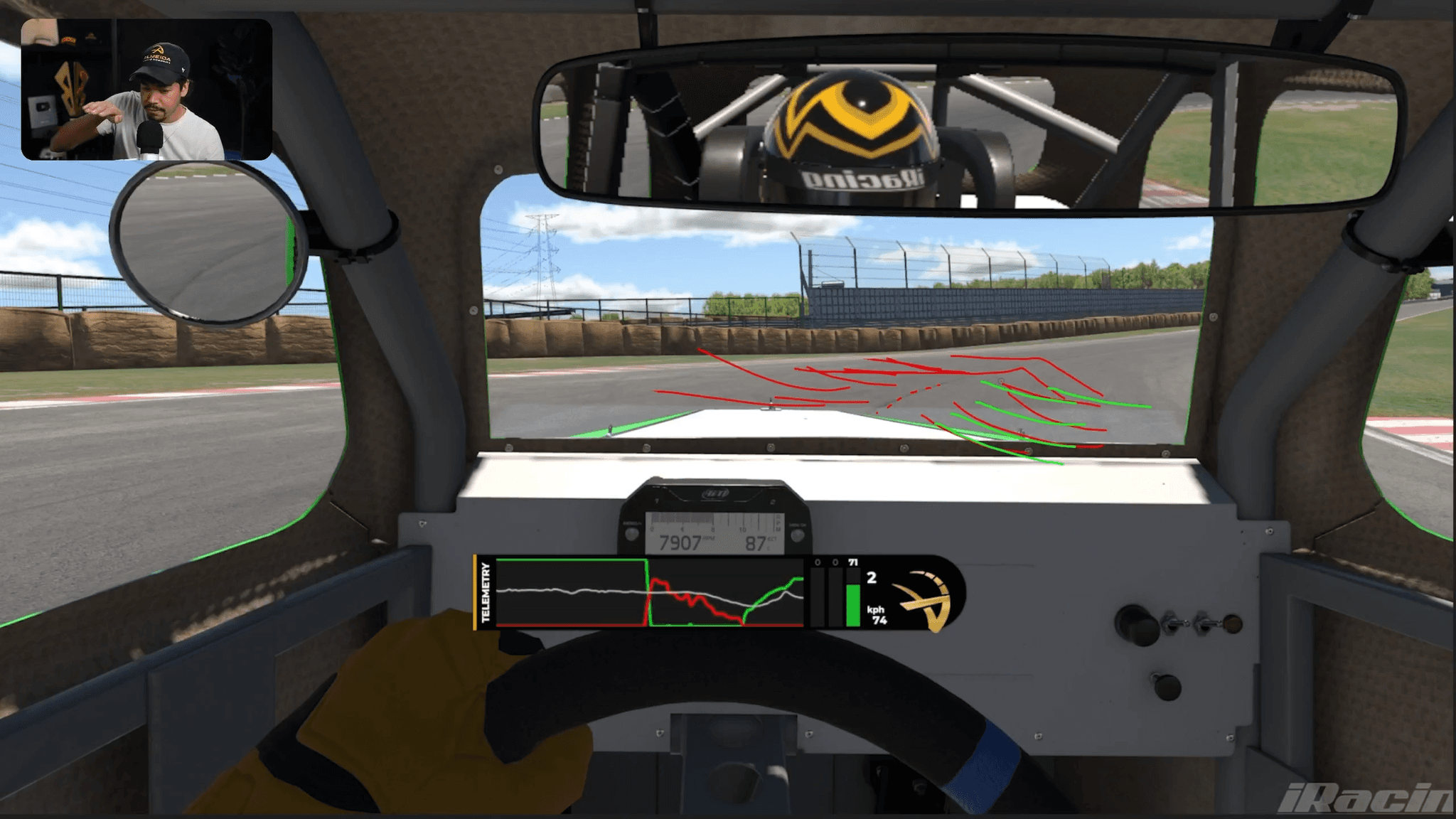
Inducing understeer gives you a feel of how much speed you need to be to get the understeer in the first place. You're going to break early, you're going to turn into the corner, and you're going to try to induce some understeer from here all the way to the exit in a very controlled way. You're going to accelerate a little bit 30, 40, 50% throttle and lots of steering that is going to help us find the limit at a slower speed. This is the most important thing.
When you're looking for the ideal line, you're actually going to break earlier. You're coming at high speed, you break earlier, and then when you get more or less to the middle of the corner, you're going to try to induce understeer pretty early. When you induce understeer, you're actually not accelerating at the apex, you're accelerating a little bit earlier. We're going to control more or less through the throttle a level of speed range that will get you some understeer.
This speed is definitely going to be a little bit lower than the actual ideal speed that we still don't know, but it's going to give us a reference. The minimum speed is not going to be that different, and we're going to have probably a slightly slower exit as well because we're not really getting as much grip from the tires.
Finding the Speed Range
The benefit of induce understeer is finding what this range even is. If you go too slow, you're going to try to induce understeer and the car will actually just keep turning more. Then you're going to have to correct the steering not to hit the inside too much or go to grass or something. If you're too slow, the understeer won't happen. Even if you accelerate 30, 40%, the understeer is not going to happen because the car is way too slow. That already gives you some information that if you want to get understeer properly, you need to carry at least a speed that is somewhat close to what will be the ideal.
This is an exercise that will give you a feel for the grip and give you information on how much speed you are going to eventually carry in a corner. That is the main use of understeer, getting you a little bit under the limit, the true limit, collective limit of maximum braking reference at the highest minimum speed while you're dancing with the car. Understeer will give you the first step so that you can at least have a peak of how much speed you're going to be eventually carrying.
The Physics Behind Understeer
The physics behind understeer are very simple. The front tires make a request. They try to rotate the car to a direction and the rear tires will react to that request. They will resist and try to have the car going straight. Through the pedal inputs, we're able to add more weight or less weight to the front tires.
If there's a little bit more weight to the front tires, they grab the track more. It's like they're holding on to the track more strongly and pulling the car with more force to the inside, which will request even more resistance from the rear tires. If there's too much grab on the front tires to the track and the rear tires can't resist that, then the car will turn way too much and the rear tires will keep going forwards causing oversteer.
Definition of Understeer
Understeer is pretty much the opposite. If there's not enough grip on the front tires and they make a request to turn the car, the rear tires will say, I refuse that request, we will go straighter than you think. That is where the car actually turns less than intended. You add a lot more steering. You expect 30 degrees of rotation per second, but the car gives you 20 degrees of rotation per second. This is the very definition of understeer.
Weight Transfer and Understeer
Understeer happens a little bit more easily when you shift weight back to the rear of the car by accelerating slightly. If you accelerate say 30, 40 percent, that will lift the front because all the weight will want to go to the back. Because of inertia, the weight going to the back plus gravity means that the whole car squats rearwards. The front tires lift and they lose that grip. They can't grab against the track. So instead of pulling the front tires biting the front tires towards the direction you want it to go, it will just slide forwards way more easily.
You can get a lot of understeers by asking for 100 degrees of rotation if you turn all the steering all the way and getting only like 15 degrees per second of rotation because you're requesting way too much, you're just sliding the front tires and they have no grab to the track. What we are going to do with this exercise is pretty much control that effect so that you gain an instinctive, intuitive understanding of it and you gain full control of it.
Future Applications
In the future, you can use this inducing understeer technique not only to test the limit of a tire but also to correct for oversteer. It's going to be very useful in the future. At a high level, you're going to use this concept many times per second. Literally, it's going to be part of your driving style. It's going to be what constitutes you dancing with the car when people see you driving super fast.
Different Types of Understeer
Understeer can happen in different ways. One is actually you literally just removing the weight from the front tires with half throttle but you can also get understeer if you ask for too much and add too much stress on the front tires. If you break too hard for example and you turn into a corner, you will lock the front tires and you will get something way worse than understeer. The car is literally going to go straight unless you have ABS. If you have ABS, it's still going to turn a little bit but it's going to feel exactly like understeer. You're going to try to turn the car and the car will just not go because you're abusing it and you're just overwhelming the tire and the tire is also going to give up.
For this exercise, what you should do is gently approach the understeer with half throttle which is the most predictable and most useful way we are going to use this effect.
How to Induce Understeer
The starting point is very simple: half throttle, lots of steering. This is the most extreme way, it's just the easy way for you to feel the understeer. If you can't do this at a track because you're still not able to control it, just go to the centripetal circuit in iRacing where you have no corners, just a parking lot, that's way easier to try it there and then make sure you try that at the track as well.
Key Guidelines:
No brakes, do the braking before turning
This exercise is going to be purely on throttle
Just feel the effect of lifting the front
Don't try to trail brake yet
This exercise is focused only on inducing an extreme version of understeer
Main Objective
The main objective of this exercise is to spend the most time in understeer until you're able to keep it until corner exit using all the track. To make sure that you truly understood and controlled this effect, start inducing understeer a little bit after you turn into the corner. It can be like halfway to the apex, but then maintain that understeer while doing the racing line. Maintain that understeer while going all the way to the outside of the track. It's not going to be super fast. Again, this is not about speed, it's about understanding of dynamics. Control the line of the car with your right foot while having the steering completely turned, just so you can understand more and more the effects of understeer.
Throttle Control for Line Adjustment
In the end, your throttle adjustments should determine the exit line. You start inducing understeer. If you want the car to go a little bit wider, you can just accelerate a little bit more from 30 to 40 to 50 to 60%. Just be careful when you're doing that with a very high horsepower car, because you don't want to get wheelspin. If you get wheelspin, then you're going to transform that understeer into a quick spin through the understeer snap oversteer effect. What we just want is half throttle, not abusing the rear tires, but rather abusing the front tires.
Progressive Application
Inducing understeer is an exercise. Do it in an extreme way first, and then you can do smaller and smaller amounts of it. This is the cool part of it: at first it looks silly, it looks ugly, it looks like it's not going to help you, but it's teaching you something and then you're going to actually make it smaller to a point where you can introduce it to an actual fast lap, to actual fast driving.
You can use it to test the grip a little bit, or you can use it to correct oversteer, or sometimes it's just a little bit faster, or maybe you just want to take care of the rear tires if you're doing it at a microscopic amount.
Consistency & Confidence
Balance & Speed
Cornering Precision
Mastery