Advanced Tips
Lesson
7
of
49

Fundamental Steering Technique and String Theory
The fundamental principle to understand about steering is that you should never combine peak steering with peak braking. This is one of the most common mistakes made by beginners. When panic sets in, drivers instinctively add both steering and braking simultaneously, which happens in 99% of cases at least once when beginning.
The Relationship Between Braking and Steering
If you're braking at peak braking pressure and you want to start turning into the corner, the braking pressure has to decrease as the steering input increases. When you want to turn, you must add steering while releasing the brakes proportionally. This prevents several dangerous scenarios:
Locking the tires
Inducing crazy oversteer and spinning the car
Preventing proper car rotation
Depending on the car, combining peak braking with peak steering can result in multiple problems. You can lock the tires and go straight, trigger ABS intervention and still go off track, lock the rear tires and spin, or simply oversteer and spin. Creating separation between braking and steering inputs is essential, and once this separation is established, everything else becomes more straightforward.
Transition Speed and Timing
The speed of steering application relative to the speed of brake release is an advanced topic that will be covered in higher levels. Questions about transition duration—whether it should be very fast with a quick drop in brakes and quick steering application, or very long with a slow brake release as you slowly add steering—depend on many scenarios. These details will be addressed in level two.
For now, the most important objective is to develop the muscle memory to never apply both inputs at peak levels simultaneously, and most importantly, never add both brakes and steering at the same time. Adding brakes and steering simultaneously is the worst mistake, causing the car to do the opposite of what you want.
The String Theory Concept
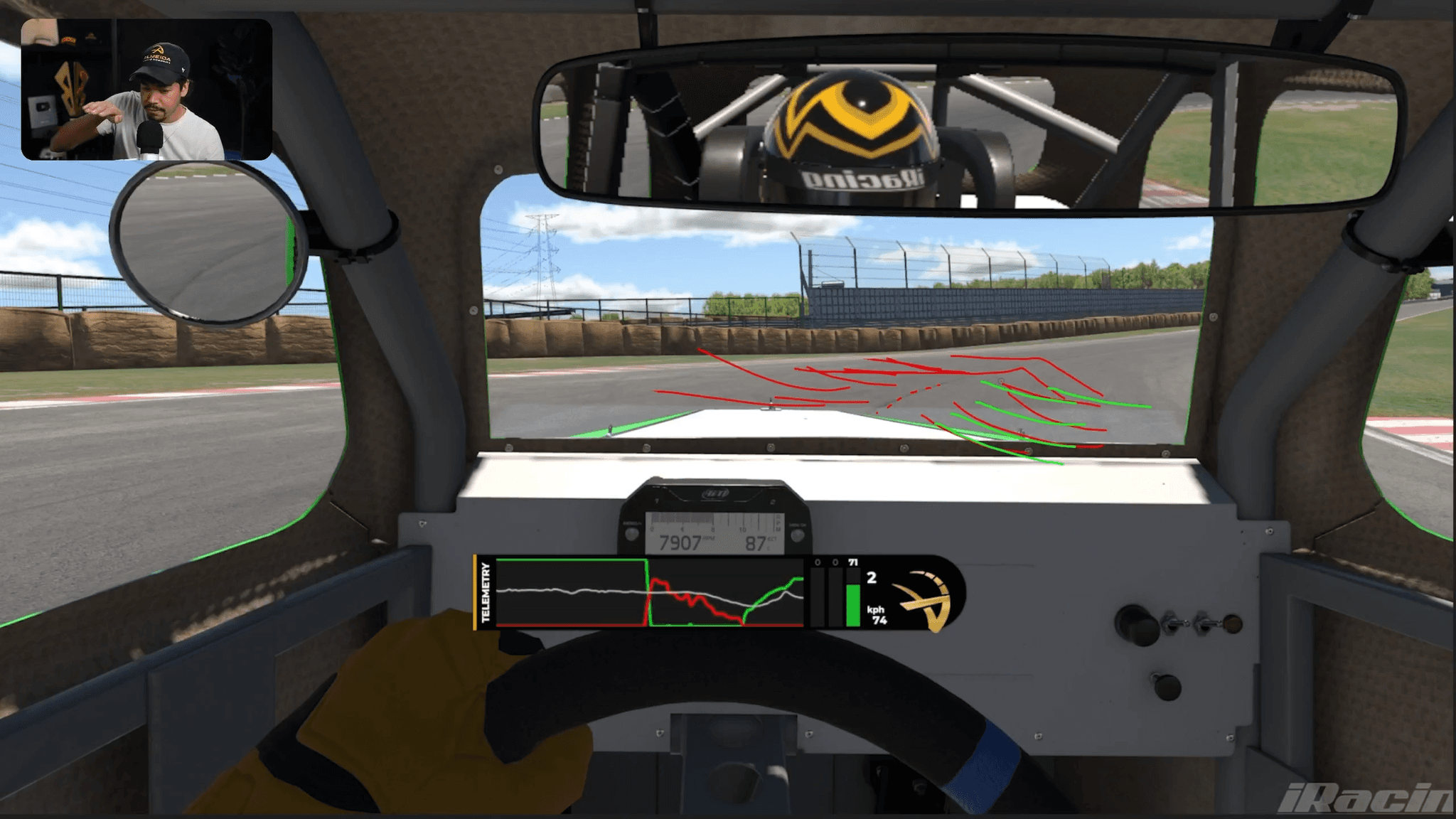
To help develop proper muscle memory, there's a concept called the string theory. This name has nothing to do with the actual scientific string theory—it's simply the idea that your steering and pedals are connected by an imaginary string. Picture a string connecting the steering wheel to the brake pedal. As you start turning the car into the corner, that imaginary string pulls the brakes up, creating a correlation between steering addition and brake release.
Practicing the String Theory
The string theory essentially describes the correlation between brake release and the addition of steering. When braking and then releasing the brakes, you add steering at the same rate. This can be practiced with different steering angles:
90 degrees of steering equals near-zero pedal pressure (or 1%)
180 degrees means turning the steering more for less brake release
By the time you reach lower brake pressure, you should have already turned the target steering angle
It's useful to practice this correlation to both sides, as different cars will have different ratios. The speed of this transition depends significantly on the car characteristics—high downforce cars require slightly faster transitions, low downforce cars slightly slower. Additional factors like V-shape versus U-shape corners will be covered in levels two, three, and four.
Critical Warnings
Never maintain full brake pressure while adding steering input. Even with ABS, this is a terrible habit. In cars without ABS, this will result in tire locking, and even with ABS, you'll experience significant understeer. Always perform the brake release according to your steering input.
Create this imaginary string connection in your muscle memory, as it will help you progressively improve over time. Be especially careful during panic situations when going too fast or when anything unexpected happens. It naturally feels like you need to add both steering and brakes simultaneously when panicking, but you must not cultivate this muscle memory. Avoid feeding this instinct over time, as it will severely hurt your driving performance in the long term.
Consistency & Confidence
Balance & Speed
Cornering Precision
Mastery