Lesson
Lesson
17
of
of
Weight Transfers
Mark as Finished

Lesson by
Suellio Almeida
Book Coach
In this lesson, we'll explore what weight transfer is and how to understand the relation between the pedals and the steering at a professional level. One of the most important dynamics in car racing is the relationship and interference between the steering and the pedals. You can turn the steering a lot and have the car not rotated at all, just understeer, or you can steer just a little bit and actually send the car into a spin. Beginners have a really hard time understanding weight transfer, where acceleration or deceleration will heavily influence the rotation of the car.
Understanding Weight Distribution
Let's imagine a car with 50% weight distribution between the front and rear axles compressed against the track equally. This balance is going to be true as long as the speed is constant and it doesn't matter if the car is moving or stopped. If the speed is constant, be it 0 or 50 or 100, the weight distribution is still 50%. Now let's assume this car slightly understeers at this state.
Weight Transfer During Braking
If you start breaking a little bit, inertia will shift the weight forward, just like when you're inside a bus and you're standing and then suddenly the driver breaks very quickly, you can feel your body moving forward very quickly. This is exactly how weight transfer works in a car, except that that transfer of weight happens with every part of the car's body itself.
Because everything wants to go forward, but gravity still pulls everything down, you combine the force of everything moving forward because the speed is decelerating plus the gravity pulling down and you combine those two forces and the weight is actually going to be more compressed on the front tires. So the front tires will receive more weight while the rear tires get unloaded, they lift a little bit.
Weight Transfer During Acceleration
If you start accelerating, inertia shifts the weight backwards. So the rear tires will receive more of that weight and the front tires will get unloaded, the front tires will get lifted.
How Weight Transfer Affects Rotation
When you turn the steering, the front tires initiate a rotation by pointing the front of the car first and the rear tires react by resisting or limiting that rotation. Now if the car is decelerating, the turning effectiveness of the front tires actually goes up making the car turn more and potentially even turn too much and oversteer. If the car is accelerating, the unloaded front tires will struggle to turn the car to rotate the car as much because the rear tires are holding most of that weight and the rear tires always want to go straight. So they will resist that rotation requested by the front tires.
Common Beginner Mistakes
A lot of beginners spin and crash just because they're unintentionally shifting the weight forward and inducing oversteer by accident by breaking or lifting wall turning, especially when they enter a corner a little bit too fast. You enter the corner, you're like, oh my god, I'm a little bit too fast. Let me add a little bit of brakes while those brakes are precisely what makes the car rotate even a little bit too much and oversteer.
Deceleration will bring extra rotation to the car whether you want it or not. So if you break wall turning, the rotation will increase. If you accelerate slightly wall turning, you lift the front tires and it will get less rotation. The rotation will decrease and this is why during trail braking, you need very relaxed hands to handle the oversteer tendency and make the micro corrections that you need to make sure that the car is rotating as much as possible without going over and rotating excessively.
Practicing Weight Transfer
These effects of rotation or less rotation through the pedals are way easier to understand when you have a little bit of braking and a little bit of throttle because too much brake pedal or too much throttle can cause the opposite effects because you might lock the tires or you get wheel spent if you go 100% throttle on a car with a lot of power.
If you want to feel that effect of weight transfer in the corner, you can go to the centripetal circuit and you can try that with just a little bit of braking and just a little bit of throttle and just a little bit of steering. Do all those things in a subtle way because if you do too much steering, too much throttle, too much brakes, then you're going to get other effects interfering with your training experience of those effects.
Adjusting to Different Cars
Remember that the balance between oversteer and understeer depends always on the setup and nature of the car. So you always have to adjust your inputs to get the effect that you want. Some cars will make it very, very easy. With a little bit of brakes, you're already get a lot of rotation and some understeer cars like say the Porsche Cup will require a little bit more trail braking to get that rotation that you want. So you always have to adjust specifically for the car that you're driving and even for the setup that you're driving.
Pedals as a Compensating Force
Your pedal inputs in the end become a compensating force. Depending on the car, you might need more weight on the front to compensate for the car being super lazy or you can shift more weight to the rear or brake less or throttle a little bit earlier if the car rotates a little bit too much and you need to control that balance through the pedals.
Advanced Micro Adjustments
At a more advanced level, you can actually do micro adjustments in the weight transfer in smaller sizes and sometimes all within the braking or all within the throttle application. For example, if we're breaking like this and we realize that the car is a little bit too oversteer, you can actually shift the weight back to the rear, not by accelerating but by just releasing the brakes a little bit more quickly. This is one of the ways that you can actually induce understeer just by releasing more quickly. Yes, the weight is still a little bit more to the front tires but way less than before. So this shift here pretty much will feel like you accelerating a little bit.
Lift Off Oversteer
At the same time, if you're doing a corner flat and you lift, this will also have the effect of shifting the weight back to the rear. You don't have to start braking to feel the weight transfer and to get more rotation sometimes, just lifting the throttle is already enough. That's why we have something we call lift off oversteer, which is when you start releasing and you get oversteer because you lift it, which is a very dangerous thing for beginners in real life because they are afraid of going fast in a corner. They end up lifting but the lifting itself is what causes the danger, is what causes the oversteer. So the fear becomes a self-fulfilling prophecy and that's why sometimes the coach has to scream on the passenger seat. Stay on power, stay on power, don't fully lift because fully lifting is actually shifting weight to the front tires and getting more rotation, even if the student doesn't want to.
High-Level Corrections
At a very high level, you can actually make a lot of adjustments and you can make the car correct a little bit for oversteer and then get back at it and then correct again and then finally get back on power and then make a little adjustment and then power again and so on. So these corrections, although not ideal, they are going to help you make adjustments on the balance of the car because of weight transfer as well. We're going to talk about this in more detail at the mastery level four course.
Visualizing Car Personalities
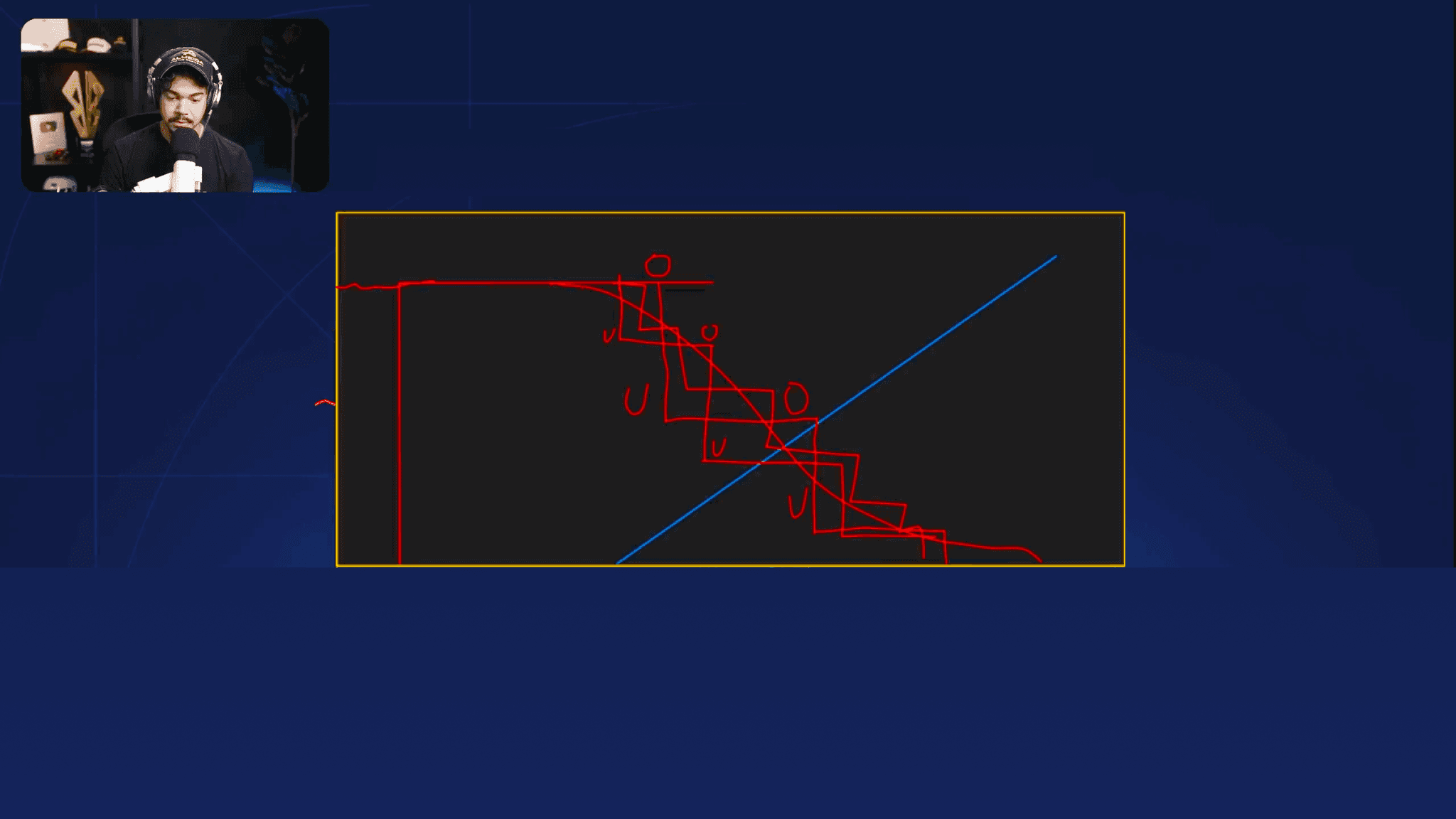
This is a very useful way of visualizing how different cars have kind of different personalities and you need to adjust for that personality with your pedals to keep the car neutral. For example, this is a car that is very over steering. It's a car that requires you to be a little bit on power to be at the neutral state. The blue line here is what would be the neutral state. Anything over that in terms of pedals will make the car oversteer. Anything under that will make the car understeer.
Understeer Cars
This here would be an understeer car. That means you really need to be on the brakes to make it rotate well and if you're just coasting, coasting would be this middle here. Zero percent pedals would be this. It makes the car understeer because the line where the car gets a good amount of neutral rotation is above and you would need to break a little bit more to reach that line.
Oversteer Cars
If the car is oversteer, again, let's say the car is very oversteer, right? Even if you're accelerating 30% mid-corner while rotating the car is loose. Well, that's why we have this graph representing that you need to compensate for that natural balance with your pedals. Understeer car requires you to have some more weight mid-corner. Oversteer car requires you to have a little bit of throttle and very neutral car would allow you to coast for a while.
But again, coasting just mid-corner. You still need to trail brake because you can brake later because you can build a better line and you can get a better exit after that.
In this lesson, we'll explore what weight transfer is and how to understand the relation between the pedals and the steering at a professional level. One of the most important dynamics in car racing is the relationship and interference between the steering and the pedals. You can turn the steering a lot and have the car not rotated at all, just understeer, or you can steer just a little bit and actually send the car into a spin. Beginners have a really hard time understanding weight transfer, where acceleration or deceleration will heavily influence the rotation of the car.
Understanding Weight Distribution
Let's imagine a car with 50% weight distribution between the front and rear axles compressed against the track equally. This balance is going to be true as long as the speed is constant and it doesn't matter if the car is moving or stopped. If the speed is constant, be it 0 or 50 or 100, the weight distribution is still 50%. Now let's assume this car slightly understeers at this state.
Weight Transfer During Braking
If you start breaking a little bit, inertia will shift the weight forward, just like when you're inside a bus and you're standing and then suddenly the driver breaks very quickly, you can feel your body moving forward very quickly. This is exactly how weight transfer works in a car, except that that transfer of weight happens with every part of the car's body itself.
Because everything wants to go forward, but gravity still pulls everything down, you combine the force of everything moving forward because the speed is decelerating plus the gravity pulling down and you combine those two forces and the weight is actually going to be more compressed on the front tires. So the front tires will receive more weight while the rear tires get unloaded, they lift a little bit.
Weight Transfer During Acceleration
If you start accelerating, inertia shifts the weight backwards. So the rear tires will receive more of that weight and the front tires will get unloaded, the front tires will get lifted.
How Weight Transfer Affects Rotation
When you turn the steering, the front tires initiate a rotation by pointing the front of the car first and the rear tires react by resisting or limiting that rotation. Now if the car is decelerating, the turning effectiveness of the front tires actually goes up making the car turn more and potentially even turn too much and oversteer. If the car is accelerating, the unloaded front tires will struggle to turn the car to rotate the car as much because the rear tires are holding most of that weight and the rear tires always want to go straight. So they will resist that rotation requested by the front tires.
Common Beginner Mistakes
A lot of beginners spin and crash just because they're unintentionally shifting the weight forward and inducing oversteer by accident by breaking or lifting wall turning, especially when they enter a corner a little bit too fast. You enter the corner, you're like, oh my god, I'm a little bit too fast. Let me add a little bit of brakes while those brakes are precisely what makes the car rotate even a little bit too much and oversteer.
Deceleration will bring extra rotation to the car whether you want it or not. So if you break wall turning, the rotation will increase. If you accelerate slightly wall turning, you lift the front tires and it will get less rotation. The rotation will decrease and this is why during trail braking, you need very relaxed hands to handle the oversteer tendency and make the micro corrections that you need to make sure that the car is rotating as much as possible without going over and rotating excessively.
Practicing Weight Transfer
These effects of rotation or less rotation through the pedals are way easier to understand when you have a little bit of braking and a little bit of throttle because too much brake pedal or too much throttle can cause the opposite effects because you might lock the tires or you get wheel spent if you go 100% throttle on a car with a lot of power.
If you want to feel that effect of weight transfer in the corner, you can go to the centripetal circuit and you can try that with just a little bit of braking and just a little bit of throttle and just a little bit of steering. Do all those things in a subtle way because if you do too much steering, too much throttle, too much brakes, then you're going to get other effects interfering with your training experience of those effects.
Adjusting to Different Cars
Remember that the balance between oversteer and understeer depends always on the setup and nature of the car. So you always have to adjust your inputs to get the effect that you want. Some cars will make it very, very easy. With a little bit of brakes, you're already get a lot of rotation and some understeer cars like say the Porsche Cup will require a little bit more trail braking to get that rotation that you want. So you always have to adjust specifically for the car that you're driving and even for the setup that you're driving.
Pedals as a Compensating Force
Your pedal inputs in the end become a compensating force. Depending on the car, you might need more weight on the front to compensate for the car being super lazy or you can shift more weight to the rear or brake less or throttle a little bit earlier if the car rotates a little bit too much and you need to control that balance through the pedals.
Advanced Micro Adjustments
At a more advanced level, you can actually do micro adjustments in the weight transfer in smaller sizes and sometimes all within the braking or all within the throttle application. For example, if we're breaking like this and we realize that the car is a little bit too oversteer, you can actually shift the weight back to the rear, not by accelerating but by just releasing the brakes a little bit more quickly. This is one of the ways that you can actually induce understeer just by releasing more quickly. Yes, the weight is still a little bit more to the front tires but way less than before. So this shift here pretty much will feel like you accelerating a little bit.
Lift Off Oversteer
At the same time, if you're doing a corner flat and you lift, this will also have the effect of shifting the weight back to the rear. You don't have to start braking to feel the weight transfer and to get more rotation sometimes, just lifting the throttle is already enough. That's why we have something we call lift off oversteer, which is when you start releasing and you get oversteer because you lift it, which is a very dangerous thing for beginners in real life because they are afraid of going fast in a corner. They end up lifting but the lifting itself is what causes the danger, is what causes the oversteer. So the fear becomes a self-fulfilling prophecy and that's why sometimes the coach has to scream on the passenger seat. Stay on power, stay on power, don't fully lift because fully lifting is actually shifting weight to the front tires and getting more rotation, even if the student doesn't want to.
High-Level Corrections
At a very high level, you can actually make a lot of adjustments and you can make the car correct a little bit for oversteer and then get back at it and then correct again and then finally get back on power and then make a little adjustment and then power again and so on. So these corrections, although not ideal, they are going to help you make adjustments on the balance of the car because of weight transfer as well. We're going to talk about this in more detail at the mastery level four course.
Visualizing Car Personalities
This is a very useful way of visualizing how different cars have kind of different personalities and you need to adjust for that personality with your pedals to keep the car neutral. For example, this is a car that is very over steering. It's a car that requires you to be a little bit on power to be at the neutral state. The blue line here is what would be the neutral state. Anything over that in terms of pedals will make the car oversteer. Anything under that will make the car understeer.
Understeer Cars
This here would be an understeer car. That means you really need to be on the brakes to make it rotate well and if you're just coasting, coasting would be this middle here. Zero percent pedals would be this. It makes the car understeer because the line where the car gets a good amount of neutral rotation is above and you would need to break a little bit more to reach that line.
Oversteer Cars
If the car is oversteer, again, let's say the car is very oversteer, right? Even if you're accelerating 30% mid-corner while rotating the car is loose. Well, that's why we have this graph representing that you need to compensate for that natural balance with your pedals. Understeer car requires you to have some more weight mid-corner. Oversteer car requires you to have a little bit of throttle and very neutral car would allow you to coast for a while.
But again, coasting just mid-corner. You still need to trail brake because you can brake later because you can build a better line and you can get a better exit after that.
In this lesson, we'll explore what weight transfer is and how to understand the relation between the pedals and the steering at a professional level. One of the most important dynamics in car racing is the relationship and interference between the steering and the pedals. You can turn the steering a lot and have the car not rotated at all, just understeer, or you can steer just a little bit and actually send the car into a spin. Beginners have a really hard time understanding weight transfer, where acceleration or deceleration will heavily influence the rotation of the car.
Understanding Weight Distribution
Let's imagine a car with 50% weight distribution between the front and rear axles compressed against the track equally. This balance is going to be true as long as the speed is constant and it doesn't matter if the car is moving or stopped. If the speed is constant, be it 0 or 50 or 100, the weight distribution is still 50%. Now let's assume this car slightly understeers at this state.
Weight Transfer During Braking
If you start breaking a little bit, inertia will shift the weight forward, just like when you're inside a bus and you're standing and then suddenly the driver breaks very quickly, you can feel your body moving forward very quickly. This is exactly how weight transfer works in a car, except that that transfer of weight happens with every part of the car's body itself.
Because everything wants to go forward, but gravity still pulls everything down, you combine the force of everything moving forward because the speed is decelerating plus the gravity pulling down and you combine those two forces and the weight is actually going to be more compressed on the front tires. So the front tires will receive more weight while the rear tires get unloaded, they lift a little bit.
Weight Transfer During Acceleration
If you start accelerating, inertia shifts the weight backwards. So the rear tires will receive more of that weight and the front tires will get unloaded, the front tires will get lifted.
How Weight Transfer Affects Rotation
When you turn the steering, the front tires initiate a rotation by pointing the front of the car first and the rear tires react by resisting or limiting that rotation. Now if the car is decelerating, the turning effectiveness of the front tires actually goes up making the car turn more and potentially even turn too much and oversteer. If the car is accelerating, the unloaded front tires will struggle to turn the car to rotate the car as much because the rear tires are holding most of that weight and the rear tires always want to go straight. So they will resist that rotation requested by the front tires.
Common Beginner Mistakes
A lot of beginners spin and crash just because they're unintentionally shifting the weight forward and inducing oversteer by accident by breaking or lifting wall turning, especially when they enter a corner a little bit too fast. You enter the corner, you're like, oh my god, I'm a little bit too fast. Let me add a little bit of brakes while those brakes are precisely what makes the car rotate even a little bit too much and oversteer.
Deceleration will bring extra rotation to the car whether you want it or not. So if you break wall turning, the rotation will increase. If you accelerate slightly wall turning, you lift the front tires and it will get less rotation. The rotation will decrease and this is why during trail braking, you need very relaxed hands to handle the oversteer tendency and make the micro corrections that you need to make sure that the car is rotating as much as possible without going over and rotating excessively.
Practicing Weight Transfer
These effects of rotation or less rotation through the pedals are way easier to understand when you have a little bit of braking and a little bit of throttle because too much brake pedal or too much throttle can cause the opposite effects because you might lock the tires or you get wheel spent if you go 100% throttle on a car with a lot of power.
If you want to feel that effect of weight transfer in the corner, you can go to the centripetal circuit and you can try that with just a little bit of braking and just a little bit of throttle and just a little bit of steering. Do all those things in a subtle way because if you do too much steering, too much throttle, too much brakes, then you're going to get other effects interfering with your training experience of those effects.
Adjusting to Different Cars
Remember that the balance between oversteer and understeer depends always on the setup and nature of the car. So you always have to adjust your inputs to get the effect that you want. Some cars will make it very, very easy. With a little bit of brakes, you're already get a lot of rotation and some understeer cars like say the Porsche Cup will require a little bit more trail braking to get that rotation that you want. So you always have to adjust specifically for the car that you're driving and even for the setup that you're driving.
Pedals as a Compensating Force
Your pedal inputs in the end become a compensating force. Depending on the car, you might need more weight on the front to compensate for the car being super lazy or you can shift more weight to the rear or brake less or throttle a little bit earlier if the car rotates a little bit too much and you need to control that balance through the pedals.
Advanced Micro Adjustments
At a more advanced level, you can actually do micro adjustments in the weight transfer in smaller sizes and sometimes all within the braking or all within the throttle application. For example, if we're breaking like this and we realize that the car is a little bit too oversteer, you can actually shift the weight back to the rear, not by accelerating but by just releasing the brakes a little bit more quickly. This is one of the ways that you can actually induce understeer just by releasing more quickly. Yes, the weight is still a little bit more to the front tires but way less than before. So this shift here pretty much will feel like you accelerating a little bit.
Lift Off Oversteer
At the same time, if you're doing a corner flat and you lift, this will also have the effect of shifting the weight back to the rear. You don't have to start braking to feel the weight transfer and to get more rotation sometimes, just lifting the throttle is already enough. That's why we have something we call lift off oversteer, which is when you start releasing and you get oversteer because you lift it, which is a very dangerous thing for beginners in real life because they are afraid of going fast in a corner. They end up lifting but the lifting itself is what causes the danger, is what causes the oversteer. So the fear becomes a self-fulfilling prophecy and that's why sometimes the coach has to scream on the passenger seat. Stay on power, stay on power, don't fully lift because fully lifting is actually shifting weight to the front tires and getting more rotation, even if the student doesn't want to.
High-Level Corrections
At a very high level, you can actually make a lot of adjustments and you can make the car correct a little bit for oversteer and then get back at it and then correct again and then finally get back on power and then make a little adjustment and then power again and so on. So these corrections, although not ideal, they are going to help you make adjustments on the balance of the car because of weight transfer as well. We're going to talk about this in more detail at the mastery level four course.
Visualizing Car Personalities
This is a very useful way of visualizing how different cars have kind of different personalities and you need to adjust for that personality with your pedals to keep the car neutral. For example, this is a car that is very over steering. It's a car that requires you to be a little bit on power to be at the neutral state. The blue line here is what would be the neutral state. Anything over that in terms of pedals will make the car oversteer. Anything under that will make the car understeer.
Understeer Cars
This here would be an understeer car. That means you really need to be on the brakes to make it rotate well and if you're just coasting, coasting would be this middle here. Zero percent pedals would be this. It makes the car understeer because the line where the car gets a good amount of neutral rotation is above and you would need to break a little bit more to reach that line.
Oversteer Cars
If the car is oversteer, again, let's say the car is very oversteer, right? Even if you're accelerating 30% mid-corner while rotating the car is loose. Well, that's why we have this graph representing that you need to compensate for that natural balance with your pedals. Understeer car requires you to have some more weight mid-corner. Oversteer car requires you to have a little bit of throttle and very neutral car would allow you to coast for a while.
But again, coasting just mid-corner. You still need to trail brake because you can brake later because you can build a better line and you can get a better exit after that.
In this lesson, we'll explore what weight transfer is and how to understand the relation between the pedals and the steering at a professional level. One of the most important dynamics in car racing is the relationship and interference between the steering and the pedals. You can turn the steering a lot and have the car not rotated at all, just understeer, or you can steer just a little bit and actually send the car into a spin. Beginners have a really hard time understanding weight transfer, where acceleration or deceleration will heavily influence the rotation of the car.
Understanding Weight Distribution
Let's imagine a car with 50% weight distribution between the front and rear axles compressed against the track equally. This balance is going to be true as long as the speed is constant and it doesn't matter if the car is moving or stopped. If the speed is constant, be it 0 or 50 or 100, the weight distribution is still 50%. Now let's assume this car slightly understeers at this state.
Weight Transfer During Braking
If you start breaking a little bit, inertia will shift the weight forward, just like when you're inside a bus and you're standing and then suddenly the driver breaks very quickly, you can feel your body moving forward very quickly. This is exactly how weight transfer works in a car, except that that transfer of weight happens with every part of the car's body itself.
Because everything wants to go forward, but gravity still pulls everything down, you combine the force of everything moving forward because the speed is decelerating plus the gravity pulling down and you combine those two forces and the weight is actually going to be more compressed on the front tires. So the front tires will receive more weight while the rear tires get unloaded, they lift a little bit.
Weight Transfer During Acceleration
If you start accelerating, inertia shifts the weight backwards. So the rear tires will receive more of that weight and the front tires will get unloaded, the front tires will get lifted.
How Weight Transfer Affects Rotation
When you turn the steering, the front tires initiate a rotation by pointing the front of the car first and the rear tires react by resisting or limiting that rotation. Now if the car is decelerating, the turning effectiveness of the front tires actually goes up making the car turn more and potentially even turn too much and oversteer. If the car is accelerating, the unloaded front tires will struggle to turn the car to rotate the car as much because the rear tires are holding most of that weight and the rear tires always want to go straight. So they will resist that rotation requested by the front tires.
Common Beginner Mistakes
A lot of beginners spin and crash just because they're unintentionally shifting the weight forward and inducing oversteer by accident by breaking or lifting wall turning, especially when they enter a corner a little bit too fast. You enter the corner, you're like, oh my god, I'm a little bit too fast. Let me add a little bit of brakes while those brakes are precisely what makes the car rotate even a little bit too much and oversteer.
Deceleration will bring extra rotation to the car whether you want it or not. So if you break wall turning, the rotation will increase. If you accelerate slightly wall turning, you lift the front tires and it will get less rotation. The rotation will decrease and this is why during trail braking, you need very relaxed hands to handle the oversteer tendency and make the micro corrections that you need to make sure that the car is rotating as much as possible without going over and rotating excessively.
Practicing Weight Transfer
These effects of rotation or less rotation through the pedals are way easier to understand when you have a little bit of braking and a little bit of throttle because too much brake pedal or too much throttle can cause the opposite effects because you might lock the tires or you get wheel spent if you go 100% throttle on a car with a lot of power.
If you want to feel that effect of weight transfer in the corner, you can go to the centripetal circuit and you can try that with just a little bit of braking and just a little bit of throttle and just a little bit of steering. Do all those things in a subtle way because if you do too much steering, too much throttle, too much brakes, then you're going to get other effects interfering with your training experience of those effects.
Adjusting to Different Cars
Remember that the balance between oversteer and understeer depends always on the setup and nature of the car. So you always have to adjust your inputs to get the effect that you want. Some cars will make it very, very easy. With a little bit of brakes, you're already get a lot of rotation and some understeer cars like say the Porsche Cup will require a little bit more trail braking to get that rotation that you want. So you always have to adjust specifically for the car that you're driving and even for the setup that you're driving.
Pedals as a Compensating Force
Your pedal inputs in the end become a compensating force. Depending on the car, you might need more weight on the front to compensate for the car being super lazy or you can shift more weight to the rear or brake less or throttle a little bit earlier if the car rotates a little bit too much and you need to control that balance through the pedals.
Advanced Micro Adjustments
At a more advanced level, you can actually do micro adjustments in the weight transfer in smaller sizes and sometimes all within the braking or all within the throttle application. For example, if we're breaking like this and we realize that the car is a little bit too oversteer, you can actually shift the weight back to the rear, not by accelerating but by just releasing the brakes a little bit more quickly. This is one of the ways that you can actually induce understeer just by releasing more quickly. Yes, the weight is still a little bit more to the front tires but way less than before. So this shift here pretty much will feel like you accelerating a little bit.
Lift Off Oversteer
At the same time, if you're doing a corner flat and you lift, this will also have the effect of shifting the weight back to the rear. You don't have to start braking to feel the weight transfer and to get more rotation sometimes, just lifting the throttle is already enough. That's why we have something we call lift off oversteer, which is when you start releasing and you get oversteer because you lift it, which is a very dangerous thing for beginners in real life because they are afraid of going fast in a corner. They end up lifting but the lifting itself is what causes the danger, is what causes the oversteer. So the fear becomes a self-fulfilling prophecy and that's why sometimes the coach has to scream on the passenger seat. Stay on power, stay on power, don't fully lift because fully lifting is actually shifting weight to the front tires and getting more rotation, even if the student doesn't want to.
High-Level Corrections
At a very high level, you can actually make a lot of adjustments and you can make the car correct a little bit for oversteer and then get back at it and then correct again and then finally get back on power and then make a little adjustment and then power again and so on. So these corrections, although not ideal, they are going to help you make adjustments on the balance of the car because of weight transfer as well. We're going to talk about this in more detail at the mastery level four course.
Visualizing Car Personalities
This is a very useful way of visualizing how different cars have kind of different personalities and you need to adjust for that personality with your pedals to keep the car neutral. For example, this is a car that is very over steering. It's a car that requires you to be a little bit on power to be at the neutral state. The blue line here is what would be the neutral state. Anything over that in terms of pedals will make the car oversteer. Anything under that will make the car understeer.
Understeer Cars
This here would be an understeer car. That means you really need to be on the brakes to make it rotate well and if you're just coasting, coasting would be this middle here. Zero percent pedals would be this. It makes the car understeer because the line where the car gets a good amount of neutral rotation is above and you would need to break a little bit more to reach that line.
Oversteer Cars
If the car is oversteer, again, let's say the car is very oversteer, right? Even if you're accelerating 30% mid-corner while rotating the car is loose. Well, that's why we have this graph representing that you need to compensate for that natural balance with your pedals. Understeer car requires you to have some more weight mid-corner. Oversteer car requires you to have a little bit of throttle and very neutral car would allow you to coast for a while.
But again, coasting just mid-corner. You still need to trail brake because you can brake later because you can build a better line and you can get a better exit after that.
Consistency & Confidence
Balance & Speed
Cornering Precision
Mastery
Other Lessons