Active vs Passive Countersteer
Lesson
24
of
49

Lesson by
Suellio Almeida
Lesson by
Suellio Almeida
Mark as Finished
Let's talk about active and passive counter steer. We're going to create a distinction between both, and examine examples of each, along with which one you should use the most.
Passive Counter Steer
Passive counter steer is physics—it's basically the self-centering force of the front tires. It will happen naturally. As discussed in steering concepts, the front tires will always try to point themselves to the direction they are going. So if the car is going straight, the front tires want to go straight. If the car is sliding 45 degrees, the front tires want to turn themselves 45 degrees. This force is always going to be there.
Cars with a lot of power steering kind of numb this feeling out, and you end up not being able to feel it that much. That's why many racing drivers don't like a lot of power steering—because they want to feel the front tires actually doing things and forcing the steering for them, because that's a very important way to communicate with the car.
Characteristics of Passive Counter Steer
The passive counter steer has no delay. It happens immediately, because it's pure physics. As soon as you start turning, the front tires create a force against the track, and then they try to force themselves back, and they're transmitting that force through every part of the car to the shaft until you're steering. So you are pretty much going to feel those forces immediately with no delay.
We can always say that passive counter steer is basically the car trying to fix its own slide immediately.
Active Counter Steer
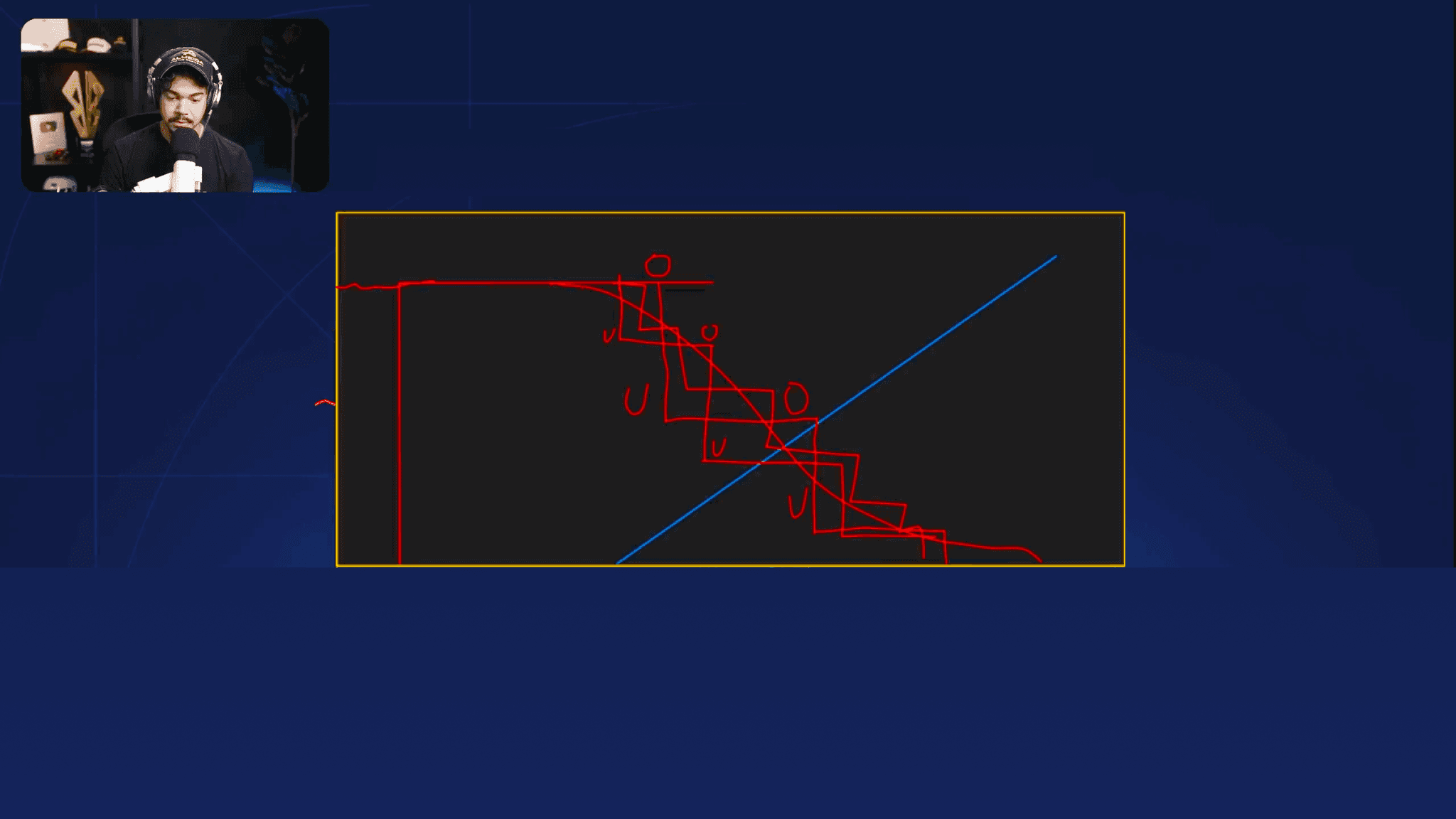
Active counter steer is human counter steer—it's when you are actively pulling the steering to the other side to correct for a slide. And there is a problem: humans are very slow.
Human Reaction Time Limitations
Humans have at least 200 milliseconds of reaction time, and that's only if you're expecting it. If you're not expecting it, then your reaction time is going to be way higher than 200 milliseconds, because reaction times have two types:
If you're expecting something to happen, then your reaction time to it is going to be very, very good
If something is a surprise, then by the time you understand what's happening in your brain until you decide to do something about it, until you do something about it, it's going to be many times longer than you just waiting for the red lights to go green before a race starts
The surprise scenario is totally different because you're not expecting it. There's a lot more steps before you do something about it.
When to Use Active Counter Steer
The active counter steer is going to be very useful when there is not enough passive counter steer. That's pretty much it. You can only use it if the passive counter steer is not enough.
So if the car has a lot of power steering and the steering is extremely light and it doesn't correct anything for you, or if you have a G29 or any steering wheel with only two Newton meters of force, you will still have to do a lot of active counter steer. But as soon as you get a wheel that is like four Newton meters or more, then you can already start relying on passive counter steer.
Understanding Fast Corrections
Every time you see someone doing a very, very fast correction, maybe it's not their reaction times at all. It's just them letting the passive counter steer do its thing.
Let's talk about active and passive counter steer. We're going to create a distinction between both, and examine examples of each, along with which one you should use the most.
Passive Counter Steer
Passive counter steer is physics—it's basically the self-centering force of the front tires. It will happen naturally. As discussed in steering concepts, the front tires will always try to point themselves to the direction they are going. So if the car is going straight, the front tires want to go straight. If the car is sliding 45 degrees, the front tires want to turn themselves 45 degrees. This force is always going to be there.
Cars with a lot of power steering kind of numb this feeling out, and you end up not being able to feel it that much. That's why many racing drivers don't like a lot of power steering—because they want to feel the front tires actually doing things and forcing the steering for them, because that's a very important way to communicate with the car.
Characteristics of Passive Counter Steer
The passive counter steer has no delay. It happens immediately, because it's pure physics. As soon as you start turning, the front tires create a force against the track, and then they try to force themselves back, and they're transmitting that force through every part of the car to the shaft until you're steering. So you are pretty much going to feel those forces immediately with no delay.
We can always say that passive counter steer is basically the car trying to fix its own slide immediately.
Active Counter Steer
Active counter steer is human counter steer—it's when you are actively pulling the steering to the other side to correct for a slide. And there is a problem: humans are very slow.
Human Reaction Time Limitations
Humans have at least 200 milliseconds of reaction time, and that's only if you're expecting it. If you're not expecting it, then your reaction time is going to be way higher than 200 milliseconds, because reaction times have two types:
If you're expecting something to happen, then your reaction time to it is going to be very, very good
If something is a surprise, then by the time you understand what's happening in your brain until you decide to do something about it, until you do something about it, it's going to be many times longer than you just waiting for the red lights to go green before a race starts
The surprise scenario is totally different because you're not expecting it. There's a lot more steps before you do something about it.
When to Use Active Counter Steer
The active counter steer is going to be very useful when there is not enough passive counter steer. That's pretty much it. You can only use it if the passive counter steer is not enough.
So if the car has a lot of power steering and the steering is extremely light and it doesn't correct anything for you, or if you have a G29 or any steering wheel with only two Newton meters of force, you will still have to do a lot of active counter steer. But as soon as you get a wheel that is like four Newton meters or more, then you can already start relying on passive counter steer.
Understanding Fast Corrections
Every time you see someone doing a very, very fast correction, maybe it's not their reaction times at all. It's just them letting the passive counter steer do its thing.
Let's talk about active and passive counter steer. We're going to create a distinction between both, and examine examples of each, along with which one you should use the most.
Passive Counter Steer
Passive counter steer is physics—it's basically the self-centering force of the front tires. It will happen naturally. As discussed in steering concepts, the front tires will always try to point themselves to the direction they are going. So if the car is going straight, the front tires want to go straight. If the car is sliding 45 degrees, the front tires want to turn themselves 45 degrees. This force is always going to be there.
Cars with a lot of power steering kind of numb this feeling out, and you end up not being able to feel it that much. That's why many racing drivers don't like a lot of power steering—because they want to feel the front tires actually doing things and forcing the steering for them, because that's a very important way to communicate with the car.
Characteristics of Passive Counter Steer
The passive counter steer has no delay. It happens immediately, because it's pure physics. As soon as you start turning, the front tires create a force against the track, and then they try to force themselves back, and they're transmitting that force through every part of the car to the shaft until you're steering. So you are pretty much going to feel those forces immediately with no delay.
We can always say that passive counter steer is basically the car trying to fix its own slide immediately.
Active Counter Steer
Active counter steer is human counter steer—it's when you are actively pulling the steering to the other side to correct for a slide. And there is a problem: humans are very slow.
Human Reaction Time Limitations
Humans have at least 200 milliseconds of reaction time, and that's only if you're expecting it. If you're not expecting it, then your reaction time is going to be way higher than 200 milliseconds, because reaction times have two types:
If you're expecting something to happen, then your reaction time to it is going to be very, very good
If something is a surprise, then by the time you understand what's happening in your brain until you decide to do something about it, until you do something about it, it's going to be many times longer than you just waiting for the red lights to go green before a race starts
The surprise scenario is totally different because you're not expecting it. There's a lot more steps before you do something about it.
When to Use Active Counter Steer
The active counter steer is going to be very useful when there is not enough passive counter steer. That's pretty much it. You can only use it if the passive counter steer is not enough.
So if the car has a lot of power steering and the steering is extremely light and it doesn't correct anything for you, or if you have a G29 or any steering wheel with only two Newton meters of force, you will still have to do a lot of active counter steer. But as soon as you get a wheel that is like four Newton meters or more, then you can already start relying on passive counter steer.
Understanding Fast Corrections
Every time you see someone doing a very, very fast correction, maybe it's not their reaction times at all. It's just them letting the passive counter steer do its thing.
Consistency & Confidence
Balance & Speed
Cornering Precision
Mastery
Other Lessons