String Theory
Lesson
21
of
49

Lesson by
Suellio Almeida
Lesson by
Suellio Almeida
Mark as Finished
Advanced String Theory Concepts
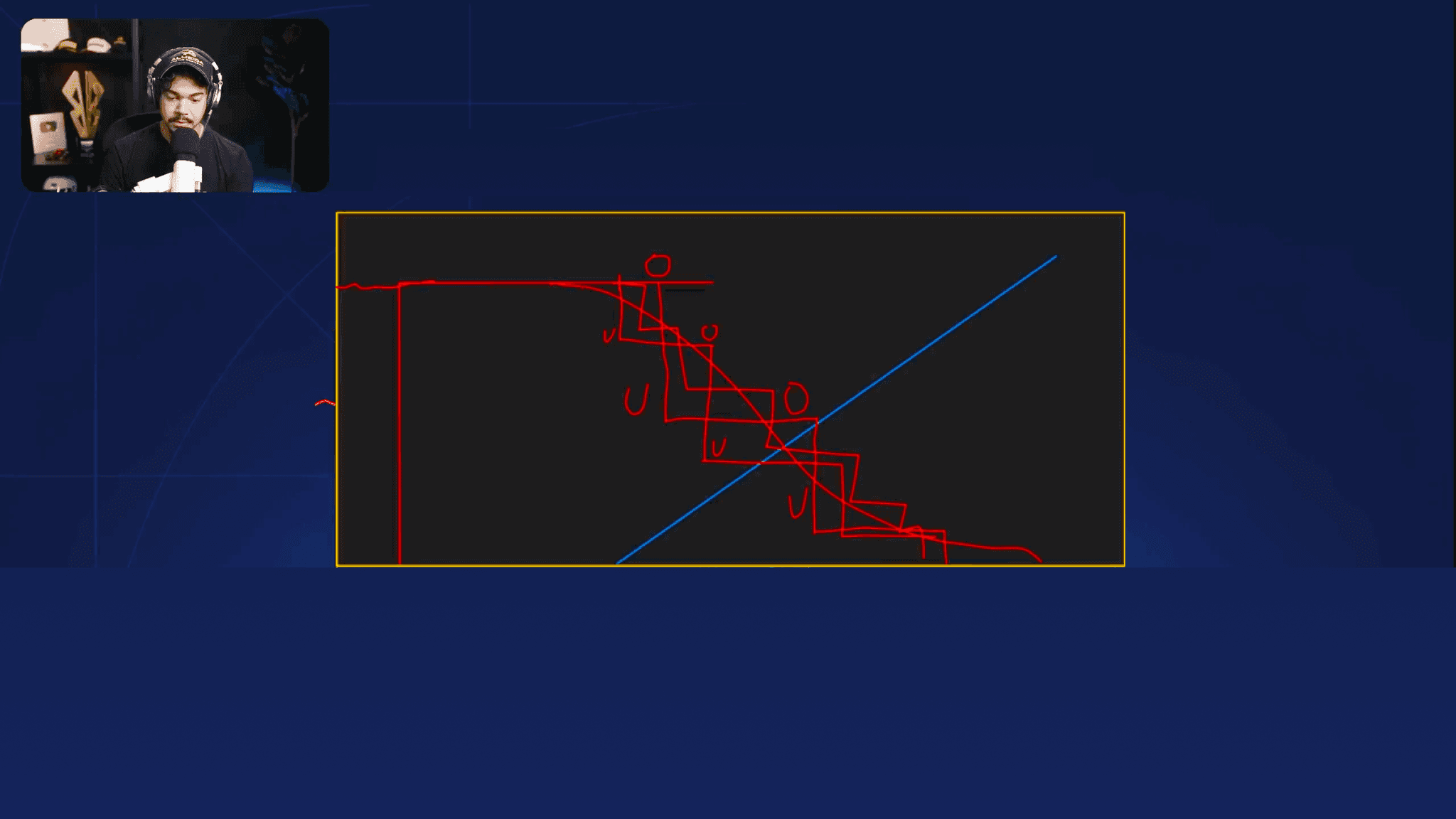
The basic string theory idea introduced at level one is a simplistic introduction to the relation between the steering and the brakes. In this version, we add the steering pretty much linearly as we release the brakes, assuming that this would be the perfect way to stay on 100% of the grip limit all the time, transitioning from longitudinal grip to lateral grip. But it's not that simple. You can have different steering ratios, and some cars will not like a lot of steering initially, but then would accept a lot more steering mid-corner. This relation needs to be found in a better way.
Understanding Advanced String Theory
Advanced string theory is a better way to justify this idea and help intermediate and advanced drivers actually apply it. You are going to release the brakes according to not only the steering that you're applying, but also its feedback. The brake release is determined by three key factors:
The amount of rotation that the car is getting
The feedback from the steering
The line that you want to trace in the corner
Sometimes you're adding steering and you might get a little bit of oversteer. In this case, you might have to do some adjustments with the brakes. This release is according to how much the car is rotating. If you get a little bit of front locking, you have to release a little bit more quickly or have to adjust the steering and make it a little bit straighter. You have to constantly do adjustments using these three factors as guidance.
Practical Application Example
This is the best example that would not have worked through the traditional string theory, but is perfect for advanced string theory. When turning with the feedback from the steering, you are trying to find the amount of steering that makes the car rotate while paying attention to the feedback of the steering, to how much rotation the car is getting, and to the line that you want.
In a proper application, you turn in with a certain amount of steering and braking. From there, the car already gets into a little bit of oversteer and really bends to one side. Through the basic string theory, if you're releasing the brakes while adding steering, you would immediately spin. But with the advanced one, by having very relaxed hands and feeling it, you release the brakes according to how much rotation the car is getting. You don't add steering blindly.
Managing Neutral Steer
You are only keeping that force, feeling the force feedback resistance and staying where it's like pretty heavy, not forcing it too much, just letting the car do its thing because you see it's rotating. The whole platform has the neutral steer and the neutral steer is already at an angle with the weight on the front tires. That's enough for the car to turn more. The car is literally gaining rotation in one direction when the steering is pointed in the opposite direction. The steering might be to the left a little bit, but still, it keeps gaining rotation.
This is fast, this is actual proper neutral steer. You're releasing the brakes according to the rotation. The steering might be going to the other side, which doesn't make a lot of sense initially, but if you feel the force feedback, if you sense the rotation visually and through the feedback on the steering, it becomes clear. When you're almost off the brakes completely, at literally 10% brakes, you might still be turning in the opposite direction because you're very relaxed, maintaining the neutral steer and making sure that the car is neutrally turning more and more.
Finally, when you feel that it's getting less and less weight and you're almost completely off the brakes (around 4% brakes), only then do you start to add the steering. Because now you want to actually get that extra bit from the front tires, the weight is already moving to the back, and you're actually back on power. You're forcing a little bit more, but still not a lot because you don't want to scrub the front tires.
Key Adjustments During Cornering
You need to make constant adjustments throughout the corner. As soon as you get to 100% throttle, you're doing feedback reading on your steering to make sure you're not abusing the front tires and not abusing the car as a whole. This is advanced string theory at its best.
Corner Entry Technique
At corner entry, you might turn just a tiny bit in one direction. As soon as you start braking, you can see how immediately the steering wants to go in the opposite direction. That's not driver input—that's the force feedback. By relaxing your hands, you're letting it do its thing. You might fight that force feedback a tiny bit because you want the car to start pointing to the inside and you want it to get into neutral steer.
Once the car is really in neutral steer and starting to slide in, you're controlling that slide through the brake release and through the steering. A little bit more steering, a little bit less brakes—lots of adjustments all the time to make sure the car doesn't lock the front and go straight or doesn't spin. You're constantly feeling it.
Speed and Corner Type Variations
The technique varies depending on the corner. In lower speed corners, you might actually start to add more steering way earlier because it's a much lower speed corner, and you might be doing a double apex. This requires more low speed forcing of the car to turn. With radial tires, the behavior is a little bit different, and the car might slide slightly less or more depending on the vehicle.
For corners that don't require hard braking, you won't see the advanced string theory as obviously applied. When you're not breaking that hard, there are fewer corrections needed. The steering actually has to point the car a little bit more, and you're trying not to use too much trail brake to turn the car because it would decelerate the car too much.
Inverted String Theory
Inverted string theory is literally the opposite of regular string theory. It's very rare and you don't always use it, but it's something you have to always know. When you're coming from a corner with trail brake and have the steering turned, but have another corner right after, you're still turning a little bit but have to break again.
When to Apply Inverted String Theory
Sometimes you don't have enough time to go straight and then break again. Sometimes you have to start breaking from that cornering. What you will have to do instead is actually do an inverted string theory, where you start to unwind the steering back into a straight line, just load the car down, and then trail brake again, and then turn again.
In this case, the inverted string theory is pretty much mirroring what we generally do, but we do regular string theory 99% of the time. We prep our muscle memory to do it very easily. But we only do inverted string theory 1% of the time in some specific corners. That is why a lot of people end up not doing it and not applying it, because it's very, very uncommon.
Practical Example: Sequential Corners
A good example of inverted string theory occurs when you have a corner that leads into a breaking zone right away, and then another corner. You are breaking and turning, adding steering. Then you don't have any time to accelerate or to go straight and prepare for the next breaking zone right away. You are coming from a corner into a breaking zone.
Execution Technique
As you're turning just a little bit in one direction, as soon as you start adding more breaks, you're going to relax your hands accordingly. You're not necessarily actively unwinding the steering—you're just going to relax your hands and let the force feedback unwind the steering for you. That's why it's so useful to relax your hands. As you're adding more breaks and relaxing your hands, you can see the steering progressively coming back to straight. This is inverted string theory—it's the anti-trail breaking, pretty much the same thing just upside down.
Then you're fully straight and fully on the breaks. Now you're going to go back to releasing as you turn into the corner, back to regular string theory. Inverted string theory generally happens as you get into another corner, so it will always be followed by another regular string theory.
Advanced String Theory Concepts
The basic string theory idea introduced at level one is a simplistic introduction to the relation between the steering and the brakes. In this version, we add the steering pretty much linearly as we release the brakes, assuming that this would be the perfect way to stay on 100% of the grip limit all the time, transitioning from longitudinal grip to lateral grip. But it's not that simple. You can have different steering ratios, and some cars will not like a lot of steering initially, but then would accept a lot more steering mid-corner. This relation needs to be found in a better way.
Understanding Advanced String Theory
Advanced string theory is a better way to justify this idea and help intermediate and advanced drivers actually apply it. You are going to release the brakes according to not only the steering that you're applying, but also its feedback. The brake release is determined by three key factors:
The amount of rotation that the car is getting
The feedback from the steering
The line that you want to trace in the corner
Sometimes you're adding steering and you might get a little bit of oversteer. In this case, you might have to do some adjustments with the brakes. This release is according to how much the car is rotating. If you get a little bit of front locking, you have to release a little bit more quickly or have to adjust the steering and make it a little bit straighter. You have to constantly do adjustments using these three factors as guidance.
Practical Application Example
This is the best example that would not have worked through the traditional string theory, but is perfect for advanced string theory. When turning with the feedback from the steering, you are trying to find the amount of steering that makes the car rotate while paying attention to the feedback of the steering, to how much rotation the car is getting, and to the line that you want.
In a proper application, you turn in with a certain amount of steering and braking. From there, the car already gets into a little bit of oversteer and really bends to one side. Through the basic string theory, if you're releasing the brakes while adding steering, you would immediately spin. But with the advanced one, by having very relaxed hands and feeling it, you release the brakes according to how much rotation the car is getting. You don't add steering blindly.
Managing Neutral Steer
You are only keeping that force, feeling the force feedback resistance and staying where it's like pretty heavy, not forcing it too much, just letting the car do its thing because you see it's rotating. The whole platform has the neutral steer and the neutral steer is already at an angle with the weight on the front tires. That's enough for the car to turn more. The car is literally gaining rotation in one direction when the steering is pointed in the opposite direction. The steering might be to the left a little bit, but still, it keeps gaining rotation.
This is fast, this is actual proper neutral steer. You're releasing the brakes according to the rotation. The steering might be going to the other side, which doesn't make a lot of sense initially, but if you feel the force feedback, if you sense the rotation visually and through the feedback on the steering, it becomes clear. When you're almost off the brakes completely, at literally 10% brakes, you might still be turning in the opposite direction because you're very relaxed, maintaining the neutral steer and making sure that the car is neutrally turning more and more.
Finally, when you feel that it's getting less and less weight and you're almost completely off the brakes (around 4% brakes), only then do you start to add the steering. Because now you want to actually get that extra bit from the front tires, the weight is already moving to the back, and you're actually back on power. You're forcing a little bit more, but still not a lot because you don't want to scrub the front tires.
Key Adjustments During Cornering
You need to make constant adjustments throughout the corner. As soon as you get to 100% throttle, you're doing feedback reading on your steering to make sure you're not abusing the front tires and not abusing the car as a whole. This is advanced string theory at its best.
Corner Entry Technique
At corner entry, you might turn just a tiny bit in one direction. As soon as you start braking, you can see how immediately the steering wants to go in the opposite direction. That's not driver input—that's the force feedback. By relaxing your hands, you're letting it do its thing. You might fight that force feedback a tiny bit because you want the car to start pointing to the inside and you want it to get into neutral steer.
Once the car is really in neutral steer and starting to slide in, you're controlling that slide through the brake release and through the steering. A little bit more steering, a little bit less brakes—lots of adjustments all the time to make sure the car doesn't lock the front and go straight or doesn't spin. You're constantly feeling it.
Speed and Corner Type Variations
The technique varies depending on the corner. In lower speed corners, you might actually start to add more steering way earlier because it's a much lower speed corner, and you might be doing a double apex. This requires more low speed forcing of the car to turn. With radial tires, the behavior is a little bit different, and the car might slide slightly less or more depending on the vehicle.
For corners that don't require hard braking, you won't see the advanced string theory as obviously applied. When you're not breaking that hard, there are fewer corrections needed. The steering actually has to point the car a little bit more, and you're trying not to use too much trail brake to turn the car because it would decelerate the car too much.
Inverted String Theory
Inverted string theory is literally the opposite of regular string theory. It's very rare and you don't always use it, but it's something you have to always know. When you're coming from a corner with trail brake and have the steering turned, but have another corner right after, you're still turning a little bit but have to break again.
When to Apply Inverted String Theory
Sometimes you don't have enough time to go straight and then break again. Sometimes you have to start breaking from that cornering. What you will have to do instead is actually do an inverted string theory, where you start to unwind the steering back into a straight line, just load the car down, and then trail brake again, and then turn again.
In this case, the inverted string theory is pretty much mirroring what we generally do, but we do regular string theory 99% of the time. We prep our muscle memory to do it very easily. But we only do inverted string theory 1% of the time in some specific corners. That is why a lot of people end up not doing it and not applying it, because it's very, very uncommon.
Practical Example: Sequential Corners
A good example of inverted string theory occurs when you have a corner that leads into a breaking zone right away, and then another corner. You are breaking and turning, adding steering. Then you don't have any time to accelerate or to go straight and prepare for the next breaking zone right away. You are coming from a corner into a breaking zone.
Execution Technique
As you're turning just a little bit in one direction, as soon as you start adding more breaks, you're going to relax your hands accordingly. You're not necessarily actively unwinding the steering—you're just going to relax your hands and let the force feedback unwind the steering for you. That's why it's so useful to relax your hands. As you're adding more breaks and relaxing your hands, you can see the steering progressively coming back to straight. This is inverted string theory—it's the anti-trail breaking, pretty much the same thing just upside down.
Then you're fully straight and fully on the breaks. Now you're going to go back to releasing as you turn into the corner, back to regular string theory. Inverted string theory generally happens as you get into another corner, so it will always be followed by another regular string theory.
Advanced String Theory Concepts
The basic string theory idea introduced at level one is a simplistic introduction to the relation between the steering and the brakes. In this version, we add the steering pretty much linearly as we release the brakes, assuming that this would be the perfect way to stay on 100% of the grip limit all the time, transitioning from longitudinal grip to lateral grip. But it's not that simple. You can have different steering ratios, and some cars will not like a lot of steering initially, but then would accept a lot more steering mid-corner. This relation needs to be found in a better way.
Understanding Advanced String Theory
Advanced string theory is a better way to justify this idea and help intermediate and advanced drivers actually apply it. You are going to release the brakes according to not only the steering that you're applying, but also its feedback. The brake release is determined by three key factors:
The amount of rotation that the car is getting
The feedback from the steering
The line that you want to trace in the corner
Sometimes you're adding steering and you might get a little bit of oversteer. In this case, you might have to do some adjustments with the brakes. This release is according to how much the car is rotating. If you get a little bit of front locking, you have to release a little bit more quickly or have to adjust the steering and make it a little bit straighter. You have to constantly do adjustments using these three factors as guidance.
Practical Application Example
This is the best example that would not have worked through the traditional string theory, but is perfect for advanced string theory. When turning with the feedback from the steering, you are trying to find the amount of steering that makes the car rotate while paying attention to the feedback of the steering, to how much rotation the car is getting, and to the line that you want.
In a proper application, you turn in with a certain amount of steering and braking. From there, the car already gets into a little bit of oversteer and really bends to one side. Through the basic string theory, if you're releasing the brakes while adding steering, you would immediately spin. But with the advanced one, by having very relaxed hands and feeling it, you release the brakes according to how much rotation the car is getting. You don't add steering blindly.
Managing Neutral Steer
You are only keeping that force, feeling the force feedback resistance and staying where it's like pretty heavy, not forcing it too much, just letting the car do its thing because you see it's rotating. The whole platform has the neutral steer and the neutral steer is already at an angle with the weight on the front tires. That's enough for the car to turn more. The car is literally gaining rotation in one direction when the steering is pointed in the opposite direction. The steering might be to the left a little bit, but still, it keeps gaining rotation.
This is fast, this is actual proper neutral steer. You're releasing the brakes according to the rotation. The steering might be going to the other side, which doesn't make a lot of sense initially, but if you feel the force feedback, if you sense the rotation visually and through the feedback on the steering, it becomes clear. When you're almost off the brakes completely, at literally 10% brakes, you might still be turning in the opposite direction because you're very relaxed, maintaining the neutral steer and making sure that the car is neutrally turning more and more.
Finally, when you feel that it's getting less and less weight and you're almost completely off the brakes (around 4% brakes), only then do you start to add the steering. Because now you want to actually get that extra bit from the front tires, the weight is already moving to the back, and you're actually back on power. You're forcing a little bit more, but still not a lot because you don't want to scrub the front tires.
Key Adjustments During Cornering
You need to make constant adjustments throughout the corner. As soon as you get to 100% throttle, you're doing feedback reading on your steering to make sure you're not abusing the front tires and not abusing the car as a whole. This is advanced string theory at its best.
Corner Entry Technique
At corner entry, you might turn just a tiny bit in one direction. As soon as you start braking, you can see how immediately the steering wants to go in the opposite direction. That's not driver input—that's the force feedback. By relaxing your hands, you're letting it do its thing. You might fight that force feedback a tiny bit because you want the car to start pointing to the inside and you want it to get into neutral steer.
Once the car is really in neutral steer and starting to slide in, you're controlling that slide through the brake release and through the steering. A little bit more steering, a little bit less brakes—lots of adjustments all the time to make sure the car doesn't lock the front and go straight or doesn't spin. You're constantly feeling it.
Speed and Corner Type Variations
The technique varies depending on the corner. In lower speed corners, you might actually start to add more steering way earlier because it's a much lower speed corner, and you might be doing a double apex. This requires more low speed forcing of the car to turn. With radial tires, the behavior is a little bit different, and the car might slide slightly less or more depending on the vehicle.
For corners that don't require hard braking, you won't see the advanced string theory as obviously applied. When you're not breaking that hard, there are fewer corrections needed. The steering actually has to point the car a little bit more, and you're trying not to use too much trail brake to turn the car because it would decelerate the car too much.
Inverted String Theory
Inverted string theory is literally the opposite of regular string theory. It's very rare and you don't always use it, but it's something you have to always know. When you're coming from a corner with trail brake and have the steering turned, but have another corner right after, you're still turning a little bit but have to break again.
When to Apply Inverted String Theory
Sometimes you don't have enough time to go straight and then break again. Sometimes you have to start breaking from that cornering. What you will have to do instead is actually do an inverted string theory, where you start to unwind the steering back into a straight line, just load the car down, and then trail brake again, and then turn again.
In this case, the inverted string theory is pretty much mirroring what we generally do, but we do regular string theory 99% of the time. We prep our muscle memory to do it very easily. But we only do inverted string theory 1% of the time in some specific corners. That is why a lot of people end up not doing it and not applying it, because it's very, very uncommon.
Practical Example: Sequential Corners
A good example of inverted string theory occurs when you have a corner that leads into a breaking zone right away, and then another corner. You are breaking and turning, adding steering. Then you don't have any time to accelerate or to go straight and prepare for the next breaking zone right away. You are coming from a corner into a breaking zone.
Execution Technique
As you're turning just a little bit in one direction, as soon as you start adding more breaks, you're going to relax your hands accordingly. You're not necessarily actively unwinding the steering—you're just going to relax your hands and let the force feedback unwind the steering for you. That's why it's so useful to relax your hands. As you're adding more breaks and relaxing your hands, you can see the steering progressively coming back to straight. This is inverted string theory—it's the anti-trail breaking, pretty much the same thing just upside down.
Then you're fully straight and fully on the breaks. Now you're going to go back to releasing as you turn into the corner, back to regular string theory. Inverted string theory generally happens as you get into another corner, so it will always be followed by another regular string theory.
Consistency & Confidence
Balance & Speed
Cornering Precision
Mastery
Other Lessons