Cold Tires
Lesson
49
of
49

Lesson by
Suellio Almeida
Lesson by
Suellio Almeida
Mark as Finished
Understanding Cold Tires
To properly understand cold tires, we need to divide the tire into two distinct areas: the inside (the carcass) and the outside (the surface). The surface is in direct contact with the track and is the most sensitive part of the tire. This is where tire wear occurs, where scrub happens, and where the tire takes the most punishment.
When the whole tire is cold—meaning both the carcass and surface—the increase in temperature on the surface will hurt your grip far more than when the tire as a whole is already at optimal temperature. When there's a big difference between the surface temperature and the inside temperature, the tire will have significantly less grip and will be easier to damage and develop tire wear.
Warming Up Cold Tires: The Outlap Strategy
First Half of the Outlap
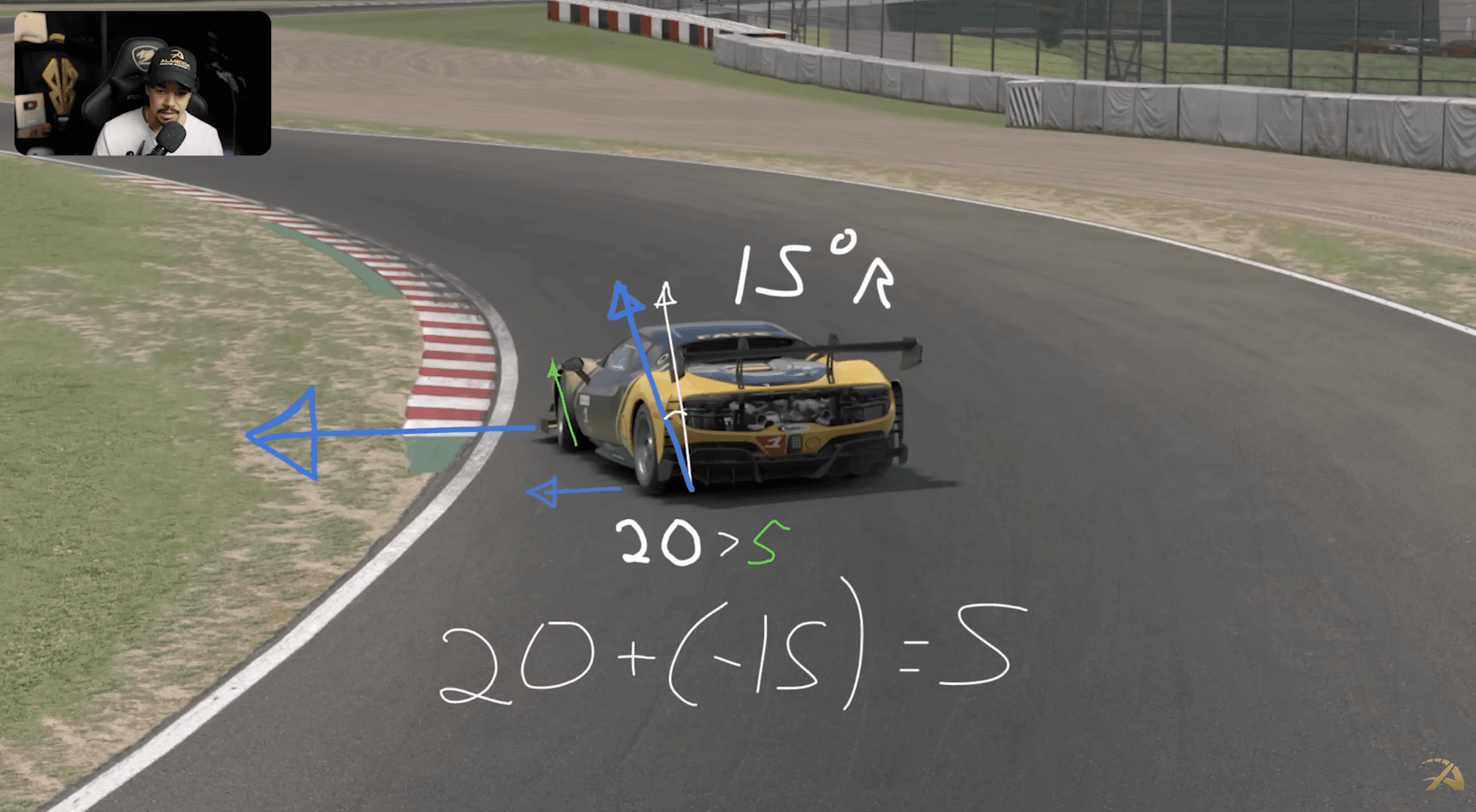
On cold tires, you should avoid scrub as much as possible, and this is most important at the beginning of the outlap. When you get out of the pits, you should not scrub the front tires or the rear. Don't dance with the car around or slide the car, especially on the first half of the outlap, because the tires are very sensitive to getting damage and tire wear due to the extreme temperature difference between the carcass and the surface.
Instead of scrubbing, focus on heating the tires from the inside out. The safest way to build temperature is to:
Brake more on a straight line
Accelerate and brake repeatedly in cycles
Heat up the brakes themselves, which will transfer temperature outward toward the carcass of the tire
Ensure you're not locking the tires, as this defeats the entire purpose
A third option is actually doing nothing—simply underdriving the car during the outlap and letting the temperature slowly build up on the tire can also work in some cars. You need to know which car you're driving, and note that every three months iRacing does an update that could slightly change the way you warm up the tires. However, they are getting closer and closer to how we warm up tires in real life, and in real life, it's pretty much sacred: you first warm up the tires with the brakes.
Second Half of the Outlap
On the second half of the lap, the carcass temperature is already going to be a little bit higher because of the brakes temperature coming out to the carcass. At this point, the temperature of the whole tire is going to be higher, and the tire will support a little bit of scrubbing. This is why we see many people doing weaving on the second half of the outlap, but not doing that on the first half. We're waiting for the carcass temperature to go up so that it can support some scrub.
Even so, this really depends on the tire, and you might not want to do it everywhere all the time. You have to try and test what works. The baseline is:
Braking on a straight line on the first half
A little bit of scrubbing at higher speed on the second half
This approach should get you to a good temperature.
The Critical Grip Drop Effect
It is very important to know that when the carcass is cold and the surface gets hot with a little bit of scrubbing on cold tires, the grip drop is drastic. You will lose grip very quickly if you scrub the tires when they're cold. This is why if you do a little bit of a lockup on a race start—particularly a standing start where you don't have any opportunity to warm up the tires—it's very easy to slide the car after the lockup. That lockup was already enough to overheat the surface temperature and completely destroy the grip available.
Race Start Strategy with Cold Tires
For race starts with standing starts, avoid scrub at all costs. You should:
Do a little bit of trail braking
Consider inducing a tiny bit of understeer mid-corner if the car is loose on entry
Make sure you don't get the snowball effect of initiating a slide, overheating the rear, and then spinning
This happens very fast and very easily. Everyone knows how difficult it is to drive with cold tires. If you think iRacing is too difficult to drive with cold tires, it's because you haven't driven in real life yet. It's insane how little grip we have in real life when using cold tires, especially on an early morning with a cold track. The lack of grip is absurd—spinning an LMP3 out of the pits with 25% throttle is entirely possible. So do not complain about iRacing.
Avoiding Scrub on Cold Tires
We need to avoid scrub, which comes from sliding too much with either the fronts or the rears. This means:
Trail brake a little bit more on cold tires during race starts
Avoid longitudinal scrub
Avoid getting into ABS
Avoid excessive locking
Brake a little bit earlier and a little bit softer to prevent the surface temperature from going up
By doing this, you'll have better grip when you start turning. Remember: when you gain temperature because you're scrubbing the tire, the grip goes down. On cold tires, when approaching an apex, the effects on grip are dramatic—it gets way worse because the temperature of the carcass is too low. You're not necessarily gaining more temperature, but it feels like you're just destroying the tires because they're not ready to take that amount of temperature.
Corner-by-Corner Strategy on Cold Tires
You have to be really careful not to heat up the surface too much on the first few corners of a race. The key is using less grip on corner entry, but you're going to have better mid-corner grip than everyone else who's overdriving the cold tires.
By the second lap, you can already start scrubbing a little bit more, and by lap 5 you can really drive as hard as you can. Interestingly, if you don't know about this phenomenon, you tend to feel like the tires on lap 5 or 6 have way more grip. This is likely because you're turning the steering too much on cold tires, which is really hurting your grip. This is probably also hurting your grip at optimal temperatures, but you feel that less.
A tire that is up to temperature will not punish you as much for scrubbing it too much.
Practice and Application
Go on track and try the warm-up procedures discussed, and also try to notice how easy it is to overheat the surface and completely lose your grip when you go out on a cold tire.
Understanding Cold Tires
To properly understand cold tires, we need to divide the tire into two distinct areas: the inside (the carcass) and the outside (the surface). The surface is in direct contact with the track and is the most sensitive part of the tire. This is where tire wear occurs, where scrub happens, and where the tire takes the most punishment.
When the whole tire is cold—meaning both the carcass and surface—the increase in temperature on the surface will hurt your grip far more than when the tire as a whole is already at optimal temperature. When there's a big difference between the surface temperature and the inside temperature, the tire will have significantly less grip and will be easier to damage and develop tire wear.
Warming Up Cold Tires: The Outlap Strategy
First Half of the Outlap
On cold tires, you should avoid scrub as much as possible, and this is most important at the beginning of the outlap. When you get out of the pits, you should not scrub the front tires or the rear. Don't dance with the car around or slide the car, especially on the first half of the outlap, because the tires are very sensitive to getting damage and tire wear due to the extreme temperature difference between the carcass and the surface.
Instead of scrubbing, focus on heating the tires from the inside out. The safest way to build temperature is to:
Brake more on a straight line
Accelerate and brake repeatedly in cycles
Heat up the brakes themselves, which will transfer temperature outward toward the carcass of the tire
Ensure you're not locking the tires, as this defeats the entire purpose
A third option is actually doing nothing—simply underdriving the car during the outlap and letting the temperature slowly build up on the tire can also work in some cars. You need to know which car you're driving, and note that every three months iRacing does an update that could slightly change the way you warm up the tires. However, they are getting closer and closer to how we warm up tires in real life, and in real life, it's pretty much sacred: you first warm up the tires with the brakes.
Second Half of the Outlap
On the second half of the lap, the carcass temperature is already going to be a little bit higher because of the brakes temperature coming out to the carcass. At this point, the temperature of the whole tire is going to be higher, and the tire will support a little bit of scrubbing. This is why we see many people doing weaving on the second half of the outlap, but not doing that on the first half. We're waiting for the carcass temperature to go up so that it can support some scrub.
Even so, this really depends on the tire, and you might not want to do it everywhere all the time. You have to try and test what works. The baseline is:
Braking on a straight line on the first half
A little bit of scrubbing at higher speed on the second half
This approach should get you to a good temperature.
The Critical Grip Drop Effect
It is very important to know that when the carcass is cold and the surface gets hot with a little bit of scrubbing on cold tires, the grip drop is drastic. You will lose grip very quickly if you scrub the tires when they're cold. This is why if you do a little bit of a lockup on a race start—particularly a standing start where you don't have any opportunity to warm up the tires—it's very easy to slide the car after the lockup. That lockup was already enough to overheat the surface temperature and completely destroy the grip available.
Race Start Strategy with Cold Tires
For race starts with standing starts, avoid scrub at all costs. You should:
Do a little bit of trail braking
Consider inducing a tiny bit of understeer mid-corner if the car is loose on entry
Make sure you don't get the snowball effect of initiating a slide, overheating the rear, and then spinning
This happens very fast and very easily. Everyone knows how difficult it is to drive with cold tires. If you think iRacing is too difficult to drive with cold tires, it's because you haven't driven in real life yet. It's insane how little grip we have in real life when using cold tires, especially on an early morning with a cold track. The lack of grip is absurd—spinning an LMP3 out of the pits with 25% throttle is entirely possible. So do not complain about iRacing.
Avoiding Scrub on Cold Tires
We need to avoid scrub, which comes from sliding too much with either the fronts or the rears. This means:
Trail brake a little bit more on cold tires during race starts
Avoid longitudinal scrub
Avoid getting into ABS
Avoid excessive locking
Brake a little bit earlier and a little bit softer to prevent the surface temperature from going up
By doing this, you'll have better grip when you start turning. Remember: when you gain temperature because you're scrubbing the tire, the grip goes down. On cold tires, when approaching an apex, the effects on grip are dramatic—it gets way worse because the temperature of the carcass is too low. You're not necessarily gaining more temperature, but it feels like you're just destroying the tires because they're not ready to take that amount of temperature.
Corner-by-Corner Strategy on Cold Tires
You have to be really careful not to heat up the surface too much on the first few corners of a race. The key is using less grip on corner entry, but you're going to have better mid-corner grip than everyone else who's overdriving the cold tires.
By the second lap, you can already start scrubbing a little bit more, and by lap 5 you can really drive as hard as you can. Interestingly, if you don't know about this phenomenon, you tend to feel like the tires on lap 5 or 6 have way more grip. This is likely because you're turning the steering too much on cold tires, which is really hurting your grip. This is probably also hurting your grip at optimal temperatures, but you feel that less.
A tire that is up to temperature will not punish you as much for scrubbing it too much.
Practice and Application
Go on track and try the warm-up procedures discussed, and also try to notice how easy it is to overheat the surface and completely lose your grip when you go out on a cold tire.
Understanding Cold Tires
To properly understand cold tires, we need to divide the tire into two distinct areas: the inside (the carcass) and the outside (the surface). The surface is in direct contact with the track and is the most sensitive part of the tire. This is where tire wear occurs, where scrub happens, and where the tire takes the most punishment.
When the whole tire is cold—meaning both the carcass and surface—the increase in temperature on the surface will hurt your grip far more than when the tire as a whole is already at optimal temperature. When there's a big difference between the surface temperature and the inside temperature, the tire will have significantly less grip and will be easier to damage and develop tire wear.
Warming Up Cold Tires: The Outlap Strategy
First Half of the Outlap
On cold tires, you should avoid scrub as much as possible, and this is most important at the beginning of the outlap. When you get out of the pits, you should not scrub the front tires or the rear. Don't dance with the car around or slide the car, especially on the first half of the outlap, because the tires are very sensitive to getting damage and tire wear due to the extreme temperature difference between the carcass and the surface.
Instead of scrubbing, focus on heating the tires from the inside out. The safest way to build temperature is to:
Brake more on a straight line
Accelerate and brake repeatedly in cycles
Heat up the brakes themselves, which will transfer temperature outward toward the carcass of the tire
Ensure you're not locking the tires, as this defeats the entire purpose
A third option is actually doing nothing—simply underdriving the car during the outlap and letting the temperature slowly build up on the tire can also work in some cars. You need to know which car you're driving, and note that every three months iRacing does an update that could slightly change the way you warm up the tires. However, they are getting closer and closer to how we warm up tires in real life, and in real life, it's pretty much sacred: you first warm up the tires with the brakes.
Second Half of the Outlap
On the second half of the lap, the carcass temperature is already going to be a little bit higher because of the brakes temperature coming out to the carcass. At this point, the temperature of the whole tire is going to be higher, and the tire will support a little bit of scrubbing. This is why we see many people doing weaving on the second half of the outlap, but not doing that on the first half. We're waiting for the carcass temperature to go up so that it can support some scrub.
Even so, this really depends on the tire, and you might not want to do it everywhere all the time. You have to try and test what works. The baseline is:
Braking on a straight line on the first half
A little bit of scrubbing at higher speed on the second half
This approach should get you to a good temperature.
The Critical Grip Drop Effect
It is very important to know that when the carcass is cold and the surface gets hot with a little bit of scrubbing on cold tires, the grip drop is drastic. You will lose grip very quickly if you scrub the tires when they're cold. This is why if you do a little bit of a lockup on a race start—particularly a standing start where you don't have any opportunity to warm up the tires—it's very easy to slide the car after the lockup. That lockup was already enough to overheat the surface temperature and completely destroy the grip available.
Race Start Strategy with Cold Tires
For race starts with standing starts, avoid scrub at all costs. You should:
Do a little bit of trail braking
Consider inducing a tiny bit of understeer mid-corner if the car is loose on entry
Make sure you don't get the snowball effect of initiating a slide, overheating the rear, and then spinning
This happens very fast and very easily. Everyone knows how difficult it is to drive with cold tires. If you think iRacing is too difficult to drive with cold tires, it's because you haven't driven in real life yet. It's insane how little grip we have in real life when using cold tires, especially on an early morning with a cold track. The lack of grip is absurd—spinning an LMP3 out of the pits with 25% throttle is entirely possible. So do not complain about iRacing.
Avoiding Scrub on Cold Tires
We need to avoid scrub, which comes from sliding too much with either the fronts or the rears. This means:
Trail brake a little bit more on cold tires during race starts
Avoid longitudinal scrub
Avoid getting into ABS
Avoid excessive locking
Brake a little bit earlier and a little bit softer to prevent the surface temperature from going up
By doing this, you'll have better grip when you start turning. Remember: when you gain temperature because you're scrubbing the tire, the grip goes down. On cold tires, when approaching an apex, the effects on grip are dramatic—it gets way worse because the temperature of the carcass is too low. You're not necessarily gaining more temperature, but it feels like you're just destroying the tires because they're not ready to take that amount of temperature.
Corner-by-Corner Strategy on Cold Tires
You have to be really careful not to heat up the surface too much on the first few corners of a race. The key is using less grip on corner entry, but you're going to have better mid-corner grip than everyone else who's overdriving the cold tires.
By the second lap, you can already start scrubbing a little bit more, and by lap 5 you can really drive as hard as you can. Interestingly, if you don't know about this phenomenon, you tend to feel like the tires on lap 5 or 6 have way more grip. This is likely because you're turning the steering too much on cold tires, which is really hurting your grip. This is probably also hurting your grip at optimal temperatures, but you feel that less.
A tire that is up to temperature will not punish you as much for scrubbing it too much.
Practice and Application
Go on track and try the warm-up procedures discussed, and also try to notice how easy it is to overheat the surface and completely lose your grip when you go out on a cold tire.
Consistency & Confidence
Balance & Speed
Cornering Precision
Other Lessons