Racestarts
Lesson
15
of
21

Lesson by
Suellio Almeida
Lesson by
Suellio Almeida
Mark as Finished
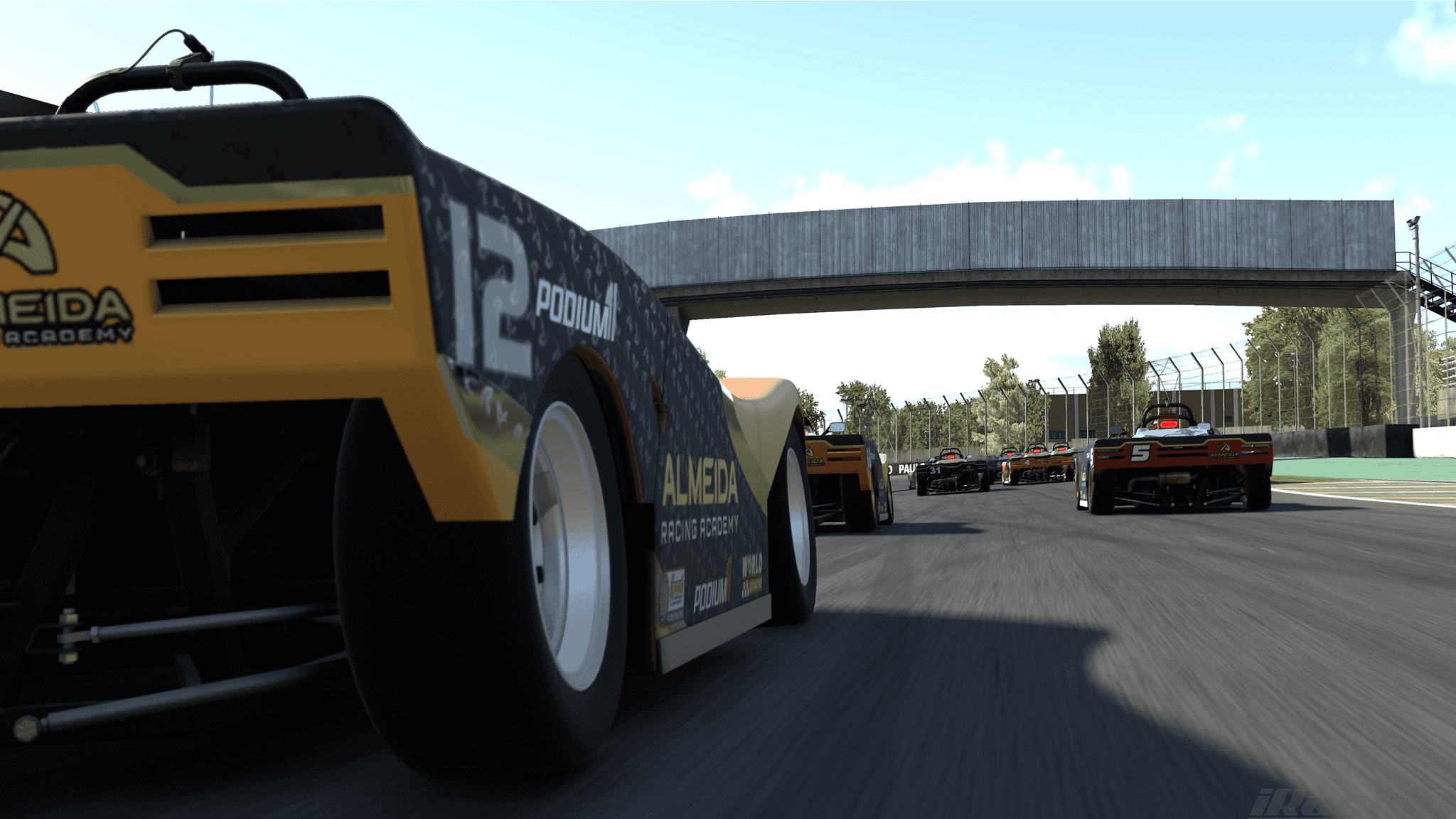
Race starts represent the most chaotic form of motorsports. They combine the intensity of the first two corners with back racing, but without the calmness of high-level pack racing. You'll encounter drivers trying to win the race on turn one, competitors locking up behind you and ahead of you, and crashes happening on both the inside and outside. Even in real life, most coaches acknowledge this reality, advising drivers to simply stay alive and do whatever they can to stay out of trouble.
The tips and strategies discussed here come from experience with over a thousand race starts in iRacing and approximately 40 to 50 race starts in real life. However, it's important to understand that every tip might work very well in one situation, but the opposite approach might be the best option depending on what happens around you. You might choose the outside at a specific track because it's statistically safer, but then someone could crash on the inside and get thrown to the outside, hitting you anyway. Luck plays a more important role in race starts than anywhere else in racing.
Mental Preparation and Breathing
The first thing you need to remember is that everyone around you is nervous—not just you. When you focus on the stress itself, you might find yourself tense, shaking, and even holding your breath. But if you remember that the driver behind you or ahead of you is also nervous, it allows you to relax a little bit and let this tension out. Thinking "the person behind me or ahead of me is more nervous than I am" gives you a sense of control over their moves. Instead of worrying that they'll box you in or make you lose positions, you can focus on making moves on them or staying close to prevent anything bad from happening.
Be relaxed and breathe normally during race starts. Try not to hold your breath. While it sounds simple, it works. You need to focus your limited energy on spatial awareness and taking quick decisions. At least 80% of the crashes that happen in race starts are avoidable. This means you can spot them happening—you can see a car getting bigger, avoid it slightly, look at a crash ahead and decide where to go. Not 100%, but 80%.
Managing Turn One Entry
On turn one, most people will get too aggressive, especially behind you. The accordion effect causes people to start checking up mid-corner, particularly if it's a lower speed corner. However, you're not going to be "careful"—careful is a bad word here. Instead, you're going to be in control of your car.
You're going to brake slightly early because you don't want to be on the limit of deceleration, unable to slow down and hitting someone ahead. What you want to do is lift just a little bit before braking. Then you're going to adjust your brake pressure to stay as close as possible to the car ahead. This is key.
If you brake too late, there's nothing you can do
If you brake too early and stay braking, you lose track position and someone behind you might hit you
If you brake a little bit early and then adjust track position by releasing the brakes accordingly, you have much more control and leave less space for people behind you to crash into you
You leave some space, and then as the car slows down to mid-corner, you get super close. At this point, you try to get the best exit possible. Essentially, everything discussed in previous lessons happens at the same time during race starts.
Primary Goals in Race Starts
Your number one goal in race starts is to avoid damage. However, remember that avoiding damage does not mean braking early, because that can actually cause a crash. You can cause people to hit you from behind, or you can become an easy victim with less control. You want to avoid damage by being super close to the cars ahead.
Choosing Inside versus Outside Line
Low Speed Corners (Example: Spa Turn One)
Spa turn one is a very low speed corner where lots of crashes commonly occur. If you choose the inside, what typically happens is that people clog up. People slow down too much and the accordion effect becomes huge. There's a big chance that people might get sandwiched by hitting each other because one person slows down too much and people from behind lose their brakes and hit them.
At the same time, if you are on the inside and there's no issue, you're actually protected from crashes that happen on the outside. Crashes on the outside will generally cause cars to move outward. So if you're on the outside and someone crashes, the natural direction they're going to go is straight to the outside, potentially hitting you. This makes you dependent on luck.
However, assuming people are clogging up on the inside, you can actually make one, two, or three positions on the outside if you're able to stay on the limit and carry lots of speed. Conversely, if people are not clogging up on the inside and are doing a good job, trying to go on the outside will most likely cause you to lose a position or two.
Generally, the inside is safer in corners that are very low speed because people don't slow down as much, as the corner is already very slow.
High Speed Corners (Example: Sebring Turn One)
Sebring turn one is a very high speed corner. On the start, lots of cars clog up on the inside and go very slow because they're trying to gain position. They have closed vision because there are so many cars too close to each other. Many drivers make passes on the outside easily because on the outside, you feel free to focus on keeping the car on its limit. You see a lot of space while everyone is trying to be on the inside, and depending on what's happening on the inside, you can have a good run and make passes.
In real life Radical racing, making at least five positions on the outside in the first two or three corners is possible because people clog up and slow down too much on the inside, especially on cold tires. When everyone is nervous, this becomes even more common.
At higher speed corners on turn one, the outside is often better when you see the opportunity. Everyone is attracted to the inside too much, so taking the alternative approach and keeping your car on the limit can result in gaining positions.
General preference: Low speed corners on turn one—prefer the inside. High speed corners on turn one—prefer the outside.
Even with this strategy, bad luck can occur. For example, at Sebring when choosing the outside, someone might make a mistake and spin on the inside, getting thrown out to the outside and requiring you to take avoiding action, which can cost positions.
Spatial Awareness and Avoiding Crashes
As soon as you realize through spatial awareness that someone is spinning, you should already be making adjustments to your driving. When you see a car starting to slide to the outside and about to hit you, relax your hands and add a little bit of brakes so you can slow down without spinning.
One of the most common causes of crashes in race starts occurs when you're turning, see something happening ahead, and start braking while still keeping the steering angle. This is the worst thing you can do because as soon as you add brakes with steering, you spin the car. This is why understanding car handling techniques is so important in race starts. When you get off your racing line and have to act in totally uncharted territory, you must understand your car and your inputs so that you don't induce any unwanted spin.
Being Assertive and Defensive
Be assertive, be aggressive, move around, and make people know that you are going to do something about it. If you become too careful, brake too early, or stay on one line doing everything slowly, people behind you might think they can dive bomb you. Defend and then come back, move around, and show that you're going to keep your position to discourage aggressive moves.
Everything from the other lessons applies here—it just happens very fast, and you're changing from move to move, from lesson to lesson, in a fraction of a second all the time.
Tire Management
Try to take care of your tires during race starts. The tip about braking a little bit earlier and adjusting your track position with brake release helps a lot with saving tires. This means you're not desperately trying to stop the car and locking up. If you lock up the tires, depending on the simulator, in real life, and in iRacing, the same thing happens—if you abuse the tires on the first lap in the first corners, you're going to suffer with performance for the rest of the race. You are destroying your tires while they're cold, while they're in their early phase, and you can feel that effect snowballing throughout the whole stint.
The more you take care of the tires on the first few laps, the better your performance will be later in the stint. It is a win-win scenario to brake a little bit early and release your brakes throughout the entry of corners full of cars. You're going to save yourself from being hit, save yourself from hitting someone, and save your tires.
Exit Strategy and Positioning
After you deal with the entry, choose your lane, brake carefully and stay very close to the car ahead, and avoid any crashes, it's time to start thinking about a good exit. The second most important thing in race starts is getting a good exit so that you don't invite other drivers to attack on the very next corner.
It's very good for you to find a single line early so you can attack the drivers ahead instead of fighting side by side and losing the pack ahead. Just like any other racing scenario, if you're side by side with someone, the driver ahead in a single file will be faster than you no matter what you do. If you're in single file early and there's a fight ahead of you, there's a big chance you can make one or two positions very early in the race.
Track Usage During Race Starts
Even in race starts, it's possible to find yourself in a single lane and find the possibility of actually using all the track on entry, using all the track mid-corner, using all the track on exit, and gaining lots of positions on the straights after.
If you find yourself in a situation where there are two cars ahead, then you, then another two cars behind, don't stay on the inside. Stay on the outside, use all the track on entry, use all the track mid-corner, use all the track on exit. At that point, the other drivers are still going to be fighting, you're going to have a better exit, and you're going to be able to go faster after.
Priority Checklist
Make sure you take all these boxes of priority:
I'm not going to hit anyone
I'm going to brake early
I'm going to release my brakes
I'm going to get as close as possible
I'm going to focus on getting a good exit
If there's space on my sides, I'm going to use all the track
Just by focusing on these things, your race starts are already going to be better than 80% of the grid.
Practical Examples and Analysis
Example 1: Three-Wide Start and Brake Modulation
In a three-wide situation, staying in the middle gets you the draft of the car ahead to gain some track position, but this is not a very good place to be—you're boxed in on the inside and can't really do a lot. Lifting and waiting a little bit allows you to decide where to go. As soon as you realize the car ahead is going to the outside, you can go to the space on the inside, which allows you to have some room to brake and not hit anyone. Having room ahead means you can gain extra track position under braking.
Breaking a little bit later, then releasing the brakes if you realize you can have extra track position, is the technique discussed earlier. Breaking more or less in the same spot as the car on your left, then releasing the brakes and gaining speed compared to the other car, demonstrates this principle. However, if there isn't enough room because another car comes to the inside, you slow down a little bit more and stay behind that car.
At this point, think about the exit. If the track distance between you and the car ahead shows the cars are pretty close, but you have space to the cars behind, this is optimal—you have more control. If you were directly behind with no gap, you'd be depending on the driver ahead doing a good job. But with space behind and close ahead, you're in control and can focus on getting a good exit.
When another car attacks the driver ahead and they go side by side, you can use all the track. If there's no one behind, prepare a very good run, go all the way to the inside where there's space, and get a very good exit.
Example 2: Three-Wide Decision Making
In a three-wide situation for the next corner, you must decide whether to commit. If you're unsure, lift and get back to trying to use as much track as possible. If you're not sure a driver is going to use a specific space, don't go there, but still go as much as you can in the available area so you can have a good line. Turn in, carry as much speed as possible in your lane, make the pass, and get a better exit.
When you realize you're clearing yourself from another car, use all the track on the exit. Get back on power earlier, gain track position, clear yourself from the other car, go all the way to the outside, and have a great run. This can set you up to make additional passes.
There are lots of changes of plan during race starts. You don't have to nail everything and pass everyone perfectly. You should try things, and if they don't work immediately, wait and try again. There's enough time—you just have to be sure that whatever you do will work in a safe way.
Example 3: High-Risk Three-Wide on the Inside
This scenario represents the definition of a higher risk move in a race start. You can choose to go left, but there may not be a lot of space there, and if the next corner is a long right-hander, it's probably not ideal to stay on the outside in such a long corner. You can go to the inside, but there's a possibility of forming a three-wide or even four-wide situation.
There's big risk when multiple cars decide to be aggressive because you can form a four-wide, and the track actually tightens more and more into the next corner. In a situation like that, a three-wide is actually safer for the car on the inside, so the car deciding to form the three-wide at that point might be at an advantage if anything happens.
When you're on the inside with zero room, you almost have to follow the inside line. The driver must be aware that there's a three-wide and that there's no space. In this scenario, it can end up being better and you can gain both positions, but it's very tricky. If you don't know how to maintain the car on the inside like that, be careful when trying three-wide—not because you're going to cause a crash, but because if you don't know how to carry speed in such a tight lane, you end up over-slowing yourself and losing positions.
Many drivers try to form three-wide into a race start and then lack confidence to pull it off. They over-slow and lose positions anyway. Be careful, because if you check up due to lack of confidence to make the move, you end up losing more positions than if you just stayed behind and tried to follow the cars ahead.
Example 4: Higher Level Racing and Spatial Awareness
In higher level races, pack racing is much closer on race starts. Even though there are cars everywhere, drivers really manage their spatial awareness and give space to everyone else. When you're clear to go, you can use all the track. As soon as drivers realize there is more space, you'll see them moving around.
Moving to the left, then back to the right, then using all the track going to the left demonstrates this awareness. When trying to pass on the outside, you're not using all the track at that moment, but as soon as you clear yourself, you start using all the track. This is a very important adjustment that depends on being very aware of what's around you.
In a situation where you could form a three-wide but you're in the worst position possible, you'll see drivers lifting and deciding not to form a three-wide, especially if they're in the back position and would lose to the car behind if they tried to fight with the cars ahead. It's a good decision to wait until you get a better opportunity to actually make a pass. Because you let the others fight only two-wide instead of three-wide, they're now very close to the leader, which means you can still follow the pack and fight for the win.
Example 5: Crash Avoidance with Spatial Awareness
This example demonstrates both crash avoidance and spatial awareness. Starting to brake into a corner with no awareness that cars are about to crash ahead, you begin turning in and see that cars are starting to have an incident. Your plan is to use all the track on the inside because you see there's no one right behind you on the inside. You have lots of space on your right, and because of that spatial awareness, you can just turn and use the whole track even though it looks like there's absolutely no space because it's a race start. But there is space—it's just right there in the gap—and you have to identify it and use it very quickly.
This is a very good decision because if you had chosen to stay on the outside just because you were not sure if anyone was there, you would have been caught in that accident. Even after avoiding the initial incident, you may have to reapply the brakes because everyone is checking up slightly, and you're making sure you're not causing any other crash.
Example 6: Focusing on Exit Over Entry
This is proof that on a race start, it's a very good decision to focus a lot on your exits instead of trying to overdrive the car on entries. When you see cars fighting and one car thinking about going to the inside, you know they're going to be slower mid-corner. At that point, track position will be valuable after the corner, not in the corner.
What you're trying to do is brake very early and patiently prepare the best exit you can possibly do. Very slow braking application, just making sure the car is very well set, and then very aggressive exit allows you to easily gain positions.
Looking at the braking trace, it's not what you're supposed to do in a hot lap, but in a race start, this is security, this is track position. The release in the braking is track position; the reapplication is to make sure you slow down. You're consistently adjusting your brakes according to what's happening around you and how far you are from the cars ahead. In that situation, you might gain two positions just by trying to stay as close as possible to the drivers ahead and getting a good exit.
Example 7: Unavoidable Situations
You can try whatever you want, but if you're not lucky or depending on the situation, you can't really avoid anything. In one example, slow braking ensures good track position. Deciding to go to the inside, then realizing very early (even turning left slightly) that you could go to the inside but seeing another driver in the mirror causes you to abandon the inside because you know they're going to hit everyone.
When that driver hits one car and both are going in a direction because of the contact, you can decide to go all the way to the inside. However, someone else who had lost their braking hits you. In that situation, there's really not a lot you could have done. You could have maybe stayed on the outside and checked up with the other cars, which would have given you less damage but would have stopped you anyway. You might not even see a car on the inside because they changed direction abruptly. This is an unavoidable scenario in racing that everyone will eventually have to deal with.
Example 8: Dealing with Chaos Aggressively
This is a very good example of how to deal with chaos in an aggressive way. When there are a lot of things happening ahead—people fighting, crashing, spinning—you stay in charge of your future by staying as close as possible to the cars ahead, not by trying to check up and make yourself a passive actor or victim of what's happening behind.
Use all the track, then realize you can't really go to the inside and go the long way around the outside. Get back on power, then when people start crashing and you see that, you're not even going full throttle. Start braking a little bit, then go right to avoid a car. At this point, there may already be someone in another position, so you have to be careful not to check up and cause a crash behind. Get back on power right away to make your car gain track position, then with still lots of things happening, find your way through.
The main objective here is to avoid the incidents while staying as far forward as possible so that you avoid being hit from behind.
Race starts represent the most chaotic form of motorsports. They combine the intensity of the first two corners with back racing, but without the calmness of high-level pack racing. You'll encounter drivers trying to win the race on turn one, competitors locking up behind you and ahead of you, and crashes happening on both the inside and outside. Even in real life, most coaches acknowledge this reality, advising drivers to simply stay alive and do whatever they can to stay out of trouble.
The tips and strategies discussed here come from experience with over a thousand race starts in iRacing and approximately 40 to 50 race starts in real life. However, it's important to understand that every tip might work very well in one situation, but the opposite approach might be the best option depending on what happens around you. You might choose the outside at a specific track because it's statistically safer, but then someone could crash on the inside and get thrown to the outside, hitting you anyway. Luck plays a more important role in race starts than anywhere else in racing.
Mental Preparation and Breathing
The first thing you need to remember is that everyone around you is nervous—not just you. When you focus on the stress itself, you might find yourself tense, shaking, and even holding your breath. But if you remember that the driver behind you or ahead of you is also nervous, it allows you to relax a little bit and let this tension out. Thinking "the person behind me or ahead of me is more nervous than I am" gives you a sense of control over their moves. Instead of worrying that they'll box you in or make you lose positions, you can focus on making moves on them or staying close to prevent anything bad from happening.
Be relaxed and breathe normally during race starts. Try not to hold your breath. While it sounds simple, it works. You need to focus your limited energy on spatial awareness and taking quick decisions. At least 80% of the crashes that happen in race starts are avoidable. This means you can spot them happening—you can see a car getting bigger, avoid it slightly, look at a crash ahead and decide where to go. Not 100%, but 80%.
Managing Turn One Entry
On turn one, most people will get too aggressive, especially behind you. The accordion effect causes people to start checking up mid-corner, particularly if it's a lower speed corner. However, you're not going to be "careful"—careful is a bad word here. Instead, you're going to be in control of your car.
You're going to brake slightly early because you don't want to be on the limit of deceleration, unable to slow down and hitting someone ahead. What you want to do is lift just a little bit before braking. Then you're going to adjust your brake pressure to stay as close as possible to the car ahead. This is key.
If you brake too late, there's nothing you can do
If you brake too early and stay braking, you lose track position and someone behind you might hit you
If you brake a little bit early and then adjust track position by releasing the brakes accordingly, you have much more control and leave less space for people behind you to crash into you
You leave some space, and then as the car slows down to mid-corner, you get super close. At this point, you try to get the best exit possible. Essentially, everything discussed in previous lessons happens at the same time during race starts.
Primary Goals in Race Starts
Your number one goal in race starts is to avoid damage. However, remember that avoiding damage does not mean braking early, because that can actually cause a crash. You can cause people to hit you from behind, or you can become an easy victim with less control. You want to avoid damage by being super close to the cars ahead.
Choosing Inside versus Outside Line
Low Speed Corners (Example: Spa Turn One)
Spa turn one is a very low speed corner where lots of crashes commonly occur. If you choose the inside, what typically happens is that people clog up. People slow down too much and the accordion effect becomes huge. There's a big chance that people might get sandwiched by hitting each other because one person slows down too much and people from behind lose their brakes and hit them.
At the same time, if you are on the inside and there's no issue, you're actually protected from crashes that happen on the outside. Crashes on the outside will generally cause cars to move outward. So if you're on the outside and someone crashes, the natural direction they're going to go is straight to the outside, potentially hitting you. This makes you dependent on luck.
However, assuming people are clogging up on the inside, you can actually make one, two, or three positions on the outside if you're able to stay on the limit and carry lots of speed. Conversely, if people are not clogging up on the inside and are doing a good job, trying to go on the outside will most likely cause you to lose a position or two.
Generally, the inside is safer in corners that are very low speed because people don't slow down as much, as the corner is already very slow.
High Speed Corners (Example: Sebring Turn One)
Sebring turn one is a very high speed corner. On the start, lots of cars clog up on the inside and go very slow because they're trying to gain position. They have closed vision because there are so many cars too close to each other. Many drivers make passes on the outside easily because on the outside, you feel free to focus on keeping the car on its limit. You see a lot of space while everyone is trying to be on the inside, and depending on what's happening on the inside, you can have a good run and make passes.
In real life Radical racing, making at least five positions on the outside in the first two or three corners is possible because people clog up and slow down too much on the inside, especially on cold tires. When everyone is nervous, this becomes even more common.
At higher speed corners on turn one, the outside is often better when you see the opportunity. Everyone is attracted to the inside too much, so taking the alternative approach and keeping your car on the limit can result in gaining positions.
General preference: Low speed corners on turn one—prefer the inside. High speed corners on turn one—prefer the outside.
Even with this strategy, bad luck can occur. For example, at Sebring when choosing the outside, someone might make a mistake and spin on the inside, getting thrown out to the outside and requiring you to take avoiding action, which can cost positions.
Spatial Awareness and Avoiding Crashes
As soon as you realize through spatial awareness that someone is spinning, you should already be making adjustments to your driving. When you see a car starting to slide to the outside and about to hit you, relax your hands and add a little bit of brakes so you can slow down without spinning.
One of the most common causes of crashes in race starts occurs when you're turning, see something happening ahead, and start braking while still keeping the steering angle. This is the worst thing you can do because as soon as you add brakes with steering, you spin the car. This is why understanding car handling techniques is so important in race starts. When you get off your racing line and have to act in totally uncharted territory, you must understand your car and your inputs so that you don't induce any unwanted spin.
Being Assertive and Defensive
Be assertive, be aggressive, move around, and make people know that you are going to do something about it. If you become too careful, brake too early, or stay on one line doing everything slowly, people behind you might think they can dive bomb you. Defend and then come back, move around, and show that you're going to keep your position to discourage aggressive moves.
Everything from the other lessons applies here—it just happens very fast, and you're changing from move to move, from lesson to lesson, in a fraction of a second all the time.
Tire Management
Try to take care of your tires during race starts. The tip about braking a little bit earlier and adjusting your track position with brake release helps a lot with saving tires. This means you're not desperately trying to stop the car and locking up. If you lock up the tires, depending on the simulator, in real life, and in iRacing, the same thing happens—if you abuse the tires on the first lap in the first corners, you're going to suffer with performance for the rest of the race. You are destroying your tires while they're cold, while they're in their early phase, and you can feel that effect snowballing throughout the whole stint.
The more you take care of the tires on the first few laps, the better your performance will be later in the stint. It is a win-win scenario to brake a little bit early and release your brakes throughout the entry of corners full of cars. You're going to save yourself from being hit, save yourself from hitting someone, and save your tires.
Exit Strategy and Positioning
After you deal with the entry, choose your lane, brake carefully and stay very close to the car ahead, and avoid any crashes, it's time to start thinking about a good exit. The second most important thing in race starts is getting a good exit so that you don't invite other drivers to attack on the very next corner.
It's very good for you to find a single line early so you can attack the drivers ahead instead of fighting side by side and losing the pack ahead. Just like any other racing scenario, if you're side by side with someone, the driver ahead in a single file will be faster than you no matter what you do. If you're in single file early and there's a fight ahead of you, there's a big chance you can make one or two positions very early in the race.
Track Usage During Race Starts
Even in race starts, it's possible to find yourself in a single lane and find the possibility of actually using all the track on entry, using all the track mid-corner, using all the track on exit, and gaining lots of positions on the straights after.
If you find yourself in a situation where there are two cars ahead, then you, then another two cars behind, don't stay on the inside. Stay on the outside, use all the track on entry, use all the track mid-corner, use all the track on exit. At that point, the other drivers are still going to be fighting, you're going to have a better exit, and you're going to be able to go faster after.
Priority Checklist
Make sure you take all these boxes of priority:
I'm not going to hit anyone
I'm going to brake early
I'm going to release my brakes
I'm going to get as close as possible
I'm going to focus on getting a good exit
If there's space on my sides, I'm going to use all the track
Just by focusing on these things, your race starts are already going to be better than 80% of the grid.
Practical Examples and Analysis
Example 1: Three-Wide Start and Brake Modulation
In a three-wide situation, staying in the middle gets you the draft of the car ahead to gain some track position, but this is not a very good place to be—you're boxed in on the inside and can't really do a lot. Lifting and waiting a little bit allows you to decide where to go. As soon as you realize the car ahead is going to the outside, you can go to the space on the inside, which allows you to have some room to brake and not hit anyone. Having room ahead means you can gain extra track position under braking.
Breaking a little bit later, then releasing the brakes if you realize you can have extra track position, is the technique discussed earlier. Breaking more or less in the same spot as the car on your left, then releasing the brakes and gaining speed compared to the other car, demonstrates this principle. However, if there isn't enough room because another car comes to the inside, you slow down a little bit more and stay behind that car.
At this point, think about the exit. If the track distance between you and the car ahead shows the cars are pretty close, but you have space to the cars behind, this is optimal—you have more control. If you were directly behind with no gap, you'd be depending on the driver ahead doing a good job. But with space behind and close ahead, you're in control and can focus on getting a good exit.
When another car attacks the driver ahead and they go side by side, you can use all the track. If there's no one behind, prepare a very good run, go all the way to the inside where there's space, and get a very good exit.
Example 2: Three-Wide Decision Making
In a three-wide situation for the next corner, you must decide whether to commit. If you're unsure, lift and get back to trying to use as much track as possible. If you're not sure a driver is going to use a specific space, don't go there, but still go as much as you can in the available area so you can have a good line. Turn in, carry as much speed as possible in your lane, make the pass, and get a better exit.
When you realize you're clearing yourself from another car, use all the track on the exit. Get back on power earlier, gain track position, clear yourself from the other car, go all the way to the outside, and have a great run. This can set you up to make additional passes.
There are lots of changes of plan during race starts. You don't have to nail everything and pass everyone perfectly. You should try things, and if they don't work immediately, wait and try again. There's enough time—you just have to be sure that whatever you do will work in a safe way.
Example 3: High-Risk Three-Wide on the Inside
This scenario represents the definition of a higher risk move in a race start. You can choose to go left, but there may not be a lot of space there, and if the next corner is a long right-hander, it's probably not ideal to stay on the outside in such a long corner. You can go to the inside, but there's a possibility of forming a three-wide or even four-wide situation.
There's big risk when multiple cars decide to be aggressive because you can form a four-wide, and the track actually tightens more and more into the next corner. In a situation like that, a three-wide is actually safer for the car on the inside, so the car deciding to form the three-wide at that point might be at an advantage if anything happens.
When you're on the inside with zero room, you almost have to follow the inside line. The driver must be aware that there's a three-wide and that there's no space. In this scenario, it can end up being better and you can gain both positions, but it's very tricky. If you don't know how to maintain the car on the inside like that, be careful when trying three-wide—not because you're going to cause a crash, but because if you don't know how to carry speed in such a tight lane, you end up over-slowing yourself and losing positions.
Many drivers try to form three-wide into a race start and then lack confidence to pull it off. They over-slow and lose positions anyway. Be careful, because if you check up due to lack of confidence to make the move, you end up losing more positions than if you just stayed behind and tried to follow the cars ahead.
Example 4: Higher Level Racing and Spatial Awareness
In higher level races, pack racing is much closer on race starts. Even though there are cars everywhere, drivers really manage their spatial awareness and give space to everyone else. When you're clear to go, you can use all the track. As soon as drivers realize there is more space, you'll see them moving around.
Moving to the left, then back to the right, then using all the track going to the left demonstrates this awareness. When trying to pass on the outside, you're not using all the track at that moment, but as soon as you clear yourself, you start using all the track. This is a very important adjustment that depends on being very aware of what's around you.
In a situation where you could form a three-wide but you're in the worst position possible, you'll see drivers lifting and deciding not to form a three-wide, especially if they're in the back position and would lose to the car behind if they tried to fight with the cars ahead. It's a good decision to wait until you get a better opportunity to actually make a pass. Because you let the others fight only two-wide instead of three-wide, they're now very close to the leader, which means you can still follow the pack and fight for the win.
Example 5: Crash Avoidance with Spatial Awareness
This example demonstrates both crash avoidance and spatial awareness. Starting to brake into a corner with no awareness that cars are about to crash ahead, you begin turning in and see that cars are starting to have an incident. Your plan is to use all the track on the inside because you see there's no one right behind you on the inside. You have lots of space on your right, and because of that spatial awareness, you can just turn and use the whole track even though it looks like there's absolutely no space because it's a race start. But there is space—it's just right there in the gap—and you have to identify it and use it very quickly.
This is a very good decision because if you had chosen to stay on the outside just because you were not sure if anyone was there, you would have been caught in that accident. Even after avoiding the initial incident, you may have to reapply the brakes because everyone is checking up slightly, and you're making sure you're not causing any other crash.
Example 6: Focusing on Exit Over Entry
This is proof that on a race start, it's a very good decision to focus a lot on your exits instead of trying to overdrive the car on entries. When you see cars fighting and one car thinking about going to the inside, you know they're going to be slower mid-corner. At that point, track position will be valuable after the corner, not in the corner.
What you're trying to do is brake very early and patiently prepare the best exit you can possibly do. Very slow braking application, just making sure the car is very well set, and then very aggressive exit allows you to easily gain positions.
Looking at the braking trace, it's not what you're supposed to do in a hot lap, but in a race start, this is security, this is track position. The release in the braking is track position; the reapplication is to make sure you slow down. You're consistently adjusting your brakes according to what's happening around you and how far you are from the cars ahead. In that situation, you might gain two positions just by trying to stay as close as possible to the drivers ahead and getting a good exit.
Example 7: Unavoidable Situations
You can try whatever you want, but if you're not lucky or depending on the situation, you can't really avoid anything. In one example, slow braking ensures good track position. Deciding to go to the inside, then realizing very early (even turning left slightly) that you could go to the inside but seeing another driver in the mirror causes you to abandon the inside because you know they're going to hit everyone.
When that driver hits one car and both are going in a direction because of the contact, you can decide to go all the way to the inside. However, someone else who had lost their braking hits you. In that situation, there's really not a lot you could have done. You could have maybe stayed on the outside and checked up with the other cars, which would have given you less damage but would have stopped you anyway. You might not even see a car on the inside because they changed direction abruptly. This is an unavoidable scenario in racing that everyone will eventually have to deal with.
Example 8: Dealing with Chaos Aggressively
This is a very good example of how to deal with chaos in an aggressive way. When there are a lot of things happening ahead—people fighting, crashing, spinning—you stay in charge of your future by staying as close as possible to the cars ahead, not by trying to check up and make yourself a passive actor or victim of what's happening behind.
Use all the track, then realize you can't really go to the inside and go the long way around the outside. Get back on power, then when people start crashing and you see that, you're not even going full throttle. Start braking a little bit, then go right to avoid a car. At this point, there may already be someone in another position, so you have to be careful not to check up and cause a crash behind. Get back on power right away to make your car gain track position, then with still lots of things happening, find your way through.
The main objective here is to avoid the incidents while staying as far forward as possible so that you avoid being hit from behind.
Race starts represent the most chaotic form of motorsports. They combine the intensity of the first two corners with back racing, but without the calmness of high-level pack racing. You'll encounter drivers trying to win the race on turn one, competitors locking up behind you and ahead of you, and crashes happening on both the inside and outside. Even in real life, most coaches acknowledge this reality, advising drivers to simply stay alive and do whatever they can to stay out of trouble.
The tips and strategies discussed here come from experience with over a thousand race starts in iRacing and approximately 40 to 50 race starts in real life. However, it's important to understand that every tip might work very well in one situation, but the opposite approach might be the best option depending on what happens around you. You might choose the outside at a specific track because it's statistically safer, but then someone could crash on the inside and get thrown to the outside, hitting you anyway. Luck plays a more important role in race starts than anywhere else in racing.
Mental Preparation and Breathing
The first thing you need to remember is that everyone around you is nervous—not just you. When you focus on the stress itself, you might find yourself tense, shaking, and even holding your breath. But if you remember that the driver behind you or ahead of you is also nervous, it allows you to relax a little bit and let this tension out. Thinking "the person behind me or ahead of me is more nervous than I am" gives you a sense of control over their moves. Instead of worrying that they'll box you in or make you lose positions, you can focus on making moves on them or staying close to prevent anything bad from happening.
Be relaxed and breathe normally during race starts. Try not to hold your breath. While it sounds simple, it works. You need to focus your limited energy on spatial awareness and taking quick decisions. At least 80% of the crashes that happen in race starts are avoidable. This means you can spot them happening—you can see a car getting bigger, avoid it slightly, look at a crash ahead and decide where to go. Not 100%, but 80%.
Managing Turn One Entry
On turn one, most people will get too aggressive, especially behind you. The accordion effect causes people to start checking up mid-corner, particularly if it's a lower speed corner. However, you're not going to be "careful"—careful is a bad word here. Instead, you're going to be in control of your car.
You're going to brake slightly early because you don't want to be on the limit of deceleration, unable to slow down and hitting someone ahead. What you want to do is lift just a little bit before braking. Then you're going to adjust your brake pressure to stay as close as possible to the car ahead. This is key.
If you brake too late, there's nothing you can do
If you brake too early and stay braking, you lose track position and someone behind you might hit you
If you brake a little bit early and then adjust track position by releasing the brakes accordingly, you have much more control and leave less space for people behind you to crash into you
You leave some space, and then as the car slows down to mid-corner, you get super close. At this point, you try to get the best exit possible. Essentially, everything discussed in previous lessons happens at the same time during race starts.
Primary Goals in Race Starts
Your number one goal in race starts is to avoid damage. However, remember that avoiding damage does not mean braking early, because that can actually cause a crash. You can cause people to hit you from behind, or you can become an easy victim with less control. You want to avoid damage by being super close to the cars ahead.
Choosing Inside versus Outside Line
Low Speed Corners (Example: Spa Turn One)
Spa turn one is a very low speed corner where lots of crashes commonly occur. If you choose the inside, what typically happens is that people clog up. People slow down too much and the accordion effect becomes huge. There's a big chance that people might get sandwiched by hitting each other because one person slows down too much and people from behind lose their brakes and hit them.
At the same time, if you are on the inside and there's no issue, you're actually protected from crashes that happen on the outside. Crashes on the outside will generally cause cars to move outward. So if you're on the outside and someone crashes, the natural direction they're going to go is straight to the outside, potentially hitting you. This makes you dependent on luck.
However, assuming people are clogging up on the inside, you can actually make one, two, or three positions on the outside if you're able to stay on the limit and carry lots of speed. Conversely, if people are not clogging up on the inside and are doing a good job, trying to go on the outside will most likely cause you to lose a position or two.
Generally, the inside is safer in corners that are very low speed because people don't slow down as much, as the corner is already very slow.
High Speed Corners (Example: Sebring Turn One)
Sebring turn one is a very high speed corner. On the start, lots of cars clog up on the inside and go very slow because they're trying to gain position. They have closed vision because there are so many cars too close to each other. Many drivers make passes on the outside easily because on the outside, you feel free to focus on keeping the car on its limit. You see a lot of space while everyone is trying to be on the inside, and depending on what's happening on the inside, you can have a good run and make passes.
In real life Radical racing, making at least five positions on the outside in the first two or three corners is possible because people clog up and slow down too much on the inside, especially on cold tires. When everyone is nervous, this becomes even more common.
At higher speed corners on turn one, the outside is often better when you see the opportunity. Everyone is attracted to the inside too much, so taking the alternative approach and keeping your car on the limit can result in gaining positions.
General preference: Low speed corners on turn one—prefer the inside. High speed corners on turn one—prefer the outside.
Even with this strategy, bad luck can occur. For example, at Sebring when choosing the outside, someone might make a mistake and spin on the inside, getting thrown out to the outside and requiring you to take avoiding action, which can cost positions.
Spatial Awareness and Avoiding Crashes
As soon as you realize through spatial awareness that someone is spinning, you should already be making adjustments to your driving. When you see a car starting to slide to the outside and about to hit you, relax your hands and add a little bit of brakes so you can slow down without spinning.
One of the most common causes of crashes in race starts occurs when you're turning, see something happening ahead, and start braking while still keeping the steering angle. This is the worst thing you can do because as soon as you add brakes with steering, you spin the car. This is why understanding car handling techniques is so important in race starts. When you get off your racing line and have to act in totally uncharted territory, you must understand your car and your inputs so that you don't induce any unwanted spin.
Being Assertive and Defensive
Be assertive, be aggressive, move around, and make people know that you are going to do something about it. If you become too careful, brake too early, or stay on one line doing everything slowly, people behind you might think they can dive bomb you. Defend and then come back, move around, and show that you're going to keep your position to discourage aggressive moves.
Everything from the other lessons applies here—it just happens very fast, and you're changing from move to move, from lesson to lesson, in a fraction of a second all the time.
Tire Management
Try to take care of your tires during race starts. The tip about braking a little bit earlier and adjusting your track position with brake release helps a lot with saving tires. This means you're not desperately trying to stop the car and locking up. If you lock up the tires, depending on the simulator, in real life, and in iRacing, the same thing happens—if you abuse the tires on the first lap in the first corners, you're going to suffer with performance for the rest of the race. You are destroying your tires while they're cold, while they're in their early phase, and you can feel that effect snowballing throughout the whole stint.
The more you take care of the tires on the first few laps, the better your performance will be later in the stint. It is a win-win scenario to brake a little bit early and release your brakes throughout the entry of corners full of cars. You're going to save yourself from being hit, save yourself from hitting someone, and save your tires.
Exit Strategy and Positioning
After you deal with the entry, choose your lane, brake carefully and stay very close to the car ahead, and avoid any crashes, it's time to start thinking about a good exit. The second most important thing in race starts is getting a good exit so that you don't invite other drivers to attack on the very next corner.
It's very good for you to find a single line early so you can attack the drivers ahead instead of fighting side by side and losing the pack ahead. Just like any other racing scenario, if you're side by side with someone, the driver ahead in a single file will be faster than you no matter what you do. If you're in single file early and there's a fight ahead of you, there's a big chance you can make one or two positions very early in the race.
Track Usage During Race Starts
Even in race starts, it's possible to find yourself in a single lane and find the possibility of actually using all the track on entry, using all the track mid-corner, using all the track on exit, and gaining lots of positions on the straights after.
If you find yourself in a situation where there are two cars ahead, then you, then another two cars behind, don't stay on the inside. Stay on the outside, use all the track on entry, use all the track mid-corner, use all the track on exit. At that point, the other drivers are still going to be fighting, you're going to have a better exit, and you're going to be able to go faster after.
Priority Checklist
Make sure you take all these boxes of priority:
I'm not going to hit anyone
I'm going to brake early
I'm going to release my brakes
I'm going to get as close as possible
I'm going to focus on getting a good exit
If there's space on my sides, I'm going to use all the track
Just by focusing on these things, your race starts are already going to be better than 80% of the grid.
Practical Examples and Analysis
Example 1: Three-Wide Start and Brake Modulation
In a three-wide situation, staying in the middle gets you the draft of the car ahead to gain some track position, but this is not a very good place to be—you're boxed in on the inside and can't really do a lot. Lifting and waiting a little bit allows you to decide where to go. As soon as you realize the car ahead is going to the outside, you can go to the space on the inside, which allows you to have some room to brake and not hit anyone. Having room ahead means you can gain extra track position under braking.
Breaking a little bit later, then releasing the brakes if you realize you can have extra track position, is the technique discussed earlier. Breaking more or less in the same spot as the car on your left, then releasing the brakes and gaining speed compared to the other car, demonstrates this principle. However, if there isn't enough room because another car comes to the inside, you slow down a little bit more and stay behind that car.
At this point, think about the exit. If the track distance between you and the car ahead shows the cars are pretty close, but you have space to the cars behind, this is optimal—you have more control. If you were directly behind with no gap, you'd be depending on the driver ahead doing a good job. But with space behind and close ahead, you're in control and can focus on getting a good exit.
When another car attacks the driver ahead and they go side by side, you can use all the track. If there's no one behind, prepare a very good run, go all the way to the inside where there's space, and get a very good exit.
Example 2: Three-Wide Decision Making
In a three-wide situation for the next corner, you must decide whether to commit. If you're unsure, lift and get back to trying to use as much track as possible. If you're not sure a driver is going to use a specific space, don't go there, but still go as much as you can in the available area so you can have a good line. Turn in, carry as much speed as possible in your lane, make the pass, and get a better exit.
When you realize you're clearing yourself from another car, use all the track on the exit. Get back on power earlier, gain track position, clear yourself from the other car, go all the way to the outside, and have a great run. This can set you up to make additional passes.
There are lots of changes of plan during race starts. You don't have to nail everything and pass everyone perfectly. You should try things, and if they don't work immediately, wait and try again. There's enough time—you just have to be sure that whatever you do will work in a safe way.
Example 3: High-Risk Three-Wide on the Inside
This scenario represents the definition of a higher risk move in a race start. You can choose to go left, but there may not be a lot of space there, and if the next corner is a long right-hander, it's probably not ideal to stay on the outside in such a long corner. You can go to the inside, but there's a possibility of forming a three-wide or even four-wide situation.
There's big risk when multiple cars decide to be aggressive because you can form a four-wide, and the track actually tightens more and more into the next corner. In a situation like that, a three-wide is actually safer for the car on the inside, so the car deciding to form the three-wide at that point might be at an advantage if anything happens.
When you're on the inside with zero room, you almost have to follow the inside line. The driver must be aware that there's a three-wide and that there's no space. In this scenario, it can end up being better and you can gain both positions, but it's very tricky. If you don't know how to maintain the car on the inside like that, be careful when trying three-wide—not because you're going to cause a crash, but because if you don't know how to carry speed in such a tight lane, you end up over-slowing yourself and losing positions.
Many drivers try to form three-wide into a race start and then lack confidence to pull it off. They over-slow and lose positions anyway. Be careful, because if you check up due to lack of confidence to make the move, you end up losing more positions than if you just stayed behind and tried to follow the cars ahead.
Example 4: Higher Level Racing and Spatial Awareness
In higher level races, pack racing is much closer on race starts. Even though there are cars everywhere, drivers really manage their spatial awareness and give space to everyone else. When you're clear to go, you can use all the track. As soon as drivers realize there is more space, you'll see them moving around.
Moving to the left, then back to the right, then using all the track going to the left demonstrates this awareness. When trying to pass on the outside, you're not using all the track at that moment, but as soon as you clear yourself, you start using all the track. This is a very important adjustment that depends on being very aware of what's around you.
In a situation where you could form a three-wide but you're in the worst position possible, you'll see drivers lifting and deciding not to form a three-wide, especially if they're in the back position and would lose to the car behind if they tried to fight with the cars ahead. It's a good decision to wait until you get a better opportunity to actually make a pass. Because you let the others fight only two-wide instead of three-wide, they're now very close to the leader, which means you can still follow the pack and fight for the win.
Example 5: Crash Avoidance with Spatial Awareness
This example demonstrates both crash avoidance and spatial awareness. Starting to brake into a corner with no awareness that cars are about to crash ahead, you begin turning in and see that cars are starting to have an incident. Your plan is to use all the track on the inside because you see there's no one right behind you on the inside. You have lots of space on your right, and because of that spatial awareness, you can just turn and use the whole track even though it looks like there's absolutely no space because it's a race start. But there is space—it's just right there in the gap—and you have to identify it and use it very quickly.
This is a very good decision because if you had chosen to stay on the outside just because you were not sure if anyone was there, you would have been caught in that accident. Even after avoiding the initial incident, you may have to reapply the brakes because everyone is checking up slightly, and you're making sure you're not causing any other crash.
Example 6: Focusing on Exit Over Entry
This is proof that on a race start, it's a very good decision to focus a lot on your exits instead of trying to overdrive the car on entries. When you see cars fighting and one car thinking about going to the inside, you know they're going to be slower mid-corner. At that point, track position will be valuable after the corner, not in the corner.
What you're trying to do is brake very early and patiently prepare the best exit you can possibly do. Very slow braking application, just making sure the car is very well set, and then very aggressive exit allows you to easily gain positions.
Looking at the braking trace, it's not what you're supposed to do in a hot lap, but in a race start, this is security, this is track position. The release in the braking is track position; the reapplication is to make sure you slow down. You're consistently adjusting your brakes according to what's happening around you and how far you are from the cars ahead. In that situation, you might gain two positions just by trying to stay as close as possible to the drivers ahead and getting a good exit.
Example 7: Unavoidable Situations
You can try whatever you want, but if you're not lucky or depending on the situation, you can't really avoid anything. In one example, slow braking ensures good track position. Deciding to go to the inside, then realizing very early (even turning left slightly) that you could go to the inside but seeing another driver in the mirror causes you to abandon the inside because you know they're going to hit everyone.
When that driver hits one car and both are going in a direction because of the contact, you can decide to go all the way to the inside. However, someone else who had lost their braking hits you. In that situation, there's really not a lot you could have done. You could have maybe stayed on the outside and checked up with the other cars, which would have given you less damage but would have stopped you anyway. You might not even see a car on the inside because they changed direction abruptly. This is an unavoidable scenario in racing that everyone will eventually have to deal with.
Example 8: Dealing with Chaos Aggressively
This is a very good example of how to deal with chaos in an aggressive way. When there are a lot of things happening ahead—people fighting, crashing, spinning—you stay in charge of your future by staying as close as possible to the cars ahead, not by trying to check up and make yourself a passive actor or victim of what's happening behind.
Use all the track, then realize you can't really go to the inside and go the long way around the outside. Get back on power, then when people start crashing and you see that, you're not even going full throttle. Start braking a little bit, then go right to avoid a car. At this point, there may already be someone in another position, so you have to be careful not to check up and cause a crash behind. Get back on power right away to make your car gain track position, then with still lots of things happening, find your way through.
The main objective here is to avoid the incidents while staying as far forward as possible so that you avoid being hit from behind.
Racecraft Foundations
Battle Dynamics
Racing Strategies
Psychology of Racing
Other Lessons