Fuel Saving
Lesson
17
of
21

Lesson by
Suellio Almeida
Lesson by
Suellio Almeida
Mark as Finished
Understanding Fuel-Saving Strategy in Racing
Sometimes, just going as fast as possible is not the best way to win races. In some scenarios, it might be faster to spend less time in the pit stops by doing an extra lap in your stint, and you can do that by saving fuel. But if you want to save more time in the pits than you would lose by trying to save the fuel on track, you have to know exactly where to save it.
What is Lifting Coast?
Lifting Coast is a technique used in racing where you release the throttle, or lift, before reaching the braking zone and let the car coast without applying the brakes. In real-life motorsports, lift-in-coast is used mostly for three things:
Fuel saving: Lift-in-coasting is commonly used in endurance racing to conserve fuel, allowing you to extend your stint or reduce pit stops
Tire management: Decreasing tire wear under braking
Brake temperature management
In the simulator, we generally use it only to save fuel and endurance events.
The Fundamentals of Fuel Saving
We normally spend almost all of our time accelerating or braking. To save fuel, we need to spend less time per lap on the throttle while using inertia to let the car roll in a little bit more during the lap. But of course, by doing that, we do lose time, so the secret is to know exactly what places it would be worth it to leave the car rolling or coasting on the track without losing too much time per lap.
So the math should be pretty simple. If you lose less time lifting, then the time you will save in the pits refueling.
Three Ways to Use Less Throttle and Why Only One Works
Now, let's discuss three ways we could use less throttle and fuel and why lifting and coasting in the braking zone is the only way you should do it. Let's say we have three corners: one deceleration, pretty low speed, another corner, low speed, and then a long straight that leads into a harder braking zone, also to a low speed.
Why Not to Lift on Corner Exit
Let's say we're trying to save fuel and one of the attempts is to just accelerate later. Well, when we do this, we lose time throughout the whole straight. So all this area is time lost. So lifting on the exit of a corner makes you lose way too much time that is definitely not going to be worth the time that you're going to save in the pits.
The Best Place to Lift: Before the Braking Zone
The best place to save fuel is always going to be at the very end before the braking zone. If you're lifting for, let's say, one second at the exit, you lose a lot of time throughout the straight. Now let's replace this. Instead of lifting at the exit, we're going to lift for the same amount, one second, but right before the braking zone.
If you exit fast, you carry the same amount of speed and then we lift for one second before braking and then we get to brake a little bit later. Now the amount of fuel we saved is actually exactly the same because when you're full throttle, the car doesn't know what speed you are. The car just knows how much fuel it's injecting, right? So you save the same amount of fuel by lifting for one second before braking that it would save at corner exit. The amount of time you lose is a fraction of a fraction.
So it's definitely not worth it to lift on a corner exit or on the middle of the straight. You always want to lift only at the very end before you start braking because that's where you lose the least amount of time.
High Speed vs. Low Speed Braking Zones
Now we know that we want to lift before a braking zone, but should we do it before a corner where we don't have a lot of straight line speed to speed up the car, or should we do it before one where we are at a much higher speed?
Well the best option is actually the high-speed corner. The higher the speed, the better it's going to be to save fuel and there's a reason for it. The speed percentage that you lose on the high end is going to be way lower than the speed percentage that you're going to lose at low speeds.
So relatively speaking, one second lifting at low speed will make you lose a lot of the speed. If you're at 50 km/h and then you're at 45, that makes you lose a lot of time because relatively speaking 45 km/h at a lower speed is a lot of speed. But comparing 300 to 295, proportionally that's a very small amount. So when you are at higher speeds, lifting will make you lose a lot less time than you think.
So it's much better to save fuel at top speed before corners, like for example Daytona Turn 1.
Why Not to Use Half Throttle
Another thing you should not do is half throttle. You don't want to accelerate less and lose progressively more speed just because the same way we're spending all this time, the area under the curve of the speed graph determines how much time we're losing and that area is much bigger when we don't go full throttle.
Summary: Optimal Fuel-Saving Strategy
So in other words, to save fuel you want to be extremely aggressive on low speed corners. You only want to lift before the braking and you want to prioritize lifting before long braking zones after a long straight.
The Best Way to Save Fuel: Using the Draft
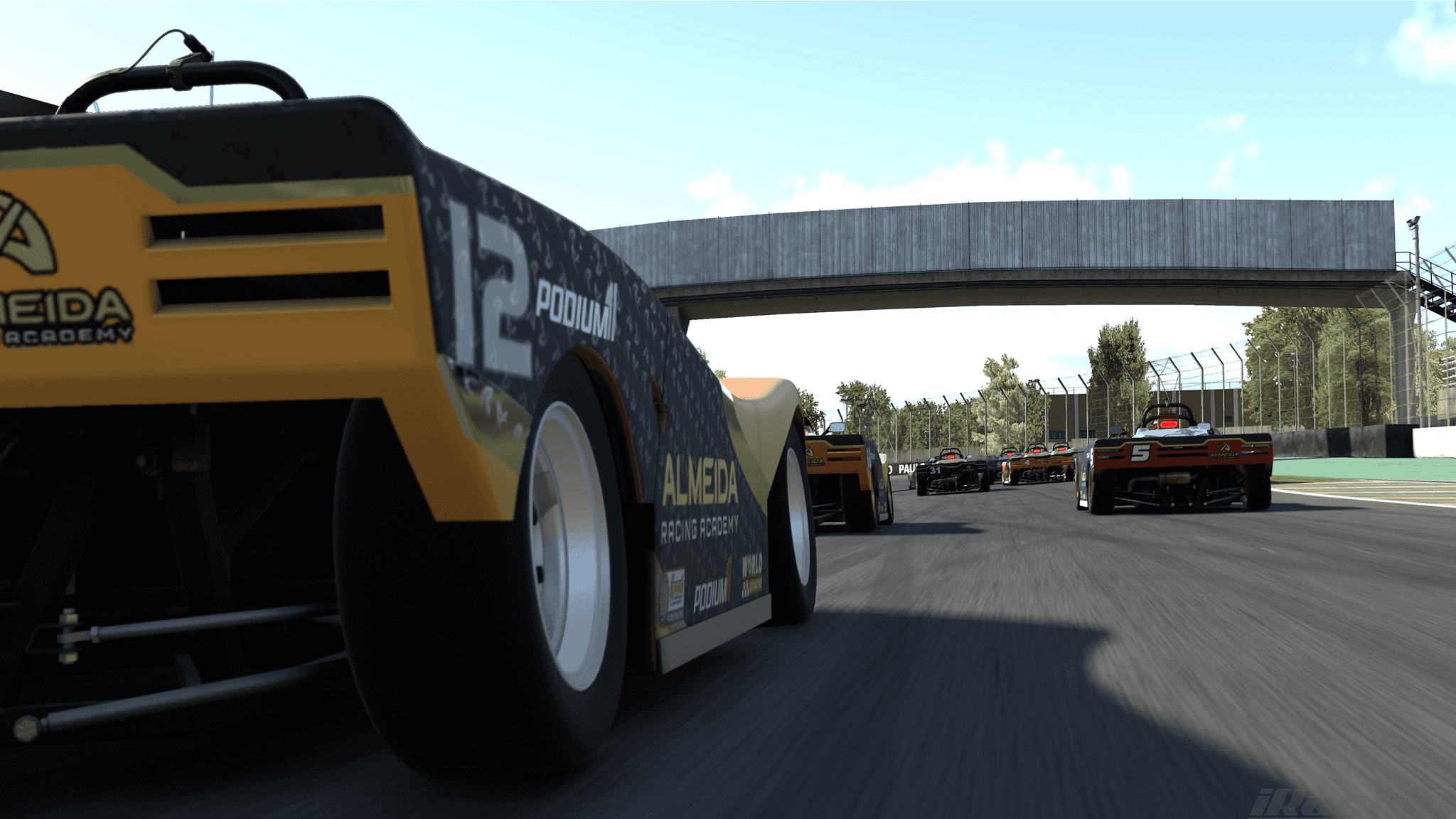
And the absolute best way to save fuel is by being behind someone and getting their draft. This is the way most people win races in endurance events. If they find someone that is fast enough so that they can just stay behind because the draft pulls you and gives you a little bit extra speed, right? So you gain that speed and then you lift earlier, you lift, you lift, you wait and then you brake and you continue benefiting from the draft.
As long as the other driver is fast and keeps you on a very good lap time, that's the absolute best way to gain time because if you do this over a stint, we could be talking about three to five seconds that you save in a pit stop. It's a lot of time and in a competitive scenario, it's a no brainer and it can be the way you are going to win a race.
Understanding Fuel-Saving Strategy in Racing
Sometimes, just going as fast as possible is not the best way to win races. In some scenarios, it might be faster to spend less time in the pit stops by doing an extra lap in your stint, and you can do that by saving fuel. But if you want to save more time in the pits than you would lose by trying to save the fuel on track, you have to know exactly where to save it.
What is Lifting Coast?
Lifting Coast is a technique used in racing where you release the throttle, or lift, before reaching the braking zone and let the car coast without applying the brakes. In real-life motorsports, lift-in-coast is used mostly for three things:
Fuel saving: Lift-in-coasting is commonly used in endurance racing to conserve fuel, allowing you to extend your stint or reduce pit stops
Tire management: Decreasing tire wear under braking
Brake temperature management
In the simulator, we generally use it only to save fuel and endurance events.
The Fundamentals of Fuel Saving
We normally spend almost all of our time accelerating or braking. To save fuel, we need to spend less time per lap on the throttle while using inertia to let the car roll in a little bit more during the lap. But of course, by doing that, we do lose time, so the secret is to know exactly what places it would be worth it to leave the car rolling or coasting on the track without losing too much time per lap.
So the math should be pretty simple. If you lose less time lifting, then the time you will save in the pits refueling.
Three Ways to Use Less Throttle and Why Only One Works
Now, let's discuss three ways we could use less throttle and fuel and why lifting and coasting in the braking zone is the only way you should do it. Let's say we have three corners: one deceleration, pretty low speed, another corner, low speed, and then a long straight that leads into a harder braking zone, also to a low speed.
Why Not to Lift on Corner Exit
Let's say we're trying to save fuel and one of the attempts is to just accelerate later. Well, when we do this, we lose time throughout the whole straight. So all this area is time lost. So lifting on the exit of a corner makes you lose way too much time that is definitely not going to be worth the time that you're going to save in the pits.
The Best Place to Lift: Before the Braking Zone
The best place to save fuel is always going to be at the very end before the braking zone. If you're lifting for, let's say, one second at the exit, you lose a lot of time throughout the straight. Now let's replace this. Instead of lifting at the exit, we're going to lift for the same amount, one second, but right before the braking zone.
If you exit fast, you carry the same amount of speed and then we lift for one second before braking and then we get to brake a little bit later. Now the amount of fuel we saved is actually exactly the same because when you're full throttle, the car doesn't know what speed you are. The car just knows how much fuel it's injecting, right? So you save the same amount of fuel by lifting for one second before braking that it would save at corner exit. The amount of time you lose is a fraction of a fraction.
So it's definitely not worth it to lift on a corner exit or on the middle of the straight. You always want to lift only at the very end before you start braking because that's where you lose the least amount of time.
High Speed vs. Low Speed Braking Zones
Now we know that we want to lift before a braking zone, but should we do it before a corner where we don't have a lot of straight line speed to speed up the car, or should we do it before one where we are at a much higher speed?
Well the best option is actually the high-speed corner. The higher the speed, the better it's going to be to save fuel and there's a reason for it. The speed percentage that you lose on the high end is going to be way lower than the speed percentage that you're going to lose at low speeds.
So relatively speaking, one second lifting at low speed will make you lose a lot of the speed. If you're at 50 km/h and then you're at 45, that makes you lose a lot of time because relatively speaking 45 km/h at a lower speed is a lot of speed. But comparing 300 to 295, proportionally that's a very small amount. So when you are at higher speeds, lifting will make you lose a lot less time than you think.
So it's much better to save fuel at top speed before corners, like for example Daytona Turn 1.
Why Not to Use Half Throttle
Another thing you should not do is half throttle. You don't want to accelerate less and lose progressively more speed just because the same way we're spending all this time, the area under the curve of the speed graph determines how much time we're losing and that area is much bigger when we don't go full throttle.
Summary: Optimal Fuel-Saving Strategy
So in other words, to save fuel you want to be extremely aggressive on low speed corners. You only want to lift before the braking and you want to prioritize lifting before long braking zones after a long straight.
The Best Way to Save Fuel: Using the Draft
And the absolute best way to save fuel is by being behind someone and getting their draft. This is the way most people win races in endurance events. If they find someone that is fast enough so that they can just stay behind because the draft pulls you and gives you a little bit extra speed, right? So you gain that speed and then you lift earlier, you lift, you lift, you wait and then you brake and you continue benefiting from the draft.
As long as the other driver is fast and keeps you on a very good lap time, that's the absolute best way to gain time because if you do this over a stint, we could be talking about three to five seconds that you save in a pit stop. It's a lot of time and in a competitive scenario, it's a no brainer and it can be the way you are going to win a race.
Understanding Fuel-Saving Strategy in Racing
Sometimes, just going as fast as possible is not the best way to win races. In some scenarios, it might be faster to spend less time in the pit stops by doing an extra lap in your stint, and you can do that by saving fuel. But if you want to save more time in the pits than you would lose by trying to save the fuel on track, you have to know exactly where to save it.
What is Lifting Coast?
Lifting Coast is a technique used in racing where you release the throttle, or lift, before reaching the braking zone and let the car coast without applying the brakes. In real-life motorsports, lift-in-coast is used mostly for three things:
Fuel saving: Lift-in-coasting is commonly used in endurance racing to conserve fuel, allowing you to extend your stint or reduce pit stops
Tire management: Decreasing tire wear under braking
Brake temperature management
In the simulator, we generally use it only to save fuel and endurance events.
The Fundamentals of Fuel Saving
We normally spend almost all of our time accelerating or braking. To save fuel, we need to spend less time per lap on the throttle while using inertia to let the car roll in a little bit more during the lap. But of course, by doing that, we do lose time, so the secret is to know exactly what places it would be worth it to leave the car rolling or coasting on the track without losing too much time per lap.
So the math should be pretty simple. If you lose less time lifting, then the time you will save in the pits refueling.
Three Ways to Use Less Throttle and Why Only One Works
Now, let's discuss three ways we could use less throttle and fuel and why lifting and coasting in the braking zone is the only way you should do it. Let's say we have three corners: one deceleration, pretty low speed, another corner, low speed, and then a long straight that leads into a harder braking zone, also to a low speed.
Why Not to Lift on Corner Exit
Let's say we're trying to save fuel and one of the attempts is to just accelerate later. Well, when we do this, we lose time throughout the whole straight. So all this area is time lost. So lifting on the exit of a corner makes you lose way too much time that is definitely not going to be worth the time that you're going to save in the pits.
The Best Place to Lift: Before the Braking Zone
The best place to save fuel is always going to be at the very end before the braking zone. If you're lifting for, let's say, one second at the exit, you lose a lot of time throughout the straight. Now let's replace this. Instead of lifting at the exit, we're going to lift for the same amount, one second, but right before the braking zone.
If you exit fast, you carry the same amount of speed and then we lift for one second before braking and then we get to brake a little bit later. Now the amount of fuel we saved is actually exactly the same because when you're full throttle, the car doesn't know what speed you are. The car just knows how much fuel it's injecting, right? So you save the same amount of fuel by lifting for one second before braking that it would save at corner exit. The amount of time you lose is a fraction of a fraction.
So it's definitely not worth it to lift on a corner exit or on the middle of the straight. You always want to lift only at the very end before you start braking because that's where you lose the least amount of time.
High Speed vs. Low Speed Braking Zones
Now we know that we want to lift before a braking zone, but should we do it before a corner where we don't have a lot of straight line speed to speed up the car, or should we do it before one where we are at a much higher speed?
Well the best option is actually the high-speed corner. The higher the speed, the better it's going to be to save fuel and there's a reason for it. The speed percentage that you lose on the high end is going to be way lower than the speed percentage that you're going to lose at low speeds.
So relatively speaking, one second lifting at low speed will make you lose a lot of the speed. If you're at 50 km/h and then you're at 45, that makes you lose a lot of time because relatively speaking 45 km/h at a lower speed is a lot of speed. But comparing 300 to 295, proportionally that's a very small amount. So when you are at higher speeds, lifting will make you lose a lot less time than you think.
So it's much better to save fuel at top speed before corners, like for example Daytona Turn 1.
Why Not to Use Half Throttle
Another thing you should not do is half throttle. You don't want to accelerate less and lose progressively more speed just because the same way we're spending all this time, the area under the curve of the speed graph determines how much time we're losing and that area is much bigger when we don't go full throttle.
Summary: Optimal Fuel-Saving Strategy
So in other words, to save fuel you want to be extremely aggressive on low speed corners. You only want to lift before the braking and you want to prioritize lifting before long braking zones after a long straight.
The Best Way to Save Fuel: Using the Draft
And the absolute best way to save fuel is by being behind someone and getting their draft. This is the way most people win races in endurance events. If they find someone that is fast enough so that they can just stay behind because the draft pulls you and gives you a little bit extra speed, right? So you gain that speed and then you lift earlier, you lift, you lift, you wait and then you brake and you continue benefiting from the draft.
As long as the other driver is fast and keeps you on a very good lap time, that's the absolute best way to gain time because if you do this over a stint, we could be talking about three to five seconds that you save in a pit stop. It's a lot of time and in a competitive scenario, it's a no brainer and it can be the way you are going to win a race.
Racecraft Foundations
Battle Dynamics
Racing Strategies
Psychology of Racing
Other Lessons