Lesson
Lesson
19
of
of
21
Adapting to the Track

Lesson by
Suellio Almeida
Lesson by
Suellio Almeida
Mark as Finished
Adapting to the Track
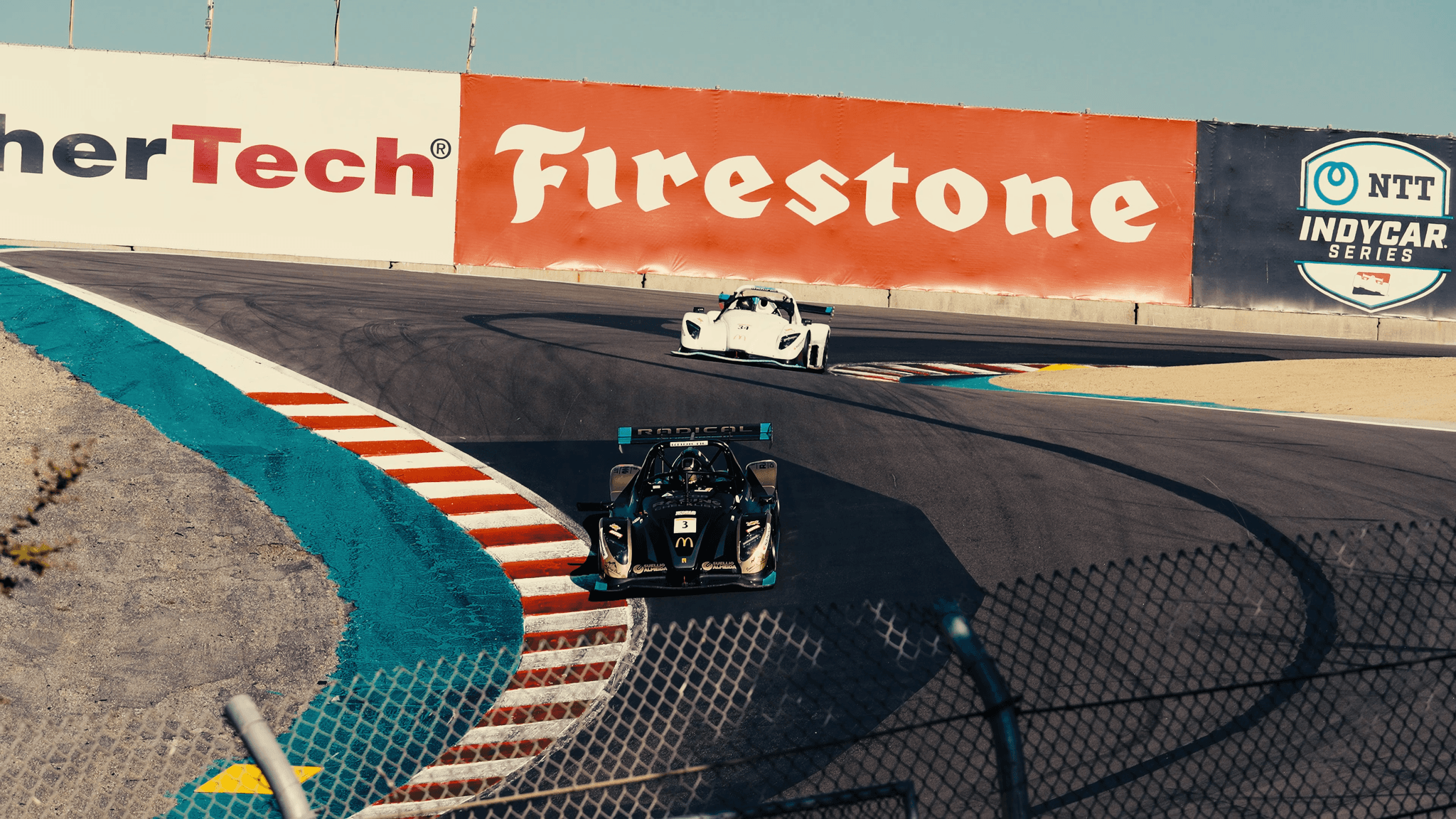
Elevation changes and camber changes on the track will directly change the amount of total grip available on a race car. They are also a common cause of crashes because the grip changes can be dramatic. In this lesson we will learn all types of elevation and camber changes and how to plan and adjust your lines to maximize them and also prevent these bad surprises.
Compressions
Compressions are elevation changes that increase the amount of available grip. They happen when we start going upwards from a flat track or when we start to go flat going from a downhill. The car will compress against the track and the tires will receive an extra amount of load on top of the car's own weight.
During compressions we can ask for more from the car. We can turn more, we can accelerate more, we can break more. Under braking for example you can break up to 20, 30% more depending on the compression compared to braking on a flat track.
Crests or Decompressions
Crests or decompressions are the opposite of compressions. The track starts falling away from the car and the tires lose the load for the duration of the crest. During the crest we can turn less, break less, accelerate less because the load the tires are supporting is lower than the car's own weight.
Not understanding the grip changes during crests is a very common cause of spins and crashes for beginners because these changes are drastic. Sometimes you have to break up to 50% less during a crest compared to a flat track and if the crest is on a corner exit it's extremely easy to get throttle oversteer and spin.
To understand crests better just think that if the crest is aggressive enough the car can literally lose total contact which means we're jumping. And during airtime the car will not turn at all, not break at all, not accelerate at all. It will just continue going straight following the line it had before the jump and stay on that straight line until it lands. This is exactly how crests affect the line that the car can trace. The more aggressive the crest the straighter the line the car is capable of doing.
Understanding Weight Transfer Through the Tires
Let's humanize the tires a little bit for the sake of this explanation. Compressions and crests will affect how the tire feels the weight of the car. In a flat track and a 1000 kilo car the tires will feel the 1000 kilo distributed onto them constantly. But during a compression the tires feel a dramatically higher weight like 1500 kilos for example for the duration of the compression. During a crest the tires can feel 500 kilo or 250 kilo or even nothing in the case of a jump.
Camber and Off Camber Changes
Camber or off camber changes happen when the track tilts clockwise or counter clockwise. We will call camber or on camber if the track tilts to the direction of the corner and there will be more grip just like a compression. This is why we have banking in oval tracks to allow the cars to carry dramatically higher speeds during the corners. In oval racing we can find banking angles of up to 34 degrees but even tiny changes in camber like 5 degrees or even less will already substantially change the amount of grip available during the corner.
Off camber happens when the track tilts away from the direction of the corner. There will be less grip like a decompression. Off camber corners are less common but even the slightest off camber angles can make the corner drop its grip levels substantially.
For beginners it's easier to identify big compressions, big camber changes and crests but the more you internalize these concepts the more precise you get enabling you to identify subtle changes in elevation that will still have a substantial effect on the grip of the car.
Adjusting the Racing Line for Track Changes
So how is the racing line affected by track changes? What adjustments do we need to do to find and maximize the perfect line in corners like that? Well racing line wise the one thing that applies to every situation is:
If you have more grip you can rotate more or carry more speed on that same line
If you have less grip you will have to go straighter unless you slow down more
Because one single corner can have changing conditions between braking, entry, mid corner and exit sometimes the lines may take an obvious route. So let's say you have a corner that has a compression on entry and mid corner and then a crests on exit like the last corner at autumn park. Instead of doing the traditional 50% rotation on entry and 50% rotation on exit you should actually do for example 70% of the rotation on entry and only 30% of the rotation on exit to carry the most speed possible.
And because there's no grip on exit and most drivers ignore that this corner is actually famous for being very tricky especially for beginners who tend to spin on corner exits. The reason they spin is because they do only 50% of the rotation on entry and expect a normal amount of grip and then as they get on power they find themselves with absolutely no grip and end up spinning.
We're going to do a detailed elevation changes analysis on a few tracks on the next videos. I'll see you there.
Fundamental Motorsports Tips
Driving at the limit
Car Control Fundamentals
Building Race Confidence
Mastering Elevation Changes
Other Lessons
Other Lessons