
How VR Transformed My Sim Racing — And Why It Might Not Be For You
Suellio Almeida
•
Thursday, October 23, 2025
VR Was Supposed to Be the Answer. So Why Did I Stop Using It?
Let me be direct: I raced in VR for years. Then I stopped.
Not because it wasn't immersive. Not because the tech wasn't good enough. I stopped because the headsets gave me headaches. Every. Single. Session.
You know the feeling. That pressure building behind your eyes. The slight nausea creeping in after 30 minutes. The way your spatial awareness feels off when you take the headset off.
I convinced myself it was normal. "VR just takes getting used to," I told students. "Push through it."
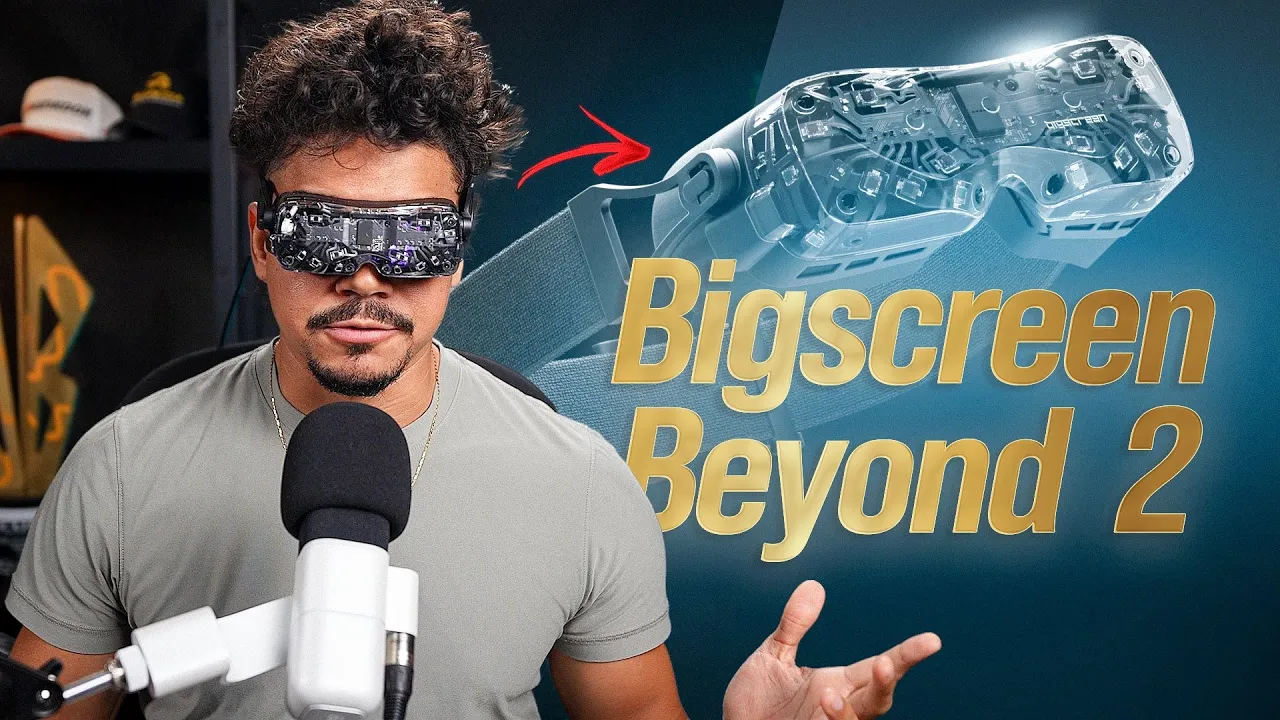
Then the BigScreen Beyond landed on my desk.
What Makes a VR Headset Actually Usable for Racing?
Here's what nobody tells you about VR in sim racing: comfort isn't a luxury feature. It's the deciding factor between a tool you use and a gadget that collects dust.
The BigScreen Beyond weighs 127 grams. That's less than a smartphone. You forget it's there.
Compare that to the Meta Quest 3 at 515 grams. Or the Valve Index at 809 grams. After a 2-hour endurance stint, that difference isn't academic — it's the difference between finishing your practice session and calling it quits early.
But weight is just the start. The real breakthrough? Custom facial interface.
BigScreen scans your face. They 3D print a cushion that fits YOUR face geometry. No light leak. No pressure points. No constant readjusting mid-race.
I could finally run a full IMSA practice session without stopping. That's when I realized: my VR problems were never about "getting used to it." They were about forcing my face into a one-size-fits-none design.
The Tech Specs That Actually Matter on Track
2560x2560 per eye. OLED panels. 90Hz refresh rate.
Those numbers sound great on paper. Here's what they mean in the car:
You can read the dash. All of it. Brake bias numbers. Tire temps. Fuel calculations. No more guessing, no more leaning forward to squint at blurry pixels.
Depth perception comes back. Trail braking into a tight corner? You can feel the nose dive, judge the apex distance, spot your rotation point. It's not "like" being in a real car. It's close enough that your brain stops fighting it.
The framerate holds. This is critical. Dropped frames in VR don't just look bad — they make you slow. Your brain can't predict where the car will be next. You second-guess your inputs. With 90Hz locked, that hesitation disappears.
I tested this during IMSA TCR practice at Daytona. Multiclass traffic at night, rain starting to fall. I could track cars in my mirrors, spot brake markers through spray, and still hit my apexes. That's not possible in a headset that's fighting you.
But VR Still Isn't Perfect (And That's Fine)
Let's be real: VR has trade-offs you need to accept.
You're tethered. The DisplayPort cable isn't going anywhere. This isn't a wireless headset. You need a full gaming PC with a serious GPU. If you're on a laptop or mid-range setup, this isn't your solution yet.
Glasses don't fit. The slim design means no space for frames. You'll need prescription lens inserts (about $100 extra) or contacts. Non-negotiable.
Setup takes time. The face scan, the fitting process, the audio setup (it uses built-in speakers, no headphones) — this isn't plug-and-play. It's a commitment.
And here's the part that surprises people: VR doesn't automatically make you faster.
I've coached drivers who gained 2 seconds switching to VR. I've also coached drivers who got slower because they couldn't adapt to the depth perception shift.
VR is a tool. Like any tool in racing, it amplifies what you already know. If your fundamentals are shaky — if you're guessing at brake points, if your vision technique is reactive instead of predictive — VR won't fix that. It might even expose those gaps harder.
Who Actually Needs This Headset?
You're serious about sim racing. Not "I race on weekends for fun" serious — "I'm studying data, working on consistency, treating this like real motorsport training" serious.
You've hit the ceiling with flat screens. You know the lines, you know the techniques, but something's missing. That connection between what you see and what you feel.
You have the hardware to support it. RTX 3080 minimum, really. Strong CPU. USB-C port for the face scanner. A rig that isn't going to flex when you're pulling 3Gs in VR.
You're willing to invest in the adaptation period. Because yeah, it takes time. Your first few sessions will feel weird. Your lap times might drop before they improve. That's normal. Your brain is rewiring its spatial reference points.
For me? The BigScreen Beyond brought back what I missed about VR — that feeling of actually being in the car — without the pain that made me quit. I can coach for hours. I can run full race distances. I can focus on technique instead of managing discomfort.
That's what changed. Not the immersion. Not the resolution. The ability to actually use the tool without it fighting me.
What If Your Biggest Limitation Isn't Your Equipment?
You could have the best VR headset. The most expensive rig. The fastest pedals money can buy.
But if you're still guessing at trail braking zones... if you're not sure why you're losing time in sector 2... if you're fast one lap and inconsistent the next...
How much is the hardware really the problem?
I built Almeida Racing Academy because I kept seeing the same pattern: drivers buying upgrades hoping for breakthroughs, when what they actually needed was structured technique training.
The difference between a 2.5 second lap time drop and spinning your wheels for months? Having a method. Understanding the physics. Practicing the right things in the right order.
That's what you get inside Gold membership. 8 courses. 80 lessons. Trail braking, weight transfer, racecraft, consistency — the techniques I use in IMSA, broken down step by step. Plus coach-led workshops, challenges, and a community of drivers actually putting in the work.
Start your 7-day trial for $1 at Almeida Racing Academy
(use code WINTER to lock in $25/month after). See if the training makes more difference than the gear.
Sim Racing Academy Membership
Everything you need to stop guessing and start getting faster.
Starting at
$25
/mo
Car Handling Online Course
4 levels, full curriculum. Aimed to get you to top 1% in driving pace.
Racecraft Online Course
Overtaking, Defending, Race Strategy
Live coaching + on-track practice
Bi-weekly pro-coach workshops (recorded — never miss one) plus on-track Pit Parties to practice racecraft with a coach.
Plus These Bonuses
13,000+ Member Community
League Racing
Advanced MX-5 Mini Course
Racing Technique Development Guide
The Motor Racing Book (260 pages)
Think & Behave Like a Pro Driver — Mini eBook
How VR Transformed My Sim Racing — And Why It Might Not Be For You
Suellio Almeida
•
Thursday, October 23, 2025
VR Was Supposed to Be the Answer. So Why Did I Stop Using It?
Let me be direct: I raced in VR for years. Then I stopped.
Not because it wasn't immersive. Not because the tech wasn't good enough. I stopped because the headsets gave me headaches. Every. Single. Session.
You know the feeling. That pressure building behind your eyes. The slight nausea creeping in after 30 minutes. The way your spatial awareness feels off when you take the headset off.
I convinced myself it was normal. "VR just takes getting used to," I told students. "Push through it."
Then the BigScreen Beyond landed on my desk.
What Makes a VR Headset Actually Usable for Racing?
Here's what nobody tells you about VR in sim racing: comfort isn't a luxury feature. It's the deciding factor between a tool you use and a gadget that collects dust.
The BigScreen Beyond weighs 127 grams. That's less than a smartphone. You forget it's there.
Compare that to the Meta Quest 3 at 515 grams. Or the Valve Index at 809 grams. After a 2-hour endurance stint, that difference isn't academic — it's the difference between finishing your practice session and calling it quits early.
But weight is just the start. The real breakthrough? Custom facial interface.
BigScreen scans your face. They 3D print a cushion that fits YOUR face geometry. No light leak. No pressure points. No constant readjusting mid-race.
I could finally run a full IMSA practice session without stopping. That's when I realized: my VR problems were never about "getting used to it." They were about forcing my face into a one-size-fits-none design.
The Tech Specs That Actually Matter on Track
2560x2560 per eye. OLED panels. 90Hz refresh rate.
Those numbers sound great on paper. Here's what they mean in the car:
You can read the dash. All of it. Brake bias numbers. Tire temps. Fuel calculations. No more guessing, no more leaning forward to squint at blurry pixels.
Depth perception comes back. Trail braking into a tight corner? You can feel the nose dive, judge the apex distance, spot your rotation point. It's not "like" being in a real car. It's close enough that your brain stops fighting it.
The framerate holds. This is critical. Dropped frames in VR don't just look bad — they make you slow. Your brain can't predict where the car will be next. You second-guess your inputs. With 90Hz locked, that hesitation disappears.
I tested this during IMSA TCR practice at Daytona. Multiclass traffic at night, rain starting to fall. I could track cars in my mirrors, spot brake markers through spray, and still hit my apexes. That's not possible in a headset that's fighting you.
But VR Still Isn't Perfect (And That's Fine)
Let's be real: VR has trade-offs you need to accept.
You're tethered. The DisplayPort cable isn't going anywhere. This isn't a wireless headset. You need a full gaming PC with a serious GPU. If you're on a laptop or mid-range setup, this isn't your solution yet.
Glasses don't fit. The slim design means no space for frames. You'll need prescription lens inserts (about $100 extra) or contacts. Non-negotiable.
Setup takes time. The face scan, the fitting process, the audio setup (it uses built-in speakers, no headphones) — this isn't plug-and-play. It's a commitment.
And here's the part that surprises people: VR doesn't automatically make you faster.
I've coached drivers who gained 2 seconds switching to VR. I've also coached drivers who got slower because they couldn't adapt to the depth perception shift.
VR is a tool. Like any tool in racing, it amplifies what you already know. If your fundamentals are shaky — if you're guessing at brake points, if your vision technique is reactive instead of predictive — VR won't fix that. It might even expose those gaps harder.
Who Actually Needs This Headset?
You're serious about sim racing. Not "I race on weekends for fun" serious — "I'm studying data, working on consistency, treating this like real motorsport training" serious.
You've hit the ceiling with flat screens. You know the lines, you know the techniques, but something's missing. That connection between what you see and what you feel.
You have the hardware to support it. RTX 3080 minimum, really. Strong CPU. USB-C port for the face scanner. A rig that isn't going to flex when you're pulling 3Gs in VR.
You're willing to invest in the adaptation period. Because yeah, it takes time. Your first few sessions will feel weird. Your lap times might drop before they improve. That's normal. Your brain is rewiring its spatial reference points.
For me? The BigScreen Beyond brought back what I missed about VR — that feeling of actually being in the car — without the pain that made me quit. I can coach for hours. I can run full race distances. I can focus on technique instead of managing discomfort.
That's what changed. Not the immersion. Not the resolution. The ability to actually use the tool without it fighting me.
What If Your Biggest Limitation Isn't Your Equipment?
You could have the best VR headset. The most expensive rig. The fastest pedals money can buy.
But if you're still guessing at trail braking zones... if you're not sure why you're losing time in sector 2... if you're fast one lap and inconsistent the next...
How much is the hardware really the problem?
I built Almeida Racing Academy because I kept seeing the same pattern: drivers buying upgrades hoping for breakthroughs, when what they actually needed was structured technique training.
The difference between a 2.5 second lap time drop and spinning your wheels for months? Having a method. Understanding the physics. Practicing the right things in the right order.
That's what you get inside Gold membership. 8 courses. 80 lessons. Trail braking, weight transfer, racecraft, consistency — the techniques I use in IMSA, broken down step by step. Plus coach-led workshops, challenges, and a community of drivers actually putting in the work.
Start your 7-day trial for $1 at Almeida Racing Academy
(use code WINTER to lock in $25/month after). See if the training makes more difference than the gear.
Sim Racing Academy Membership
Everything you need to stop guessing and start getting faster.
Starting at
$25
/mo
Car Handling Online Course
4 levels, full curriculum. Aimed to get you to top 1% in driving pace.
Racecraft Online Course
Overtaking, Defending, Race Strategy
Live coaching + on-track practice
Bi-weekly pro-coach workshops (recorded — never miss one) plus on-track Pit Parties to practice racecraft with a coach.
Plus These Bonuses
13,000+ Member Community
League Racing
Advanced MX-5 Mini Course
Racing Technique Development Guide
The Motor Racing Book (260 pages)
Think & Behave Like a Pro Driver — Mini eBook
How VR Transformed My Sim Racing — And Why It Might Not Be For You
Suellio Almeida
•
Thursday, October 23, 2025
VR Was Supposed to Be the Answer. So Why Did I Stop Using It?
Let me be direct: I raced in VR for years. Then I stopped.
Not because it wasn't immersive. Not because the tech wasn't good enough. I stopped because the headsets gave me headaches. Every. Single. Session.
You know the feeling. That pressure building behind your eyes. The slight nausea creeping in after 30 minutes. The way your spatial awareness feels off when you take the headset off.
I convinced myself it was normal. "VR just takes getting used to," I told students. "Push through it."
Then the BigScreen Beyond landed on my desk.
What Makes a VR Headset Actually Usable for Racing?
Here's what nobody tells you about VR in sim racing: comfort isn't a luxury feature. It's the deciding factor between a tool you use and a gadget that collects dust.
The BigScreen Beyond weighs 127 grams. That's less than a smartphone. You forget it's there.
Compare that to the Meta Quest 3 at 515 grams. Or the Valve Index at 809 grams. After a 2-hour endurance stint, that difference isn't academic — it's the difference between finishing your practice session and calling it quits early.
But weight is just the start. The real breakthrough? Custom facial interface.
BigScreen scans your face. They 3D print a cushion that fits YOUR face geometry. No light leak. No pressure points. No constant readjusting mid-race.
I could finally run a full IMSA practice session without stopping. That's when I realized: my VR problems were never about "getting used to it." They were about forcing my face into a one-size-fits-none design.
The Tech Specs That Actually Matter on Track
2560x2560 per eye. OLED panels. 90Hz refresh rate.
Those numbers sound great on paper. Here's what they mean in the car:
You can read the dash. All of it. Brake bias numbers. Tire temps. Fuel calculations. No more guessing, no more leaning forward to squint at blurry pixels.
Depth perception comes back. Trail braking into a tight corner? You can feel the nose dive, judge the apex distance, spot your rotation point. It's not "like" being in a real car. It's close enough that your brain stops fighting it.
The framerate holds. This is critical. Dropped frames in VR don't just look bad — they make you slow. Your brain can't predict where the car will be next. You second-guess your inputs. With 90Hz locked, that hesitation disappears.
I tested this during IMSA TCR practice at Daytona. Multiclass traffic at night, rain starting to fall. I could track cars in my mirrors, spot brake markers through spray, and still hit my apexes. That's not possible in a headset that's fighting you.
But VR Still Isn't Perfect (And That's Fine)
Let's be real: VR has trade-offs you need to accept.
You're tethered. The DisplayPort cable isn't going anywhere. This isn't a wireless headset. You need a full gaming PC with a serious GPU. If you're on a laptop or mid-range setup, this isn't your solution yet.
Glasses don't fit. The slim design means no space for frames. You'll need prescription lens inserts (about $100 extra) or contacts. Non-negotiable.
Setup takes time. The face scan, the fitting process, the audio setup (it uses built-in speakers, no headphones) — this isn't plug-and-play. It's a commitment.
And here's the part that surprises people: VR doesn't automatically make you faster.
I've coached drivers who gained 2 seconds switching to VR. I've also coached drivers who got slower because they couldn't adapt to the depth perception shift.
VR is a tool. Like any tool in racing, it amplifies what you already know. If your fundamentals are shaky — if you're guessing at brake points, if your vision technique is reactive instead of predictive — VR won't fix that. It might even expose those gaps harder.
Who Actually Needs This Headset?
You're serious about sim racing. Not "I race on weekends for fun" serious — "I'm studying data, working on consistency, treating this like real motorsport training" serious.
You've hit the ceiling with flat screens. You know the lines, you know the techniques, but something's missing. That connection between what you see and what you feel.
You have the hardware to support it. RTX 3080 minimum, really. Strong CPU. USB-C port for the face scanner. A rig that isn't going to flex when you're pulling 3Gs in VR.
You're willing to invest in the adaptation period. Because yeah, it takes time. Your first few sessions will feel weird. Your lap times might drop before they improve. That's normal. Your brain is rewiring its spatial reference points.
For me? The BigScreen Beyond brought back what I missed about VR — that feeling of actually being in the car — without the pain that made me quit. I can coach for hours. I can run full race distances. I can focus on technique instead of managing discomfort.
That's what changed. Not the immersion. Not the resolution. The ability to actually use the tool without it fighting me.
What If Your Biggest Limitation Isn't Your Equipment?
You could have the best VR headset. The most expensive rig. The fastest pedals money can buy.
But if you're still guessing at trail braking zones... if you're not sure why you're losing time in sector 2... if you're fast one lap and inconsistent the next...
How much is the hardware really the problem?
I built Almeida Racing Academy because I kept seeing the same pattern: drivers buying upgrades hoping for breakthroughs, when what they actually needed was structured technique training.
The difference between a 2.5 second lap time drop and spinning your wheels for months? Having a method. Understanding the physics. Practicing the right things in the right order.
That's what you get inside Gold membership. 8 courses. 80 lessons. Trail braking, weight transfer, racecraft, consistency — the techniques I use in IMSA, broken down step by step. Plus coach-led workshops, challenges, and a community of drivers actually putting in the work.
Start your 7-day trial for $1 at Almeida Racing Academy
(use code WINTER to lock in $25/month after). See if the training makes more difference than the gear.
Sim Racing Academy Membership
Everything you need to stop guessing and start getting faster.
Starting at
$25
/mo
Car Handling Online Course
4 levels, full curriculum. Aimed to get you to top 1% in driving pace.
Racecraft Online Course
Overtaking, Defending, Race Strategy
Live coaching + on-track practice
Bi-weekly pro-coach workshops (recorded — never miss one) plus on-track Pit Parties to practice racecraft with a coach.
Plus These Bonuses
13,000+ Member Community
League Racing
Advanced MX-5 Mini Course
Racing Technique Development Guide
The Motor Racing Book (260 pages)
Think & Behave Like a Pro Driver — Mini eBook