
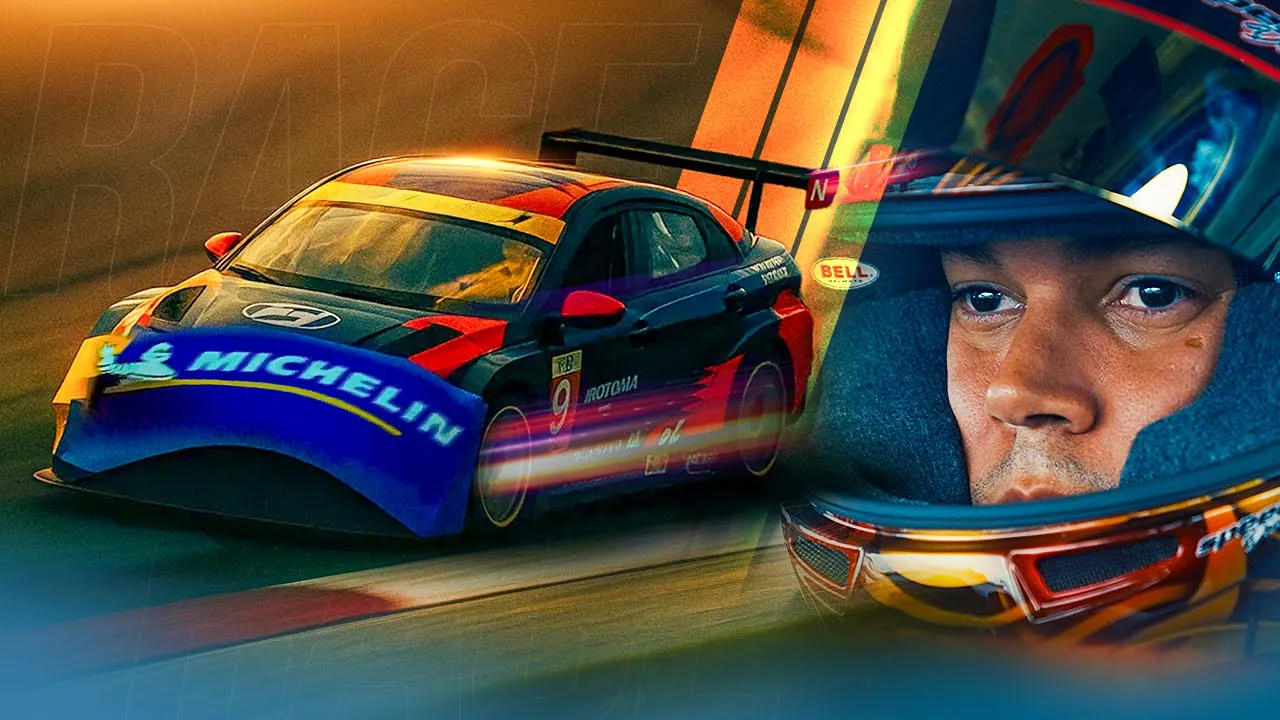
Sim Racing to IMSA: 4 Hours of Mid-Ohio — What Actually Transfers to Real Racing
Suellio Almeida
•
Wednesday, August 6, 2025
The Mental Game: Why Endurance Racing Breaks Most Drivers
Four hours in a race car sounds romantic until you're two hours in and your brain is screaming at you to quit.
This isn't like sim racing where you can pause, reset, or bail on a bad session. You're locked in. The heat, the G-forces, the relentless decision-making — it compounds. Most drivers I watched at Mid-Ohio weren't losing time because of skill. They were losing it because their mental endurance collapsed.
Here's what nobody tells you: physical fitness matters less than mental discipline in endurance racing. You can be in great shape and still mentally tap out by hour three. The difference? Training your brain to stay sharp under fatigue.
In sim racing, we have the same tool. Long stints. Consistency challenges. Forcing yourself to hit the same lap times on lap 40 as you did on lap 10. That's not just practice — that's mental conditioning. And it's the exact skillset that separated the podium finishers from the pack at Mid-Ohio.
Trail Braking Under Pressure: The Technique That Won Me Positions
Mid-Ohio has some of the most technical braking zones in IMSA. Turn 4, the Keyhole, Turn 1 — these aren't just about threshold braking. They demand progressive trail braking with precision weight transfer.
In sim racing, you can feel when you've nailed it. The car rotates perfectly, you're carrying maximum corner speed, and the exit is clean. In real life? The sensations are amplified. You feel the front tires loading. You feel the rear start to float if you overdid it. You feel the platform settle if you got it right.
Every position I gained at Mid-Ohio came from out-braking someone into Turn 1 or carrying more speed through the Keyhole. Not because I was braver. Because I trusted my trail braking technique — the exact same technique I've coached 36,000 students on in sim racing.
The physics don't change. Weight transfer is weight transfer. Maximum Rotation Point exists in both worlds. The only difference is the consequence of getting it wrong. But if you've trained the technique properly in the sim, your brain already knows the movement pattern. You're not guessing. You're executing.
Vision Techniques: How I Processed Traffic at 140 MPH
Endurance racing is traffic management. Period.
You're constantly dealing with faster cars lapping you, slower cars blocking you, and cars in your class fighting for position. At Mid-Ohio, I was processing 5-6 cars in my field of vision at any given moment — and making split-second decisions about when to defend, when to yield, when to attack.
This is where sim racing vision drills paid off massively.
In the academy, we train vision techniques obsessively. Looking through the apex. Scanning mirrors without breaking focus on the track ahead. Using peripheral awareness to track cars beside you. These aren't abstract concepts — they're trainable skills.
At Mid-Ohio, I never once felt overwhelmed by traffic. Why? Because I'd already processed those same scenarios thousands of times in iRacing. The speed is real. The stakes are real. But the visual processing? That's a learned skill, and the sim is the perfect training ground.
If you're not actively training your vision in sim racing, you're leaving the biggest advantage on the table.
Consistency > Speed: The Harsh Truth Endurance Racing Teaches
Here's what humbles every driver in their first endurance race: your fastest lap means nothing if you can't repeat it for four hours.
I watched guys at Mid-Ohio throw down blistering single laps, then fall apart over a stint. Inconsistent braking points. Sloppy exits. Mental errors compounding into lost positions.
Meanwhile, I ran my race plan. Every lap within half a second of my target. Not the fastest single lap. Not the hero move. Just relentless, repeatable pace.
That's what wins endurance races. And it's exactly what we drill in the academy's consistency challenges.
In sim racing, you can track this with data. Delta bar, lap time consistency, sector splits. You can see when you're drifting. In real racing, you feel it — but by then, you've already lost time. The discipline to stay in the window? That's built in the sim, where you can practice it without burning $5,000 in track time.
The Sim-to-Real Transfer: What Actually Works
Let me be direct: not everything transfers from sim racing to real racing.
You can't simulate G-forces. You can't simulate heat exhaustion. You can't simulate the fear of actual consequences.
But here's what does transfer — and why it matters:
1. Racing lines and track knowledge. I knew Mid-Ohio before I arrived. Every braking marker, every apex, every bump. Zero learning curve.
2. Racecraft and positioning. Defending into Turn 1, setting up an outside pass into the Keyhole — I'd done it a thousand times in iRacing. The muscle memory was there.
3. Mental discipline under fatigue. Long sim racing stints train your brain to stay sharp when your body wants to quit. That's the game in hour three of a real race.
4. Data literacy. Understanding tire deg, fuel strategy, brake bias adjustments — all of that came from years of analyzing telemetry in the sim.
The gap between sim and real racing is shrinking every year. The drivers who treat sim racing as serious training are showing up to real tracks with a 12-month head start on everyone else.
Mid-Ohio proved that to me. Again.
What Would Change If You Trained Like a Real Driver?
Here's the question most sim racers never ask themselves: Am I training, or am I just driving?
Driving is hopping in the sim, running some laps, maybe doing a race, logging off. Training is structured. Purposeful. It has a goal.
After Mid-Ohio, I'm more convinced than ever that sim racers who train with intention can outperform guys who've been racing real cars for years. The tool is that good. The physics are that accurate. The skills are that transferable.
But only if you use it correctly.
How long are you going to keep running laps without a plan? How many more months of the same plateau before you admit you need a system?
You don't need more seat time. You need better training.
Ready to Train Like You're Actually Going Racing?
Honest question: if you knew the exact techniques that transfer from sim racing to real motorsports, would you train differently?
Because here's the gap most drivers don't see — it's not talent. It's method. The guys making the jump from sim to real aren't special. They're just training the right skills in the right order.
That's what we built the academy for. Trail braking progressions. Vision drills. Consistency challenges. Mental game training. All of it designed around one goal: making you a complete racing driver, whether you're chasing iRating or preparing for your first real track day.
Gold Membership gets you 8 full courses, 80 lessons, weekly coach-led workshops, and the exact training system I used to go from sim racer to IMSA driver. Right now it's $25/month with code WINTER.
The method works. Mid-Ohio proved it. Question is — are you ready to commit to it?
Sim Racing Academy Membership
Everything you need to stop guessing and start getting faster.
Starting at
$25
/mo
Car Handling Online Course
4 levels, full curriculum. Aimed to get you to top 1% in driving pace.
Racecraft Online Course
Overtaking, Defending, Race Strategy
Live coaching + on-track practice
Bi-weekly pro-coach workshops (recorded — never miss one) plus on-track Pit Parties to practice racecraft with a coach.
Plus These Bonuses
13,000+ Member Community
League Racing
Advanced MX-5 Mini Course
Racing Technique Development Guide
The Motor Racing Book (260 pages)
Think & Behave Like a Pro Driver — Mini eBook
Sim Racing to IMSA: 4 Hours of Mid-Ohio — What Actually Transfers to Real Racing
Suellio Almeida
•
Wednesday, August 6, 2025
The Mental Game: Why Endurance Racing Breaks Most Drivers
Four hours in a race car sounds romantic until you're two hours in and your brain is screaming at you to quit.
This isn't like sim racing where you can pause, reset, or bail on a bad session. You're locked in. The heat, the G-forces, the relentless decision-making — it compounds. Most drivers I watched at Mid-Ohio weren't losing time because of skill. They were losing it because their mental endurance collapsed.
Here's what nobody tells you: physical fitness matters less than mental discipline in endurance racing. You can be in great shape and still mentally tap out by hour three. The difference? Training your brain to stay sharp under fatigue.
In sim racing, we have the same tool. Long stints. Consistency challenges. Forcing yourself to hit the same lap times on lap 40 as you did on lap 10. That's not just practice — that's mental conditioning. And it's the exact skillset that separated the podium finishers from the pack at Mid-Ohio.
Trail Braking Under Pressure: The Technique That Won Me Positions
Mid-Ohio has some of the most technical braking zones in IMSA. Turn 4, the Keyhole, Turn 1 — these aren't just about threshold braking. They demand progressive trail braking with precision weight transfer.
In sim racing, you can feel when you've nailed it. The car rotates perfectly, you're carrying maximum corner speed, and the exit is clean. In real life? The sensations are amplified. You feel the front tires loading. You feel the rear start to float if you overdid it. You feel the platform settle if you got it right.
Every position I gained at Mid-Ohio came from out-braking someone into Turn 1 or carrying more speed through the Keyhole. Not because I was braver. Because I trusted my trail braking technique — the exact same technique I've coached 36,000 students on in sim racing.
The physics don't change. Weight transfer is weight transfer. Maximum Rotation Point exists in both worlds. The only difference is the consequence of getting it wrong. But if you've trained the technique properly in the sim, your brain already knows the movement pattern. You're not guessing. You're executing.
Vision Techniques: How I Processed Traffic at 140 MPH
Endurance racing is traffic management. Period.
You're constantly dealing with faster cars lapping you, slower cars blocking you, and cars in your class fighting for position. At Mid-Ohio, I was processing 5-6 cars in my field of vision at any given moment — and making split-second decisions about when to defend, when to yield, when to attack.
This is where sim racing vision drills paid off massively.
In the academy, we train vision techniques obsessively. Looking through the apex. Scanning mirrors without breaking focus on the track ahead. Using peripheral awareness to track cars beside you. These aren't abstract concepts — they're trainable skills.
At Mid-Ohio, I never once felt overwhelmed by traffic. Why? Because I'd already processed those same scenarios thousands of times in iRacing. The speed is real. The stakes are real. But the visual processing? That's a learned skill, and the sim is the perfect training ground.
If you're not actively training your vision in sim racing, you're leaving the biggest advantage on the table.
Consistency > Speed: The Harsh Truth Endurance Racing Teaches
Here's what humbles every driver in their first endurance race: your fastest lap means nothing if you can't repeat it for four hours.
I watched guys at Mid-Ohio throw down blistering single laps, then fall apart over a stint. Inconsistent braking points. Sloppy exits. Mental errors compounding into lost positions.
Meanwhile, I ran my race plan. Every lap within half a second of my target. Not the fastest single lap. Not the hero move. Just relentless, repeatable pace.
That's what wins endurance races. And it's exactly what we drill in the academy's consistency challenges.
In sim racing, you can track this with data. Delta bar, lap time consistency, sector splits. You can see when you're drifting. In real racing, you feel it — but by then, you've already lost time. The discipline to stay in the window? That's built in the sim, where you can practice it without burning $5,000 in track time.
The Sim-to-Real Transfer: What Actually Works
Let me be direct: not everything transfers from sim racing to real racing.
You can't simulate G-forces. You can't simulate heat exhaustion. You can't simulate the fear of actual consequences.
But here's what does transfer — and why it matters:
1. Racing lines and track knowledge. I knew Mid-Ohio before I arrived. Every braking marker, every apex, every bump. Zero learning curve.
2. Racecraft and positioning. Defending into Turn 1, setting up an outside pass into the Keyhole — I'd done it a thousand times in iRacing. The muscle memory was there.
3. Mental discipline under fatigue. Long sim racing stints train your brain to stay sharp when your body wants to quit. That's the game in hour three of a real race.
4. Data literacy. Understanding tire deg, fuel strategy, brake bias adjustments — all of that came from years of analyzing telemetry in the sim.
The gap between sim and real racing is shrinking every year. The drivers who treat sim racing as serious training are showing up to real tracks with a 12-month head start on everyone else.
Mid-Ohio proved that to me. Again.
What Would Change If You Trained Like a Real Driver?
Here's the question most sim racers never ask themselves: Am I training, or am I just driving?
Driving is hopping in the sim, running some laps, maybe doing a race, logging off. Training is structured. Purposeful. It has a goal.
After Mid-Ohio, I'm more convinced than ever that sim racers who train with intention can outperform guys who've been racing real cars for years. The tool is that good. The physics are that accurate. The skills are that transferable.
But only if you use it correctly.
How long are you going to keep running laps without a plan? How many more months of the same plateau before you admit you need a system?
You don't need more seat time. You need better training.
Ready to Train Like You're Actually Going Racing?
Honest question: if you knew the exact techniques that transfer from sim racing to real motorsports, would you train differently?
Because here's the gap most drivers don't see — it's not talent. It's method. The guys making the jump from sim to real aren't special. They're just training the right skills in the right order.
That's what we built the academy for. Trail braking progressions. Vision drills. Consistency challenges. Mental game training. All of it designed around one goal: making you a complete racing driver, whether you're chasing iRating or preparing for your first real track day.
Gold Membership gets you 8 full courses, 80 lessons, weekly coach-led workshops, and the exact training system I used to go from sim racer to IMSA driver. Right now it's $25/month with code WINTER.
The method works. Mid-Ohio proved it. Question is — are you ready to commit to it?
Sim Racing Academy Membership
Everything you need to stop guessing and start getting faster.
Starting at
$25
/mo
Car Handling Online Course
4 levels, full curriculum. Aimed to get you to top 1% in driving pace.
Racecraft Online Course
Overtaking, Defending, Race Strategy
Live coaching + on-track practice
Bi-weekly pro-coach workshops (recorded — never miss one) plus on-track Pit Parties to practice racecraft with a coach.
Plus These Bonuses
13,000+ Member Community
League Racing
Advanced MX-5 Mini Course
Racing Technique Development Guide
The Motor Racing Book (260 pages)
Think & Behave Like a Pro Driver — Mini eBook
Sim Racing to IMSA: 4 Hours of Mid-Ohio — What Actually Transfers to Real Racing
Suellio Almeida
•
Wednesday, August 6, 2025
The Mental Game: Why Endurance Racing Breaks Most Drivers
Four hours in a race car sounds romantic until you're two hours in and your brain is screaming at you to quit.
This isn't like sim racing where you can pause, reset, or bail on a bad session. You're locked in. The heat, the G-forces, the relentless decision-making — it compounds. Most drivers I watched at Mid-Ohio weren't losing time because of skill. They were losing it because their mental endurance collapsed.
Here's what nobody tells you: physical fitness matters less than mental discipline in endurance racing. You can be in great shape and still mentally tap out by hour three. The difference? Training your brain to stay sharp under fatigue.
In sim racing, we have the same tool. Long stints. Consistency challenges. Forcing yourself to hit the same lap times on lap 40 as you did on lap 10. That's not just practice — that's mental conditioning. And it's the exact skillset that separated the podium finishers from the pack at Mid-Ohio.
Trail Braking Under Pressure: The Technique That Won Me Positions
Mid-Ohio has some of the most technical braking zones in IMSA. Turn 4, the Keyhole, Turn 1 — these aren't just about threshold braking. They demand progressive trail braking with precision weight transfer.
In sim racing, you can feel when you've nailed it. The car rotates perfectly, you're carrying maximum corner speed, and the exit is clean. In real life? The sensations are amplified. You feel the front tires loading. You feel the rear start to float if you overdid it. You feel the platform settle if you got it right.
Every position I gained at Mid-Ohio came from out-braking someone into Turn 1 or carrying more speed through the Keyhole. Not because I was braver. Because I trusted my trail braking technique — the exact same technique I've coached 36,000 students on in sim racing.
The physics don't change. Weight transfer is weight transfer. Maximum Rotation Point exists in both worlds. The only difference is the consequence of getting it wrong. But if you've trained the technique properly in the sim, your brain already knows the movement pattern. You're not guessing. You're executing.
Vision Techniques: How I Processed Traffic at 140 MPH
Endurance racing is traffic management. Period.
You're constantly dealing with faster cars lapping you, slower cars blocking you, and cars in your class fighting for position. At Mid-Ohio, I was processing 5-6 cars in my field of vision at any given moment — and making split-second decisions about when to defend, when to yield, when to attack.
This is where sim racing vision drills paid off massively.
In the academy, we train vision techniques obsessively. Looking through the apex. Scanning mirrors without breaking focus on the track ahead. Using peripheral awareness to track cars beside you. These aren't abstract concepts — they're trainable skills.
At Mid-Ohio, I never once felt overwhelmed by traffic. Why? Because I'd already processed those same scenarios thousands of times in iRacing. The speed is real. The stakes are real. But the visual processing? That's a learned skill, and the sim is the perfect training ground.
If you're not actively training your vision in sim racing, you're leaving the biggest advantage on the table.
Consistency > Speed: The Harsh Truth Endurance Racing Teaches
Here's what humbles every driver in their first endurance race: your fastest lap means nothing if you can't repeat it for four hours.
I watched guys at Mid-Ohio throw down blistering single laps, then fall apart over a stint. Inconsistent braking points. Sloppy exits. Mental errors compounding into lost positions.
Meanwhile, I ran my race plan. Every lap within half a second of my target. Not the fastest single lap. Not the hero move. Just relentless, repeatable pace.
That's what wins endurance races. And it's exactly what we drill in the academy's consistency challenges.
In sim racing, you can track this with data. Delta bar, lap time consistency, sector splits. You can see when you're drifting. In real racing, you feel it — but by then, you've already lost time. The discipline to stay in the window? That's built in the sim, where you can practice it without burning $5,000 in track time.
The Sim-to-Real Transfer: What Actually Works
Let me be direct: not everything transfers from sim racing to real racing.
You can't simulate G-forces. You can't simulate heat exhaustion. You can't simulate the fear of actual consequences.
But here's what does transfer — and why it matters:
1. Racing lines and track knowledge. I knew Mid-Ohio before I arrived. Every braking marker, every apex, every bump. Zero learning curve.
2. Racecraft and positioning. Defending into Turn 1, setting up an outside pass into the Keyhole — I'd done it a thousand times in iRacing. The muscle memory was there.
3. Mental discipline under fatigue. Long sim racing stints train your brain to stay sharp when your body wants to quit. That's the game in hour three of a real race.
4. Data literacy. Understanding tire deg, fuel strategy, brake bias adjustments — all of that came from years of analyzing telemetry in the sim.
The gap between sim and real racing is shrinking every year. The drivers who treat sim racing as serious training are showing up to real tracks with a 12-month head start on everyone else.
Mid-Ohio proved that to me. Again.
What Would Change If You Trained Like a Real Driver?
Here's the question most sim racers never ask themselves: Am I training, or am I just driving?
Driving is hopping in the sim, running some laps, maybe doing a race, logging off. Training is structured. Purposeful. It has a goal.
After Mid-Ohio, I'm more convinced than ever that sim racers who train with intention can outperform guys who've been racing real cars for years. The tool is that good. The physics are that accurate. The skills are that transferable.
But only if you use it correctly.
How long are you going to keep running laps without a plan? How many more months of the same plateau before you admit you need a system?
You don't need more seat time. You need better training.
Ready to Train Like You're Actually Going Racing?
Honest question: if you knew the exact techniques that transfer from sim racing to real motorsports, would you train differently?
Because here's the gap most drivers don't see — it's not talent. It's method. The guys making the jump from sim to real aren't special. They're just training the right skills in the right order.
That's what we built the academy for. Trail braking progressions. Vision drills. Consistency challenges. Mental game training. All of it designed around one goal: making you a complete racing driver, whether you're chasing iRating or preparing for your first real track day.
Gold Membership gets you 8 full courses, 80 lessons, weekly coach-led workshops, and the exact training system I used to go from sim racer to IMSA driver. Right now it's $25/month with code WINTER.
The method works. Mid-Ohio proved it. Question is — are you ready to commit to it?
Sim Racing Academy Membership
Everything you need to stop guessing and start getting faster.
Starting at
$25
/mo
Car Handling Online Course
4 levels, full curriculum. Aimed to get you to top 1% in driving pace.
Racecraft Online Course
Overtaking, Defending, Race Strategy
Live coaching + on-track practice
Bi-weekly pro-coach workshops (recorded — never miss one) plus on-track Pit Parties to practice racecraft with a coach.
Plus These Bonuses
13,000+ Member Community
League Racing
Advanced MX-5 Mini Course
Racing Technique Development Guide
The Motor Racing Book (260 pages)
Think & Behave Like a Pro Driver — Mini eBook