
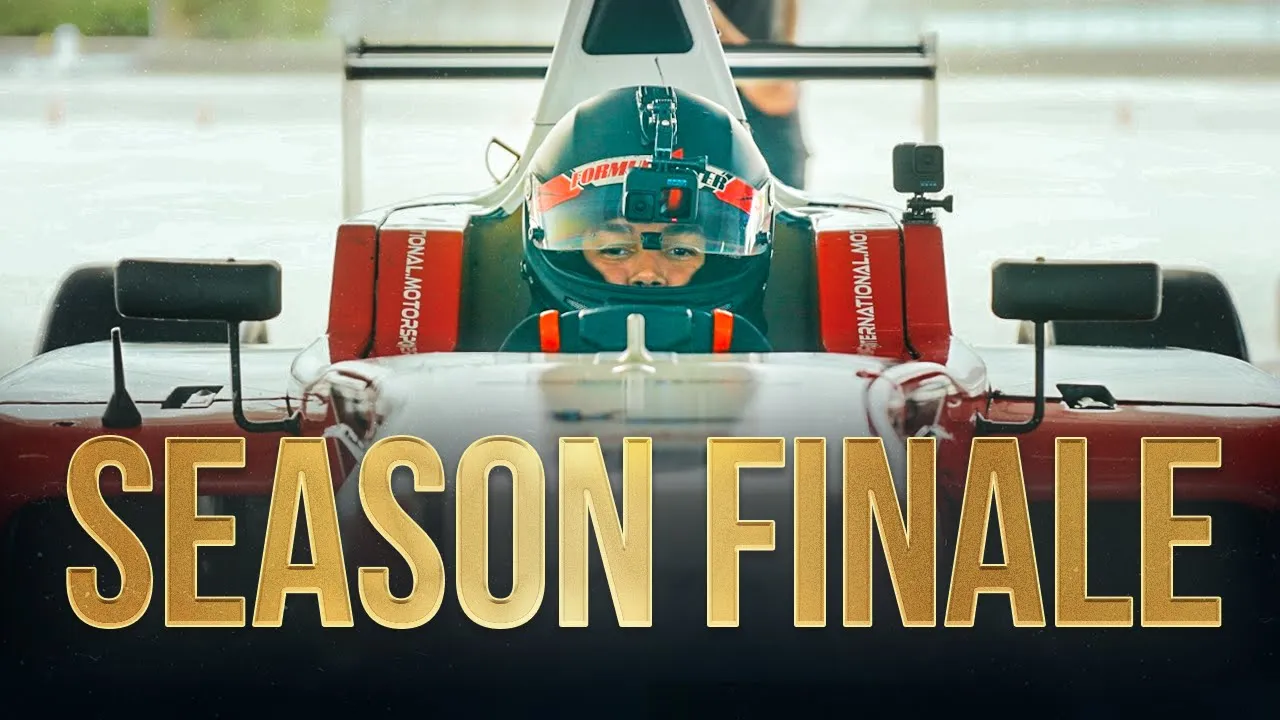
From Sim Racing to Formula Radical: Inside the Most Competitive Race of My Career
Suellio Almeida
•
Wednesday, September 27, 2023
The Grid Walk That Changes Everything
You know that feeling before a race starts? Heart rate climbing. Hands shaking slightly. Mind running through every braking point, every apex, every possible first-lap scenario.
Now multiply that by ten.
This wasn't a practice session. This wasn't club racing. This was the US Radical Cup at Canadian Tire Motorsport Park — one of the most technical tracks in North America — and I was surrounded by drivers who'd been racing real cars longer than I'd been sim racing.
The thing is, I'd prepared for this exact moment. Thousands of laps in the simulator. Data analysis. Mental rehearsal. But standing on that grid, watching the mechanics make final adjustments, feeling the heat radiating off the track surface... that's when you realize: this is where it counts.
What the Simulator Can't Teach You (But Everything Else It Does)
Let me be direct about something.
The simulator prepares you for maybe 85% of real racing. That last 15%? You only learn it when you're actually in the car.
The g-forces in a Formula Radical are violent. Your neck muscles scream through every braking zone. Your core works overtime just holding your body in position. The simulator trains your racing brain — your lines, your racecraft, your decision-making — but it can't replicate the physical punishment.
But here's what the sim absolutely nails:
Racecraft. Every wheel-to-wheel battle I'd fought in iRacing translated directly. The spatial awareness. The ability to hold your line while a competitor dives up the inside. Knowing when to defend and when to concede the corner to set up a better exit.
Track knowledge. I'd driven CTMP hundreds of times virtually. Every braking marker. Every apex curb. The camber changes through Turn 2. The compression at the bottom of Turn 5a. When you arrive at the track and it matches your mental map exactly? That's an unfair advantage.
Pressure management. The sim teaches you to perform when it matters. When there's money on the line, when your safety rating is at stake, when you're defending for a championship position — you learn to execute under pressure. That translates.
What surprised me most? The guys who'd been racing cars for years respected sim racers. They'd seen the lap times. They knew the training was legitimate.
The Start: Where Races Are Won and Lost
Lights out.
Everything I'd practiced — reaction time, wheel spin management, finding space in the pack — happened in a blur. The field compressed into Turn 1. Someone locked up. I went from P6 to P4 in two corners.
This is where sim racing experience becomes currency.
You've been in this exact situation dozens of times. First lap chaos. Cars everywhere. You need to be aggressive enough to gain positions but smart enough to survive the opening lap carnage. That judgment? You only develop it through repetition.
I held P4 through the first lap. But I could see P3 ahead. And he was making mistakes.
The Battle: Racecraft Under Real Consequences
Here's what nobody tells you about real racing: the margins are insane.
In the sim, if you make a mistake, you reset. Maybe you lose some SR. Maybe your iRating takes a hit.
In real racing? That wall doesn't care about your iRating. That repair bill is real money. And the guy you just crashed into? You're sharing a paddock with him for the rest of the weekend.
So when I caught P3 coming out of Turn 8, I had to make a decision.
Do I send it up the inside into Turn 10? It's there. The gap exists. But if I get it wrong, we're both out.
I spent three laps setting it up. Getting close enough to put pressure on him. Watching where he was strong, where he was weak. Forcing him to defend the inside, which killed his exit speed.
Then I took him around the outside of Turn 5a.
Clean. Committed. No contact.
That's sim racing training in action — patience, positioning, execution.
What Separates Sim Racers from Real Racers (Spoiler: Not Much)
After the race, I talked to some of the veterans. Guys who'd been competing in formula cars for a decade.
They asked about my background. When I told them I'd come from sim racing — that I'd won the Canadian Sim Racing Championship before ever sitting in a race car — they weren't surprised.
"Yeah, we can tell," one of them said. "Your lines are clean. You don't make the beginner mistakes."
That's the thing about modern sim racing. The physics are accurate enough that good habits transfer. Trail braking technique. Weight transfer management. Vision and reference points. If you train it correctly in the sim, it works in the car.
The only thing that doesn't transfer? The physical conditioning. My neck was destroyed after 20 minutes. My forearms were cramping. My core was on fire.
But the racing brain? That was dialed in.
The Finish: P3 Overall, Lessons Learned
I finished P3 overall. Podium in one of the most competitive Radical races I've ever been part of.
Was I the most experienced driver in that field? Absolutely not.
Did I have the most track time in a real car? Not even close.
But I had something else: deliberate practice. Thousands of hours in the simulator, training the fundamentals until they became automatic. Working with data. Analyzing every session. Building racecraft through competitive online racing.
When the lights went out, that training took over.
The Biggest Takeaway: Training Method Beats Seat Time
Here's what this race taught me.
Seat time alone doesn't make you fast. I was racing against guys with 5x more real-world laps than me. But I'd trained with purpose. Every sim session had a goal. Every lap was analyzed. Every mistake was corrected through deliberate practice.
Random seat time — whether in a sim or a real car — just reinforces bad habits.
Structured training builds speed.
That's why I coach the way I do. That's why the Almeida Racing Academy courses break down technique into specific, trainable skills. Because I've lived both sides — the amateur who just drove laps hoping to get faster, and the competitor who trained like an athlete.
The difference? Championships. Podiums. Real results.
So What Would Change If You Trained Like a Professional?
You just read about a sim racer competing at a high level in real motorsports.
But here's the question: Are you training like someone who wants those results?
Or are you just putting in laps, hoping speed finds you?
Because the gap between where you are now and where you want to be isn't talent. It's not natural ability. It's method.
I built the Almeida Racing Academy for drivers who are done guessing. Done watching YouTube tutorials that contradict each other. Done wondering why their lap times aren't dropping despite putting in the hours.
Our Gold Membership gives you the same training system I used to go from sim racer to professional driver. Eight complete courses. 80 lessons covering everything from fundamentals to advanced racecraft. Weekly coach-led workshops. Challenges and leagues to test your skills. The Garage 61 Pro tool to analyze your performance data.
All of it for $25/month (use code WINTER).
The drivers who commit to structured training? They see results in weeks, not years.
So here's the real question: How long are you going to keep training the wrong way?
Start training like a professional — join Gold Membership here
Sim Racing Academy Membership
Everything you need to stop guessing and start getting faster.
Starting at
$25
/mo
Car Handling Online Course
4 levels, full curriculum. Aimed to get you to top 1% in driving pace.
Racecraft Online Course
Overtaking, Defending, Race Strategy
Live coaching + on-track practice
Bi-weekly pro-coach workshops (recorded — never miss one) plus on-track Pit Parties to practice racecraft with a coach.
Plus These Bonuses
13,000+ Member Community
League Racing
Advanced MX-5 Mini Course
Racing Technique Development Guide
The Motor Racing Book (260 pages)
Think & Behave Like a Pro Driver — Mini eBook
From Sim Racing to Formula Radical: Inside the Most Competitive Race of My Career
Suellio Almeida
•
Wednesday, September 27, 2023
The Grid Walk That Changes Everything
You know that feeling before a race starts? Heart rate climbing. Hands shaking slightly. Mind running through every braking point, every apex, every possible first-lap scenario.
Now multiply that by ten.
This wasn't a practice session. This wasn't club racing. This was the US Radical Cup at Canadian Tire Motorsport Park — one of the most technical tracks in North America — and I was surrounded by drivers who'd been racing real cars longer than I'd been sim racing.
The thing is, I'd prepared for this exact moment. Thousands of laps in the simulator. Data analysis. Mental rehearsal. But standing on that grid, watching the mechanics make final adjustments, feeling the heat radiating off the track surface... that's when you realize: this is where it counts.
What the Simulator Can't Teach You (But Everything Else It Does)
Let me be direct about something.
The simulator prepares you for maybe 85% of real racing. That last 15%? You only learn it when you're actually in the car.
The g-forces in a Formula Radical are violent. Your neck muscles scream through every braking zone. Your core works overtime just holding your body in position. The simulator trains your racing brain — your lines, your racecraft, your decision-making — but it can't replicate the physical punishment.
But here's what the sim absolutely nails:
Racecraft. Every wheel-to-wheel battle I'd fought in iRacing translated directly. The spatial awareness. The ability to hold your line while a competitor dives up the inside. Knowing when to defend and when to concede the corner to set up a better exit.
Track knowledge. I'd driven CTMP hundreds of times virtually. Every braking marker. Every apex curb. The camber changes through Turn 2. The compression at the bottom of Turn 5a. When you arrive at the track and it matches your mental map exactly? That's an unfair advantage.
Pressure management. The sim teaches you to perform when it matters. When there's money on the line, when your safety rating is at stake, when you're defending for a championship position — you learn to execute under pressure. That translates.
What surprised me most? The guys who'd been racing cars for years respected sim racers. They'd seen the lap times. They knew the training was legitimate.
The Start: Where Races Are Won and Lost
Lights out.
Everything I'd practiced — reaction time, wheel spin management, finding space in the pack — happened in a blur. The field compressed into Turn 1. Someone locked up. I went from P6 to P4 in two corners.
This is where sim racing experience becomes currency.
You've been in this exact situation dozens of times. First lap chaos. Cars everywhere. You need to be aggressive enough to gain positions but smart enough to survive the opening lap carnage. That judgment? You only develop it through repetition.
I held P4 through the first lap. But I could see P3 ahead. And he was making mistakes.
The Battle: Racecraft Under Real Consequences
Here's what nobody tells you about real racing: the margins are insane.
In the sim, if you make a mistake, you reset. Maybe you lose some SR. Maybe your iRating takes a hit.
In real racing? That wall doesn't care about your iRating. That repair bill is real money. And the guy you just crashed into? You're sharing a paddock with him for the rest of the weekend.
So when I caught P3 coming out of Turn 8, I had to make a decision.
Do I send it up the inside into Turn 10? It's there. The gap exists. But if I get it wrong, we're both out.
I spent three laps setting it up. Getting close enough to put pressure on him. Watching where he was strong, where he was weak. Forcing him to defend the inside, which killed his exit speed.
Then I took him around the outside of Turn 5a.
Clean. Committed. No contact.
That's sim racing training in action — patience, positioning, execution.
What Separates Sim Racers from Real Racers (Spoiler: Not Much)
After the race, I talked to some of the veterans. Guys who'd been competing in formula cars for a decade.
They asked about my background. When I told them I'd come from sim racing — that I'd won the Canadian Sim Racing Championship before ever sitting in a race car — they weren't surprised.
"Yeah, we can tell," one of them said. "Your lines are clean. You don't make the beginner mistakes."
That's the thing about modern sim racing. The physics are accurate enough that good habits transfer. Trail braking technique. Weight transfer management. Vision and reference points. If you train it correctly in the sim, it works in the car.
The only thing that doesn't transfer? The physical conditioning. My neck was destroyed after 20 minutes. My forearms were cramping. My core was on fire.
But the racing brain? That was dialed in.
The Finish: P3 Overall, Lessons Learned
I finished P3 overall. Podium in one of the most competitive Radical races I've ever been part of.
Was I the most experienced driver in that field? Absolutely not.
Did I have the most track time in a real car? Not even close.
But I had something else: deliberate practice. Thousands of hours in the simulator, training the fundamentals until they became automatic. Working with data. Analyzing every session. Building racecraft through competitive online racing.
When the lights went out, that training took over.
The Biggest Takeaway: Training Method Beats Seat Time
Here's what this race taught me.
Seat time alone doesn't make you fast. I was racing against guys with 5x more real-world laps than me. But I'd trained with purpose. Every sim session had a goal. Every lap was analyzed. Every mistake was corrected through deliberate practice.
Random seat time — whether in a sim or a real car — just reinforces bad habits.
Structured training builds speed.
That's why I coach the way I do. That's why the Almeida Racing Academy courses break down technique into specific, trainable skills. Because I've lived both sides — the amateur who just drove laps hoping to get faster, and the competitor who trained like an athlete.
The difference? Championships. Podiums. Real results.
So What Would Change If You Trained Like a Professional?
You just read about a sim racer competing at a high level in real motorsports.
But here's the question: Are you training like someone who wants those results?
Or are you just putting in laps, hoping speed finds you?
Because the gap between where you are now and where you want to be isn't talent. It's not natural ability. It's method.
I built the Almeida Racing Academy for drivers who are done guessing. Done watching YouTube tutorials that contradict each other. Done wondering why their lap times aren't dropping despite putting in the hours.
Our Gold Membership gives you the same training system I used to go from sim racer to professional driver. Eight complete courses. 80 lessons covering everything from fundamentals to advanced racecraft. Weekly coach-led workshops. Challenges and leagues to test your skills. The Garage 61 Pro tool to analyze your performance data.
All of it for $25/month (use code WINTER).
The drivers who commit to structured training? They see results in weeks, not years.
So here's the real question: How long are you going to keep training the wrong way?
Start training like a professional — join Gold Membership here
Sim Racing Academy Membership
Everything you need to stop guessing and start getting faster.
Starting at
$25
/mo
Car Handling Online Course
4 levels, full curriculum. Aimed to get you to top 1% in driving pace.
Racecraft Online Course
Overtaking, Defending, Race Strategy
Live coaching + on-track practice
Bi-weekly pro-coach workshops (recorded — never miss one) plus on-track Pit Parties to practice racecraft with a coach.
Plus These Bonuses
13,000+ Member Community
League Racing
Advanced MX-5 Mini Course
Racing Technique Development Guide
The Motor Racing Book (260 pages)
Think & Behave Like a Pro Driver — Mini eBook
From Sim Racing to Formula Radical: Inside the Most Competitive Race of My Career
Suellio Almeida
•
Wednesday, September 27, 2023
The Grid Walk That Changes Everything
You know that feeling before a race starts? Heart rate climbing. Hands shaking slightly. Mind running through every braking point, every apex, every possible first-lap scenario.
Now multiply that by ten.
This wasn't a practice session. This wasn't club racing. This was the US Radical Cup at Canadian Tire Motorsport Park — one of the most technical tracks in North America — and I was surrounded by drivers who'd been racing real cars longer than I'd been sim racing.
The thing is, I'd prepared for this exact moment. Thousands of laps in the simulator. Data analysis. Mental rehearsal. But standing on that grid, watching the mechanics make final adjustments, feeling the heat radiating off the track surface... that's when you realize: this is where it counts.
What the Simulator Can't Teach You (But Everything Else It Does)
Let me be direct about something.
The simulator prepares you for maybe 85% of real racing. That last 15%? You only learn it when you're actually in the car.
The g-forces in a Formula Radical are violent. Your neck muscles scream through every braking zone. Your core works overtime just holding your body in position. The simulator trains your racing brain — your lines, your racecraft, your decision-making — but it can't replicate the physical punishment.
But here's what the sim absolutely nails:
Racecraft. Every wheel-to-wheel battle I'd fought in iRacing translated directly. The spatial awareness. The ability to hold your line while a competitor dives up the inside. Knowing when to defend and when to concede the corner to set up a better exit.
Track knowledge. I'd driven CTMP hundreds of times virtually. Every braking marker. Every apex curb. The camber changes through Turn 2. The compression at the bottom of Turn 5a. When you arrive at the track and it matches your mental map exactly? That's an unfair advantage.
Pressure management. The sim teaches you to perform when it matters. When there's money on the line, when your safety rating is at stake, when you're defending for a championship position — you learn to execute under pressure. That translates.
What surprised me most? The guys who'd been racing cars for years respected sim racers. They'd seen the lap times. They knew the training was legitimate.
The Start: Where Races Are Won and Lost
Lights out.
Everything I'd practiced — reaction time, wheel spin management, finding space in the pack — happened in a blur. The field compressed into Turn 1. Someone locked up. I went from P6 to P4 in two corners.
This is where sim racing experience becomes currency.
You've been in this exact situation dozens of times. First lap chaos. Cars everywhere. You need to be aggressive enough to gain positions but smart enough to survive the opening lap carnage. That judgment? You only develop it through repetition.
I held P4 through the first lap. But I could see P3 ahead. And he was making mistakes.
The Battle: Racecraft Under Real Consequences
Here's what nobody tells you about real racing: the margins are insane.
In the sim, if you make a mistake, you reset. Maybe you lose some SR. Maybe your iRating takes a hit.
In real racing? That wall doesn't care about your iRating. That repair bill is real money. And the guy you just crashed into? You're sharing a paddock with him for the rest of the weekend.
So when I caught P3 coming out of Turn 8, I had to make a decision.
Do I send it up the inside into Turn 10? It's there. The gap exists. But if I get it wrong, we're both out.
I spent three laps setting it up. Getting close enough to put pressure on him. Watching where he was strong, where he was weak. Forcing him to defend the inside, which killed his exit speed.
Then I took him around the outside of Turn 5a.
Clean. Committed. No contact.
That's sim racing training in action — patience, positioning, execution.
What Separates Sim Racers from Real Racers (Spoiler: Not Much)
After the race, I talked to some of the veterans. Guys who'd been competing in formula cars for a decade.
They asked about my background. When I told them I'd come from sim racing — that I'd won the Canadian Sim Racing Championship before ever sitting in a race car — they weren't surprised.
"Yeah, we can tell," one of them said. "Your lines are clean. You don't make the beginner mistakes."
That's the thing about modern sim racing. The physics are accurate enough that good habits transfer. Trail braking technique. Weight transfer management. Vision and reference points. If you train it correctly in the sim, it works in the car.
The only thing that doesn't transfer? The physical conditioning. My neck was destroyed after 20 minutes. My forearms were cramping. My core was on fire.
But the racing brain? That was dialed in.
The Finish: P3 Overall, Lessons Learned
I finished P3 overall. Podium in one of the most competitive Radical races I've ever been part of.
Was I the most experienced driver in that field? Absolutely not.
Did I have the most track time in a real car? Not even close.
But I had something else: deliberate practice. Thousands of hours in the simulator, training the fundamentals until they became automatic. Working with data. Analyzing every session. Building racecraft through competitive online racing.
When the lights went out, that training took over.
The Biggest Takeaway: Training Method Beats Seat Time
Here's what this race taught me.
Seat time alone doesn't make you fast. I was racing against guys with 5x more real-world laps than me. But I'd trained with purpose. Every sim session had a goal. Every lap was analyzed. Every mistake was corrected through deliberate practice.
Random seat time — whether in a sim or a real car — just reinforces bad habits.
Structured training builds speed.
That's why I coach the way I do. That's why the Almeida Racing Academy courses break down technique into specific, trainable skills. Because I've lived both sides — the amateur who just drove laps hoping to get faster, and the competitor who trained like an athlete.
The difference? Championships. Podiums. Real results.
So What Would Change If You Trained Like a Professional?
You just read about a sim racer competing at a high level in real motorsports.
But here's the question: Are you training like someone who wants those results?
Or are you just putting in laps, hoping speed finds you?
Because the gap between where you are now and where you want to be isn't talent. It's not natural ability. It's method.
I built the Almeida Racing Academy for drivers who are done guessing. Done watching YouTube tutorials that contradict each other. Done wondering why their lap times aren't dropping despite putting in the hours.
Our Gold Membership gives you the same training system I used to go from sim racer to professional driver. Eight complete courses. 80 lessons covering everything from fundamentals to advanced racecraft. Weekly coach-led workshops. Challenges and leagues to test your skills. The Garage 61 Pro tool to analyze your performance data.
All of it for $25/month (use code WINTER).
The drivers who commit to structured training? They see results in weeks, not years.
So here's the real question: How long are you going to keep training the wrong way?
Start training like a professional — join Gold Membership here
Sim Racing Academy Membership
Everything you need to stop guessing and start getting faster.
Starting at
$25
/mo
Car Handling Online Course
4 levels, full curriculum. Aimed to get you to top 1% in driving pace.
Racecraft Online Course
Overtaking, Defending, Race Strategy
Live coaching + on-track practice
Bi-weekly pro-coach workshops (recorded — never miss one) plus on-track Pit Parties to practice racecraft with a coach.
Plus These Bonuses
13,000+ Member Community
League Racing
Advanced MX-5 Mini Course
Racing Technique Development Guide
The Motor Racing Book (260 pages)
Think & Behave Like a Pro Driver — Mini eBook