
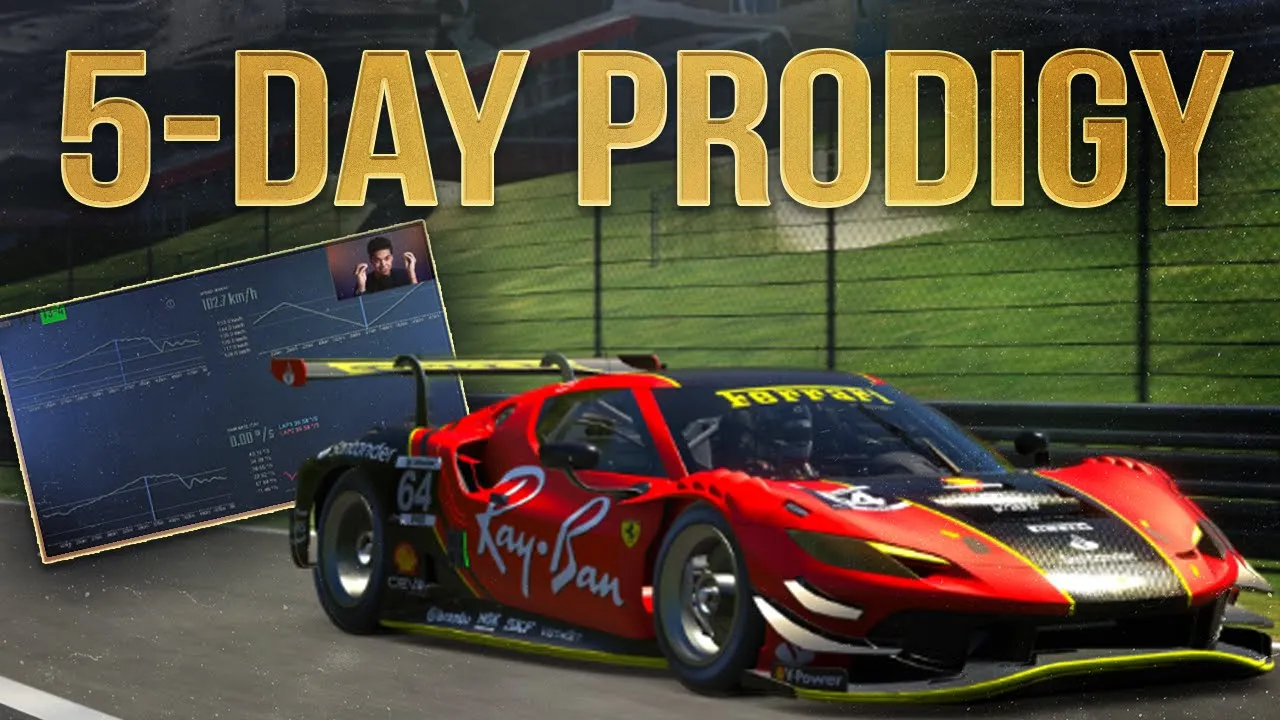
How a Sim Racing Beginner Found 3 Seconds in One Coaching Session
Suellio Almeida
•
Sunday, November 26, 2023
The Problem: Fast Straights, Slow Corners
The student came to me frustrated. He could nail the throttle down the straights, but his lap times weren't improving. Sound familiar?
I pulled up his telemetry. Immediately, I saw it — he was losing three seconds across just a handful of corners. Not because he was slow everywhere. Because he was bleeding time in the places that matter most.
This is the trap beginners fall into. You think you need to be aggressive everywhere. But speed isn't about bravery. It's about precision in the right places.
Turn 1: You're Braking Too Late
First corner at Imola — Variante Tamburello. He was braking at the 50-meter board.
I told him: "You're 15 meters too late."
His response? "But I want to carry more speed."
Here's the thing — late braking doesn't equal more speed. You brake late, you overshoot the apex, you have to wait longer to get back on throttle. You lose time on exit. Every. Single. Lap.
What I wanted him to do: brake at 65 meters. Earlier, yes. But with that extra distance, he could trail brake deeper into the corner, rotate the car properly, and hit a tighter line.
The result? He carried 8 km/h more through the apex and got on throttle a full car length earlier.
That's half a second. One corner.
Variante Alta: Stop Fighting the Car
Second issue — the chicane at Variante Alta (Turns 15-16). He was wrestling the steering wheel like he was in a street fight.
I could see it in the telemetry. Sharp steering inputs, car snapping left and right, zero flow.
I asked him: "What are you trying to do here?"
He said he was trying to be fast.
I told him to smooth it out. Sim racing isn't about how hard you can yank the wheel. It's about weight transfer. The car needs time to settle. You jerk the wheel, you unsettle the suspension, the tires lose grip, and you're slow.
What I wanted him to do: gentle, progressive steering. Turn in smoothly. Let the car rotate. Feel the weight shift. Then unwind the wheel as you accelerate out.
He tried it. First lap, he gained three-tenths. Second lap, another two-tenths.
He wasn't driving harder. He was driving smarter.
Rivazza: The Exit Determines Everything
Final corner — Rivazza. This is where the lap time lives. You exit onto the longest straight on the track. If you're slow here, you're slow for the next 15 seconds.
He was getting on throttle too early. Sounded good, felt aggressive. But his rear tires were lighting up, the car was sliding wide, and he was losing speed down the entire straight.
I showed him the data. His minimum speed was fine. His exit speed was terrible.
Minimum speed doesn't win races. Exit speed does.
What I wanted him to do: be patient. Wait for the car to rotate. Wait until you can see the exit curb. Then go to full throttle.
He was skeptical. "Won't I be slower?"
No. You'll be faster where it counts.
He tried it. His exit speed jumped from 142 km/h to 149 km/h. That's another four-tenths — just from being patient for half a second longer.
The Math: 3 Corners, 3 Seconds
Let's add it up:
Turn 1: +0.5 seconds
Variante Alta: +0.5 seconds
Rivazza: +0.4 seconds
That's 1.4 seconds from three corners.
But here's the thing — when you fix the fundamentals in those corners, everything else gets easier. Your confidence goes up. Your consistency improves. You start finding time everywhere.
By the end of the session, he dropped from a 1:48.3 to a 1:45.1.
Three seconds. One session.
What This Student Did That Most Don't
He listened. He didn't argue with the data. He didn't defend his old habits.
When I told him to brake earlier, he did it.
When I told him to smooth out his inputs, he did it.
When I told him to be patient on exit, he did it.
And he got faster. Immediately.
That's the difference between drivers who improve and drivers who plateau. Willingness to change.
You can watch every YouTube video on sim racing. You can read every forum post. But if you're not willing to challenge your instincts and trust the process, you'll keep making the same mistakes.
The Three Lessons Every Beginner Needs to Learn
1. Brake earlier, not later. More braking distance = more rotation = faster exits.
2. Smooth inputs > aggressive inputs. The car needs time to transfer weight. Let it work.
3. Patience on exit wins races. Wait for rotation. Wait for grip. Then go full throttle.
These aren't advanced techniques. These are fundamentals. But most sim racers never learn them properly because they're trying to copy the aliens without understanding the physics.
You don't need to be brave. You need to be precise.
How Long Are You Going to Keep Guessing?
Here's the reality: you can spend another six months trying to figure this out on your own. You can watch more videos, tinker with setups, blame the car.
Or you can get someone to look at your driving and tell you exactly what's costing you time.
That's what coaching is. It's not magic. It's data, experience, and someone who's been there before.
This student found three seconds in one session because I could see what he couldn't. I've coached 36,000+ students. I know what beginner mistakes look like. I know how to fix them.
What would change if you had that clarity?
If you're serious about improving — not just talking about it, but actually doing the work —
. Get access to the Car Handling course. Learn the fundamentals. Join the Discord. See if this is for you.
No credit card. No commitment. Just real training from someone who's coached students from complete beginners to F1 engineers.
The question is: are you going to keep guessing, or are you ready to actually get faster?
Sim Racing Academy Membership
Everything you need to stop guessing and start getting faster.
Starting at
$25
/mo
Car Handling Online Course
4 levels, full curriculum. Aimed to get you to top 1% in driving pace.
Racecraft Online Course
Overtaking, Defending, Race Strategy
Live coaching + on-track practice
Bi-weekly pro-coach workshops (recorded — never miss one) plus on-track Pit Parties to practice racecraft with a coach.
Plus These Bonuses
13,000+ Member Community
League Racing
Advanced MX-5 Mini Course
Racing Technique Development Guide
The Motor Racing Book (260 pages)
Think & Behave Like a Pro Driver — Mini eBook
How a Sim Racing Beginner Found 3 Seconds in One Coaching Session
Suellio Almeida
•
Sunday, November 26, 2023
The Problem: Fast Straights, Slow Corners
The student came to me frustrated. He could nail the throttle down the straights, but his lap times weren't improving. Sound familiar?
I pulled up his telemetry. Immediately, I saw it — he was losing three seconds across just a handful of corners. Not because he was slow everywhere. Because he was bleeding time in the places that matter most.
This is the trap beginners fall into. You think you need to be aggressive everywhere. But speed isn't about bravery. It's about precision in the right places.
Turn 1: You're Braking Too Late
First corner at Imola — Variante Tamburello. He was braking at the 50-meter board.
I told him: "You're 15 meters too late."
His response? "But I want to carry more speed."
Here's the thing — late braking doesn't equal more speed. You brake late, you overshoot the apex, you have to wait longer to get back on throttle. You lose time on exit. Every. Single. Lap.
What I wanted him to do: brake at 65 meters. Earlier, yes. But with that extra distance, he could trail brake deeper into the corner, rotate the car properly, and hit a tighter line.
The result? He carried 8 km/h more through the apex and got on throttle a full car length earlier.
That's half a second. One corner.
Variante Alta: Stop Fighting the Car
Second issue — the chicane at Variante Alta (Turns 15-16). He was wrestling the steering wheel like he was in a street fight.
I could see it in the telemetry. Sharp steering inputs, car snapping left and right, zero flow.
I asked him: "What are you trying to do here?"
He said he was trying to be fast.
I told him to smooth it out. Sim racing isn't about how hard you can yank the wheel. It's about weight transfer. The car needs time to settle. You jerk the wheel, you unsettle the suspension, the tires lose grip, and you're slow.
What I wanted him to do: gentle, progressive steering. Turn in smoothly. Let the car rotate. Feel the weight shift. Then unwind the wheel as you accelerate out.
He tried it. First lap, he gained three-tenths. Second lap, another two-tenths.
He wasn't driving harder. He was driving smarter.
Rivazza: The Exit Determines Everything
Final corner — Rivazza. This is where the lap time lives. You exit onto the longest straight on the track. If you're slow here, you're slow for the next 15 seconds.
He was getting on throttle too early. Sounded good, felt aggressive. But his rear tires were lighting up, the car was sliding wide, and he was losing speed down the entire straight.
I showed him the data. His minimum speed was fine. His exit speed was terrible.
Minimum speed doesn't win races. Exit speed does.
What I wanted him to do: be patient. Wait for the car to rotate. Wait until you can see the exit curb. Then go to full throttle.
He was skeptical. "Won't I be slower?"
No. You'll be faster where it counts.
He tried it. His exit speed jumped from 142 km/h to 149 km/h. That's another four-tenths — just from being patient for half a second longer.
The Math: 3 Corners, 3 Seconds
Let's add it up:
Turn 1: +0.5 seconds
Variante Alta: +0.5 seconds
Rivazza: +0.4 seconds
That's 1.4 seconds from three corners.
But here's the thing — when you fix the fundamentals in those corners, everything else gets easier. Your confidence goes up. Your consistency improves. You start finding time everywhere.
By the end of the session, he dropped from a 1:48.3 to a 1:45.1.
Three seconds. One session.
What This Student Did That Most Don't
He listened. He didn't argue with the data. He didn't defend his old habits.
When I told him to brake earlier, he did it.
When I told him to smooth out his inputs, he did it.
When I told him to be patient on exit, he did it.
And he got faster. Immediately.
That's the difference between drivers who improve and drivers who plateau. Willingness to change.
You can watch every YouTube video on sim racing. You can read every forum post. But if you're not willing to challenge your instincts and trust the process, you'll keep making the same mistakes.
The Three Lessons Every Beginner Needs to Learn
1. Brake earlier, not later. More braking distance = more rotation = faster exits.
2. Smooth inputs > aggressive inputs. The car needs time to transfer weight. Let it work.
3. Patience on exit wins races. Wait for rotation. Wait for grip. Then go full throttle.
These aren't advanced techniques. These are fundamentals. But most sim racers never learn them properly because they're trying to copy the aliens without understanding the physics.
You don't need to be brave. You need to be precise.
How Long Are You Going to Keep Guessing?
Here's the reality: you can spend another six months trying to figure this out on your own. You can watch more videos, tinker with setups, blame the car.
Or you can get someone to look at your driving and tell you exactly what's costing you time.
That's what coaching is. It's not magic. It's data, experience, and someone who's been there before.
This student found three seconds in one session because I could see what he couldn't. I've coached 36,000+ students. I know what beginner mistakes look like. I know how to fix them.
What would change if you had that clarity?
If you're serious about improving — not just talking about it, but actually doing the work —
. Get access to the Car Handling course. Learn the fundamentals. Join the Discord. See if this is for you.
No credit card. No commitment. Just real training from someone who's coached students from complete beginners to F1 engineers.
The question is: are you going to keep guessing, or are you ready to actually get faster?
Sim Racing Academy Membership
Everything you need to stop guessing and start getting faster.
Starting at
$25
/mo
Car Handling Online Course
4 levels, full curriculum. Aimed to get you to top 1% in driving pace.
Racecraft Online Course
Overtaking, Defending, Race Strategy
Live coaching + on-track practice
Bi-weekly pro-coach workshops (recorded — never miss one) plus on-track Pit Parties to practice racecraft with a coach.
Plus These Bonuses
13,000+ Member Community
League Racing
Advanced MX-5 Mini Course
Racing Technique Development Guide
The Motor Racing Book (260 pages)
Think & Behave Like a Pro Driver — Mini eBook
How a Sim Racing Beginner Found 3 Seconds in One Coaching Session
Suellio Almeida
•
Sunday, November 26, 2023
The Problem: Fast Straights, Slow Corners
The student came to me frustrated. He could nail the throttle down the straights, but his lap times weren't improving. Sound familiar?
I pulled up his telemetry. Immediately, I saw it — he was losing three seconds across just a handful of corners. Not because he was slow everywhere. Because he was bleeding time in the places that matter most.
This is the trap beginners fall into. You think you need to be aggressive everywhere. But speed isn't about bravery. It's about precision in the right places.
Turn 1: You're Braking Too Late
First corner at Imola — Variante Tamburello. He was braking at the 50-meter board.
I told him: "You're 15 meters too late."
His response? "But I want to carry more speed."
Here's the thing — late braking doesn't equal more speed. You brake late, you overshoot the apex, you have to wait longer to get back on throttle. You lose time on exit. Every. Single. Lap.
What I wanted him to do: brake at 65 meters. Earlier, yes. But with that extra distance, he could trail brake deeper into the corner, rotate the car properly, and hit a tighter line.
The result? He carried 8 km/h more through the apex and got on throttle a full car length earlier.
That's half a second. One corner.
Variante Alta: Stop Fighting the Car
Second issue — the chicane at Variante Alta (Turns 15-16). He was wrestling the steering wheel like he was in a street fight.
I could see it in the telemetry. Sharp steering inputs, car snapping left and right, zero flow.
I asked him: "What are you trying to do here?"
He said he was trying to be fast.
I told him to smooth it out. Sim racing isn't about how hard you can yank the wheel. It's about weight transfer. The car needs time to settle. You jerk the wheel, you unsettle the suspension, the tires lose grip, and you're slow.
What I wanted him to do: gentle, progressive steering. Turn in smoothly. Let the car rotate. Feel the weight shift. Then unwind the wheel as you accelerate out.
He tried it. First lap, he gained three-tenths. Second lap, another two-tenths.
He wasn't driving harder. He was driving smarter.
Rivazza: The Exit Determines Everything
Final corner — Rivazza. This is where the lap time lives. You exit onto the longest straight on the track. If you're slow here, you're slow for the next 15 seconds.
He was getting on throttle too early. Sounded good, felt aggressive. But his rear tires were lighting up, the car was sliding wide, and he was losing speed down the entire straight.
I showed him the data. His minimum speed was fine. His exit speed was terrible.
Minimum speed doesn't win races. Exit speed does.
What I wanted him to do: be patient. Wait for the car to rotate. Wait until you can see the exit curb. Then go to full throttle.
He was skeptical. "Won't I be slower?"
No. You'll be faster where it counts.
He tried it. His exit speed jumped from 142 km/h to 149 km/h. That's another four-tenths — just from being patient for half a second longer.
The Math: 3 Corners, 3 Seconds
Let's add it up:
Turn 1: +0.5 seconds
Variante Alta: +0.5 seconds
Rivazza: +0.4 seconds
That's 1.4 seconds from three corners.
But here's the thing — when you fix the fundamentals in those corners, everything else gets easier. Your confidence goes up. Your consistency improves. You start finding time everywhere.
By the end of the session, he dropped from a 1:48.3 to a 1:45.1.
Three seconds. One session.
What This Student Did That Most Don't
He listened. He didn't argue with the data. He didn't defend his old habits.
When I told him to brake earlier, he did it.
When I told him to smooth out his inputs, he did it.
When I told him to be patient on exit, he did it.
And he got faster. Immediately.
That's the difference between drivers who improve and drivers who plateau. Willingness to change.
You can watch every YouTube video on sim racing. You can read every forum post. But if you're not willing to challenge your instincts and trust the process, you'll keep making the same mistakes.
The Three Lessons Every Beginner Needs to Learn
1. Brake earlier, not later. More braking distance = more rotation = faster exits.
2. Smooth inputs > aggressive inputs. The car needs time to transfer weight. Let it work.
3. Patience on exit wins races. Wait for rotation. Wait for grip. Then go full throttle.
These aren't advanced techniques. These are fundamentals. But most sim racers never learn them properly because they're trying to copy the aliens without understanding the physics.
You don't need to be brave. You need to be precise.
How Long Are You Going to Keep Guessing?
Here's the reality: you can spend another six months trying to figure this out on your own. You can watch more videos, tinker with setups, blame the car.
Or you can get someone to look at your driving and tell you exactly what's costing you time.
That's what coaching is. It's not magic. It's data, experience, and someone who's been there before.
This student found three seconds in one session because I could see what he couldn't. I've coached 36,000+ students. I know what beginner mistakes look like. I know how to fix them.
What would change if you had that clarity?
If you're serious about improving — not just talking about it, but actually doing the work —
. Get access to the Car Handling course. Learn the fundamentals. Join the Discord. See if this is for you.
No credit card. No commitment. Just real training from someone who's coached students from complete beginners to F1 engineers.
The question is: are you going to keep guessing, or are you ready to actually get faster?
Sim Racing Academy Membership
Everything you need to stop guessing and start getting faster.
Starting at
$25
/mo
Car Handling Online Course
4 levels, full curriculum. Aimed to get you to top 1% in driving pace.
Racecraft Online Course
Overtaking, Defending, Race Strategy
Live coaching + on-track practice
Bi-weekly pro-coach workshops (recorded — never miss one) plus on-track Pit Parties to practice racecraft with a coach.
Plus These Bonuses
13,000+ Member Community
League Racing
Advanced MX-5 Mini Course
Racing Technique Development Guide
The Motor Racing Book (260 pages)
Think & Behave Like a Pro Driver — Mini eBook