
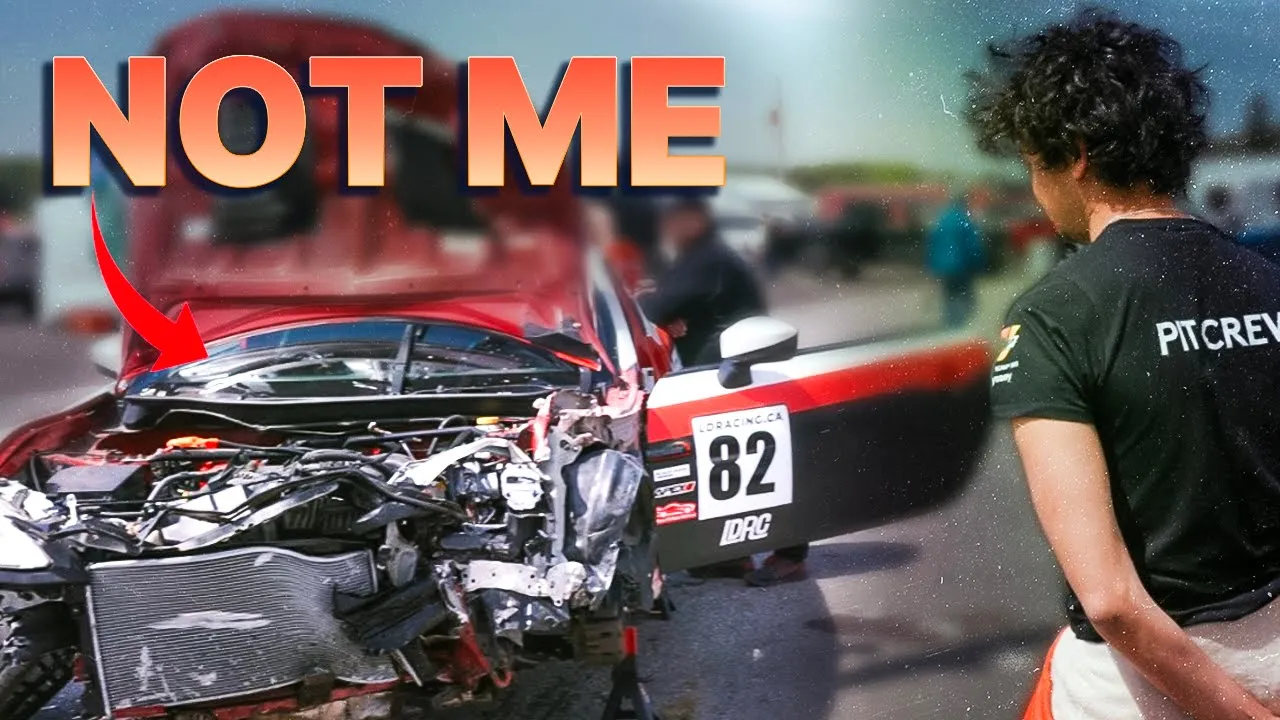
How a Sim Racer Survived Canada's Most Dangerous Racetrack — Mosport Lessons
Suellio Almeida
•
Tuesday, May 23, 2023
The Track That Breaks Drivers
Mosport doesn't care about your iRating.
Canadian Tire Motorsport Park — or Mosport, as it's historically known — is one of the oldest and most dangerous racetracks in North America. Fast elevation changes. Blind crests. Corners that load the car in ways sim racing can't fully replicate.
This is where I learned to race. And this is where I brought four sim racers — Kane, Connor, Justin, and Eric — for their first real track day in Radical SR1 race cars.
No assists. No resets. Just 170 horsepower, sequential gearboxes, and the reality that mistakes hurt.
Turn 2: The Corner That Humbles Everyone
Turn 2 at Mosport is deceptive.
It looks simple on the simulator. A fast left-hander over a crest. You turn in, apex, done.
Except the real corner is completely blind. You crest a hill before you can see the apex. The car gets light. The suspension compresses on landing. And if you're not positioned correctly, you're either running wide into the wall or scrubbing massive speed.
Kane — 9,000 iRating, one of the fastest sim racers I know — got humbled here immediately.
He turned in too early. The car went light over the crest. He lost the line. On lap two, he overcompensated and nearly put it in the wall.
This is the difference between simulation and reality: in sim racing, you learn the track visually. In real life, you feel the track through your body.
The G-forces. The suspension loading. The way the car moves under you when the wheels unweight.
You can't learn that from a screen.
The Physics Lesson: Why Real Cars Feel Different
Sim racing teaches you the line. The braking points. The theory of weight transfer.
But it can't teach you the physical sensation of a real car compressing and rebounding through a corner.
At Mosport, every corner has a compression phase. The car dives under braking. The suspension loads. Then it rebounds as you release the brakes and turn in.
If you're not smooth with your inputs — if you jerk the wheel or stab the brakes — the car gets upset. The weight shifts violently. You lose grip.
Connor learned this the hard way in Turn 5.
Turn 5 is a downhill right-hander that tightens on exit. You brake hard at the top of the hill, turn in as the car compresses, then manage the throttle as the corner tightens.
Connor braked too late. The car was still loaded when he turned in. The front end pushed. He ran wide.
Next lap, he overcompensated. Braked too early. Lost time.
This is where real-world racing separates the good from the great: precision under physical load.
You're not just driving the car. You're managing your own body's reaction to G-forces. Your vision. Your breathing. Your ability to process inputs while your brain is telling you you're in danger.
The Coaching Challenge: Teaching in Real Time
Coaching on track is different than coaching in sim.
In sim, I can pause the replay. Draw on the screen. Show telemetry. Break down every input.
On track, you get 20 minutes. The driver is in the car. The adrenaline is spiked. They're processing 10 things at once.
You have to simplify.
Justin was struggling with corner entry speed. He was braking too early, trying to be safe. But being too slow is also dangerous — it throws off the rhythm of the car.
I told him: "Pick one corner. Turn 8. Brake 50 feet later. That's it. Don't think about anything else."
Next session, he nailed it. Half a second faster through Turn 8. His confidence spiked. The rest of his lap improved because he wasn't tentative anymore.
Real-world coaching is about building confidence through small, measurable wins.
You can't overload a driver with 15 technique points when they're already at their mental limit. You give them one thing. They execute. They feel the improvement. Then you build.
Eric's Breakthrough: When It All Clicks
Eric was the least experienced driver in the group.
He'd been sim racing for a year. Never driven a real race car. Never experienced real G-forces.
First session, he was slow. Tentative. Braking way too early. Not committing to the corners.
I pulled him aside. "You're treating this like sim racing. You're trying to be perfect. Stop. Drive the car. Feel it. The car will tell you when you're at the limit."
Second session, something shifted.
He started trusting the brakes. Carrying more speed. Letting the car rotate naturally instead of forcing it.
By the third session, he was flowing. Smooth. Consistent.
That's the magic moment every coach lives for — when the driver stops thinking and starts feeling.
Turn 8: The Scariest Corner on the Track
Turn 8 at Mosport is terrifying.
It's a blind, downhill left-hander with a wall on the outside. You brake hard at the top of the hill, turn in blind, and commit to a corner you can't fully see.
If you brake too late, you understeer into the wall.
If you brake too early, you lose seconds.
The margin for error is razor-thin.
Kane, Connor, Justin, Eric — all of them had moments in Turn 8 where they questioned their line. Where they felt the car push toward the wall and had to decide: lift or commit.
This is real racing.
In sim, you can push reset. In real life, you make the call and live with it.
Every single one of them committed. Trusted the car. Trusted their training.
And every single one of them made it through clean.
The Fastest Lap: Connor's Moment
Connor is a real-world NASCAR driver. He races at tracks like Daytona, Talladega, Charlotte.
But he'd never driven Mosport.
By the final session, he was flying. Smooth. Precise. Carrying speed through corners the others were still tentative in.
His fastest lap: 1:33.4.
That's competitive pace for a first-time Radical driver at Mosport.
What made the difference?
He trusted his training.
All the sim racing technique — trail braking, weight transfer, vision — it translates. But only if you're willing to commit in the real car.
Connor didn't hesitate. He drove.
What Sim Racing Can't Teach You (But Should Prepare You For)
Sim racing is the best training tool for real-world motorsports. It builds muscle memory. Teaches racecraft. Develops consistency.
But there are things it can't replicate:
Physical G-forces. Your body gets tired. Your neck, your core, your ability to process inputs under load — that's all new.
Fear. In sim, you can push beyond the limit without consequence. In real life, every input matters. The wall is real. The cost of a mistake is real.
Feedback fidelity. The best sim rigs have motion, force feedback, tactile response. But nothing matches the sensation of a real car compressing, rebounding, and communicating through your body.
That said — every single driver in this group performed well because of their sim racing foundation.
They knew the racing line. They understood braking points. They had the mental framework for weight transfer and rotation.
Sim racing gave them the knowledge. The track gave them the experience.
The Lesson: Speed Is Earned, Not Given
By the end of the day, all four drivers were faster. More confident. More aware of their own limits.
But the real lesson wasn't about lap times.
It was about respect.
Respect for the track. Respect for the car. Respect for the process of learning.
Mosport doesn't give you speed. You earn it. One corner at a time. One session at a time. Through repetition, refinement, and the willingness to push past fear.
That's racing.
What If You Could Train Like This Every Day?
Most sim racers will never drive Mosport. Or Radical SR1s. Or any real race car.
But the principles that made Kane, Connor, Justin, and Eric faster on track — those are the same principles that make you faster in the sim.
Trail braking. Weight transfer. Vision. Commitment under pressure. The ability to process feedback and adapt in real time.
You can train all of that without leaving your rig.
The question is: are you training with purpose, or are you just doing laps?
Because the difference between a driver who improves and a driver who plateaus isn't talent. It's method.
At Almeida Racing Academy, we teach the same techniques I use to coach real-world drivers. The same fundamentals that took these four sim racers from tentative to confident in a single track day.
8 courses. 80 lessons. Coach-led workshops. Challenges. Telemetry analysis. A community of 36,000+ drivers who are serious about improving.
Right now, Gold Membership is $25/month with code WINTER.
If you're tired of guessing what's holding you back — if you want to train like a real driver — this is where you start.
Sim Racing Academy Membership
Everything you need to stop guessing and start getting faster.
Starting at
$25
/mo
Car Handling Online Course
4 levels, full curriculum. Aimed to get you to top 1% in driving pace.
Racecraft Online Course
Overtaking, Defending, Race Strategy
Live coaching + on-track practice
Bi-weekly pro-coach workshops (recorded — never miss one) plus on-track Pit Parties to practice racecraft with a coach.
Plus These Bonuses
13,000+ Member Community
League Racing
Advanced MX-5 Mini Course
Racing Technique Development Guide
The Motor Racing Book (260 pages)
Think & Behave Like a Pro Driver — Mini eBook
How a Sim Racer Survived Canada's Most Dangerous Racetrack — Mosport Lessons
Suellio Almeida
•
Tuesday, May 23, 2023
The Track That Breaks Drivers
Mosport doesn't care about your iRating.
Canadian Tire Motorsport Park — or Mosport, as it's historically known — is one of the oldest and most dangerous racetracks in North America. Fast elevation changes. Blind crests. Corners that load the car in ways sim racing can't fully replicate.
This is where I learned to race. And this is where I brought four sim racers — Kane, Connor, Justin, and Eric — for their first real track day in Radical SR1 race cars.
No assists. No resets. Just 170 horsepower, sequential gearboxes, and the reality that mistakes hurt.
Turn 2: The Corner That Humbles Everyone
Turn 2 at Mosport is deceptive.
It looks simple on the simulator. A fast left-hander over a crest. You turn in, apex, done.
Except the real corner is completely blind. You crest a hill before you can see the apex. The car gets light. The suspension compresses on landing. And if you're not positioned correctly, you're either running wide into the wall or scrubbing massive speed.
Kane — 9,000 iRating, one of the fastest sim racers I know — got humbled here immediately.
He turned in too early. The car went light over the crest. He lost the line. On lap two, he overcompensated and nearly put it in the wall.
This is the difference between simulation and reality: in sim racing, you learn the track visually. In real life, you feel the track through your body.
The G-forces. The suspension loading. The way the car moves under you when the wheels unweight.
You can't learn that from a screen.
The Physics Lesson: Why Real Cars Feel Different
Sim racing teaches you the line. The braking points. The theory of weight transfer.
But it can't teach you the physical sensation of a real car compressing and rebounding through a corner.
At Mosport, every corner has a compression phase. The car dives under braking. The suspension loads. Then it rebounds as you release the brakes and turn in.
If you're not smooth with your inputs — if you jerk the wheel or stab the brakes — the car gets upset. The weight shifts violently. You lose grip.
Connor learned this the hard way in Turn 5.
Turn 5 is a downhill right-hander that tightens on exit. You brake hard at the top of the hill, turn in as the car compresses, then manage the throttle as the corner tightens.
Connor braked too late. The car was still loaded when he turned in. The front end pushed. He ran wide.
Next lap, he overcompensated. Braked too early. Lost time.
This is where real-world racing separates the good from the great: precision under physical load.
You're not just driving the car. You're managing your own body's reaction to G-forces. Your vision. Your breathing. Your ability to process inputs while your brain is telling you you're in danger.
The Coaching Challenge: Teaching in Real Time
Coaching on track is different than coaching in sim.
In sim, I can pause the replay. Draw on the screen. Show telemetry. Break down every input.
On track, you get 20 minutes. The driver is in the car. The adrenaline is spiked. They're processing 10 things at once.
You have to simplify.
Justin was struggling with corner entry speed. He was braking too early, trying to be safe. But being too slow is also dangerous — it throws off the rhythm of the car.
I told him: "Pick one corner. Turn 8. Brake 50 feet later. That's it. Don't think about anything else."
Next session, he nailed it. Half a second faster through Turn 8. His confidence spiked. The rest of his lap improved because he wasn't tentative anymore.
Real-world coaching is about building confidence through small, measurable wins.
You can't overload a driver with 15 technique points when they're already at their mental limit. You give them one thing. They execute. They feel the improvement. Then you build.
Eric's Breakthrough: When It All Clicks
Eric was the least experienced driver in the group.
He'd been sim racing for a year. Never driven a real race car. Never experienced real G-forces.
First session, he was slow. Tentative. Braking way too early. Not committing to the corners.
I pulled him aside. "You're treating this like sim racing. You're trying to be perfect. Stop. Drive the car. Feel it. The car will tell you when you're at the limit."
Second session, something shifted.
He started trusting the brakes. Carrying more speed. Letting the car rotate naturally instead of forcing it.
By the third session, he was flowing. Smooth. Consistent.
That's the magic moment every coach lives for — when the driver stops thinking and starts feeling.
Turn 8: The Scariest Corner on the Track
Turn 8 at Mosport is terrifying.
It's a blind, downhill left-hander with a wall on the outside. You brake hard at the top of the hill, turn in blind, and commit to a corner you can't fully see.
If you brake too late, you understeer into the wall.
If you brake too early, you lose seconds.
The margin for error is razor-thin.
Kane, Connor, Justin, Eric — all of them had moments in Turn 8 where they questioned their line. Where they felt the car push toward the wall and had to decide: lift or commit.
This is real racing.
In sim, you can push reset. In real life, you make the call and live with it.
Every single one of them committed. Trusted the car. Trusted their training.
And every single one of them made it through clean.
The Fastest Lap: Connor's Moment
Connor is a real-world NASCAR driver. He races at tracks like Daytona, Talladega, Charlotte.
But he'd never driven Mosport.
By the final session, he was flying. Smooth. Precise. Carrying speed through corners the others were still tentative in.
His fastest lap: 1:33.4.
That's competitive pace for a first-time Radical driver at Mosport.
What made the difference?
He trusted his training.
All the sim racing technique — trail braking, weight transfer, vision — it translates. But only if you're willing to commit in the real car.
Connor didn't hesitate. He drove.
What Sim Racing Can't Teach You (But Should Prepare You For)
Sim racing is the best training tool for real-world motorsports. It builds muscle memory. Teaches racecraft. Develops consistency.
But there are things it can't replicate:
Physical G-forces. Your body gets tired. Your neck, your core, your ability to process inputs under load — that's all new.
Fear. In sim, you can push beyond the limit without consequence. In real life, every input matters. The wall is real. The cost of a mistake is real.
Feedback fidelity. The best sim rigs have motion, force feedback, tactile response. But nothing matches the sensation of a real car compressing, rebounding, and communicating through your body.
That said — every single driver in this group performed well because of their sim racing foundation.
They knew the racing line. They understood braking points. They had the mental framework for weight transfer and rotation.
Sim racing gave them the knowledge. The track gave them the experience.
The Lesson: Speed Is Earned, Not Given
By the end of the day, all four drivers were faster. More confident. More aware of their own limits.
But the real lesson wasn't about lap times.
It was about respect.
Respect for the track. Respect for the car. Respect for the process of learning.
Mosport doesn't give you speed. You earn it. One corner at a time. One session at a time. Through repetition, refinement, and the willingness to push past fear.
That's racing.
What If You Could Train Like This Every Day?
Most sim racers will never drive Mosport. Or Radical SR1s. Or any real race car.
But the principles that made Kane, Connor, Justin, and Eric faster on track — those are the same principles that make you faster in the sim.
Trail braking. Weight transfer. Vision. Commitment under pressure. The ability to process feedback and adapt in real time.
You can train all of that without leaving your rig.
The question is: are you training with purpose, or are you just doing laps?
Because the difference between a driver who improves and a driver who plateaus isn't talent. It's method.
At Almeida Racing Academy, we teach the same techniques I use to coach real-world drivers. The same fundamentals that took these four sim racers from tentative to confident in a single track day.
8 courses. 80 lessons. Coach-led workshops. Challenges. Telemetry analysis. A community of 36,000+ drivers who are serious about improving.
Right now, Gold Membership is $25/month with code WINTER.
If you're tired of guessing what's holding you back — if you want to train like a real driver — this is where you start.
Sim Racing Academy Membership
Everything you need to stop guessing and start getting faster.
Starting at
$25
/mo
Car Handling Online Course
4 levels, full curriculum. Aimed to get you to top 1% in driving pace.
Racecraft Online Course
Overtaking, Defending, Race Strategy
Live coaching + on-track practice
Bi-weekly pro-coach workshops (recorded — never miss one) plus on-track Pit Parties to practice racecraft with a coach.
Plus These Bonuses
13,000+ Member Community
League Racing
Advanced MX-5 Mini Course
Racing Technique Development Guide
The Motor Racing Book (260 pages)
Think & Behave Like a Pro Driver — Mini eBook
How a Sim Racer Survived Canada's Most Dangerous Racetrack — Mosport Lessons
Suellio Almeida
•
Tuesday, May 23, 2023
The Track That Breaks Drivers
Mosport doesn't care about your iRating.
Canadian Tire Motorsport Park — or Mosport, as it's historically known — is one of the oldest and most dangerous racetracks in North America. Fast elevation changes. Blind crests. Corners that load the car in ways sim racing can't fully replicate.
This is where I learned to race. And this is where I brought four sim racers — Kane, Connor, Justin, and Eric — for their first real track day in Radical SR1 race cars.
No assists. No resets. Just 170 horsepower, sequential gearboxes, and the reality that mistakes hurt.
Turn 2: The Corner That Humbles Everyone
Turn 2 at Mosport is deceptive.
It looks simple on the simulator. A fast left-hander over a crest. You turn in, apex, done.
Except the real corner is completely blind. You crest a hill before you can see the apex. The car gets light. The suspension compresses on landing. And if you're not positioned correctly, you're either running wide into the wall or scrubbing massive speed.
Kane — 9,000 iRating, one of the fastest sim racers I know — got humbled here immediately.
He turned in too early. The car went light over the crest. He lost the line. On lap two, he overcompensated and nearly put it in the wall.
This is the difference between simulation and reality: in sim racing, you learn the track visually. In real life, you feel the track through your body.
The G-forces. The suspension loading. The way the car moves under you when the wheels unweight.
You can't learn that from a screen.
The Physics Lesson: Why Real Cars Feel Different
Sim racing teaches you the line. The braking points. The theory of weight transfer.
But it can't teach you the physical sensation of a real car compressing and rebounding through a corner.
At Mosport, every corner has a compression phase. The car dives under braking. The suspension loads. Then it rebounds as you release the brakes and turn in.
If you're not smooth with your inputs — if you jerk the wheel or stab the brakes — the car gets upset. The weight shifts violently. You lose grip.
Connor learned this the hard way in Turn 5.
Turn 5 is a downhill right-hander that tightens on exit. You brake hard at the top of the hill, turn in as the car compresses, then manage the throttle as the corner tightens.
Connor braked too late. The car was still loaded when he turned in. The front end pushed. He ran wide.
Next lap, he overcompensated. Braked too early. Lost time.
This is where real-world racing separates the good from the great: precision under physical load.
You're not just driving the car. You're managing your own body's reaction to G-forces. Your vision. Your breathing. Your ability to process inputs while your brain is telling you you're in danger.
The Coaching Challenge: Teaching in Real Time
Coaching on track is different than coaching in sim.
In sim, I can pause the replay. Draw on the screen. Show telemetry. Break down every input.
On track, you get 20 minutes. The driver is in the car. The adrenaline is spiked. They're processing 10 things at once.
You have to simplify.
Justin was struggling with corner entry speed. He was braking too early, trying to be safe. But being too slow is also dangerous — it throws off the rhythm of the car.
I told him: "Pick one corner. Turn 8. Brake 50 feet later. That's it. Don't think about anything else."
Next session, he nailed it. Half a second faster through Turn 8. His confidence spiked. The rest of his lap improved because he wasn't tentative anymore.
Real-world coaching is about building confidence through small, measurable wins.
You can't overload a driver with 15 technique points when they're already at their mental limit. You give them one thing. They execute. They feel the improvement. Then you build.
Eric's Breakthrough: When It All Clicks
Eric was the least experienced driver in the group.
He'd been sim racing for a year. Never driven a real race car. Never experienced real G-forces.
First session, he was slow. Tentative. Braking way too early. Not committing to the corners.
I pulled him aside. "You're treating this like sim racing. You're trying to be perfect. Stop. Drive the car. Feel it. The car will tell you when you're at the limit."
Second session, something shifted.
He started trusting the brakes. Carrying more speed. Letting the car rotate naturally instead of forcing it.
By the third session, he was flowing. Smooth. Consistent.
That's the magic moment every coach lives for — when the driver stops thinking and starts feeling.
Turn 8: The Scariest Corner on the Track
Turn 8 at Mosport is terrifying.
It's a blind, downhill left-hander with a wall on the outside. You brake hard at the top of the hill, turn in blind, and commit to a corner you can't fully see.
If you brake too late, you understeer into the wall.
If you brake too early, you lose seconds.
The margin for error is razor-thin.
Kane, Connor, Justin, Eric — all of them had moments in Turn 8 where they questioned their line. Where they felt the car push toward the wall and had to decide: lift or commit.
This is real racing.
In sim, you can push reset. In real life, you make the call and live with it.
Every single one of them committed. Trusted the car. Trusted their training.
And every single one of them made it through clean.
The Fastest Lap: Connor's Moment
Connor is a real-world NASCAR driver. He races at tracks like Daytona, Talladega, Charlotte.
But he'd never driven Mosport.
By the final session, he was flying. Smooth. Precise. Carrying speed through corners the others were still tentative in.
His fastest lap: 1:33.4.
That's competitive pace for a first-time Radical driver at Mosport.
What made the difference?
He trusted his training.
All the sim racing technique — trail braking, weight transfer, vision — it translates. But only if you're willing to commit in the real car.
Connor didn't hesitate. He drove.
What Sim Racing Can't Teach You (But Should Prepare You For)
Sim racing is the best training tool for real-world motorsports. It builds muscle memory. Teaches racecraft. Develops consistency.
But there are things it can't replicate:
Physical G-forces. Your body gets tired. Your neck, your core, your ability to process inputs under load — that's all new.
Fear. In sim, you can push beyond the limit without consequence. In real life, every input matters. The wall is real. The cost of a mistake is real.
Feedback fidelity. The best sim rigs have motion, force feedback, tactile response. But nothing matches the sensation of a real car compressing, rebounding, and communicating through your body.
That said — every single driver in this group performed well because of their sim racing foundation.
They knew the racing line. They understood braking points. They had the mental framework for weight transfer and rotation.
Sim racing gave them the knowledge. The track gave them the experience.
The Lesson: Speed Is Earned, Not Given
By the end of the day, all four drivers were faster. More confident. More aware of their own limits.
But the real lesson wasn't about lap times.
It was about respect.
Respect for the track. Respect for the car. Respect for the process of learning.
Mosport doesn't give you speed. You earn it. One corner at a time. One session at a time. Through repetition, refinement, and the willingness to push past fear.
That's racing.
What If You Could Train Like This Every Day?
Most sim racers will never drive Mosport. Or Radical SR1s. Or any real race car.
But the principles that made Kane, Connor, Justin, and Eric faster on track — those are the same principles that make you faster in the sim.
Trail braking. Weight transfer. Vision. Commitment under pressure. The ability to process feedback and adapt in real time.
You can train all of that without leaving your rig.
The question is: are you training with purpose, or are you just doing laps?
Because the difference between a driver who improves and a driver who plateaus isn't talent. It's method.
At Almeida Racing Academy, we teach the same techniques I use to coach real-world drivers. The same fundamentals that took these four sim racers from tentative to confident in a single track day.
8 courses. 80 lessons. Coach-led workshops. Challenges. Telemetry analysis. A community of 36,000+ drivers who are serious about improving.
Right now, Gold Membership is $25/month with code WINTER.
If you're tired of guessing what's holding you back — if you want to train like a real driver — this is where you start.
Sim Racing Academy Membership
Everything you need to stop guessing and start getting faster.
Starting at
$25
/mo
Car Handling Online Course
4 levels, full curriculum. Aimed to get you to top 1% in driving pace.
Racecraft Online Course
Overtaking, Defending, Race Strategy
Live coaching + on-track practice
Bi-weekly pro-coach workshops (recorded — never miss one) plus on-track Pit Parties to practice racecraft with a coach.
Plus These Bonuses
13,000+ Member Community
League Racing
Advanced MX-5 Mini Course
Racing Technique Development Guide
The Motor Racing Book (260 pages)
Think & Behave Like a Pro Driver — Mini eBook