
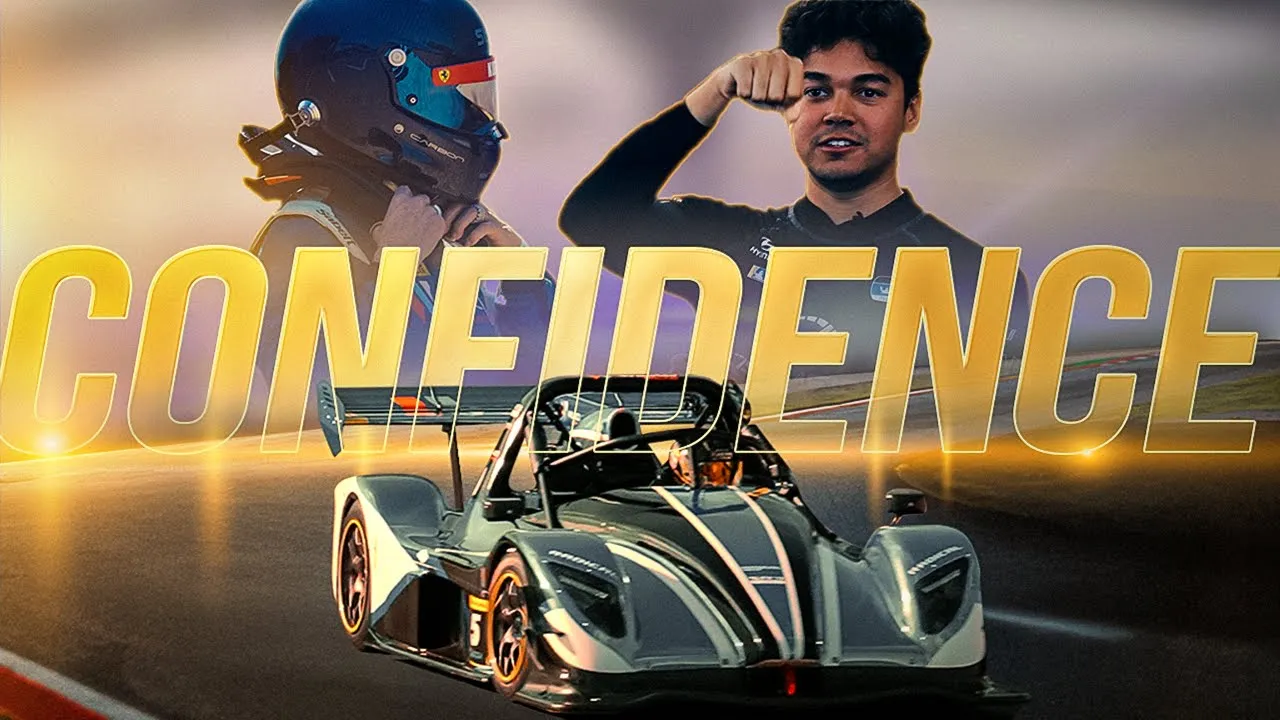
How to Rebuild Confidence After a Sim Racing Crash — Mental Reset for Drivers
Suellio Almeida
•
Thursday, February 20, 2025
The Loop Most Drivers Get Stuck In
You bin it into a wall. Maybe you lost the rear mid-corner. Maybe you misjudged a braking point under pressure.
And then? You tense up. You overthink the next corner. You brake earlier than you need to, turn in hesitant, and suddenly you're half a second off pace.
Sound familiar?
This isn't about talent. It's about how your brain reacts to failure. And if you don't have a process to reset, that one crash becomes ten cautious laps — or worse, another crash because you're overcompensating.
Let me show you how to fix it.
What Happens in Your Brain After a Crash
When you crash, your nervous system spikes. Adrenaline floods. Your focus narrows.
Your brain's job is to keep you safe. So it overrides your rational decision-making and screams: "DON'T DO THAT AGAIN."
The problem? Racing requires you to operate right at the edge of control. If your brain pulls you back from that edge every time you make a mistake, you'll never drive fast.
You need to override the override. You need a system that lets you acknowledge the mistake without letting it hijack your next lap.
Here's mine.
Step 1: Acknowledge It. Don't Bury It.
First thing after a crash: say it out loud.
"I braked too late."
"I got greedy on the throttle."
"I missed my turn-in point."
Don't make excuses. Don't blame the car, the tire model, netcode, whatever. Just name what you did wrong.
Why does this work?
Because your brain needs closure. If you don't process the mistake, it stays active in the background, eating up mental bandwidth. You'll be replaying it on loop while you're trying to nail Turn 3.
Acknowledge it. File it. Move on.
Step 2: Separate the Error from Your Ability
Here's where most drivers go wrong.
They crash and think: "I'm slow. I'm bad at this. I shouldn't be racing with these guys."
No.
You made one input error. That's it.
You're not a bad driver because you locked the fronts into a hairpin. You're a driver who braked 5 meters too late with 10% too much pressure.
See the difference?
One is fixable. The other is a spiral.
Your job is to zoom in on the specific mistake — not your entire identity as a racer. What was the input? What was the timing? What was the physics result?
Get clinical. Get specific. This isn't about you. It's about the corner.
Step 3: Build Your Reset Routine
Okay, you've named the mistake. You've separated it from your skill level.
Now what?
You need a physical reset. Something you do every time to tell your brain: "We're good. Let's go again."
Mine? I take one deep breath. I roll my shoulders back. I loosen my grip on the wheel.
That's it.
Find yours. Maybe it's shaking out your hands. Maybe it's adjusting your seating position. Maybe it's saying a word to yourself: "Reset."
Doesn't matter what it is. What matters is you do it every time. You're building a habit that tells your nervous system: "We've processed the crash. We're in control again."
This isn't woo-woo mindset stuff. This is conditioning. You're training your brain to let go faster.
Step 4: Go Back to Process, Not Outcome
Here's the trap: after a crash, most drivers obsess over not crashing again.
That's outcome thinking. And outcome thinking makes you tentative.
Instead, focus on process.
What does that mean?
"I'm going to hit my braking marker."
"I'm going to smooth out my steering input."
"I'm going to unwind the wheel progressively on exit."
You're not thinking about the crash. You're thinking about executing one corner correctly.
That's all you can control. That's all that matters.
If you nail the process, the outcome takes care of itself.
Step 5: Test It on a Slower Lap First
Don't go straight back to qualifying pace.
Take one lap at 95%. Feel the car. Rebuild trust in your inputs.
Most drivers skip this step. They crash, reset mentally, then immediately try to go faster than before to "prove" they're fine.
Bad idea.
You're not proving anything. You're reinforcing the crash pattern because your brain hasn't re-established safety yet.
Give yourself one lap to feel smooth. To feel in control. To remind your hands and your eyes that you know how to drive this corner.
Then build back up.
The Long Game: Crash Analysis Off-Track
Here's what separates good drivers from great ones.
Great drivers go back and study their crashes.
Not in the moment — later. After the session. When the adrenaline is gone.
Watch the replay. Look at the telemetry. Answer these questions:
Where was I on track when it went wrong?
What was my speed?
What was my steering angle?
What was my brake or throttle input?
What should I have done instead?
You're building a crash library. A catalog of failure modes that you can reference.
Because here's the thing: you're going to make the same mistakes again. Not because you're bad. Because racing is hard.
But if you've studied your crashes, you'll catch the mistake earlier next time. You'll feel the car starting to slide and think: "Oh, I know this one. I lift 10% here."
That's mastery.
Confidence Isn't Fearlessness. It's Preparation.
Let me be clear: you're never going to stop feeling nerves after a big crash.
That's fine. That's human.
But confidence isn't about eliminating fear. It's about having a system that lets you function despite the fear.
You know what to do when you crash. You know how to reset. You know how to rebuild trust in your inputs.
That's what makes you fast again.
Not talent. Not bravery. Preparation.
So Where Are You Getting Stuck?
Here's what I want you to think about.
How long does it take you to recover after a crash? One lap? Five laps? The rest of the session?
And what's that costing you?
Every lap you spend driving scared is a lap you're not learning. You're not improving. You're just managing damage.
Now imagine you had a coach who could watch that crash with you. Walk you through exactly what went wrong. Show you the telemetry. Give you a specific drill to rebuild that skill.
How much faster would you bounce back?
That's what we do in 1:1 coaching. I've worked with drivers at every level — from first-time sim racers to guys prepping for IMSA. And one of the biggest breakthroughs we make together is this: learning how to fail better.
You bring me your crashes. We analyze them. We fix the input. We rebuild your confidence with data, not guesswork.
Sim Racing Academy Membership
Everything you need to stop guessing and start getting faster.
Starting at
$25
/mo
Car Handling Online Course
4 levels, full curriculum. Aimed to get you to top 1% in driving pace.
Racecraft Online Course
Overtaking, Defending, Race Strategy
Live coaching + on-track practice
Bi-weekly pro-coach workshops (recorded — never miss one) plus on-track Pit Parties to practice racecraft with a coach.
Plus These Bonuses
13,000+ Member Community
League Racing
Advanced MX-5 Mini Course
Racing Technique Development Guide
The Motor Racing Book (260 pages)
Think & Behave Like a Pro Driver — Mini eBook
How to Rebuild Confidence After a Sim Racing Crash — Mental Reset for Drivers
Suellio Almeida
•
Thursday, February 20, 2025
The Loop Most Drivers Get Stuck In
You bin it into a wall. Maybe you lost the rear mid-corner. Maybe you misjudged a braking point under pressure.
And then? You tense up. You overthink the next corner. You brake earlier than you need to, turn in hesitant, and suddenly you're half a second off pace.
Sound familiar?
This isn't about talent. It's about how your brain reacts to failure. And if you don't have a process to reset, that one crash becomes ten cautious laps — or worse, another crash because you're overcompensating.
Let me show you how to fix it.
What Happens in Your Brain After a Crash
When you crash, your nervous system spikes. Adrenaline floods. Your focus narrows.
Your brain's job is to keep you safe. So it overrides your rational decision-making and screams: "DON'T DO THAT AGAIN."
The problem? Racing requires you to operate right at the edge of control. If your brain pulls you back from that edge every time you make a mistake, you'll never drive fast.
You need to override the override. You need a system that lets you acknowledge the mistake without letting it hijack your next lap.
Here's mine.
Step 1: Acknowledge It. Don't Bury It.
First thing after a crash: say it out loud.
"I braked too late."
"I got greedy on the throttle."
"I missed my turn-in point."
Don't make excuses. Don't blame the car, the tire model, netcode, whatever. Just name what you did wrong.
Why does this work?
Because your brain needs closure. If you don't process the mistake, it stays active in the background, eating up mental bandwidth. You'll be replaying it on loop while you're trying to nail Turn 3.
Acknowledge it. File it. Move on.
Step 2: Separate the Error from Your Ability
Here's where most drivers go wrong.
They crash and think: "I'm slow. I'm bad at this. I shouldn't be racing with these guys."
No.
You made one input error. That's it.
You're not a bad driver because you locked the fronts into a hairpin. You're a driver who braked 5 meters too late with 10% too much pressure.
See the difference?
One is fixable. The other is a spiral.
Your job is to zoom in on the specific mistake — not your entire identity as a racer. What was the input? What was the timing? What was the physics result?
Get clinical. Get specific. This isn't about you. It's about the corner.
Step 3: Build Your Reset Routine
Okay, you've named the mistake. You've separated it from your skill level.
Now what?
You need a physical reset. Something you do every time to tell your brain: "We're good. Let's go again."
Mine? I take one deep breath. I roll my shoulders back. I loosen my grip on the wheel.
That's it.
Find yours. Maybe it's shaking out your hands. Maybe it's adjusting your seating position. Maybe it's saying a word to yourself: "Reset."
Doesn't matter what it is. What matters is you do it every time. You're building a habit that tells your nervous system: "We've processed the crash. We're in control again."
This isn't woo-woo mindset stuff. This is conditioning. You're training your brain to let go faster.
Step 4: Go Back to Process, Not Outcome
Here's the trap: after a crash, most drivers obsess over not crashing again.
That's outcome thinking. And outcome thinking makes you tentative.
Instead, focus on process.
What does that mean?
"I'm going to hit my braking marker."
"I'm going to smooth out my steering input."
"I'm going to unwind the wheel progressively on exit."
You're not thinking about the crash. You're thinking about executing one corner correctly.
That's all you can control. That's all that matters.
If you nail the process, the outcome takes care of itself.
Step 5: Test It on a Slower Lap First
Don't go straight back to qualifying pace.
Take one lap at 95%. Feel the car. Rebuild trust in your inputs.
Most drivers skip this step. They crash, reset mentally, then immediately try to go faster than before to "prove" they're fine.
Bad idea.
You're not proving anything. You're reinforcing the crash pattern because your brain hasn't re-established safety yet.
Give yourself one lap to feel smooth. To feel in control. To remind your hands and your eyes that you know how to drive this corner.
Then build back up.
The Long Game: Crash Analysis Off-Track
Here's what separates good drivers from great ones.
Great drivers go back and study their crashes.
Not in the moment — later. After the session. When the adrenaline is gone.
Watch the replay. Look at the telemetry. Answer these questions:
Where was I on track when it went wrong?
What was my speed?
What was my steering angle?
What was my brake or throttle input?
What should I have done instead?
You're building a crash library. A catalog of failure modes that you can reference.
Because here's the thing: you're going to make the same mistakes again. Not because you're bad. Because racing is hard.
But if you've studied your crashes, you'll catch the mistake earlier next time. You'll feel the car starting to slide and think: "Oh, I know this one. I lift 10% here."
That's mastery.
Confidence Isn't Fearlessness. It's Preparation.
Let me be clear: you're never going to stop feeling nerves after a big crash.
That's fine. That's human.
But confidence isn't about eliminating fear. It's about having a system that lets you function despite the fear.
You know what to do when you crash. You know how to reset. You know how to rebuild trust in your inputs.
That's what makes you fast again.
Not talent. Not bravery. Preparation.
So Where Are You Getting Stuck?
Here's what I want you to think about.
How long does it take you to recover after a crash? One lap? Five laps? The rest of the session?
And what's that costing you?
Every lap you spend driving scared is a lap you're not learning. You're not improving. You're just managing damage.
Now imagine you had a coach who could watch that crash with you. Walk you through exactly what went wrong. Show you the telemetry. Give you a specific drill to rebuild that skill.
How much faster would you bounce back?
That's what we do in 1:1 coaching. I've worked with drivers at every level — from first-time sim racers to guys prepping for IMSA. And one of the biggest breakthroughs we make together is this: learning how to fail better.
You bring me your crashes. We analyze them. We fix the input. We rebuild your confidence with data, not guesswork.
Sim Racing Academy Membership
Everything you need to stop guessing and start getting faster.
Starting at
$25
/mo
Car Handling Online Course
4 levels, full curriculum. Aimed to get you to top 1% in driving pace.
Racecraft Online Course
Overtaking, Defending, Race Strategy
Live coaching + on-track practice
Bi-weekly pro-coach workshops (recorded — never miss one) plus on-track Pit Parties to practice racecraft with a coach.
Plus These Bonuses
13,000+ Member Community
League Racing
Advanced MX-5 Mini Course
Racing Technique Development Guide
The Motor Racing Book (260 pages)
Think & Behave Like a Pro Driver — Mini eBook
How to Rebuild Confidence After a Sim Racing Crash — Mental Reset for Drivers
Suellio Almeida
•
Thursday, February 20, 2025
The Loop Most Drivers Get Stuck In
You bin it into a wall. Maybe you lost the rear mid-corner. Maybe you misjudged a braking point under pressure.
And then? You tense up. You overthink the next corner. You brake earlier than you need to, turn in hesitant, and suddenly you're half a second off pace.
Sound familiar?
This isn't about talent. It's about how your brain reacts to failure. And if you don't have a process to reset, that one crash becomes ten cautious laps — or worse, another crash because you're overcompensating.
Let me show you how to fix it.
What Happens in Your Brain After a Crash
When you crash, your nervous system spikes. Adrenaline floods. Your focus narrows.
Your brain's job is to keep you safe. So it overrides your rational decision-making and screams: "DON'T DO THAT AGAIN."
The problem? Racing requires you to operate right at the edge of control. If your brain pulls you back from that edge every time you make a mistake, you'll never drive fast.
You need to override the override. You need a system that lets you acknowledge the mistake without letting it hijack your next lap.
Here's mine.
Step 1: Acknowledge It. Don't Bury It.
First thing after a crash: say it out loud.
"I braked too late."
"I got greedy on the throttle."
"I missed my turn-in point."
Don't make excuses. Don't blame the car, the tire model, netcode, whatever. Just name what you did wrong.
Why does this work?
Because your brain needs closure. If you don't process the mistake, it stays active in the background, eating up mental bandwidth. You'll be replaying it on loop while you're trying to nail Turn 3.
Acknowledge it. File it. Move on.
Step 2: Separate the Error from Your Ability
Here's where most drivers go wrong.
They crash and think: "I'm slow. I'm bad at this. I shouldn't be racing with these guys."
No.
You made one input error. That's it.
You're not a bad driver because you locked the fronts into a hairpin. You're a driver who braked 5 meters too late with 10% too much pressure.
See the difference?
One is fixable. The other is a spiral.
Your job is to zoom in on the specific mistake — not your entire identity as a racer. What was the input? What was the timing? What was the physics result?
Get clinical. Get specific. This isn't about you. It's about the corner.
Step 3: Build Your Reset Routine
Okay, you've named the mistake. You've separated it from your skill level.
Now what?
You need a physical reset. Something you do every time to tell your brain: "We're good. Let's go again."
Mine? I take one deep breath. I roll my shoulders back. I loosen my grip on the wheel.
That's it.
Find yours. Maybe it's shaking out your hands. Maybe it's adjusting your seating position. Maybe it's saying a word to yourself: "Reset."
Doesn't matter what it is. What matters is you do it every time. You're building a habit that tells your nervous system: "We've processed the crash. We're in control again."
This isn't woo-woo mindset stuff. This is conditioning. You're training your brain to let go faster.
Step 4: Go Back to Process, Not Outcome
Here's the trap: after a crash, most drivers obsess over not crashing again.
That's outcome thinking. And outcome thinking makes you tentative.
Instead, focus on process.
What does that mean?
"I'm going to hit my braking marker."
"I'm going to smooth out my steering input."
"I'm going to unwind the wheel progressively on exit."
You're not thinking about the crash. You're thinking about executing one corner correctly.
That's all you can control. That's all that matters.
If you nail the process, the outcome takes care of itself.
Step 5: Test It on a Slower Lap First
Don't go straight back to qualifying pace.
Take one lap at 95%. Feel the car. Rebuild trust in your inputs.
Most drivers skip this step. They crash, reset mentally, then immediately try to go faster than before to "prove" they're fine.
Bad idea.
You're not proving anything. You're reinforcing the crash pattern because your brain hasn't re-established safety yet.
Give yourself one lap to feel smooth. To feel in control. To remind your hands and your eyes that you know how to drive this corner.
Then build back up.
The Long Game: Crash Analysis Off-Track
Here's what separates good drivers from great ones.
Great drivers go back and study their crashes.
Not in the moment — later. After the session. When the adrenaline is gone.
Watch the replay. Look at the telemetry. Answer these questions:
Where was I on track when it went wrong?
What was my speed?
What was my steering angle?
What was my brake or throttle input?
What should I have done instead?
You're building a crash library. A catalog of failure modes that you can reference.
Because here's the thing: you're going to make the same mistakes again. Not because you're bad. Because racing is hard.
But if you've studied your crashes, you'll catch the mistake earlier next time. You'll feel the car starting to slide and think: "Oh, I know this one. I lift 10% here."
That's mastery.
Confidence Isn't Fearlessness. It's Preparation.
Let me be clear: you're never going to stop feeling nerves after a big crash.
That's fine. That's human.
But confidence isn't about eliminating fear. It's about having a system that lets you function despite the fear.
You know what to do when you crash. You know how to reset. You know how to rebuild trust in your inputs.
That's what makes you fast again.
Not talent. Not bravery. Preparation.
So Where Are You Getting Stuck?
Here's what I want you to think about.
How long does it take you to recover after a crash? One lap? Five laps? The rest of the session?
And what's that costing you?
Every lap you spend driving scared is a lap you're not learning. You're not improving. You're just managing damage.
Now imagine you had a coach who could watch that crash with you. Walk you through exactly what went wrong. Show you the telemetry. Give you a specific drill to rebuild that skill.
How much faster would you bounce back?
That's what we do in 1:1 coaching. I've worked with drivers at every level — from first-time sim racers to guys prepping for IMSA. And one of the biggest breakthroughs we make together is this: learning how to fail better.
You bring me your crashes. We analyze them. We fix the input. We rebuild your confidence with data, not guesswork.
Sim Racing Academy Membership
Everything you need to stop guessing and start getting faster.
Starting at
$25
/mo
Car Handling Online Course
4 levels, full curriculum. Aimed to get you to top 1% in driving pace.
Racecraft Online Course
Overtaking, Defending, Race Strategy
Live coaching + on-track practice
Bi-weekly pro-coach workshops (recorded — never miss one) plus on-track Pit Parties to practice racecraft with a coach.
Plus These Bonuses
13,000+ Member Community
League Racing
Advanced MX-5 Mini Course
Racing Technique Development Guide
The Motor Racing Book (260 pages)
Think & Behave Like a Pro Driver — Mini eBook