
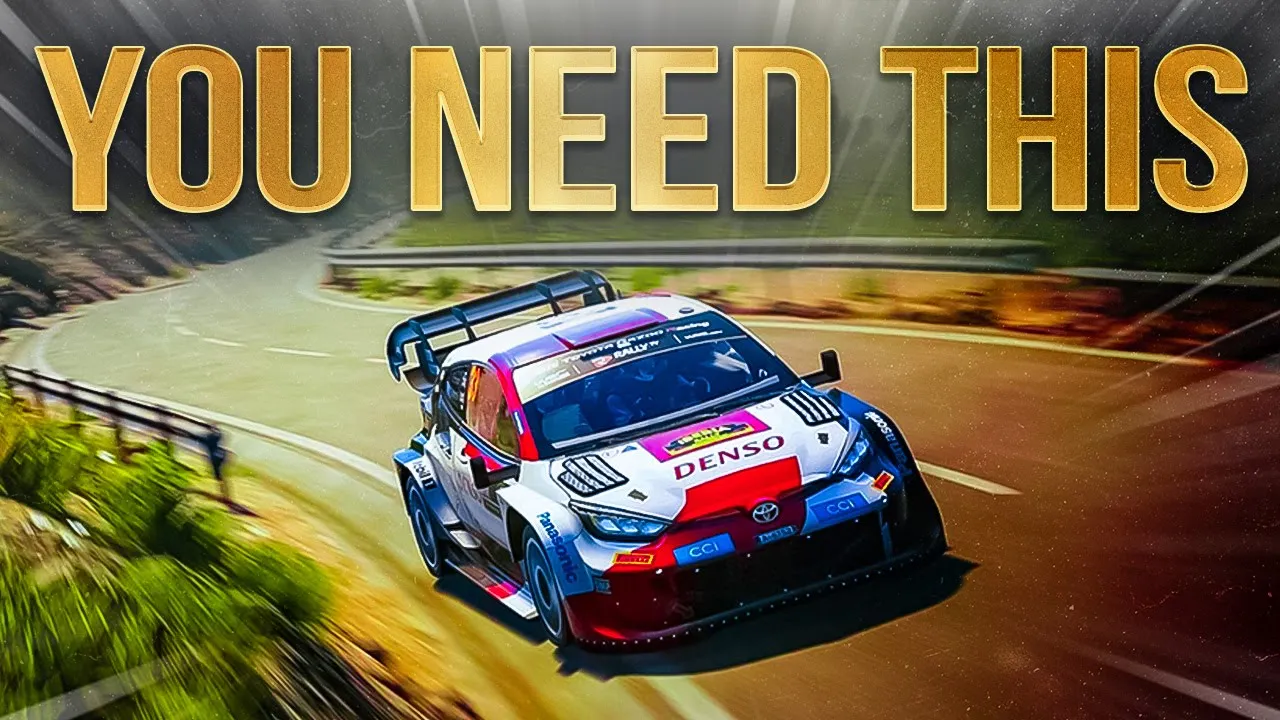
Why Rally Games Make You a Better Circuit Racer (And Which One Actually Works)
Suellio Almeida
•
Thursday, November 16, 2023
The Skill Most Circuit Racers Never Learn
You brake in a straight line. You turn in. You apex. You exit.
That's circuit racing in its most basic form. And for 90% of drivers, that's where the learning stops.
But rally drivers? They're managing weight transfer through every single input. They're reading grip levels that change corner-to-corner, surface-to-surface, sometimes wheel-to-wheel. They're committed to lines before they can see the exit.
These aren't rally-specific skills. They're foundational vehicle dynamics principles that translate directly to circuit racing.
The question is: can you actually learn them from a game?
What EA Sports WRC Gets Right (That Other Rally Games Don't)
I've driven a lot of rally sims. Most of them feel like ice skating with extra steps.
EA Sports WRC is different. The physics model actually rewards proper technique.
Weight transfer is real. When you brake, you feel the nose dive. When you turn in too early, you feel the rear go light. When you're on gravel and you lift mid-corner, the car rotates exactly like it should.
This isn't arcade. This is legitimate vehicle dynamics simulation.
The grip variation between surfaces — tarmac to gravel to snow to mud — forces you to read the car constantly. You can't rely on visual cues alone. You have to feel what the suspension is doing, what the tires are communicating.
That's the skill transfer. Circuit racers who only drive GT3s on perfect tarmac never develop that sensitivity.
The Three Rally Techniques That Make You Faster on Track
1. Scandinavian Flick (Weight Transfer on Demand)
The Scandinavian flick isn't just a rally trick. It's a weight transfer manipulation technique.
You steer away from the corner to load the outside tire, then snap back into the turn. The weight shifts violently to the outside, compressing the tire and giving you instant grip for rotation.
Why does this matter on track?
Because you're learning to actively manage load transfer, not just passively accept it. Most drivers think weight transfer is something that happens TO them. Rally drivers use it as a tool.
In EA Sports WRC, you feel this technique work or fail based on your timing and aggression. Get it right, the car pivots beautifully. Get it wrong, you're in the trees.
That feedback loop builds instinct.
2. Left-Foot Braking (Not Just for Time Attack)
Rally drivers left-foot brake because they need to keep the throttle pinned while adjusting rotation with brake pressure.
Circuit racers who learn this technique unlock a massive advantage: you can fine-tune balance mid-corner without lifting.
In WRC, left-foot braking is mandatory. The cars are built for it. The stages demand it. You either adapt or you crash.
After a few hours in rally mode, your left foot develops muscle memory. You start feeling brake pressure as a dial, not a switch. That transfers directly to trail braking on track — smoother, more precise, more confidence at the limit.
3. Commitment Before Visibility (Trust Your Inputs)
Rally drivers commit to lines they can't see yet. They trust their pace notes, their co-driver, and their feel for the car.
Circuit racers who lack this skill are always late. They wait to see the apex before they commit. They wait to feel grip before they push.
In WRC, blind crests and late-apex corners force you to commit earlier than feels comfortable. You learn to trust your inputs before visual confirmation.
That's a massive mental shift. And it makes you faster everywhere — because you're not waiting for permission from your eyes. You're reading the car, trusting your preparation, and executing.
The Career Mode Actually Teaches You (Not Just Entertains You)
Most racing game career modes are glorified time trials with cutscenes.
WRC's career mode forces you to manage a team, make strategic decisions about car development, and progress through a realistic championship structure.
But here's what matters for driver development: the stages are sequenced to teach you progressively harder skills.
You start on wide gravel roads with decent visibility. Then you hit tight mountain passes. Then you're on ice. Then you're doing night stages with limited visibility and changing surfaces.
Each environment punishes specific mistakes. Gravel punishes late braking. Tarmac punishes lazy rotation. Ice punishes any aggression that isn't perfectly timed.
You don't just play through it. You learn through it.
Why Rally Sim Training Works (When Circuit Sim Training Doesn't)
Circuit racing has the same corners every lap. Same braking points. Same apexes. Same exits.
You can memorize a circuit. You can't memorize grip.
Rally racing forces adaptive skill development. Every corner is different. Every surface is different. Every weather condition changes the equation.
That builds a different kind of driver — one who reads the car first, the track second.
When you take that mindset back to circuit racing, you're not just following a memorized racing line anymore. You're actively managing the platform, reading grip changes, adjusting inputs in real-time.
That's why rally drivers who transition to circuit racing are often faster than circuit specialists — they have a deeper understanding of vehicle dynamics.
And you can develop that same understanding in EA Sports WRC.
The One Thing WRC Gets Wrong (And Why It Doesn't Matter)
The tire model isn't perfect. It's better than most rally games, but it's not iRacing-level simulation.
Does that matter for skill development? No.
Because the principles are correct. Weight transfer works. Left-foot braking works. Commitment and car control transfer directly.
You're not training for WRC championship accuracy. You're training your brain to process vehicle dynamics under challenging conditions.
And for that purpose, this game absolutely works.
How to Actually Use This Game for Driver Development (Not Just Entertainment)
Don't just jump into career mode and treat this like a video game.
Approach it like training:
1. Pick one technique to focus on per session. Today is Scandinavian flick practice. Tomorrow is left-foot braking consistency. Next week is blind commitment drills.
2. Use time trial mode to isolate specific corners. Find a stage with a challenging hairpin. Run it 50 times until you can nail the rotation technique every single time.
3. Analyze your mistakes. When you crash, ask why. Was it too much brake? Too early turn-in? Wrong weight transfer timing? Don't just restart — diagnose.
4. Switch between surfaces deliberately. Gravel teaches rotation. Tarmac teaches precision. Snow teaches patience. Don't stick to one — challenge yourself with variety.
5. Take what you learn back to your main sim. After a WRC session, jump into iRacing or ACC. You'll feel the difference in your weight transfer awareness immediately.
This isn't a replacement for circuit racing practice. It's a supplement. A cross-training tool.
And it works.
Can a Rally Game Actually Make You Faster? (The Real Answer)
Yes. But only if you approach it with purpose.
If you play WRC casually, it's just entertainment. Fun, but not transformative.
If you use it to deliberately practice weight transfer, left-foot braking, and adaptive car control — you'll develop skills that 90% of circuit racers never touch.
Rally racing strips away the crutches. No consistent grip. No memorized lines. No perfect tarmac.
Just you, the car, and your ability to read what's happening under the tires.
That makes you a better driver. Period.
What If You Could Train Every Skill This Deliberately?
You just saw how one game — approached with the right method — can develop specific skills that translate to real pace.
But rally techniques are just one piece. What about trail braking? Racecraft? Consistency under pressure? Data analysis?
What if you had a structured training system that broke down every aspect of driver development this clearly?
That's what we built at Almeida Racing Academy. Eight full courses. Eighty lessons. Techniques tested across 36,000+ students and thousands of coaching hours. Trail braking that actually works. Weight transfer drills that build instinct. Racecraft principles that win races.
No fluff. No guesswork. Just proven method.
Sim Racing Academy Membership
Everything you need to stop guessing and start getting faster.
Starting at
$25
/mo
Car Handling Online Course
4 levels, full curriculum. Aimed to get you to top 1% in driving pace.
Racecraft Online Course
Overtaking, Defending, Race Strategy
Live coaching + on-track practice
Bi-weekly pro-coach workshops (recorded — never miss one) plus on-track Pit Parties to practice racecraft with a coach.
Plus These Bonuses
13,000+ Member Community
League Racing
Advanced MX-5 Mini Course
Racing Technique Development Guide
The Motor Racing Book (260 pages)
Think & Behave Like a Pro Driver — Mini eBook
Why Rally Games Make You a Better Circuit Racer (And Which One Actually Works)
Suellio Almeida
•
Thursday, November 16, 2023
The Skill Most Circuit Racers Never Learn
You brake in a straight line. You turn in. You apex. You exit.
That's circuit racing in its most basic form. And for 90% of drivers, that's where the learning stops.
But rally drivers? They're managing weight transfer through every single input. They're reading grip levels that change corner-to-corner, surface-to-surface, sometimes wheel-to-wheel. They're committed to lines before they can see the exit.
These aren't rally-specific skills. They're foundational vehicle dynamics principles that translate directly to circuit racing.
The question is: can you actually learn them from a game?
What EA Sports WRC Gets Right (That Other Rally Games Don't)
I've driven a lot of rally sims. Most of them feel like ice skating with extra steps.
EA Sports WRC is different. The physics model actually rewards proper technique.
Weight transfer is real. When you brake, you feel the nose dive. When you turn in too early, you feel the rear go light. When you're on gravel and you lift mid-corner, the car rotates exactly like it should.
This isn't arcade. This is legitimate vehicle dynamics simulation.
The grip variation between surfaces — tarmac to gravel to snow to mud — forces you to read the car constantly. You can't rely on visual cues alone. You have to feel what the suspension is doing, what the tires are communicating.
That's the skill transfer. Circuit racers who only drive GT3s on perfect tarmac never develop that sensitivity.
The Three Rally Techniques That Make You Faster on Track
1. Scandinavian Flick (Weight Transfer on Demand)
The Scandinavian flick isn't just a rally trick. It's a weight transfer manipulation technique.
You steer away from the corner to load the outside tire, then snap back into the turn. The weight shifts violently to the outside, compressing the tire and giving you instant grip for rotation.
Why does this matter on track?
Because you're learning to actively manage load transfer, not just passively accept it. Most drivers think weight transfer is something that happens TO them. Rally drivers use it as a tool.
In EA Sports WRC, you feel this technique work or fail based on your timing and aggression. Get it right, the car pivots beautifully. Get it wrong, you're in the trees.
That feedback loop builds instinct.
2. Left-Foot Braking (Not Just for Time Attack)
Rally drivers left-foot brake because they need to keep the throttle pinned while adjusting rotation with brake pressure.
Circuit racers who learn this technique unlock a massive advantage: you can fine-tune balance mid-corner without lifting.
In WRC, left-foot braking is mandatory. The cars are built for it. The stages demand it. You either adapt or you crash.
After a few hours in rally mode, your left foot develops muscle memory. You start feeling brake pressure as a dial, not a switch. That transfers directly to trail braking on track — smoother, more precise, more confidence at the limit.
3. Commitment Before Visibility (Trust Your Inputs)
Rally drivers commit to lines they can't see yet. They trust their pace notes, their co-driver, and their feel for the car.
Circuit racers who lack this skill are always late. They wait to see the apex before they commit. They wait to feel grip before they push.
In WRC, blind crests and late-apex corners force you to commit earlier than feels comfortable. You learn to trust your inputs before visual confirmation.
That's a massive mental shift. And it makes you faster everywhere — because you're not waiting for permission from your eyes. You're reading the car, trusting your preparation, and executing.
The Career Mode Actually Teaches You (Not Just Entertains You)
Most racing game career modes are glorified time trials with cutscenes.
WRC's career mode forces you to manage a team, make strategic decisions about car development, and progress through a realistic championship structure.
But here's what matters for driver development: the stages are sequenced to teach you progressively harder skills.
You start on wide gravel roads with decent visibility. Then you hit tight mountain passes. Then you're on ice. Then you're doing night stages with limited visibility and changing surfaces.
Each environment punishes specific mistakes. Gravel punishes late braking. Tarmac punishes lazy rotation. Ice punishes any aggression that isn't perfectly timed.
You don't just play through it. You learn through it.
Why Rally Sim Training Works (When Circuit Sim Training Doesn't)
Circuit racing has the same corners every lap. Same braking points. Same apexes. Same exits.
You can memorize a circuit. You can't memorize grip.
Rally racing forces adaptive skill development. Every corner is different. Every surface is different. Every weather condition changes the equation.
That builds a different kind of driver — one who reads the car first, the track second.
When you take that mindset back to circuit racing, you're not just following a memorized racing line anymore. You're actively managing the platform, reading grip changes, adjusting inputs in real-time.
That's why rally drivers who transition to circuit racing are often faster than circuit specialists — they have a deeper understanding of vehicle dynamics.
And you can develop that same understanding in EA Sports WRC.
The One Thing WRC Gets Wrong (And Why It Doesn't Matter)
The tire model isn't perfect. It's better than most rally games, but it's not iRacing-level simulation.
Does that matter for skill development? No.
Because the principles are correct. Weight transfer works. Left-foot braking works. Commitment and car control transfer directly.
You're not training for WRC championship accuracy. You're training your brain to process vehicle dynamics under challenging conditions.
And for that purpose, this game absolutely works.
How to Actually Use This Game for Driver Development (Not Just Entertainment)
Don't just jump into career mode and treat this like a video game.
Approach it like training:
1. Pick one technique to focus on per session. Today is Scandinavian flick practice. Tomorrow is left-foot braking consistency. Next week is blind commitment drills.
2. Use time trial mode to isolate specific corners. Find a stage with a challenging hairpin. Run it 50 times until you can nail the rotation technique every single time.
3. Analyze your mistakes. When you crash, ask why. Was it too much brake? Too early turn-in? Wrong weight transfer timing? Don't just restart — diagnose.
4. Switch between surfaces deliberately. Gravel teaches rotation. Tarmac teaches precision. Snow teaches patience. Don't stick to one — challenge yourself with variety.
5. Take what you learn back to your main sim. After a WRC session, jump into iRacing or ACC. You'll feel the difference in your weight transfer awareness immediately.
This isn't a replacement for circuit racing practice. It's a supplement. A cross-training tool.
And it works.
Can a Rally Game Actually Make You Faster? (The Real Answer)
Yes. But only if you approach it with purpose.
If you play WRC casually, it's just entertainment. Fun, but not transformative.
If you use it to deliberately practice weight transfer, left-foot braking, and adaptive car control — you'll develop skills that 90% of circuit racers never touch.
Rally racing strips away the crutches. No consistent grip. No memorized lines. No perfect tarmac.
Just you, the car, and your ability to read what's happening under the tires.
That makes you a better driver. Period.
What If You Could Train Every Skill This Deliberately?
You just saw how one game — approached with the right method — can develop specific skills that translate to real pace.
But rally techniques are just one piece. What about trail braking? Racecraft? Consistency under pressure? Data analysis?
What if you had a structured training system that broke down every aspect of driver development this clearly?
That's what we built at Almeida Racing Academy. Eight full courses. Eighty lessons. Techniques tested across 36,000+ students and thousands of coaching hours. Trail braking that actually works. Weight transfer drills that build instinct. Racecraft principles that win races.
No fluff. No guesswork. Just proven method.
Sim Racing Academy Membership
Everything you need to stop guessing and start getting faster.
Starting at
$25
/mo
Car Handling Online Course
4 levels, full curriculum. Aimed to get you to top 1% in driving pace.
Racecraft Online Course
Overtaking, Defending, Race Strategy
Live coaching + on-track practice
Bi-weekly pro-coach workshops (recorded — never miss one) plus on-track Pit Parties to practice racecraft with a coach.
Plus These Bonuses
13,000+ Member Community
League Racing
Advanced MX-5 Mini Course
Racing Technique Development Guide
The Motor Racing Book (260 pages)
Think & Behave Like a Pro Driver — Mini eBook
Why Rally Games Make You a Better Circuit Racer (And Which One Actually Works)
Suellio Almeida
•
Thursday, November 16, 2023
The Skill Most Circuit Racers Never Learn
You brake in a straight line. You turn in. You apex. You exit.
That's circuit racing in its most basic form. And for 90% of drivers, that's where the learning stops.
But rally drivers? They're managing weight transfer through every single input. They're reading grip levels that change corner-to-corner, surface-to-surface, sometimes wheel-to-wheel. They're committed to lines before they can see the exit.
These aren't rally-specific skills. They're foundational vehicle dynamics principles that translate directly to circuit racing.
The question is: can you actually learn them from a game?
What EA Sports WRC Gets Right (That Other Rally Games Don't)
I've driven a lot of rally sims. Most of them feel like ice skating with extra steps.
EA Sports WRC is different. The physics model actually rewards proper technique.
Weight transfer is real. When you brake, you feel the nose dive. When you turn in too early, you feel the rear go light. When you're on gravel and you lift mid-corner, the car rotates exactly like it should.
This isn't arcade. This is legitimate vehicle dynamics simulation.
The grip variation between surfaces — tarmac to gravel to snow to mud — forces you to read the car constantly. You can't rely on visual cues alone. You have to feel what the suspension is doing, what the tires are communicating.
That's the skill transfer. Circuit racers who only drive GT3s on perfect tarmac never develop that sensitivity.
The Three Rally Techniques That Make You Faster on Track
1. Scandinavian Flick (Weight Transfer on Demand)
The Scandinavian flick isn't just a rally trick. It's a weight transfer manipulation technique.
You steer away from the corner to load the outside tire, then snap back into the turn. The weight shifts violently to the outside, compressing the tire and giving you instant grip for rotation.
Why does this matter on track?
Because you're learning to actively manage load transfer, not just passively accept it. Most drivers think weight transfer is something that happens TO them. Rally drivers use it as a tool.
In EA Sports WRC, you feel this technique work or fail based on your timing and aggression. Get it right, the car pivots beautifully. Get it wrong, you're in the trees.
That feedback loop builds instinct.
2. Left-Foot Braking (Not Just for Time Attack)
Rally drivers left-foot brake because they need to keep the throttle pinned while adjusting rotation with brake pressure.
Circuit racers who learn this technique unlock a massive advantage: you can fine-tune balance mid-corner without lifting.
In WRC, left-foot braking is mandatory. The cars are built for it. The stages demand it. You either adapt or you crash.
After a few hours in rally mode, your left foot develops muscle memory. You start feeling brake pressure as a dial, not a switch. That transfers directly to trail braking on track — smoother, more precise, more confidence at the limit.
3. Commitment Before Visibility (Trust Your Inputs)
Rally drivers commit to lines they can't see yet. They trust their pace notes, their co-driver, and their feel for the car.
Circuit racers who lack this skill are always late. They wait to see the apex before they commit. They wait to feel grip before they push.
In WRC, blind crests and late-apex corners force you to commit earlier than feels comfortable. You learn to trust your inputs before visual confirmation.
That's a massive mental shift. And it makes you faster everywhere — because you're not waiting for permission from your eyes. You're reading the car, trusting your preparation, and executing.
The Career Mode Actually Teaches You (Not Just Entertains You)
Most racing game career modes are glorified time trials with cutscenes.
WRC's career mode forces you to manage a team, make strategic decisions about car development, and progress through a realistic championship structure.
But here's what matters for driver development: the stages are sequenced to teach you progressively harder skills.
You start on wide gravel roads with decent visibility. Then you hit tight mountain passes. Then you're on ice. Then you're doing night stages with limited visibility and changing surfaces.
Each environment punishes specific mistakes. Gravel punishes late braking. Tarmac punishes lazy rotation. Ice punishes any aggression that isn't perfectly timed.
You don't just play through it. You learn through it.
Why Rally Sim Training Works (When Circuit Sim Training Doesn't)
Circuit racing has the same corners every lap. Same braking points. Same apexes. Same exits.
You can memorize a circuit. You can't memorize grip.
Rally racing forces adaptive skill development. Every corner is different. Every surface is different. Every weather condition changes the equation.
That builds a different kind of driver — one who reads the car first, the track second.
When you take that mindset back to circuit racing, you're not just following a memorized racing line anymore. You're actively managing the platform, reading grip changes, adjusting inputs in real-time.
That's why rally drivers who transition to circuit racing are often faster than circuit specialists — they have a deeper understanding of vehicle dynamics.
And you can develop that same understanding in EA Sports WRC.
The One Thing WRC Gets Wrong (And Why It Doesn't Matter)
The tire model isn't perfect. It's better than most rally games, but it's not iRacing-level simulation.
Does that matter for skill development? No.
Because the principles are correct. Weight transfer works. Left-foot braking works. Commitment and car control transfer directly.
You're not training for WRC championship accuracy. You're training your brain to process vehicle dynamics under challenging conditions.
And for that purpose, this game absolutely works.
How to Actually Use This Game for Driver Development (Not Just Entertainment)
Don't just jump into career mode and treat this like a video game.
Approach it like training:
1. Pick one technique to focus on per session. Today is Scandinavian flick practice. Tomorrow is left-foot braking consistency. Next week is blind commitment drills.
2. Use time trial mode to isolate specific corners. Find a stage with a challenging hairpin. Run it 50 times until you can nail the rotation technique every single time.
3. Analyze your mistakes. When you crash, ask why. Was it too much brake? Too early turn-in? Wrong weight transfer timing? Don't just restart — diagnose.
4. Switch between surfaces deliberately. Gravel teaches rotation. Tarmac teaches precision. Snow teaches patience. Don't stick to one — challenge yourself with variety.
5. Take what you learn back to your main sim. After a WRC session, jump into iRacing or ACC. You'll feel the difference in your weight transfer awareness immediately.
This isn't a replacement for circuit racing practice. It's a supplement. A cross-training tool.
And it works.
Can a Rally Game Actually Make You Faster? (The Real Answer)
Yes. But only if you approach it with purpose.
If you play WRC casually, it's just entertainment. Fun, but not transformative.
If you use it to deliberately practice weight transfer, left-foot braking, and adaptive car control — you'll develop skills that 90% of circuit racers never touch.
Rally racing strips away the crutches. No consistent grip. No memorized lines. No perfect tarmac.
Just you, the car, and your ability to read what's happening under the tires.
That makes you a better driver. Period.
What If You Could Train Every Skill This Deliberately?
You just saw how one game — approached with the right method — can develop specific skills that translate to real pace.
But rally techniques are just one piece. What about trail braking? Racecraft? Consistency under pressure? Data analysis?
What if you had a structured training system that broke down every aspect of driver development this clearly?
That's what we built at Almeida Racing Academy. Eight full courses. Eighty lessons. Techniques tested across 36,000+ students and thousands of coaching hours. Trail braking that actually works. Weight transfer drills that build instinct. Racecraft principles that win races.
No fluff. No guesswork. Just proven method.
Sim Racing Academy Membership
Everything you need to stop guessing and start getting faster.
Starting at
$25
/mo
Car Handling Online Course
4 levels, full curriculum. Aimed to get you to top 1% in driving pace.
Racecraft Online Course
Overtaking, Defending, Race Strategy
Live coaching + on-track practice
Bi-weekly pro-coach workshops (recorded — never miss one) plus on-track Pit Parties to practice racecraft with a coach.
Plus These Bonuses
13,000+ Member Community
League Racing
Advanced MX-5 Mini Course
Racing Technique Development Guide
The Motor Racing Book (260 pages)
Think & Behave Like a Pro Driver — Mini eBook