
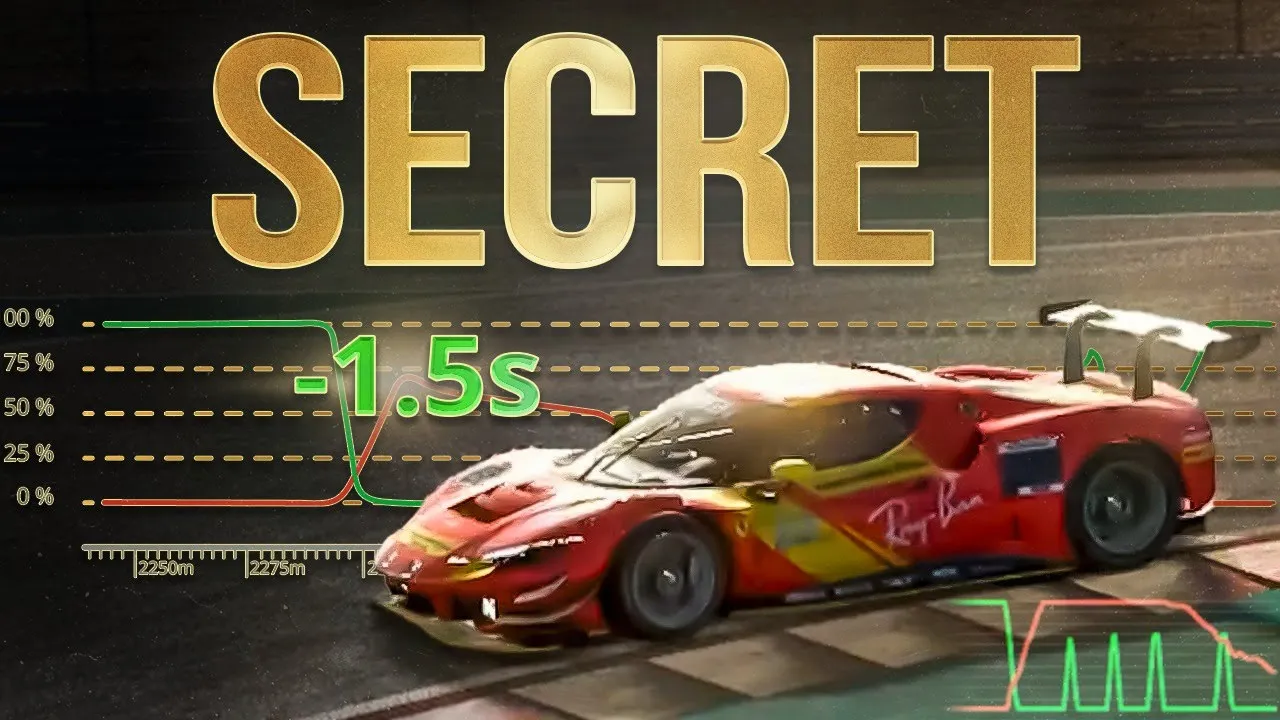
How This Racing Student Found 1.5 Seconds with ONE Trail Braking Fix
Suellio Almeida
•
Tuesday, March 19, 2024
The Problem: Fast Entry, Slow Exit — The Understeer Trap
This student came to me driving the Radical SR3 at Spa-Francorchamps. His initial lap time: 2:38.9.
He was aggressive. He was committed. He knew the track.
But every fast corner — Eau Rouge, Pouhon, Blanchimont — same issue. He'd carry good speed into the turn, and then the car would just push. Understeer. He'd have to wait, wait, wait for the car to rotate before he could get back to throttle.
His exit speeds were killing him. And he didn't understand why.
I pulled up his telemetry. The problem was obvious: he was releasing the brake too early.
What Trail Braking Actually Does (And Why You Need It)
Here's what most drivers get wrong about trail braking:
They think it's about braking later. It's not.
Trail braking is about keeping weight on the front tires as you turn in. That weight is what gives you front grip. That grip is what allows the car to rotate.
When you release the brake too early — before the car starts turning — the weight shifts back. The front tires unload. The car understeers. You have to slow down mid-corner to regain control.
You just lost time. A lot of it.
This student was releasing the brake at turn-in. The car had no rotation. He was fighting understeer through the entire mid-corner phase, which meant he couldn't get to throttle until way too late.
The fix? Trail the brake deeper into the corner — past turn-in, past the initial rotation, until the car is settled and pointed where you want to go.
The Fix: Extending the Trail Phase Through Eau Rouge
We started with Eau Rouge. High-speed, high-commitment, and a perfect place to feel the difference.
On his baseline lap, he was releasing the brake right at turn-in. The car pushed wide. He had to lift mid-corner to tuck the nose back in.
I told him: "Keep your foot on the brake through the entire compression. Don't release until the car is fully rotated and you're ready to commit to throttle."
First lap with the change? Immediate difference.
The car stayed loaded. The front bit. He carried the rotation all the way through the compression. His minimum speed went up — not because he braked less, but because the car was more stable and he didn't have to scrub speed mid-corner.
Exit speed? Night and day.
The Result: 2:38.9 → 2:37.4 — And That Was Just the Beginning
After applying the same principle through Pouhon, Blanchimont, and Campus — extending the trail phase, keeping weight on the front, letting the car rotate — his lap time dropped to 2:37.4.
1.5 seconds. One change.
And the car felt completely different to him. His words: "I didn't realize how much I was fighting the car before. Now it just... turns."
That's the thing about trail braking. When you get it right, the car does what you want. When you get it wrong, you're constantly correcting, adjusting, scrubbing speed.
Most drivers think they need to brake later or carry more speed. What they actually need is better weight transfer control.
Why This Works in Every Car, Every Track
This isn't a Radical-specific trick. This is fundamental vehicle dynamics.
Every car — GT3, LMP2, Formula car, touring car — needs front-end load to turn. The faster the corner, the more critical it becomes.
If you're fighting understeer in high-speed corners, this is why. You're unloading the front too early.
The fix is the same:
Extend your trail braking phase past turn-in
Feel the car rotate under the brake
Don't release until the car is settled and tracking toward the apex
Then commit to throttle with confidence
You'll carry more minimum speed. You'll exit faster. You'll feel the car work with you instead of against you.
Are You Still Fighting Understeer — Or Ready to Fix It?
Here's the question: How many seconds are you leaving on the table because you're releasing the brake too early?
You can feel it, right? That moment where the car pushes, and you have to wait, and everyone else is already back to throttle. You know the gap is there.
So what happens if you keep driving the same way? You plateau. You run the same lap times. You blame the car, the setup, the track conditions. But the real issue is technique — and technique is fixable.
This student fixed it in one session. Not because he had natural talent. Because he had a coach who could see the problem in the data and give him the exact solution.
That's what 1:1 coaching does. We analyze your telemetry. We watch your footage. We identify the specific change that will unlock your next level. No guessing. No YouTube rabbit holes. Just results.
Ready to find your 1.5 seconds?
and let's get to work.
Sim Racing Academy Membership
Everything you need to stop guessing and start getting faster.
Starting at
$25
/mo
Car Handling Online Course
4 levels, full curriculum. Aimed to get you to top 1% in driving pace.
Racecraft Online Course
Overtaking, Defending, Race Strategy
Live coaching + on-track practice
Bi-weekly pro-coach workshops (recorded — never miss one) plus on-track Pit Parties to practice racecraft with a coach.
Plus These Bonuses
13,000+ Member Community
League Racing
Advanced MX-5 Mini Course
Racing Technique Development Guide
The Motor Racing Book (260 pages)
Think & Behave Like a Pro Driver — Mini eBook
How This Racing Student Found 1.5 Seconds with ONE Trail Braking Fix
Suellio Almeida
•
Tuesday, March 19, 2024
The Problem: Fast Entry, Slow Exit — The Understeer Trap
This student came to me driving the Radical SR3 at Spa-Francorchamps. His initial lap time: 2:38.9.
He was aggressive. He was committed. He knew the track.
But every fast corner — Eau Rouge, Pouhon, Blanchimont — same issue. He'd carry good speed into the turn, and then the car would just push. Understeer. He'd have to wait, wait, wait for the car to rotate before he could get back to throttle.
His exit speeds were killing him. And he didn't understand why.
I pulled up his telemetry. The problem was obvious: he was releasing the brake too early.
What Trail Braking Actually Does (And Why You Need It)
Here's what most drivers get wrong about trail braking:
They think it's about braking later. It's not.
Trail braking is about keeping weight on the front tires as you turn in. That weight is what gives you front grip. That grip is what allows the car to rotate.
When you release the brake too early — before the car starts turning — the weight shifts back. The front tires unload. The car understeers. You have to slow down mid-corner to regain control.
You just lost time. A lot of it.
This student was releasing the brake at turn-in. The car had no rotation. He was fighting understeer through the entire mid-corner phase, which meant he couldn't get to throttle until way too late.
The fix? Trail the brake deeper into the corner — past turn-in, past the initial rotation, until the car is settled and pointed where you want to go.
The Fix: Extending the Trail Phase Through Eau Rouge
We started with Eau Rouge. High-speed, high-commitment, and a perfect place to feel the difference.
On his baseline lap, he was releasing the brake right at turn-in. The car pushed wide. He had to lift mid-corner to tuck the nose back in.
I told him: "Keep your foot on the brake through the entire compression. Don't release until the car is fully rotated and you're ready to commit to throttle."
First lap with the change? Immediate difference.
The car stayed loaded. The front bit. He carried the rotation all the way through the compression. His minimum speed went up — not because he braked less, but because the car was more stable and he didn't have to scrub speed mid-corner.
Exit speed? Night and day.
The Result: 2:38.9 → 2:37.4 — And That Was Just the Beginning
After applying the same principle through Pouhon, Blanchimont, and Campus — extending the trail phase, keeping weight on the front, letting the car rotate — his lap time dropped to 2:37.4.
1.5 seconds. One change.
And the car felt completely different to him. His words: "I didn't realize how much I was fighting the car before. Now it just... turns."
That's the thing about trail braking. When you get it right, the car does what you want. When you get it wrong, you're constantly correcting, adjusting, scrubbing speed.
Most drivers think they need to brake later or carry more speed. What they actually need is better weight transfer control.
Why This Works in Every Car, Every Track
This isn't a Radical-specific trick. This is fundamental vehicle dynamics.
Every car — GT3, LMP2, Formula car, touring car — needs front-end load to turn. The faster the corner, the more critical it becomes.
If you're fighting understeer in high-speed corners, this is why. You're unloading the front too early.
The fix is the same:
Extend your trail braking phase past turn-in
Feel the car rotate under the brake
Don't release until the car is settled and tracking toward the apex
Then commit to throttle with confidence
You'll carry more minimum speed. You'll exit faster. You'll feel the car work with you instead of against you.
Are You Still Fighting Understeer — Or Ready to Fix It?
Here's the question: How many seconds are you leaving on the table because you're releasing the brake too early?
You can feel it, right? That moment where the car pushes, and you have to wait, and everyone else is already back to throttle. You know the gap is there.
So what happens if you keep driving the same way? You plateau. You run the same lap times. You blame the car, the setup, the track conditions. But the real issue is technique — and technique is fixable.
This student fixed it in one session. Not because he had natural talent. Because he had a coach who could see the problem in the data and give him the exact solution.
That's what 1:1 coaching does. We analyze your telemetry. We watch your footage. We identify the specific change that will unlock your next level. No guessing. No YouTube rabbit holes. Just results.
Ready to find your 1.5 seconds?
and let's get to work.
Sim Racing Academy Membership
Everything you need to stop guessing and start getting faster.
Starting at
$25
/mo
Car Handling Online Course
4 levels, full curriculum. Aimed to get you to top 1% in driving pace.
Racecraft Online Course
Overtaking, Defending, Race Strategy
Live coaching + on-track practice
Bi-weekly pro-coach workshops (recorded — never miss one) plus on-track Pit Parties to practice racecraft with a coach.
Plus These Bonuses
13,000+ Member Community
League Racing
Advanced MX-5 Mini Course
Racing Technique Development Guide
The Motor Racing Book (260 pages)
Think & Behave Like a Pro Driver — Mini eBook
How This Racing Student Found 1.5 Seconds with ONE Trail Braking Fix
Suellio Almeida
•
Tuesday, March 19, 2024
The Problem: Fast Entry, Slow Exit — The Understeer Trap
This student came to me driving the Radical SR3 at Spa-Francorchamps. His initial lap time: 2:38.9.
He was aggressive. He was committed. He knew the track.
But every fast corner — Eau Rouge, Pouhon, Blanchimont — same issue. He'd carry good speed into the turn, and then the car would just push. Understeer. He'd have to wait, wait, wait for the car to rotate before he could get back to throttle.
His exit speeds were killing him. And he didn't understand why.
I pulled up his telemetry. The problem was obvious: he was releasing the brake too early.
What Trail Braking Actually Does (And Why You Need It)
Here's what most drivers get wrong about trail braking:
They think it's about braking later. It's not.
Trail braking is about keeping weight on the front tires as you turn in. That weight is what gives you front grip. That grip is what allows the car to rotate.
When you release the brake too early — before the car starts turning — the weight shifts back. The front tires unload. The car understeers. You have to slow down mid-corner to regain control.
You just lost time. A lot of it.
This student was releasing the brake at turn-in. The car had no rotation. He was fighting understeer through the entire mid-corner phase, which meant he couldn't get to throttle until way too late.
The fix? Trail the brake deeper into the corner — past turn-in, past the initial rotation, until the car is settled and pointed where you want to go.
The Fix: Extending the Trail Phase Through Eau Rouge
We started with Eau Rouge. High-speed, high-commitment, and a perfect place to feel the difference.
On his baseline lap, he was releasing the brake right at turn-in. The car pushed wide. He had to lift mid-corner to tuck the nose back in.
I told him: "Keep your foot on the brake through the entire compression. Don't release until the car is fully rotated and you're ready to commit to throttle."
First lap with the change? Immediate difference.
The car stayed loaded. The front bit. He carried the rotation all the way through the compression. His minimum speed went up — not because he braked less, but because the car was more stable and he didn't have to scrub speed mid-corner.
Exit speed? Night and day.
The Result: 2:38.9 → 2:37.4 — And That Was Just the Beginning
After applying the same principle through Pouhon, Blanchimont, and Campus — extending the trail phase, keeping weight on the front, letting the car rotate — his lap time dropped to 2:37.4.
1.5 seconds. One change.
And the car felt completely different to him. His words: "I didn't realize how much I was fighting the car before. Now it just... turns."
That's the thing about trail braking. When you get it right, the car does what you want. When you get it wrong, you're constantly correcting, adjusting, scrubbing speed.
Most drivers think they need to brake later or carry more speed. What they actually need is better weight transfer control.
Why This Works in Every Car, Every Track
This isn't a Radical-specific trick. This is fundamental vehicle dynamics.
Every car — GT3, LMP2, Formula car, touring car — needs front-end load to turn. The faster the corner, the more critical it becomes.
If you're fighting understeer in high-speed corners, this is why. You're unloading the front too early.
The fix is the same:
Extend your trail braking phase past turn-in
Feel the car rotate under the brake
Don't release until the car is settled and tracking toward the apex
Then commit to throttle with confidence
You'll carry more minimum speed. You'll exit faster. You'll feel the car work with you instead of against you.
Are You Still Fighting Understeer — Or Ready to Fix It?
Here's the question: How many seconds are you leaving on the table because you're releasing the brake too early?
You can feel it, right? That moment where the car pushes, and you have to wait, and everyone else is already back to throttle. You know the gap is there.
So what happens if you keep driving the same way? You plateau. You run the same lap times. You blame the car, the setup, the track conditions. But the real issue is technique — and technique is fixable.
This student fixed it in one session. Not because he had natural talent. Because he had a coach who could see the problem in the data and give him the exact solution.
That's what 1:1 coaching does. We analyze your telemetry. We watch your footage. We identify the specific change that will unlock your next level. No guessing. No YouTube rabbit holes. Just results.
Ready to find your 1.5 seconds?
and let's get to work.
Sim Racing Academy Membership
Everything you need to stop guessing and start getting faster.
Starting at
$25
/mo
Car Handling Online Course
4 levels, full curriculum. Aimed to get you to top 1% in driving pace.
Racecraft Online Course
Overtaking, Defending, Race Strategy
Live coaching + on-track practice
Bi-weekly pro-coach workshops (recorded — never miss one) plus on-track Pit Parties to practice racecraft with a coach.
Plus These Bonuses
13,000+ Member Community
League Racing
Advanced MX-5 Mini Course
Racing Technique Development Guide
The Motor Racing Book (260 pages)
Think & Behave Like a Pro Driver — Mini eBook