
Racing with Damage in IMSA: What Sim Racing Doesn't Teach You About Real-World Resilience
Suellio Almeida
•
Saturday, August 23, 2025
The Hit That Changed Everything
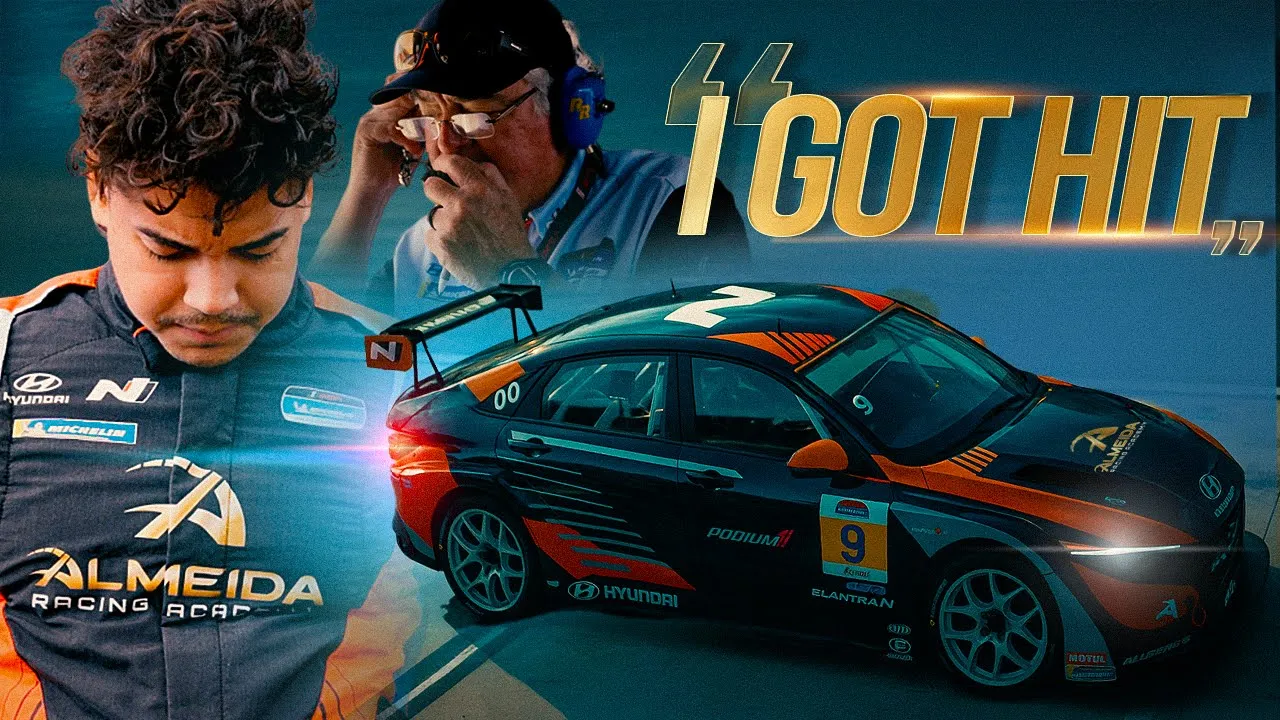
Lap one. Turn one. Someone misjudged their braking point and punted me wide. In sim racing, you'd either reset or rage quit. In IMSA, you keep driving.
The front splitter was damaged. The car pulled hard to the right under braking. Every corner became a negotiation between what the car wanted to do and what I needed it to do. And here's the thing — this is where real racing actually begins.
Sim racing trains you for perfection. Real racing trains you for damage control.
What Damage Does to Your Driving (And Your Brain)
When your car isn't handling the way you've trained for, your entire mental model breaks down. You've spent hundreds of hours ingraining muscle memory for a car that responds a certain way. Now it doesn't.
Your instinct is to fight it. To force the car back into the behavior you know. That's exactly wrong.
The drivers who succeed with damaged cars are the ones who adapt their driving to the car, not the other way around. You need to:
Adjust your braking points earlier than you think
Compensate for pull/push in real-time, every single corner
Accept slower lap times and focus on consistency
Protect the damage from getting worse
That last point? Critical. A cracked splitter can become a destroyed splitter if you keep hitting curbs the same way. You're not just managing speed — you're managing structural integrity.
The Mental Game: When Your Race Becomes Survival
This is what sim racing doesn't prepare you for: the psychological shift from racing to survival mode.
In the sim, you're chasing tenths. Every lap is an optimization problem. But when you're nursing a damaged car through a 45-minute stint in 90-degree heat, the goal changes. Now you're fighting to:
Keep the car on track
Maintain gap to the cars behind
Not lose more time than necessary
Preserve equipment for your co-driver
Your ego wants to push. Your brain knows you can't. That internal conflict? That's the real race.
I had to tell myself, corner after corner: "Your job right now is to finish. Not to be a hero. Not to prove anything. Finish."
The Physics of Broken Aero
Here's what actually happens when your front splitter gets damaged:
You lose downforce at the front. That means less grip under braking and less front-end bite in high-speed corners. The car becomes more prone to understeer because the rear still has its aero, but the front doesn't.
Your braking points need to move 10-15 meters earlier depending on the corner. Not because you can't brake hard — you can — but because the car won't rotate the way it used to. You'll push wide if you brake at your normal point.
And here's the kicker: this isn't consistent. As the splitter flexes and breaks more, the handling changes lap by lap. You're constantly recalibrating.
Sim racing teaches you to find the limit once and repeat it. Real racing with damage teaches you to find a new limit every lap.
What I Learned: The Skills Sim Racing Can't Teach
Adaptability under pressure. The ability to throw out your entire mental model mid-race and build a new one on the fly. Sim racers practice perfection. Real racers practice adjustment.
Physical endurance management. Fighting a broken car is exhausting. Your arms burn from compensating for the pull. Your concentration drains faster because you can't rely on muscle memory. You have to actively think through every input.
Emotional regulation. The anger, frustration, disappointment — all of it has to get shoved into a box so you can focus on the next corner. You don't have the luxury of tilting. The car doesn't care how you feel.
Team communication. Describing what's broken over the radio, clearly and calmly, while still driving at race pace. "The car pulls right under braking, I'm compensating, splitter looks cracked on the left side." No drama, just data.
These are the skills that separate sim racers from racing drivers.
The Brutal Truth: Most Sim Racers Aren't Ready
You can be alien-fast in iRacing. Top 0.1%. Doesn't matter.
If you can't adapt when the car doesn't behave the way you expect, you're not ready for real racing.
The sim gives you the perfect lab. Every lap, the car responds the same way. But real racing is chaos management. It's making the best of broken equipment, bad luck, and situations you didn't train for.
That's not a criticism of sim racing — it's an acknowledgment of the gap. The sim teaches you what to do. Real racing teaches you what to do when nothing goes according to plan.
How to Train for This (Even in the Sim)
You can build adaptability skills even without real-world racing:
Run different cars every week. Stop obsessing over one car setup. Force yourself to adapt to new handling characteristics constantly. This builds mental flexibility.
Practice with damage. Take damage early in a practice session and keep driving. Don't reset. Learn what the car does when it's broken.
Race in traffic, always. Stop hotlapping. Get into populated splits. Deal with unpredictability — that's where adaptability gets trained.
Challenge yourself with bad setups. Deliberately run a setup that understeers or has too much rear bias. Learn to drive around problems instead of always fixing them.
The goal isn't to master damaged driving. The goal is to stop relying on perfect conditions.
What Finishing That Stint Taught Me
I didn't win. I didn't set any fast laps. But I brought the car home, handed it off to my co-driver, and we finished the race.
That's the win.
Real racing isn't about perfection. It's about resilience. It's about executing under conditions that are worse than you trained for. It's about staying calm when your brain is screaming at you to panic.
Sim racing gave me the foundation — the racecraft, the lines, the technique. But that IMSA stint with a broken car taught me something the sim never could: how to race when everything goes wrong.
And honestly? That's the skill that matters most.
Ready to Build the Skills That Matter in Real Racing?
How long are you going to keep training in perfect conditions?
The sim is incredible for learning technique. But if you're serious about real motorsports — or even just becoming a complete driver — you need to train adaptability, racecraft under pressure, and mental resilience. Not just speed.
What happens when you get into a real car and it doesn't handle like your setup? What happens when you take contact and have to keep racing? Are you ready for that?
Almeida Racing Academy's Gold Membership isn't just about going faster. It's about becoming the kind of driver who can handle anything the track throws at you. Racecraft courses, coached workshops, challenges that force you out of your comfort zone. Real driver development, not just lap time chasing.
Sim Racing Academy Membership
Everything you need to stop guessing and start getting faster.
Starting at
$25
/mo
Car Handling Online Course
4 levels, full curriculum. Aimed to get you to top 1% in driving pace.
Racecraft Online Course
Overtaking, Defending, Race Strategy
Live coaching + on-track practice
Bi-weekly pro-coach workshops (recorded — never miss one) plus on-track Pit Parties to practice racecraft with a coach.
Plus These Bonuses
13,000+ Member Community
League Racing
Advanced MX-5 Mini Course
Racing Technique Development Guide
The Motor Racing Book (260 pages)
Think & Behave Like a Pro Driver — Mini eBook
Racing with Damage in IMSA: What Sim Racing Doesn't Teach You About Real-World Resilience
Suellio Almeida
•
Saturday, August 23, 2025
The Hit That Changed Everything
Lap one. Turn one. Someone misjudged their braking point and punted me wide. In sim racing, you'd either reset or rage quit. In IMSA, you keep driving.
The front splitter was damaged. The car pulled hard to the right under braking. Every corner became a negotiation between what the car wanted to do and what I needed it to do. And here's the thing — this is where real racing actually begins.
Sim racing trains you for perfection. Real racing trains you for damage control.
What Damage Does to Your Driving (And Your Brain)
When your car isn't handling the way you've trained for, your entire mental model breaks down. You've spent hundreds of hours ingraining muscle memory for a car that responds a certain way. Now it doesn't.
Your instinct is to fight it. To force the car back into the behavior you know. That's exactly wrong.
The drivers who succeed with damaged cars are the ones who adapt their driving to the car, not the other way around. You need to:
Adjust your braking points earlier than you think
Compensate for pull/push in real-time, every single corner
Accept slower lap times and focus on consistency
Protect the damage from getting worse
That last point? Critical. A cracked splitter can become a destroyed splitter if you keep hitting curbs the same way. You're not just managing speed — you're managing structural integrity.
The Mental Game: When Your Race Becomes Survival
This is what sim racing doesn't prepare you for: the psychological shift from racing to survival mode.
In the sim, you're chasing tenths. Every lap is an optimization problem. But when you're nursing a damaged car through a 45-minute stint in 90-degree heat, the goal changes. Now you're fighting to:
Keep the car on track
Maintain gap to the cars behind
Not lose more time than necessary
Preserve equipment for your co-driver
Your ego wants to push. Your brain knows you can't. That internal conflict? That's the real race.
I had to tell myself, corner after corner: "Your job right now is to finish. Not to be a hero. Not to prove anything. Finish."
The Physics of Broken Aero
Here's what actually happens when your front splitter gets damaged:
You lose downforce at the front. That means less grip under braking and less front-end bite in high-speed corners. The car becomes more prone to understeer because the rear still has its aero, but the front doesn't.
Your braking points need to move 10-15 meters earlier depending on the corner. Not because you can't brake hard — you can — but because the car won't rotate the way it used to. You'll push wide if you brake at your normal point.
And here's the kicker: this isn't consistent. As the splitter flexes and breaks more, the handling changes lap by lap. You're constantly recalibrating.
Sim racing teaches you to find the limit once and repeat it. Real racing with damage teaches you to find a new limit every lap.
What I Learned: The Skills Sim Racing Can't Teach
Adaptability under pressure. The ability to throw out your entire mental model mid-race and build a new one on the fly. Sim racers practice perfection. Real racers practice adjustment.
Physical endurance management. Fighting a broken car is exhausting. Your arms burn from compensating for the pull. Your concentration drains faster because you can't rely on muscle memory. You have to actively think through every input.
Emotional regulation. The anger, frustration, disappointment — all of it has to get shoved into a box so you can focus on the next corner. You don't have the luxury of tilting. The car doesn't care how you feel.
Team communication. Describing what's broken over the radio, clearly and calmly, while still driving at race pace. "The car pulls right under braking, I'm compensating, splitter looks cracked on the left side." No drama, just data.
These are the skills that separate sim racers from racing drivers.
The Brutal Truth: Most Sim Racers Aren't Ready
You can be alien-fast in iRacing. Top 0.1%. Doesn't matter.
If you can't adapt when the car doesn't behave the way you expect, you're not ready for real racing.
The sim gives you the perfect lab. Every lap, the car responds the same way. But real racing is chaos management. It's making the best of broken equipment, bad luck, and situations you didn't train for.
That's not a criticism of sim racing — it's an acknowledgment of the gap. The sim teaches you what to do. Real racing teaches you what to do when nothing goes according to plan.
How to Train for This (Even in the Sim)
You can build adaptability skills even without real-world racing:
Run different cars every week. Stop obsessing over one car setup. Force yourself to adapt to new handling characteristics constantly. This builds mental flexibility.
Practice with damage. Take damage early in a practice session and keep driving. Don't reset. Learn what the car does when it's broken.
Race in traffic, always. Stop hotlapping. Get into populated splits. Deal with unpredictability — that's where adaptability gets trained.
Challenge yourself with bad setups. Deliberately run a setup that understeers or has too much rear bias. Learn to drive around problems instead of always fixing them.
The goal isn't to master damaged driving. The goal is to stop relying on perfect conditions.
What Finishing That Stint Taught Me
I didn't win. I didn't set any fast laps. But I brought the car home, handed it off to my co-driver, and we finished the race.
That's the win.
Real racing isn't about perfection. It's about resilience. It's about executing under conditions that are worse than you trained for. It's about staying calm when your brain is screaming at you to panic.
Sim racing gave me the foundation — the racecraft, the lines, the technique. But that IMSA stint with a broken car taught me something the sim never could: how to race when everything goes wrong.
And honestly? That's the skill that matters most.
Ready to Build the Skills That Matter in Real Racing?
How long are you going to keep training in perfect conditions?
The sim is incredible for learning technique. But if you're serious about real motorsports — or even just becoming a complete driver — you need to train adaptability, racecraft under pressure, and mental resilience. Not just speed.
What happens when you get into a real car and it doesn't handle like your setup? What happens when you take contact and have to keep racing? Are you ready for that?
Almeida Racing Academy's Gold Membership isn't just about going faster. It's about becoming the kind of driver who can handle anything the track throws at you. Racecraft courses, coached workshops, challenges that force you out of your comfort zone. Real driver development, not just lap time chasing.
Sim Racing Academy Membership
Everything you need to stop guessing and start getting faster.
Starting at
$25
/mo
Car Handling Online Course
4 levels, full curriculum. Aimed to get you to top 1% in driving pace.
Racecraft Online Course
Overtaking, Defending, Race Strategy
Live coaching + on-track practice
Bi-weekly pro-coach workshops (recorded — never miss one) plus on-track Pit Parties to practice racecraft with a coach.
Plus These Bonuses
13,000+ Member Community
League Racing
Advanced MX-5 Mini Course
Racing Technique Development Guide
The Motor Racing Book (260 pages)
Think & Behave Like a Pro Driver — Mini eBook
Racing with Damage in IMSA: What Sim Racing Doesn't Teach You About Real-World Resilience
Suellio Almeida
•
Saturday, August 23, 2025
The Hit That Changed Everything
Lap one. Turn one. Someone misjudged their braking point and punted me wide. In sim racing, you'd either reset or rage quit. In IMSA, you keep driving.
The front splitter was damaged. The car pulled hard to the right under braking. Every corner became a negotiation between what the car wanted to do and what I needed it to do. And here's the thing — this is where real racing actually begins.
Sim racing trains you for perfection. Real racing trains you for damage control.
What Damage Does to Your Driving (And Your Brain)
When your car isn't handling the way you've trained for, your entire mental model breaks down. You've spent hundreds of hours ingraining muscle memory for a car that responds a certain way. Now it doesn't.
Your instinct is to fight it. To force the car back into the behavior you know. That's exactly wrong.
The drivers who succeed with damaged cars are the ones who adapt their driving to the car, not the other way around. You need to:
Adjust your braking points earlier than you think
Compensate for pull/push in real-time, every single corner
Accept slower lap times and focus on consistency
Protect the damage from getting worse
That last point? Critical. A cracked splitter can become a destroyed splitter if you keep hitting curbs the same way. You're not just managing speed — you're managing structural integrity.
The Mental Game: When Your Race Becomes Survival
This is what sim racing doesn't prepare you for: the psychological shift from racing to survival mode.
In the sim, you're chasing tenths. Every lap is an optimization problem. But when you're nursing a damaged car through a 45-minute stint in 90-degree heat, the goal changes. Now you're fighting to:
Keep the car on track
Maintain gap to the cars behind
Not lose more time than necessary
Preserve equipment for your co-driver
Your ego wants to push. Your brain knows you can't. That internal conflict? That's the real race.
I had to tell myself, corner after corner: "Your job right now is to finish. Not to be a hero. Not to prove anything. Finish."
The Physics of Broken Aero
Here's what actually happens when your front splitter gets damaged:
You lose downforce at the front. That means less grip under braking and less front-end bite in high-speed corners. The car becomes more prone to understeer because the rear still has its aero, but the front doesn't.
Your braking points need to move 10-15 meters earlier depending on the corner. Not because you can't brake hard — you can — but because the car won't rotate the way it used to. You'll push wide if you brake at your normal point.
And here's the kicker: this isn't consistent. As the splitter flexes and breaks more, the handling changes lap by lap. You're constantly recalibrating.
Sim racing teaches you to find the limit once and repeat it. Real racing with damage teaches you to find a new limit every lap.
What I Learned: The Skills Sim Racing Can't Teach
Adaptability under pressure. The ability to throw out your entire mental model mid-race and build a new one on the fly. Sim racers practice perfection. Real racers practice adjustment.
Physical endurance management. Fighting a broken car is exhausting. Your arms burn from compensating for the pull. Your concentration drains faster because you can't rely on muscle memory. You have to actively think through every input.
Emotional regulation. The anger, frustration, disappointment — all of it has to get shoved into a box so you can focus on the next corner. You don't have the luxury of tilting. The car doesn't care how you feel.
Team communication. Describing what's broken over the radio, clearly and calmly, while still driving at race pace. "The car pulls right under braking, I'm compensating, splitter looks cracked on the left side." No drama, just data.
These are the skills that separate sim racers from racing drivers.
The Brutal Truth: Most Sim Racers Aren't Ready
You can be alien-fast in iRacing. Top 0.1%. Doesn't matter.
If you can't adapt when the car doesn't behave the way you expect, you're not ready for real racing.
The sim gives you the perfect lab. Every lap, the car responds the same way. But real racing is chaos management. It's making the best of broken equipment, bad luck, and situations you didn't train for.
That's not a criticism of sim racing — it's an acknowledgment of the gap. The sim teaches you what to do. Real racing teaches you what to do when nothing goes according to plan.
How to Train for This (Even in the Sim)
You can build adaptability skills even without real-world racing:
Run different cars every week. Stop obsessing over one car setup. Force yourself to adapt to new handling characteristics constantly. This builds mental flexibility.
Practice with damage. Take damage early in a practice session and keep driving. Don't reset. Learn what the car does when it's broken.
Race in traffic, always. Stop hotlapping. Get into populated splits. Deal with unpredictability — that's where adaptability gets trained.
Challenge yourself with bad setups. Deliberately run a setup that understeers or has too much rear bias. Learn to drive around problems instead of always fixing them.
The goal isn't to master damaged driving. The goal is to stop relying on perfect conditions.
What Finishing That Stint Taught Me
I didn't win. I didn't set any fast laps. But I brought the car home, handed it off to my co-driver, and we finished the race.
That's the win.
Real racing isn't about perfection. It's about resilience. It's about executing under conditions that are worse than you trained for. It's about staying calm when your brain is screaming at you to panic.
Sim racing gave me the foundation — the racecraft, the lines, the technique. But that IMSA stint with a broken car taught me something the sim never could: how to race when everything goes wrong.
And honestly? That's the skill that matters most.
Ready to Build the Skills That Matter in Real Racing?
How long are you going to keep training in perfect conditions?
The sim is incredible for learning technique. But if you're serious about real motorsports — or even just becoming a complete driver — you need to train adaptability, racecraft under pressure, and mental resilience. Not just speed.
What happens when you get into a real car and it doesn't handle like your setup? What happens when you take contact and have to keep racing? Are you ready for that?
Almeida Racing Academy's Gold Membership isn't just about going faster. It's about becoming the kind of driver who can handle anything the track throws at you. Racecraft courses, coached workshops, challenges that force you out of your comfort zone. Real driver development, not just lap time chasing.
Sim Racing Academy Membership
Everything you need to stop guessing and start getting faster.
Starting at
$25
/mo
Car Handling Online Course
4 levels, full curriculum. Aimed to get you to top 1% in driving pace.
Racecraft Online Course
Overtaking, Defending, Race Strategy
Live coaching + on-track practice
Bi-weekly pro-coach workshops (recorded — never miss one) plus on-track Pit Parties to practice racecraft with a coach.
Plus These Bonuses
13,000+ Member Community
League Racing
Advanced MX-5 Mini Course
Racing Technique Development Guide
The Motor Racing Book (260 pages)
Think & Behave Like a Pro Driver — Mini eBook