
How to Practice Multi-Car Racing: The Method That Actually Works for Sim Racers
Suellio Almeida
•
Saturday, January 3, 2026
Why Your Multi-Car Practice Isn't Working
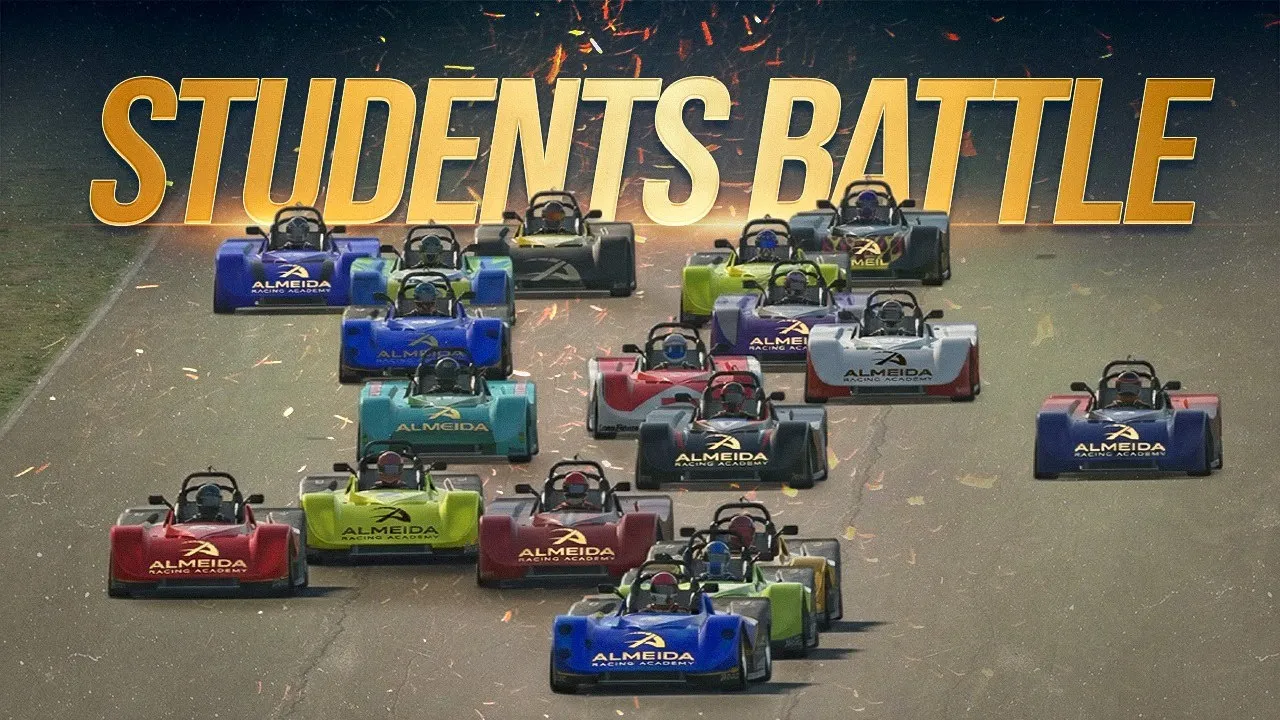
You know the pattern. You run some laps alone, feel confident, then join a race. Suddenly there are cars everywhere. Your lap times fall apart. You make dive-bombs that don't stick. You get caught out by moves you didn't see coming.
The problem isn't your speed. It's that you never trained your brain to process racing with other cars.
Most drivers treat multi-car practice like this: "I'll just do more races and figure it out." That's not practice. That's hoping experience will magically fix your awareness gaps. It won't.
You need a method. Here's the one that actually works.
The Three-Phase Multi-Car Practice System
This isn't theory. This is what we run at Almeida Racing Academy — the same system that's taken drivers from mid-pack chaos to consistent top-five finishes.
Phase 1: Shadow Driving (Building Awareness)
Join a practice session. Find a car that's reasonably quick — not the fastest, but someone putting in consistent laps. Get behind them. Stay behind them. Don't pass.
Your job: match their pace, maintain a gap, and predict their inputs. Where are they braking? What line are they taking through the corner? When do they get back on throttle?
This trains your awareness outside your own cockpit. You stop being locked into your own driving and start reading another car's behavior. That's the foundation of racecraft.
Run 10-15 laps like this. If they pit, find another car. Rotate through different drivers. Each one has different tendencies — different braking points, different corner entries. You're building a database in your brain of how cars behave in traffic.
Phase 2: Close Proximity Driving (Pressure and Consistency)
Now you level up. Stay behind the same car, but this time, close the gap. Get within half a second. Maintain it.
This is where your mistakes show up. You overdrive corners trying to stay close. Your tires overheat. You brake too late and nearly take them out. Good. That's what practice is for.
The skill you're building: consistency under pressure. In a race, you'll need to run two inches off someone's bumper for lap after lap. If you can't do it in practice, you'll bin it in a race when it matters.
Run another 10 laps. Focus on smoothness. Your lap times might be slower — that's fine. You're not chasing lap time. You're training your brain to function in proximity.
Phase 3: Overtaking Attempts (Decision-Making Under Load)
Final phase. Now you pass.
But here's the rule: every overtake must be clean. No contact. No forcing. You're looking for opportunities where you have a genuine advantage — better exit, better positioning, earlier throttle application.
If you don't see a clean move within a lap, stay patient. The point isn't to pass as fast as possible. The point is to make good decisions when your brain is already loaded with proximity, tire management, and traffic awareness.
Run 5-10 laps. Make 2-3 overtakes. If you mess one up, reset — fall back, find the car again, try another pass.
This phase trains your decision-making under cognitive load. Racing isn't just about knowing the fast line. It's about executing the fast line while tracking three other cars, managing tire temps, and deciding if that gap into Turn 1 is real or a trap.
What This System Actually Fixes
Let's be specific about what you're building:
Spatial awareness. Most drivers have tunnel vision. They only see their own car. This system forces you to track another car's position, speed, and trajectory continuously. That's the skill that keeps you out of incidents.
Predictive processing. You learn to read a car's behavior before they make their move. You see the setup for a pass attempt two corners early. You anticipate when someone's going to defend. That gives you time to react instead of scrambling.
Emotional regulation. Phase 2 is uncomfortable. You're right on someone's bumper, your tires are getting hot, your lap times are dropping. If you can stay calm and smooth in practice, you'll stay calm in a race when someone's attacking you lap after lap.
Overtaking instincts. Phase 3 builds your library of what a good pass looks like. You stop forcing low-percentage moves because you've trained yourself to recognize when you actually have the advantage.
The Mistake Most Drivers Make
They skip Phase 1 and 2 and jump straight to Phase 3. They treat every practice session like a race. So they never build the foundational awareness and consistency that makes overtaking work.
Then they wonder why they keep making contact, why their racecraft feels chaotic, why they can't maintain pressure without overdriving.
You can't skip the groundwork. If you try to pass before you can shadow, you're just creating bad habits at higher speed.
How to Actually Implement This
Week 1: Shadow driving only. 3-4 sessions, 15 laps each. Different cars, different tracks. Build your awareness muscle.
Week 2: Add Phase 2. Start each session with shadow driving (5 laps), then move to close proximity (10 laps). You'll feel your consistency improve.
Week 3: Full system. Shadow → proximity → overtaking. By now, you'll notice something: you're calmer in traffic. You're seeing opportunities earlier. You're not overreacting to every move around you.
That's racecraft. That's what separates the drivers who finish top-five from the drivers who are fast alone but mid-pack in races.
What Changes When You Train Like This?
Your iRating stops being a lottery. You're not hoping for a clean race — you're creating clean races through awareness and discipline.
You finish more races. Simple as that. Most incidents happen because drivers don't see what's coming or make decisions too late. This system fixes both.
And your confidence changes. You stop fearing multi-car situations. You start hunting them. Because you've trained for exactly this.
That's the difference between drivers who wing it and drivers who have a method.
What If You Want a Structured System That Builds All of This?
Here's the thing: you just learned a three-phase practice system that works. But practice only gets you so far if you don't have the foundational skills locked in first.
What about your racecraft principles? Your defensive and offensive positioning? Your ability to read tire deg and adjust your aggression mid-race? Your understanding of when to attack and when to hold position?
The Gold Membership at Almeida Racing Academy gives you the full racecraft curriculum — 8 courses, 80 lessons covering everything from basic traffic awareness to advanced race strategy. You get coach-led workshops where we run exactly these kinds of practice sessions as a group. You get access to our leagues where you apply this in real competitive environments. You get the Garage 61 Pro plugin that records every session so you can review your decisions and see where you're still making mistakes.
And right now, you can get all of it for $25/month with code WINTER.
If you're serious about improving your multi-car racing, you need more than one YouTube video. You need a system that builds every layer of racecraft, with feedback, with coaching, with a community of drivers doing the same work.
Sim Racing Academy Membership
Everything you need to stop guessing and start getting faster.
Starting at
$25
/mo
Car Handling Online Course
4 levels, full curriculum. Aimed to get you to top 1% in driving pace.
Racecraft Online Course
Overtaking, Defending, Race Strategy
Live coaching + on-track practice
Bi-weekly pro-coach workshops (recorded — never miss one) plus on-track Pit Parties to practice racecraft with a coach.
Plus These Bonuses
13,000+ Member Community
League Racing
Advanced MX-5 Mini Course
Racing Technique Development Guide
The Motor Racing Book (260 pages)
Think & Behave Like a Pro Driver — Mini eBook
How to Practice Multi-Car Racing: The Method That Actually Works for Sim Racers
Suellio Almeida
•
Saturday, January 3, 2026
Why Your Multi-Car Practice Isn't Working
You know the pattern. You run some laps alone, feel confident, then join a race. Suddenly there are cars everywhere. Your lap times fall apart. You make dive-bombs that don't stick. You get caught out by moves you didn't see coming.
The problem isn't your speed. It's that you never trained your brain to process racing with other cars.
Most drivers treat multi-car practice like this: "I'll just do more races and figure it out." That's not practice. That's hoping experience will magically fix your awareness gaps. It won't.
You need a method. Here's the one that actually works.
The Three-Phase Multi-Car Practice System
This isn't theory. This is what we run at Almeida Racing Academy — the same system that's taken drivers from mid-pack chaos to consistent top-five finishes.
Phase 1: Shadow Driving (Building Awareness)
Join a practice session. Find a car that's reasonably quick — not the fastest, but someone putting in consistent laps. Get behind them. Stay behind them. Don't pass.
Your job: match their pace, maintain a gap, and predict their inputs. Where are they braking? What line are they taking through the corner? When do they get back on throttle?
This trains your awareness outside your own cockpit. You stop being locked into your own driving and start reading another car's behavior. That's the foundation of racecraft.
Run 10-15 laps like this. If they pit, find another car. Rotate through different drivers. Each one has different tendencies — different braking points, different corner entries. You're building a database in your brain of how cars behave in traffic.
Phase 2: Close Proximity Driving (Pressure and Consistency)
Now you level up. Stay behind the same car, but this time, close the gap. Get within half a second. Maintain it.
This is where your mistakes show up. You overdrive corners trying to stay close. Your tires overheat. You brake too late and nearly take them out. Good. That's what practice is for.
The skill you're building: consistency under pressure. In a race, you'll need to run two inches off someone's bumper for lap after lap. If you can't do it in practice, you'll bin it in a race when it matters.
Run another 10 laps. Focus on smoothness. Your lap times might be slower — that's fine. You're not chasing lap time. You're training your brain to function in proximity.
Phase 3: Overtaking Attempts (Decision-Making Under Load)
Final phase. Now you pass.
But here's the rule: every overtake must be clean. No contact. No forcing. You're looking for opportunities where you have a genuine advantage — better exit, better positioning, earlier throttle application.
If you don't see a clean move within a lap, stay patient. The point isn't to pass as fast as possible. The point is to make good decisions when your brain is already loaded with proximity, tire management, and traffic awareness.
Run 5-10 laps. Make 2-3 overtakes. If you mess one up, reset — fall back, find the car again, try another pass.
This phase trains your decision-making under cognitive load. Racing isn't just about knowing the fast line. It's about executing the fast line while tracking three other cars, managing tire temps, and deciding if that gap into Turn 1 is real or a trap.
What This System Actually Fixes
Let's be specific about what you're building:
Spatial awareness. Most drivers have tunnel vision. They only see their own car. This system forces you to track another car's position, speed, and trajectory continuously. That's the skill that keeps you out of incidents.
Predictive processing. You learn to read a car's behavior before they make their move. You see the setup for a pass attempt two corners early. You anticipate when someone's going to defend. That gives you time to react instead of scrambling.
Emotional regulation. Phase 2 is uncomfortable. You're right on someone's bumper, your tires are getting hot, your lap times are dropping. If you can stay calm and smooth in practice, you'll stay calm in a race when someone's attacking you lap after lap.
Overtaking instincts. Phase 3 builds your library of what a good pass looks like. You stop forcing low-percentage moves because you've trained yourself to recognize when you actually have the advantage.
The Mistake Most Drivers Make
They skip Phase 1 and 2 and jump straight to Phase 3. They treat every practice session like a race. So they never build the foundational awareness and consistency that makes overtaking work.
Then they wonder why they keep making contact, why their racecraft feels chaotic, why they can't maintain pressure without overdriving.
You can't skip the groundwork. If you try to pass before you can shadow, you're just creating bad habits at higher speed.
How to Actually Implement This
Week 1: Shadow driving only. 3-4 sessions, 15 laps each. Different cars, different tracks. Build your awareness muscle.
Week 2: Add Phase 2. Start each session with shadow driving (5 laps), then move to close proximity (10 laps). You'll feel your consistency improve.
Week 3: Full system. Shadow → proximity → overtaking. By now, you'll notice something: you're calmer in traffic. You're seeing opportunities earlier. You're not overreacting to every move around you.
That's racecraft. That's what separates the drivers who finish top-five from the drivers who are fast alone but mid-pack in races.
What Changes When You Train Like This?
Your iRating stops being a lottery. You're not hoping for a clean race — you're creating clean races through awareness and discipline.
You finish more races. Simple as that. Most incidents happen because drivers don't see what's coming or make decisions too late. This system fixes both.
And your confidence changes. You stop fearing multi-car situations. You start hunting them. Because you've trained for exactly this.
That's the difference between drivers who wing it and drivers who have a method.
What If You Want a Structured System That Builds All of This?
Here's the thing: you just learned a three-phase practice system that works. But practice only gets you so far if you don't have the foundational skills locked in first.
What about your racecraft principles? Your defensive and offensive positioning? Your ability to read tire deg and adjust your aggression mid-race? Your understanding of when to attack and when to hold position?
The Gold Membership at Almeida Racing Academy gives you the full racecraft curriculum — 8 courses, 80 lessons covering everything from basic traffic awareness to advanced race strategy. You get coach-led workshops where we run exactly these kinds of practice sessions as a group. You get access to our leagues where you apply this in real competitive environments. You get the Garage 61 Pro plugin that records every session so you can review your decisions and see where you're still making mistakes.
And right now, you can get all of it for $25/month with code WINTER.
If you're serious about improving your multi-car racing, you need more than one YouTube video. You need a system that builds every layer of racecraft, with feedback, with coaching, with a community of drivers doing the same work.
Sim Racing Academy Membership
Everything you need to stop guessing and start getting faster.
Starting at
$25
/mo
Car Handling Online Course
4 levels, full curriculum. Aimed to get you to top 1% in driving pace.
Racecraft Online Course
Overtaking, Defending, Race Strategy
Live coaching + on-track practice
Bi-weekly pro-coach workshops (recorded — never miss one) plus on-track Pit Parties to practice racecraft with a coach.
Plus These Bonuses
13,000+ Member Community
League Racing
Advanced MX-5 Mini Course
Racing Technique Development Guide
The Motor Racing Book (260 pages)
Think & Behave Like a Pro Driver — Mini eBook
How to Practice Multi-Car Racing: The Method That Actually Works for Sim Racers
Suellio Almeida
•
Saturday, January 3, 2026
Why Your Multi-Car Practice Isn't Working
You know the pattern. You run some laps alone, feel confident, then join a race. Suddenly there are cars everywhere. Your lap times fall apart. You make dive-bombs that don't stick. You get caught out by moves you didn't see coming.
The problem isn't your speed. It's that you never trained your brain to process racing with other cars.
Most drivers treat multi-car practice like this: "I'll just do more races and figure it out." That's not practice. That's hoping experience will magically fix your awareness gaps. It won't.
You need a method. Here's the one that actually works.
The Three-Phase Multi-Car Practice System
This isn't theory. This is what we run at Almeida Racing Academy — the same system that's taken drivers from mid-pack chaos to consistent top-five finishes.
Phase 1: Shadow Driving (Building Awareness)
Join a practice session. Find a car that's reasonably quick — not the fastest, but someone putting in consistent laps. Get behind them. Stay behind them. Don't pass.
Your job: match their pace, maintain a gap, and predict their inputs. Where are they braking? What line are they taking through the corner? When do they get back on throttle?
This trains your awareness outside your own cockpit. You stop being locked into your own driving and start reading another car's behavior. That's the foundation of racecraft.
Run 10-15 laps like this. If they pit, find another car. Rotate through different drivers. Each one has different tendencies — different braking points, different corner entries. You're building a database in your brain of how cars behave in traffic.
Phase 2: Close Proximity Driving (Pressure and Consistency)
Now you level up. Stay behind the same car, but this time, close the gap. Get within half a second. Maintain it.
This is where your mistakes show up. You overdrive corners trying to stay close. Your tires overheat. You brake too late and nearly take them out. Good. That's what practice is for.
The skill you're building: consistency under pressure. In a race, you'll need to run two inches off someone's bumper for lap after lap. If you can't do it in practice, you'll bin it in a race when it matters.
Run another 10 laps. Focus on smoothness. Your lap times might be slower — that's fine. You're not chasing lap time. You're training your brain to function in proximity.
Phase 3: Overtaking Attempts (Decision-Making Under Load)
Final phase. Now you pass.
But here's the rule: every overtake must be clean. No contact. No forcing. You're looking for opportunities where you have a genuine advantage — better exit, better positioning, earlier throttle application.
If you don't see a clean move within a lap, stay patient. The point isn't to pass as fast as possible. The point is to make good decisions when your brain is already loaded with proximity, tire management, and traffic awareness.
Run 5-10 laps. Make 2-3 overtakes. If you mess one up, reset — fall back, find the car again, try another pass.
This phase trains your decision-making under cognitive load. Racing isn't just about knowing the fast line. It's about executing the fast line while tracking three other cars, managing tire temps, and deciding if that gap into Turn 1 is real or a trap.
What This System Actually Fixes
Let's be specific about what you're building:
Spatial awareness. Most drivers have tunnel vision. They only see their own car. This system forces you to track another car's position, speed, and trajectory continuously. That's the skill that keeps you out of incidents.
Predictive processing. You learn to read a car's behavior before they make their move. You see the setup for a pass attempt two corners early. You anticipate when someone's going to defend. That gives you time to react instead of scrambling.
Emotional regulation. Phase 2 is uncomfortable. You're right on someone's bumper, your tires are getting hot, your lap times are dropping. If you can stay calm and smooth in practice, you'll stay calm in a race when someone's attacking you lap after lap.
Overtaking instincts. Phase 3 builds your library of what a good pass looks like. You stop forcing low-percentage moves because you've trained yourself to recognize when you actually have the advantage.
The Mistake Most Drivers Make
They skip Phase 1 and 2 and jump straight to Phase 3. They treat every practice session like a race. So they never build the foundational awareness and consistency that makes overtaking work.
Then they wonder why they keep making contact, why their racecraft feels chaotic, why they can't maintain pressure without overdriving.
You can't skip the groundwork. If you try to pass before you can shadow, you're just creating bad habits at higher speed.
How to Actually Implement This
Week 1: Shadow driving only. 3-4 sessions, 15 laps each. Different cars, different tracks. Build your awareness muscle.
Week 2: Add Phase 2. Start each session with shadow driving (5 laps), then move to close proximity (10 laps). You'll feel your consistency improve.
Week 3: Full system. Shadow → proximity → overtaking. By now, you'll notice something: you're calmer in traffic. You're seeing opportunities earlier. You're not overreacting to every move around you.
That's racecraft. That's what separates the drivers who finish top-five from the drivers who are fast alone but mid-pack in races.
What Changes When You Train Like This?
Your iRating stops being a lottery. You're not hoping for a clean race — you're creating clean races through awareness and discipline.
You finish more races. Simple as that. Most incidents happen because drivers don't see what's coming or make decisions too late. This system fixes both.
And your confidence changes. You stop fearing multi-car situations. You start hunting them. Because you've trained for exactly this.
That's the difference between drivers who wing it and drivers who have a method.
What If You Want a Structured System That Builds All of This?
Here's the thing: you just learned a three-phase practice system that works. But practice only gets you so far if you don't have the foundational skills locked in first.
What about your racecraft principles? Your defensive and offensive positioning? Your ability to read tire deg and adjust your aggression mid-race? Your understanding of when to attack and when to hold position?
The Gold Membership at Almeida Racing Academy gives you the full racecraft curriculum — 8 courses, 80 lessons covering everything from basic traffic awareness to advanced race strategy. You get coach-led workshops where we run exactly these kinds of practice sessions as a group. You get access to our leagues where you apply this in real competitive environments. You get the Garage 61 Pro plugin that records every session so you can review your decisions and see where you're still making mistakes.
And right now, you can get all of it for $25/month with code WINTER.
If you're serious about improving your multi-car racing, you need more than one YouTube video. You need a system that builds every layer of racecraft, with feedback, with coaching, with a community of drivers doing the same work.
Sim Racing Academy Membership
Everything you need to stop guessing and start getting faster.
Starting at
$25
/mo
Car Handling Online Course
4 levels, full curriculum. Aimed to get you to top 1% in driving pace.
Racecraft Online Course
Overtaking, Defending, Race Strategy
Live coaching + on-track practice
Bi-weekly pro-coach workshops (recorded — never miss one) plus on-track Pit Parties to practice racecraft with a coach.
Plus These Bonuses
13,000+ Member Community
League Racing
Advanced MX-5 Mini Course
Racing Technique Development Guide
The Motor Racing Book (260 pages)
Think & Behave Like a Pro Driver — Mini eBook