
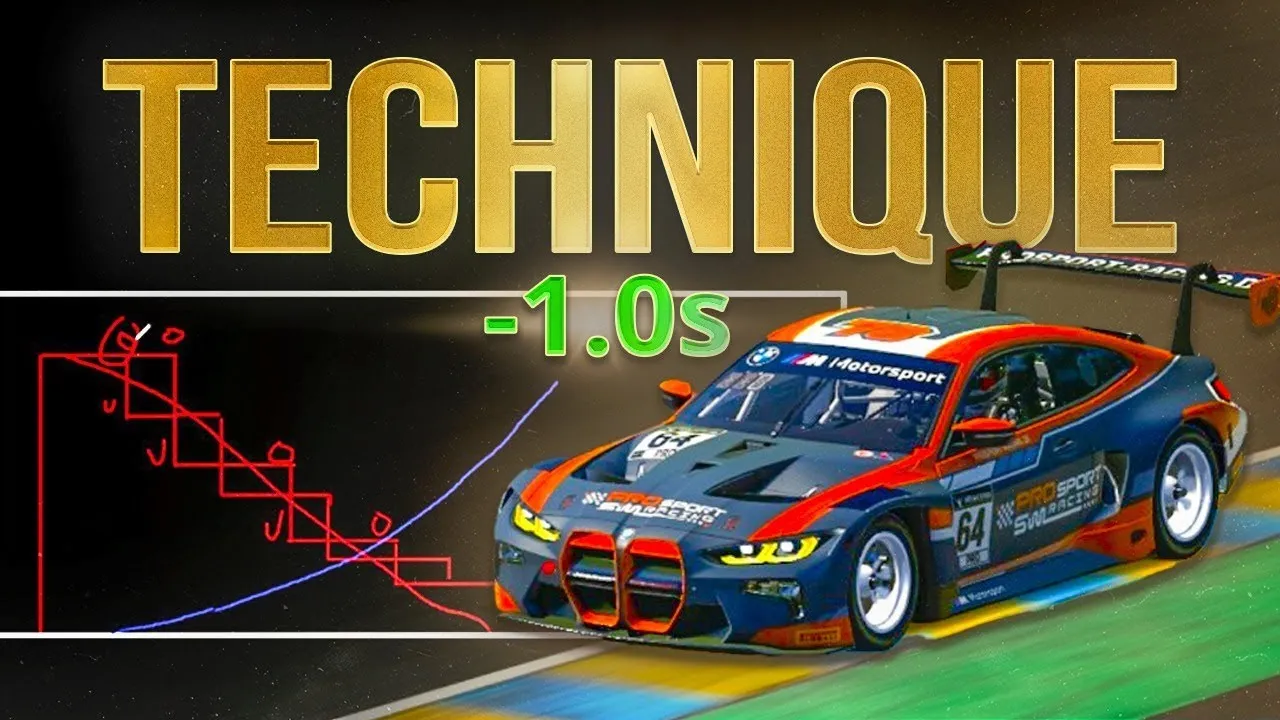
Why Oversteer Is Faster Than Understeer: The Physics Every Sim Racer Needs to Understand
Suellio Almeida
•
Thursday, May 2, 2024
The Real Reason Oversteer Beats Understeer (It's Not What You Think)
Let me ask you something.
When you're pushing a corner and the car starts sliding, what's your first instinct?
If you're like most drivers, you either panic or you try to "save it" with steering input. And here's the problem: you're reacting to the symptom, not understanding the cause.
Oversteer isn't just "faster" because it looks cooler or feels more dramatic. It's faster because of tire grip physics and how the car rotates through corners. Understanding this changes everything.
The Myth: "Oversteer Is Always Fast, Understeer Is Always Slow"
This is where most drivers get confused.
They think oversteer means the car is sliding everywhere, sideways, dramatic. And understeer means you're plowing straight off track.
That's not what we're talking about.
The fastest lap times come from a car that's on the edge of oversteer — not sliding, not understeering, but RIGHT on that knife edge where the rear is loaded and the car rotates efficiently.
Here's the thing: when you're understeering, you're asking the front tires to do two jobs at once — turn the car AND slow it down. That's a losing battle. The front tires only have so much grip, and you're splitting that grip between lateral (turning) and longitudinal (braking) forces.
When you're slightly oversteery — and I mean SLIGHTLY — the rear is helping you rotate. The car turns faster. The front tires aren't doing all the work. You get through the apex quicker, and you can get on the throttle earlier.
That's the difference between a 1:30 lap and a 1:29.5.
What Happens When You Understeer
Let's break this down.
You're coming into a corner. You brake. You turn in. The car doesn't rotate. The front pushes wide.
What do most drivers do? They add more steering angle.
Wrong.
Adding more steering angle INCREASES the slip angle on the front tires. You're asking them to work harder, but they're already at their limit. So what happens? You scrub more speed. You bleed lap time. And you STILL don't make the apex.
The physics here are simple: the front tires are overloaded. They're trying to change direction while also managing braking forces (if you're trail braking) or weight transfer. They don't have enough grip to do both jobs effectively.
So you end up with a car that:
Turns in late
Pushes wide at the apex
Forces you to wait longer before getting on throttle
Carries less minimum speed through the corner
Every single one of those things costs you lap time.
What Happens When You Have Controlled Oversteer
Now let's flip it.
You're coming into the same corner. You brake. You turn in. The rear starts to rotate.
But here's the key: you're controlling it with brake pressure and steering input. This isn't a slide. This isn't opposite lock. This is the car rotating ON the limit.
What's happening physically?
The rear tires are helping you change direction. The weight transfer from braking is loading the front, giving you MORE front grip. The rear is light enough to rotate, but not so light that it snaps out.
You're using trail braking to balance the car. You're modulating brake pressure as you turn in, and that's what keeps the car rotating smoothly through the apex.
The result?
Faster turn-in
Tighter apex
Higher minimum speed
Earlier throttle application
Faster exit
That's where the lap time comes from.
The Traction Circle: Why You Can't Do Both at Once
Let me explain this with physics.
Every tire has a traction circle — a limit to how much grip it can generate in any direction. You can use that grip for braking, turning, or accelerating. But the total amount of grip is FIXED.
If you're asking the front tires to turn AND brake at maximum capacity, you're going to exceed the traction circle. The tire will slide. You'll understeer.
But if you're trail braking correctly, you're managing that traction circle. You're reducing brake pressure as you add steering input. You're keeping the front tires JUST inside their grip limit.
Meanwhile, the rear tires are lightly loaded. They're not overworked. They're helping you rotate.
This is what "balance" means. This is what fast drivers do.
The Maximum Rotation Point: The Exact Moment That Defines Your Lap Time
Here's where it all comes together.
There's a moment in every corner — I call it the Maximum Rotation Point — where the car reaches its highest rate of rotation. This is the point where the car is turning the fastest, where the rear is most active, where the balance is perfect.
If you hit this point EARLY in the corner, closer to turn-in, you're fast. You're using oversteer to rotate the car quickly, and then you're straightening the wheel and getting on throttle.
If you hit this point LATE in the corner, or not at all, you're slow. You're understeering, scrubbing speed, waiting to turn the car.
The fastest drivers in the world — whether it's sim racing or real motorsports — are obsessed with finding this Maximum Rotation Point. They know that nailing this moment is the difference between a podium and P15.
How to Train Your Brain to Feel Oversteer vs. Understeer
Okay, so you understand the theory. Now what?
You need to FEEL the difference. And most drivers can't, because they're not paying attention to the right inputs.
Here's what you should be monitoring:
Steering angle — If you're adding more and more steering and the car isn't turning, you're understeering.
Brake pressure — Are you releasing brake pressure as you turn in? Or are you holding too much?
Weight transfer — Can you feel the front loading, the rear lightening?
Throttle timing — Are you waiting too long to get on throttle because the car won't rotate?
The best way to train this? Slow down. Take a corner at 70% pace and FEEL what the car is doing. Add brake pressure. Reduce it. Add steering angle. Feel the limit.
Then, gradually push closer to 100%. You'll start to recognize the inputs that create that perfect balance.
Why Most Sim Racers Get This Wrong
The problem is that most sim racers are REACTIVE, not PROACTIVE.
They wait for the car to understeer, then they try to fix it. They wait for the car to oversteer, then they panic and countersteer.
Fast drivers don't react. They ANTICIPATE.
They know, from experience and data, what the car is going to do. They know how much brake pressure to carry. They know when to release. They know the exact steering angle that puts the car on the edge of oversteer without crossing into a slide.
This is what I teach at Almeida Racing Academy. This is what 36,000+ students have learned. This is what takes you from "fast enough" to "consistently top split."
The Setup Factor: Why Some Cars Oversteer More Than Others
Now, let's talk about car setup, because this matters.
Some cars are naturally oversteery. Some are naturally understeery. And you can adjust this with setup changes.
But here's the catch: setup doesn't fix driver inputs.
If you're understeering because you're carrying too much brake pressure into the corner, loosening the rear won't fix that. You'll just create a car that snaps into oversteer and spins.
The best approach? Learn to drive the car as it is FIRST. Master the inputs. THEN adjust the setup to fine-tune the balance.
Most drivers do it backwards. They blame the setup when the real issue is their technique.
What About Exit Oversteer? When Does It Cost You Time?
Okay, so we've established that ENTRY oversteer is fast.
But what about on EXIT?
This is where it gets tricky.
If the car is oversteering on throttle, on corner exit, you're losing time. Why? Because you're not able to apply full throttle. You're managing a slide instead of accelerating in a straight line.
Exit oversteer is SLOW. Entry oversteer is FAST.
The goal is to rotate the car early, then straighten the wheel and get on throttle WITHOUT oversteer. That's the ideal.
If you're sliding on exit, you need to adjust your throttle application or your setup. But again, technique first, setup second.
The One Drill That Will Change How You Approach Corners
Here's what I want you to do.
Pick ONE corner. Any corner.
Drive it 10 times. On each lap, focus ONLY on the Maximum Rotation Point. Where is it happening? Is it early, near turn-in? Or late, near apex?
Now, experiment with brake pressure. Carry more brake pressure into turn-in. Hold it longer. Release it earlier. Feel how the car rotates.
Your goal: move the Maximum Rotation Point as close to turn-in as possible WITHOUT spinning.
That's it. That's the drill.
Do this for one corner per session, and I guarantee your lap times will drop.
Why Understanding This Physics Separates You From the Pack
Look, you can watch a thousand YouTube videos. You can copy alien setups. You can buy a direct drive wheel.
None of that matters if you don't understand the PHYSICS of why oversteer is faster.
Because once you understand it, you stop guessing. You stop reacting. You start CONTROLLING the car.
You start thinking like a race engineer. You start making setup changes that actually work. You start analyzing your telemetry with PURPOSE.
And that's when you go from "pretty quick" to "consistently fast."
So What's Stopping You From Getting There?
Here's the reality.
You can read this article and think, "Okay, cool, I get it."
Or you can actually APPLY it. You can go into your next session with a clear focus. You can train the Maximum Rotation Point. You can learn to feel oversteer vs. understeer.
But most drivers won't. Most drivers will go back to grinding laps, hoping they magically get faster. They'll blame the setup, the car, the track, the tire model.
What if you didn't have to guess?
What if you had a structured system that taught you EXACTLY how to find the limit, how to rotate the car, how to brake with precision?
That's what we built at Almeida Racing Academy. 80 lessons across 8 courses, breaking down every aspect of car control, racecraft, and consistency. Workshops led by coaches who actually race — not just in sim, but in IMSA, NASCAR, Radical Cup.
And right now, Gold Membership is $25/month with code WINTER. That's less than a tank of gas.
The question is: how much longer are you going to keep making the same mistakes?
Sim Racing Academy Membership
Everything you need to stop guessing and start getting faster.
Starting at
$25
/mo
Car Handling Online Course
4 levels, full curriculum. Aimed to get you to top 1% in driving pace.
Racecraft Online Course
Overtaking, Defending, Race Strategy
Live coaching + on-track practice
Bi-weekly pro-coach workshops (recorded — never miss one) plus on-track Pit Parties to practice racecraft with a coach.
Plus These Bonuses
13,000+ Member Community
League Racing
Advanced MX-5 Mini Course
Racing Technique Development Guide
The Motor Racing Book (260 pages)
Think & Behave Like a Pro Driver — Mini eBook
Why Oversteer Is Faster Than Understeer: The Physics Every Sim Racer Needs to Understand
Suellio Almeida
•
Thursday, May 2, 2024
The Real Reason Oversteer Beats Understeer (It's Not What You Think)
Let me ask you something.
When you're pushing a corner and the car starts sliding, what's your first instinct?
If you're like most drivers, you either panic or you try to "save it" with steering input. And here's the problem: you're reacting to the symptom, not understanding the cause.
Oversteer isn't just "faster" because it looks cooler or feels more dramatic. It's faster because of tire grip physics and how the car rotates through corners. Understanding this changes everything.
The Myth: "Oversteer Is Always Fast, Understeer Is Always Slow"
This is where most drivers get confused.
They think oversteer means the car is sliding everywhere, sideways, dramatic. And understeer means you're plowing straight off track.
That's not what we're talking about.
The fastest lap times come from a car that's on the edge of oversteer — not sliding, not understeering, but RIGHT on that knife edge where the rear is loaded and the car rotates efficiently.
Here's the thing: when you're understeering, you're asking the front tires to do two jobs at once — turn the car AND slow it down. That's a losing battle. The front tires only have so much grip, and you're splitting that grip between lateral (turning) and longitudinal (braking) forces.
When you're slightly oversteery — and I mean SLIGHTLY — the rear is helping you rotate. The car turns faster. The front tires aren't doing all the work. You get through the apex quicker, and you can get on the throttle earlier.
That's the difference between a 1:30 lap and a 1:29.5.
What Happens When You Understeer
Let's break this down.
You're coming into a corner. You brake. You turn in. The car doesn't rotate. The front pushes wide.
What do most drivers do? They add more steering angle.
Wrong.
Adding more steering angle INCREASES the slip angle on the front tires. You're asking them to work harder, but they're already at their limit. So what happens? You scrub more speed. You bleed lap time. And you STILL don't make the apex.
The physics here are simple: the front tires are overloaded. They're trying to change direction while also managing braking forces (if you're trail braking) or weight transfer. They don't have enough grip to do both jobs effectively.
So you end up with a car that:
Turns in late
Pushes wide at the apex
Forces you to wait longer before getting on throttle
Carries less minimum speed through the corner
Every single one of those things costs you lap time.
What Happens When You Have Controlled Oversteer
Now let's flip it.
You're coming into the same corner. You brake. You turn in. The rear starts to rotate.
But here's the key: you're controlling it with brake pressure and steering input. This isn't a slide. This isn't opposite lock. This is the car rotating ON the limit.
What's happening physically?
The rear tires are helping you change direction. The weight transfer from braking is loading the front, giving you MORE front grip. The rear is light enough to rotate, but not so light that it snaps out.
You're using trail braking to balance the car. You're modulating brake pressure as you turn in, and that's what keeps the car rotating smoothly through the apex.
The result?
Faster turn-in
Tighter apex
Higher minimum speed
Earlier throttle application
Faster exit
That's where the lap time comes from.
The Traction Circle: Why You Can't Do Both at Once
Let me explain this with physics.
Every tire has a traction circle — a limit to how much grip it can generate in any direction. You can use that grip for braking, turning, or accelerating. But the total amount of grip is FIXED.
If you're asking the front tires to turn AND brake at maximum capacity, you're going to exceed the traction circle. The tire will slide. You'll understeer.
But if you're trail braking correctly, you're managing that traction circle. You're reducing brake pressure as you add steering input. You're keeping the front tires JUST inside their grip limit.
Meanwhile, the rear tires are lightly loaded. They're not overworked. They're helping you rotate.
This is what "balance" means. This is what fast drivers do.
The Maximum Rotation Point: The Exact Moment That Defines Your Lap Time
Here's where it all comes together.
There's a moment in every corner — I call it the Maximum Rotation Point — where the car reaches its highest rate of rotation. This is the point where the car is turning the fastest, where the rear is most active, where the balance is perfect.
If you hit this point EARLY in the corner, closer to turn-in, you're fast. You're using oversteer to rotate the car quickly, and then you're straightening the wheel and getting on throttle.
If you hit this point LATE in the corner, or not at all, you're slow. You're understeering, scrubbing speed, waiting to turn the car.
The fastest drivers in the world — whether it's sim racing or real motorsports — are obsessed with finding this Maximum Rotation Point. They know that nailing this moment is the difference between a podium and P15.
How to Train Your Brain to Feel Oversteer vs. Understeer
Okay, so you understand the theory. Now what?
You need to FEEL the difference. And most drivers can't, because they're not paying attention to the right inputs.
Here's what you should be monitoring:
Steering angle — If you're adding more and more steering and the car isn't turning, you're understeering.
Brake pressure — Are you releasing brake pressure as you turn in? Or are you holding too much?
Weight transfer — Can you feel the front loading, the rear lightening?
Throttle timing — Are you waiting too long to get on throttle because the car won't rotate?
The best way to train this? Slow down. Take a corner at 70% pace and FEEL what the car is doing. Add brake pressure. Reduce it. Add steering angle. Feel the limit.
Then, gradually push closer to 100%. You'll start to recognize the inputs that create that perfect balance.
Why Most Sim Racers Get This Wrong
The problem is that most sim racers are REACTIVE, not PROACTIVE.
They wait for the car to understeer, then they try to fix it. They wait for the car to oversteer, then they panic and countersteer.
Fast drivers don't react. They ANTICIPATE.
They know, from experience and data, what the car is going to do. They know how much brake pressure to carry. They know when to release. They know the exact steering angle that puts the car on the edge of oversteer without crossing into a slide.
This is what I teach at Almeida Racing Academy. This is what 36,000+ students have learned. This is what takes you from "fast enough" to "consistently top split."
The Setup Factor: Why Some Cars Oversteer More Than Others
Now, let's talk about car setup, because this matters.
Some cars are naturally oversteery. Some are naturally understeery. And you can adjust this with setup changes.
But here's the catch: setup doesn't fix driver inputs.
If you're understeering because you're carrying too much brake pressure into the corner, loosening the rear won't fix that. You'll just create a car that snaps into oversteer and spins.
The best approach? Learn to drive the car as it is FIRST. Master the inputs. THEN adjust the setup to fine-tune the balance.
Most drivers do it backwards. They blame the setup when the real issue is their technique.
What About Exit Oversteer? When Does It Cost You Time?
Okay, so we've established that ENTRY oversteer is fast.
But what about on EXIT?
This is where it gets tricky.
If the car is oversteering on throttle, on corner exit, you're losing time. Why? Because you're not able to apply full throttle. You're managing a slide instead of accelerating in a straight line.
Exit oversteer is SLOW. Entry oversteer is FAST.
The goal is to rotate the car early, then straighten the wheel and get on throttle WITHOUT oversteer. That's the ideal.
If you're sliding on exit, you need to adjust your throttle application or your setup. But again, technique first, setup second.
The One Drill That Will Change How You Approach Corners
Here's what I want you to do.
Pick ONE corner. Any corner.
Drive it 10 times. On each lap, focus ONLY on the Maximum Rotation Point. Where is it happening? Is it early, near turn-in? Or late, near apex?
Now, experiment with brake pressure. Carry more brake pressure into turn-in. Hold it longer. Release it earlier. Feel how the car rotates.
Your goal: move the Maximum Rotation Point as close to turn-in as possible WITHOUT spinning.
That's it. That's the drill.
Do this for one corner per session, and I guarantee your lap times will drop.
Why Understanding This Physics Separates You From the Pack
Look, you can watch a thousand YouTube videos. You can copy alien setups. You can buy a direct drive wheel.
None of that matters if you don't understand the PHYSICS of why oversteer is faster.
Because once you understand it, you stop guessing. You stop reacting. You start CONTROLLING the car.
You start thinking like a race engineer. You start making setup changes that actually work. You start analyzing your telemetry with PURPOSE.
And that's when you go from "pretty quick" to "consistently fast."
So What's Stopping You From Getting There?
Here's the reality.
You can read this article and think, "Okay, cool, I get it."
Or you can actually APPLY it. You can go into your next session with a clear focus. You can train the Maximum Rotation Point. You can learn to feel oversteer vs. understeer.
But most drivers won't. Most drivers will go back to grinding laps, hoping they magically get faster. They'll blame the setup, the car, the track, the tire model.
What if you didn't have to guess?
What if you had a structured system that taught you EXACTLY how to find the limit, how to rotate the car, how to brake with precision?
That's what we built at Almeida Racing Academy. 80 lessons across 8 courses, breaking down every aspect of car control, racecraft, and consistency. Workshops led by coaches who actually race — not just in sim, but in IMSA, NASCAR, Radical Cup.
And right now, Gold Membership is $25/month with code WINTER. That's less than a tank of gas.
The question is: how much longer are you going to keep making the same mistakes?
Sim Racing Academy Membership
Everything you need to stop guessing and start getting faster.
Starting at
$25
/mo
Car Handling Online Course
4 levels, full curriculum. Aimed to get you to top 1% in driving pace.
Racecraft Online Course
Overtaking, Defending, Race Strategy
Live coaching + on-track practice
Bi-weekly pro-coach workshops (recorded — never miss one) plus on-track Pit Parties to practice racecraft with a coach.
Plus These Bonuses
13,000+ Member Community
League Racing
Advanced MX-5 Mini Course
Racing Technique Development Guide
The Motor Racing Book (260 pages)
Think & Behave Like a Pro Driver — Mini eBook
Why Oversteer Is Faster Than Understeer: The Physics Every Sim Racer Needs to Understand
Suellio Almeida
•
Thursday, May 2, 2024
The Real Reason Oversteer Beats Understeer (It's Not What You Think)
Let me ask you something.
When you're pushing a corner and the car starts sliding, what's your first instinct?
If you're like most drivers, you either panic or you try to "save it" with steering input. And here's the problem: you're reacting to the symptom, not understanding the cause.
Oversteer isn't just "faster" because it looks cooler or feels more dramatic. It's faster because of tire grip physics and how the car rotates through corners. Understanding this changes everything.
The Myth: "Oversteer Is Always Fast, Understeer Is Always Slow"
This is where most drivers get confused.
They think oversteer means the car is sliding everywhere, sideways, dramatic. And understeer means you're plowing straight off track.
That's not what we're talking about.
The fastest lap times come from a car that's on the edge of oversteer — not sliding, not understeering, but RIGHT on that knife edge where the rear is loaded and the car rotates efficiently.
Here's the thing: when you're understeering, you're asking the front tires to do two jobs at once — turn the car AND slow it down. That's a losing battle. The front tires only have so much grip, and you're splitting that grip between lateral (turning) and longitudinal (braking) forces.
When you're slightly oversteery — and I mean SLIGHTLY — the rear is helping you rotate. The car turns faster. The front tires aren't doing all the work. You get through the apex quicker, and you can get on the throttle earlier.
That's the difference between a 1:30 lap and a 1:29.5.
What Happens When You Understeer
Let's break this down.
You're coming into a corner. You brake. You turn in. The car doesn't rotate. The front pushes wide.
What do most drivers do? They add more steering angle.
Wrong.
Adding more steering angle INCREASES the slip angle on the front tires. You're asking them to work harder, but they're already at their limit. So what happens? You scrub more speed. You bleed lap time. And you STILL don't make the apex.
The physics here are simple: the front tires are overloaded. They're trying to change direction while also managing braking forces (if you're trail braking) or weight transfer. They don't have enough grip to do both jobs effectively.
So you end up with a car that:
Turns in late
Pushes wide at the apex
Forces you to wait longer before getting on throttle
Carries less minimum speed through the corner
Every single one of those things costs you lap time.
What Happens When You Have Controlled Oversteer
Now let's flip it.
You're coming into the same corner. You brake. You turn in. The rear starts to rotate.
But here's the key: you're controlling it with brake pressure and steering input. This isn't a slide. This isn't opposite lock. This is the car rotating ON the limit.
What's happening physically?
The rear tires are helping you change direction. The weight transfer from braking is loading the front, giving you MORE front grip. The rear is light enough to rotate, but not so light that it snaps out.
You're using trail braking to balance the car. You're modulating brake pressure as you turn in, and that's what keeps the car rotating smoothly through the apex.
The result?
Faster turn-in
Tighter apex
Higher minimum speed
Earlier throttle application
Faster exit
That's where the lap time comes from.
The Traction Circle: Why You Can't Do Both at Once
Let me explain this with physics.
Every tire has a traction circle — a limit to how much grip it can generate in any direction. You can use that grip for braking, turning, or accelerating. But the total amount of grip is FIXED.
If you're asking the front tires to turn AND brake at maximum capacity, you're going to exceed the traction circle. The tire will slide. You'll understeer.
But if you're trail braking correctly, you're managing that traction circle. You're reducing brake pressure as you add steering input. You're keeping the front tires JUST inside their grip limit.
Meanwhile, the rear tires are lightly loaded. They're not overworked. They're helping you rotate.
This is what "balance" means. This is what fast drivers do.
The Maximum Rotation Point: The Exact Moment That Defines Your Lap Time
Here's where it all comes together.
There's a moment in every corner — I call it the Maximum Rotation Point — where the car reaches its highest rate of rotation. This is the point where the car is turning the fastest, where the rear is most active, where the balance is perfect.
If you hit this point EARLY in the corner, closer to turn-in, you're fast. You're using oversteer to rotate the car quickly, and then you're straightening the wheel and getting on throttle.
If you hit this point LATE in the corner, or not at all, you're slow. You're understeering, scrubbing speed, waiting to turn the car.
The fastest drivers in the world — whether it's sim racing or real motorsports — are obsessed with finding this Maximum Rotation Point. They know that nailing this moment is the difference between a podium and P15.
How to Train Your Brain to Feel Oversteer vs. Understeer
Okay, so you understand the theory. Now what?
You need to FEEL the difference. And most drivers can't, because they're not paying attention to the right inputs.
Here's what you should be monitoring:
Steering angle — If you're adding more and more steering and the car isn't turning, you're understeering.
Brake pressure — Are you releasing brake pressure as you turn in? Or are you holding too much?
Weight transfer — Can you feel the front loading, the rear lightening?
Throttle timing — Are you waiting too long to get on throttle because the car won't rotate?
The best way to train this? Slow down. Take a corner at 70% pace and FEEL what the car is doing. Add brake pressure. Reduce it. Add steering angle. Feel the limit.
Then, gradually push closer to 100%. You'll start to recognize the inputs that create that perfect balance.
Why Most Sim Racers Get This Wrong
The problem is that most sim racers are REACTIVE, not PROACTIVE.
They wait for the car to understeer, then they try to fix it. They wait for the car to oversteer, then they panic and countersteer.
Fast drivers don't react. They ANTICIPATE.
They know, from experience and data, what the car is going to do. They know how much brake pressure to carry. They know when to release. They know the exact steering angle that puts the car on the edge of oversteer without crossing into a slide.
This is what I teach at Almeida Racing Academy. This is what 36,000+ students have learned. This is what takes you from "fast enough" to "consistently top split."
The Setup Factor: Why Some Cars Oversteer More Than Others
Now, let's talk about car setup, because this matters.
Some cars are naturally oversteery. Some are naturally understeery. And you can adjust this with setup changes.
But here's the catch: setup doesn't fix driver inputs.
If you're understeering because you're carrying too much brake pressure into the corner, loosening the rear won't fix that. You'll just create a car that snaps into oversteer and spins.
The best approach? Learn to drive the car as it is FIRST. Master the inputs. THEN adjust the setup to fine-tune the balance.
Most drivers do it backwards. They blame the setup when the real issue is their technique.
What About Exit Oversteer? When Does It Cost You Time?
Okay, so we've established that ENTRY oversteer is fast.
But what about on EXIT?
This is where it gets tricky.
If the car is oversteering on throttle, on corner exit, you're losing time. Why? Because you're not able to apply full throttle. You're managing a slide instead of accelerating in a straight line.
Exit oversteer is SLOW. Entry oversteer is FAST.
The goal is to rotate the car early, then straighten the wheel and get on throttle WITHOUT oversteer. That's the ideal.
If you're sliding on exit, you need to adjust your throttle application or your setup. But again, technique first, setup second.
The One Drill That Will Change How You Approach Corners
Here's what I want you to do.
Pick ONE corner. Any corner.
Drive it 10 times. On each lap, focus ONLY on the Maximum Rotation Point. Where is it happening? Is it early, near turn-in? Or late, near apex?
Now, experiment with brake pressure. Carry more brake pressure into turn-in. Hold it longer. Release it earlier. Feel how the car rotates.
Your goal: move the Maximum Rotation Point as close to turn-in as possible WITHOUT spinning.
That's it. That's the drill.
Do this for one corner per session, and I guarantee your lap times will drop.
Why Understanding This Physics Separates You From the Pack
Look, you can watch a thousand YouTube videos. You can copy alien setups. You can buy a direct drive wheel.
None of that matters if you don't understand the PHYSICS of why oversteer is faster.
Because once you understand it, you stop guessing. You stop reacting. You start CONTROLLING the car.
You start thinking like a race engineer. You start making setup changes that actually work. You start analyzing your telemetry with PURPOSE.
And that's when you go from "pretty quick" to "consistently fast."
So What's Stopping You From Getting There?
Here's the reality.
You can read this article and think, "Okay, cool, I get it."
Or you can actually APPLY it. You can go into your next session with a clear focus. You can train the Maximum Rotation Point. You can learn to feel oversteer vs. understeer.
But most drivers won't. Most drivers will go back to grinding laps, hoping they magically get faster. They'll blame the setup, the car, the track, the tire model.
What if you didn't have to guess?
What if you had a structured system that taught you EXACTLY how to find the limit, how to rotate the car, how to brake with precision?
That's what we built at Almeida Racing Academy. 80 lessons across 8 courses, breaking down every aspect of car control, racecraft, and consistency. Workshops led by coaches who actually race — not just in sim, but in IMSA, NASCAR, Radical Cup.
And right now, Gold Membership is $25/month with code WINTER. That's less than a tank of gas.
The question is: how much longer are you going to keep making the same mistakes?
Sim Racing Academy Membership
Everything you need to stop guessing and start getting faster.
Starting at
$25
/mo
Car Handling Online Course
4 levels, full curriculum. Aimed to get you to top 1% in driving pace.
Racecraft Online Course
Overtaking, Defending, Race Strategy
Live coaching + on-track practice
Bi-weekly pro-coach workshops (recorded — never miss one) plus on-track Pit Parties to practice racecraft with a coach.
Plus These Bonuses
13,000+ Member Community
League Racing
Advanced MX-5 Mini Course
Racing Technique Development Guide
The Motor Racing Book (260 pages)
Think & Behave Like a Pro Driver — Mini eBook