
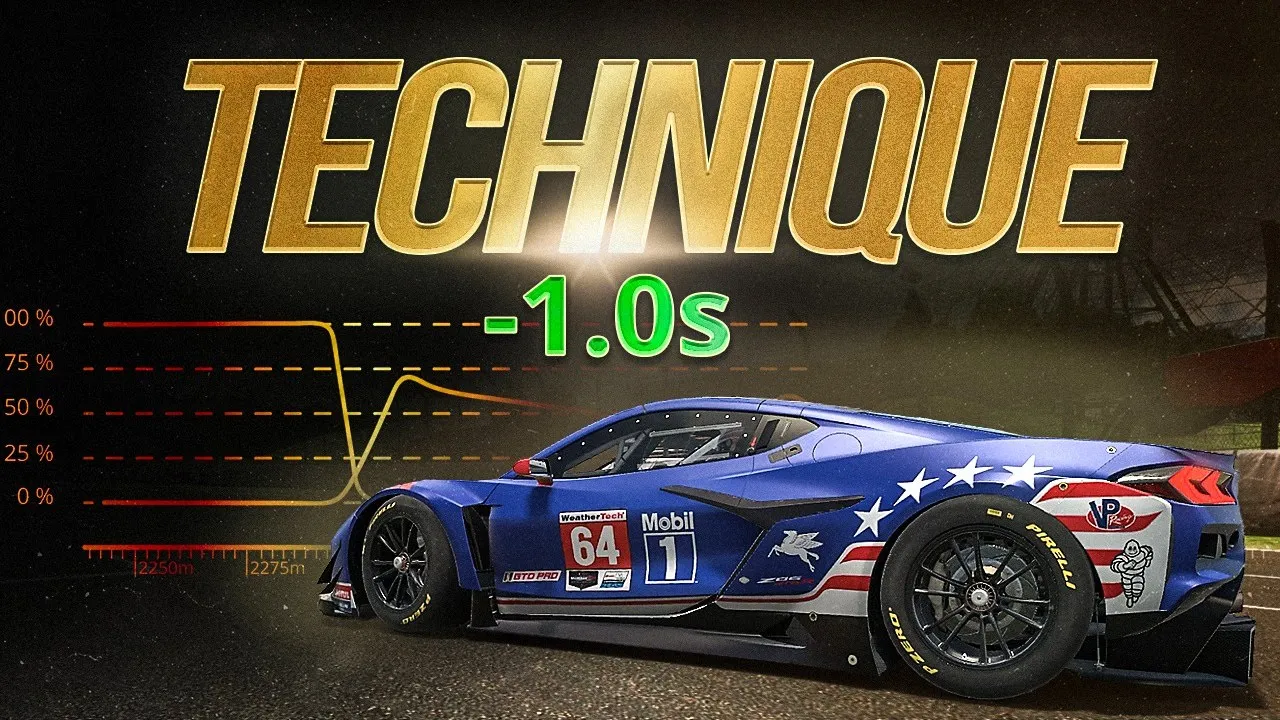
How One Student Jumped From Top 20% to Top 5% in iRacing — Coaching Session Breakdown
Suellio Almeida
•
Thursday, July 4, 2024
The Problem: Fast Enough to Be Dangerous, Not Fast Enough to Win
The student came to me running mid-pack in competitive iRacing splits. Top 20% sounds good on paper. But here's the reality: that's the gap between "sometimes on the podium" and "consistently fighting for wins."
His issue wasn't talent. It wasn't car setup. It was specific technical errors that cost him 3-4 tenths per lap. Across a 20-lap race, that's 6-8 seconds. That's the difference between P3 and P12.
When I pulled up his telemetry, the problems jumped off the screen.
What the Data Showed: Three Critical Mistakes
Mistake #1: Late braking with early turn-in.
He was braking deep—good instinct—but then turning in too early while still on heavy braking pressure. This locked the front end into understeer. The car wouldn't rotate. He'd scrub speed mid-corner trying to force the nose in, then have to wait forever to get back on throttle.
You see this constantly. Drivers think late braking = fast. But if you turn in before you've trailed off enough brake pressure, you just push wide and lose the exit. You're slower overall.
Mistake #2: Missing the Maximum Rotation Point.
Every corner has a Maximum Rotation Point—the exact moment where the car has maximum grip and will rotate fastest through the apex. It's where weight transfer, slip angle, and yaw rate align.
He was turning in too early, hitting the apex too early, and straightening the wheel before the car had finished rotating. That meant he was trying to accelerate while the car was still pointed at the outside wall. Understeer. Lift. Loss of exit speed.
Mistake #3: Inconsistent vision and reference points.
His eyes were bouncing around. No fixed braking markers. No consistent turn-in points. When you don't have a system for where you look and when, your inputs become inconsistent. Consistency is what separates top 5% from top 20%.
The Fix: Three Specific Changes, Immediate Results
Change #1: Delay turn-in by 5 meters.
I told him: "Brake where you're braking now. But hold the car straight longer. Let the brake pressure come off. Then turn in."
This allowed the weight to transfer forward, loaded the front tires, and let the car rotate on entry instead of pushing.
First lap after this adjustment? Two-tenths faster in that corner alone.
Change #2: Trail brake to the Maximum Rotation Point.
Instead of releasing the brakes early and coasting to the apex, I had him hold light brake pressure all the way to the apex. This kept the front loaded and let the car pivot through the tightest part of the corner.
Once the car rotated past the apex—once he could see the exit—then release the brakes and squeeze the throttle.
This is trail braking done correctly. You're not braking through the apex. You're braking to the rotation point, then accelerating out.
Change #3: Lock in visual reference points.
We built a checklist for every corner:
Braking marker (specific cone, board, distance marker)
Turn-in point (curbing edge, track seam, shadow)
Apex target
Exit vision (look where you want to go, not where you are)
Consistency comes from repetition of the same inputs at the same points every lap. No guessing. No "feel."
The Result: Top 5% in Three Sessions
After the first session, he dropped four-tenths off his personal best.
After the second session, he was running consistent 1-2 tenths faster than his previous "alien" laptimes.
By the third session, he qualified P2 in a top-split race and finished on the podium.
His iRating jumped 600 points in two weeks.
What changed? Not his raw speed. Not his reflexes. His technique. His consistency. His understanding of why the fast line is fast.
Why Most Drivers Stay Stuck
You know what the difference is between top 20% and top 5%?
Top 20% drivers run laps and hope they get faster.
Top 5% drivers diagnose specific problems and fix them with data.
You can't see your own mistakes in real-time. You're focused on driving. You don't have a second brain analyzing your brake pressure curve, your steering angle, your throttle application.
That's what coaching does. It's not motivation. It's not generic tips. It's looking at your data and saying: "Right there. That's the problem. Here's the fix."
This student didn't need to "get faster." He needed to stop making three specific mistakes. Once he fixed them, the lap time came.
What Would Happen If You Trained With This Level of Precision?
How long are you going to keep running the same laps, making the same mistakes, hoping it clicks?
What if you had someone analyzing your telemetry, your racing line, your inputs—and telling you exactly what to change?
Not YouTube tips. Not forum advice. Not guessing.
Your data. Your mistakes. Your fixes.
That's what 1:1 coaching is. You send me your footage and telemetry. I watch every corner. I identify the 2-3 things costing you the most time. We jump on a call, I show you exactly what to fix, and you go run faster laps.
This student went from top 20% to top 5% in three sessions. Not because he's special. Because the method works.
If you're serious about breaking through your plateau, let's talk.
Sim Racing Academy Membership
Everything you need to stop guessing and start getting faster.
Starting at
$25
/mo
Car Handling Online Course
4 levels, full curriculum. Aimed to get you to top 1% in driving pace.
Racecraft Online Course
Overtaking, Defending, Race Strategy
Live coaching + on-track practice
Bi-weekly pro-coach workshops (recorded — never miss one) plus on-track Pit Parties to practice racecraft with a coach.
Plus These Bonuses
13,000+ Member Community
League Racing
Advanced MX-5 Mini Course
Racing Technique Development Guide
The Motor Racing Book (260 pages)
Think & Behave Like a Pro Driver — Mini eBook
How One Student Jumped From Top 20% to Top 5% in iRacing — Coaching Session Breakdown
Suellio Almeida
•
Thursday, July 4, 2024
The Problem: Fast Enough to Be Dangerous, Not Fast Enough to Win
The student came to me running mid-pack in competitive iRacing splits. Top 20% sounds good on paper. But here's the reality: that's the gap between "sometimes on the podium" and "consistently fighting for wins."
His issue wasn't talent. It wasn't car setup. It was specific technical errors that cost him 3-4 tenths per lap. Across a 20-lap race, that's 6-8 seconds. That's the difference between P3 and P12.
When I pulled up his telemetry, the problems jumped off the screen.
What the Data Showed: Three Critical Mistakes
Mistake #1: Late braking with early turn-in.
He was braking deep—good instinct—but then turning in too early while still on heavy braking pressure. This locked the front end into understeer. The car wouldn't rotate. He'd scrub speed mid-corner trying to force the nose in, then have to wait forever to get back on throttle.
You see this constantly. Drivers think late braking = fast. But if you turn in before you've trailed off enough brake pressure, you just push wide and lose the exit. You're slower overall.
Mistake #2: Missing the Maximum Rotation Point.
Every corner has a Maximum Rotation Point—the exact moment where the car has maximum grip and will rotate fastest through the apex. It's where weight transfer, slip angle, and yaw rate align.
He was turning in too early, hitting the apex too early, and straightening the wheel before the car had finished rotating. That meant he was trying to accelerate while the car was still pointed at the outside wall. Understeer. Lift. Loss of exit speed.
Mistake #3: Inconsistent vision and reference points.
His eyes were bouncing around. No fixed braking markers. No consistent turn-in points. When you don't have a system for where you look and when, your inputs become inconsistent. Consistency is what separates top 5% from top 20%.
The Fix: Three Specific Changes, Immediate Results
Change #1: Delay turn-in by 5 meters.
I told him: "Brake where you're braking now. But hold the car straight longer. Let the brake pressure come off. Then turn in."
This allowed the weight to transfer forward, loaded the front tires, and let the car rotate on entry instead of pushing.
First lap after this adjustment? Two-tenths faster in that corner alone.
Change #2: Trail brake to the Maximum Rotation Point.
Instead of releasing the brakes early and coasting to the apex, I had him hold light brake pressure all the way to the apex. This kept the front loaded and let the car pivot through the tightest part of the corner.
Once the car rotated past the apex—once he could see the exit—then release the brakes and squeeze the throttle.
This is trail braking done correctly. You're not braking through the apex. You're braking to the rotation point, then accelerating out.
Change #3: Lock in visual reference points.
We built a checklist for every corner:
Braking marker (specific cone, board, distance marker)
Turn-in point (curbing edge, track seam, shadow)
Apex target
Exit vision (look where you want to go, not where you are)
Consistency comes from repetition of the same inputs at the same points every lap. No guessing. No "feel."
The Result: Top 5% in Three Sessions
After the first session, he dropped four-tenths off his personal best.
After the second session, he was running consistent 1-2 tenths faster than his previous "alien" laptimes.
By the third session, he qualified P2 in a top-split race and finished on the podium.
His iRating jumped 600 points in two weeks.
What changed? Not his raw speed. Not his reflexes. His technique. His consistency. His understanding of why the fast line is fast.
Why Most Drivers Stay Stuck
You know what the difference is between top 20% and top 5%?
Top 20% drivers run laps and hope they get faster.
Top 5% drivers diagnose specific problems and fix them with data.
You can't see your own mistakes in real-time. You're focused on driving. You don't have a second brain analyzing your brake pressure curve, your steering angle, your throttle application.
That's what coaching does. It's not motivation. It's not generic tips. It's looking at your data and saying: "Right there. That's the problem. Here's the fix."
This student didn't need to "get faster." He needed to stop making three specific mistakes. Once he fixed them, the lap time came.
What Would Happen If You Trained With This Level of Precision?
How long are you going to keep running the same laps, making the same mistakes, hoping it clicks?
What if you had someone analyzing your telemetry, your racing line, your inputs—and telling you exactly what to change?
Not YouTube tips. Not forum advice. Not guessing.
Your data. Your mistakes. Your fixes.
That's what 1:1 coaching is. You send me your footage and telemetry. I watch every corner. I identify the 2-3 things costing you the most time. We jump on a call, I show you exactly what to fix, and you go run faster laps.
This student went from top 20% to top 5% in three sessions. Not because he's special. Because the method works.
If you're serious about breaking through your plateau, let's talk.
Sim Racing Academy Membership
Everything you need to stop guessing and start getting faster.
Starting at
$25
/mo
Car Handling Online Course
4 levels, full curriculum. Aimed to get you to top 1% in driving pace.
Racecraft Online Course
Overtaking, Defending, Race Strategy
Live coaching + on-track practice
Bi-weekly pro-coach workshops (recorded — never miss one) plus on-track Pit Parties to practice racecraft with a coach.
Plus These Bonuses
13,000+ Member Community
League Racing
Advanced MX-5 Mini Course
Racing Technique Development Guide
The Motor Racing Book (260 pages)
Think & Behave Like a Pro Driver — Mini eBook
How One Student Jumped From Top 20% to Top 5% in iRacing — Coaching Session Breakdown
Suellio Almeida
•
Thursday, July 4, 2024
The Problem: Fast Enough to Be Dangerous, Not Fast Enough to Win
The student came to me running mid-pack in competitive iRacing splits. Top 20% sounds good on paper. But here's the reality: that's the gap between "sometimes on the podium" and "consistently fighting for wins."
His issue wasn't talent. It wasn't car setup. It was specific technical errors that cost him 3-4 tenths per lap. Across a 20-lap race, that's 6-8 seconds. That's the difference between P3 and P12.
When I pulled up his telemetry, the problems jumped off the screen.
What the Data Showed: Three Critical Mistakes
Mistake #1: Late braking with early turn-in.
He was braking deep—good instinct—but then turning in too early while still on heavy braking pressure. This locked the front end into understeer. The car wouldn't rotate. He'd scrub speed mid-corner trying to force the nose in, then have to wait forever to get back on throttle.
You see this constantly. Drivers think late braking = fast. But if you turn in before you've trailed off enough brake pressure, you just push wide and lose the exit. You're slower overall.
Mistake #2: Missing the Maximum Rotation Point.
Every corner has a Maximum Rotation Point—the exact moment where the car has maximum grip and will rotate fastest through the apex. It's where weight transfer, slip angle, and yaw rate align.
He was turning in too early, hitting the apex too early, and straightening the wheel before the car had finished rotating. That meant he was trying to accelerate while the car was still pointed at the outside wall. Understeer. Lift. Loss of exit speed.
Mistake #3: Inconsistent vision and reference points.
His eyes were bouncing around. No fixed braking markers. No consistent turn-in points. When you don't have a system for where you look and when, your inputs become inconsistent. Consistency is what separates top 5% from top 20%.
The Fix: Three Specific Changes, Immediate Results
Change #1: Delay turn-in by 5 meters.
I told him: "Brake where you're braking now. But hold the car straight longer. Let the brake pressure come off. Then turn in."
This allowed the weight to transfer forward, loaded the front tires, and let the car rotate on entry instead of pushing.
First lap after this adjustment? Two-tenths faster in that corner alone.
Change #2: Trail brake to the Maximum Rotation Point.
Instead of releasing the brakes early and coasting to the apex, I had him hold light brake pressure all the way to the apex. This kept the front loaded and let the car pivot through the tightest part of the corner.
Once the car rotated past the apex—once he could see the exit—then release the brakes and squeeze the throttle.
This is trail braking done correctly. You're not braking through the apex. You're braking to the rotation point, then accelerating out.
Change #3: Lock in visual reference points.
We built a checklist for every corner:
Braking marker (specific cone, board, distance marker)
Turn-in point (curbing edge, track seam, shadow)
Apex target
Exit vision (look where you want to go, not where you are)
Consistency comes from repetition of the same inputs at the same points every lap. No guessing. No "feel."
The Result: Top 5% in Three Sessions
After the first session, he dropped four-tenths off his personal best.
After the second session, he was running consistent 1-2 tenths faster than his previous "alien" laptimes.
By the third session, he qualified P2 in a top-split race and finished on the podium.
His iRating jumped 600 points in two weeks.
What changed? Not his raw speed. Not his reflexes. His technique. His consistency. His understanding of why the fast line is fast.
Why Most Drivers Stay Stuck
You know what the difference is between top 20% and top 5%?
Top 20% drivers run laps and hope they get faster.
Top 5% drivers diagnose specific problems and fix them with data.
You can't see your own mistakes in real-time. You're focused on driving. You don't have a second brain analyzing your brake pressure curve, your steering angle, your throttle application.
That's what coaching does. It's not motivation. It's not generic tips. It's looking at your data and saying: "Right there. That's the problem. Here's the fix."
This student didn't need to "get faster." He needed to stop making three specific mistakes. Once he fixed them, the lap time came.
What Would Happen If You Trained With This Level of Precision?
How long are you going to keep running the same laps, making the same mistakes, hoping it clicks?
What if you had someone analyzing your telemetry, your racing line, your inputs—and telling you exactly what to change?
Not YouTube tips. Not forum advice. Not guessing.
Your data. Your mistakes. Your fixes.
That's what 1:1 coaching is. You send me your footage and telemetry. I watch every corner. I identify the 2-3 things costing you the most time. We jump on a call, I show you exactly what to fix, and you go run faster laps.
This student went from top 20% to top 5% in three sessions. Not because he's special. Because the method works.
If you're serious about breaking through your plateau, let's talk.
Sim Racing Academy Membership
Everything you need to stop guessing and start getting faster.
Starting at
$25
/mo
Car Handling Online Course
4 levels, full curriculum. Aimed to get you to top 1% in driving pace.
Racecraft Online Course
Overtaking, Defending, Race Strategy
Live coaching + on-track practice
Bi-weekly pro-coach workshops (recorded — never miss one) plus on-track Pit Parties to practice racecraft with a coach.
Plus These Bonuses
13,000+ Member Community
League Racing
Advanced MX-5 Mini Course
Racing Technique Development Guide
The Motor Racing Book (260 pages)
Think & Behave Like a Pro Driver — Mini eBook