
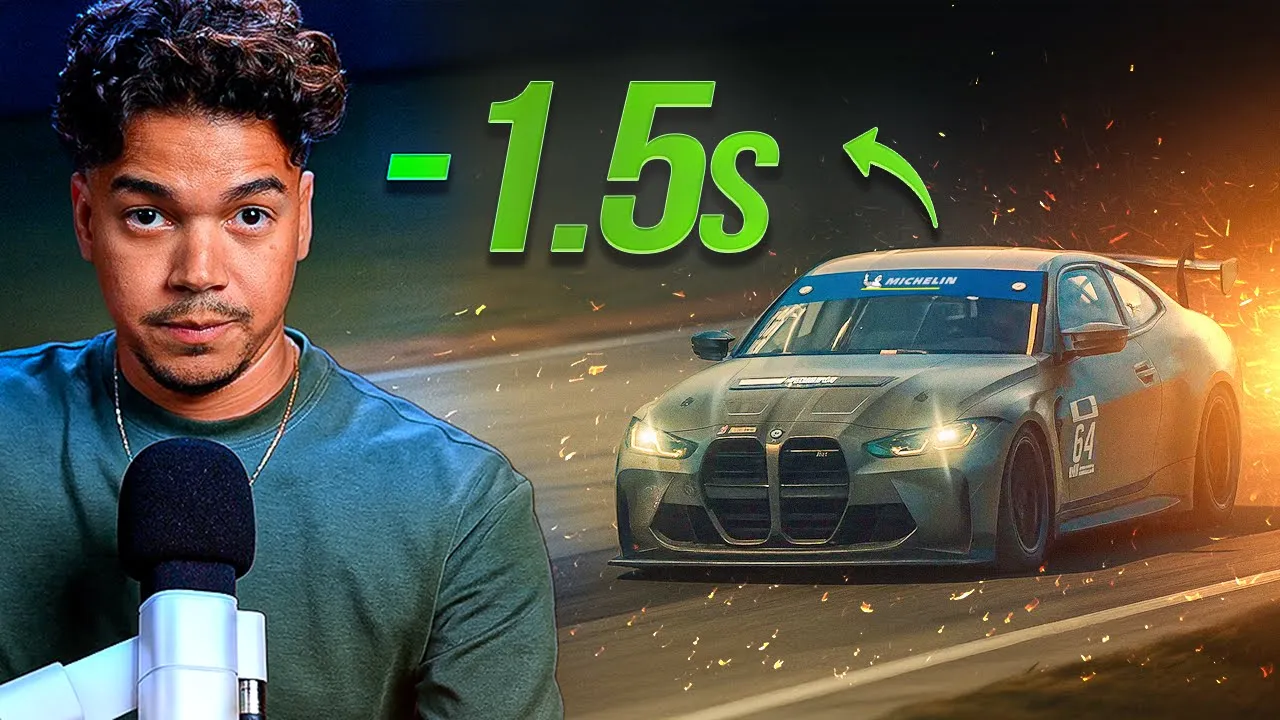
How One Student Found 1.5 Seconds Before His First Real Race — A Coaching Breakdown
Suellio Almeida
•
Thursday, June 26, 2025
The Setup: From Sim to Real in One Week
Jack had a problem.
He'd been sim racing for two years. Decent iRating. Comfortable in the Radical SR10. But in one week, he was getting in the actual car for a real track day at Sonoma Raceway.
And his sim times? They weren't where they needed to be.
He was running 1:42s. The pace he needed to be competitive? 1:40.5 or better. That's a 1.5-second gap. In sim racing, that's massive. In real life, where every tenth costs money and confidence? It's everything.
So we scheduled a session. One hour. Telemetry, video, the whole breakdown.
What I found wasn't a talent problem. It was a technique problem. And those? Those are fixable.
The Diagnosis: Three Corners, Three Mistakes
I pulled up Jack's telemetry and started scanning. Turn 2. Turn 7. Turn 11.
Three corners. Three completely different mistakes. But all adding up to the same result: lost time.
Let's start with Turn 2.
Jack was braking too late. Classic mistake. You think later braking = faster lap. Not always. He was hitting the brakes 10 meters past the optimal point, carrying too much speed into the corner, and then — here's the killer — he had to wait on the throttle.
You can see it clear as day in the data. His minimum speed was fine. His exit? Slow. He was sacrificing the entire run down to Turn 3 because he was stuck in the middle of Turn 2 managing understeer.
I told him: "Brake earlier. I know it feels slow. It's not. You'll rotate the car better, and you'll be on throttle a full car length sooner."
Turn 7 was different. High-speed kink. Jack was lifting. Not a lot — just a tiny lift, maybe 5% throttle drop. But at 120 mph, a lift is a brake. He was bleeding speed because he didn't trust the car's grip.
I asked him: "What's the scariest part of this corner?"
He said the entry.
I said: "Exactly. So we fix your vision. You're looking at the apex. Look at the exit. The car goes where you look. If you're staring at the wall, you're going to fight the wheel the whole way through."
Turn 11 — final corner onto the main straight. Jack was early on throttle. Sounds good, right? Wrong. He was getting on throttle before the car had rotated. So he was fighting understeer again, scrubbing speed, and losing two-tenths before he even hit the straight.
The fix? Let the car finish rotating before you jump on the gas. It's called the Maximum Rotation Point. Wait for it. Feel the car settle. Then nail it.
The Fix: One Change Per Corner
Here's what I told Jack:
"We're not changing everything at once. That's how you confuse yourself and go slower. We're fixing one thing per corner. And we're doing it in order."
Turn 2: Brake 10 meters earlier.
First lap, he did it. Felt slow to him. But the data doesn't lie. He picked up three-tenths on exit. Three-tenths in one corner.
Turn 7: Eyes up. Commit.
Second lap. Full throttle through the kink. No lift. He said it felt sketchy. I said: "Look at your speed. You're fine. The car has grip. Trust it."
Another two-tenths.
Turn 11: Wait for rotation.
Third lap. He let the car finish turning before he went to power. Clean exit. No understeer. Four-tenths gained on the straight.
Three corners. Three changes. Nine-tenths found.
But we weren't done.
The Compound Effect: Small Gains, Big Results
Here's the thing about lap time.
It's not linear. It's compound.
You fix Turn 2, you carry more speed into Turn 3. You carry more speed into Turn 3, you brake later into Turn 4. You brake later into Turn 4, you're on a better line through Turn 5.
One fix creates three benefits.
By lap five, Jack wasn't just hitting 1:41s. He was consistent. 1:40.8. 1:40.6. 1:40.9. Every lap within two-tenths.
That's the goal. Not one fast lap. Consistent fast laps.
Because in real racing, you don't get one lap. You get 20. And the guy who can do 1:41.0 twenty times in a row beats the guy who does 1:40.5 once and 1:42s the rest of the session.
Jack had found his 1.5 seconds. Not through magic. Through specific, repeatable technique changes.
What This Means for You
You're probably not getting in a Radical next week.
But you're leaving time on the table. I guarantee it.
Maybe it's not 1.5 seconds. Maybe it's five-tenths. Maybe it's two-tenths. But it's there.
And here's the hard truth: you can't see it yourself.
Jack couldn't. He'd driven hundreds of laps at Sonoma in the sim. He thought he knew the track. He thought he was braking in the right spots, looking in the right places, getting on throttle at the right time.
He wasn't.
It took someone looking at his data, comparing it to optimal, and saying: "Here. This is where you're losing time. This is why. This is the fix."
That's coaching.
Not motivation. Not cheerleading. Not vague advice like "brake later" or "be smoother."
Specific. Data-backed. Immediate.
What Happens If You Keep Guessing?
Let me ask you something.
How long have you been stuck at your current pace?
A month? Six months? A year?
You've watched YouTube videos. You've tried different techniques. You've changed your setup. You've practiced.
And you're still running the same times.
Why?
Because you're fixing the wrong things.
You're guessing. And guessing is expensive. Not in money — in time. In confidence. In the slow creep of frustration that makes you wonder if you've hit your ceiling.
You haven't.
Jack hadn't.
But he needed someone to show him where the time was. You do too.
What if you could sit down with a coach — someone who's driven at the level you want to reach, someone who's analyzed thousands of laps — and get the same treatment Jack got?
One hour. Your telemetry. Your footage. Specific fixes.
No fluff. No generic advice. Just: "Here's your problem. Here's why. Here's the fix. Go do it."
That's what 1:1 coaching is. That's what it's built for.
If you're serious about finding your time — the time you know is there but can't see — then stop guessing.
Sim Racing Academy Membership
Everything you need to stop guessing and start getting faster.
Starting at
$25
/mo
Car Handling Online Course
4 levels, full curriculum. Aimed to get you to top 1% in driving pace.
Racecraft Online Course
Overtaking, Defending, Race Strategy
Live coaching + on-track practice
Bi-weekly pro-coach workshops (recorded — never miss one) plus on-track Pit Parties to practice racecraft with a coach.
Plus These Bonuses
13,000+ Member Community
League Racing
Advanced MX-5 Mini Course
Racing Technique Development Guide
The Motor Racing Book (260 pages)
Think & Behave Like a Pro Driver — Mini eBook
How One Student Found 1.5 Seconds Before His First Real Race — A Coaching Breakdown
Suellio Almeida
•
Thursday, June 26, 2025
The Setup: From Sim to Real in One Week
Jack had a problem.
He'd been sim racing for two years. Decent iRating. Comfortable in the Radical SR10. But in one week, he was getting in the actual car for a real track day at Sonoma Raceway.
And his sim times? They weren't where they needed to be.
He was running 1:42s. The pace he needed to be competitive? 1:40.5 or better. That's a 1.5-second gap. In sim racing, that's massive. In real life, where every tenth costs money and confidence? It's everything.
So we scheduled a session. One hour. Telemetry, video, the whole breakdown.
What I found wasn't a talent problem. It was a technique problem. And those? Those are fixable.
The Diagnosis: Three Corners, Three Mistakes
I pulled up Jack's telemetry and started scanning. Turn 2. Turn 7. Turn 11.
Three corners. Three completely different mistakes. But all adding up to the same result: lost time.
Let's start with Turn 2.
Jack was braking too late. Classic mistake. You think later braking = faster lap. Not always. He was hitting the brakes 10 meters past the optimal point, carrying too much speed into the corner, and then — here's the killer — he had to wait on the throttle.
You can see it clear as day in the data. His minimum speed was fine. His exit? Slow. He was sacrificing the entire run down to Turn 3 because he was stuck in the middle of Turn 2 managing understeer.
I told him: "Brake earlier. I know it feels slow. It's not. You'll rotate the car better, and you'll be on throttle a full car length sooner."
Turn 7 was different. High-speed kink. Jack was lifting. Not a lot — just a tiny lift, maybe 5% throttle drop. But at 120 mph, a lift is a brake. He was bleeding speed because he didn't trust the car's grip.
I asked him: "What's the scariest part of this corner?"
He said the entry.
I said: "Exactly. So we fix your vision. You're looking at the apex. Look at the exit. The car goes where you look. If you're staring at the wall, you're going to fight the wheel the whole way through."
Turn 11 — final corner onto the main straight. Jack was early on throttle. Sounds good, right? Wrong. He was getting on throttle before the car had rotated. So he was fighting understeer again, scrubbing speed, and losing two-tenths before he even hit the straight.
The fix? Let the car finish rotating before you jump on the gas. It's called the Maximum Rotation Point. Wait for it. Feel the car settle. Then nail it.
The Fix: One Change Per Corner
Here's what I told Jack:
"We're not changing everything at once. That's how you confuse yourself and go slower. We're fixing one thing per corner. And we're doing it in order."
Turn 2: Brake 10 meters earlier.
First lap, he did it. Felt slow to him. But the data doesn't lie. He picked up three-tenths on exit. Three-tenths in one corner.
Turn 7: Eyes up. Commit.
Second lap. Full throttle through the kink. No lift. He said it felt sketchy. I said: "Look at your speed. You're fine. The car has grip. Trust it."
Another two-tenths.
Turn 11: Wait for rotation.
Third lap. He let the car finish turning before he went to power. Clean exit. No understeer. Four-tenths gained on the straight.
Three corners. Three changes. Nine-tenths found.
But we weren't done.
The Compound Effect: Small Gains, Big Results
Here's the thing about lap time.
It's not linear. It's compound.
You fix Turn 2, you carry more speed into Turn 3. You carry more speed into Turn 3, you brake later into Turn 4. You brake later into Turn 4, you're on a better line through Turn 5.
One fix creates three benefits.
By lap five, Jack wasn't just hitting 1:41s. He was consistent. 1:40.8. 1:40.6. 1:40.9. Every lap within two-tenths.
That's the goal. Not one fast lap. Consistent fast laps.
Because in real racing, you don't get one lap. You get 20. And the guy who can do 1:41.0 twenty times in a row beats the guy who does 1:40.5 once and 1:42s the rest of the session.
Jack had found his 1.5 seconds. Not through magic. Through specific, repeatable technique changes.
What This Means for You
You're probably not getting in a Radical next week.
But you're leaving time on the table. I guarantee it.
Maybe it's not 1.5 seconds. Maybe it's five-tenths. Maybe it's two-tenths. But it's there.
And here's the hard truth: you can't see it yourself.
Jack couldn't. He'd driven hundreds of laps at Sonoma in the sim. He thought he knew the track. He thought he was braking in the right spots, looking in the right places, getting on throttle at the right time.
He wasn't.
It took someone looking at his data, comparing it to optimal, and saying: "Here. This is where you're losing time. This is why. This is the fix."
That's coaching.
Not motivation. Not cheerleading. Not vague advice like "brake later" or "be smoother."
Specific. Data-backed. Immediate.
What Happens If You Keep Guessing?
Let me ask you something.
How long have you been stuck at your current pace?
A month? Six months? A year?
You've watched YouTube videos. You've tried different techniques. You've changed your setup. You've practiced.
And you're still running the same times.
Why?
Because you're fixing the wrong things.
You're guessing. And guessing is expensive. Not in money — in time. In confidence. In the slow creep of frustration that makes you wonder if you've hit your ceiling.
You haven't.
Jack hadn't.
But he needed someone to show him where the time was. You do too.
What if you could sit down with a coach — someone who's driven at the level you want to reach, someone who's analyzed thousands of laps — and get the same treatment Jack got?
One hour. Your telemetry. Your footage. Specific fixes.
No fluff. No generic advice. Just: "Here's your problem. Here's why. Here's the fix. Go do it."
That's what 1:1 coaching is. That's what it's built for.
If you're serious about finding your time — the time you know is there but can't see — then stop guessing.
Sim Racing Academy Membership
Everything you need to stop guessing and start getting faster.
Starting at
$25
/mo
Car Handling Online Course
4 levels, full curriculum. Aimed to get you to top 1% in driving pace.
Racecraft Online Course
Overtaking, Defending, Race Strategy
Live coaching + on-track practice
Bi-weekly pro-coach workshops (recorded — never miss one) plus on-track Pit Parties to practice racecraft with a coach.
Plus These Bonuses
13,000+ Member Community
League Racing
Advanced MX-5 Mini Course
Racing Technique Development Guide
The Motor Racing Book (260 pages)
Think & Behave Like a Pro Driver — Mini eBook
How One Student Found 1.5 Seconds Before His First Real Race — A Coaching Breakdown
Suellio Almeida
•
Thursday, June 26, 2025
The Setup: From Sim to Real in One Week
Jack had a problem.
He'd been sim racing for two years. Decent iRating. Comfortable in the Radical SR10. But in one week, he was getting in the actual car for a real track day at Sonoma Raceway.
And his sim times? They weren't where they needed to be.
He was running 1:42s. The pace he needed to be competitive? 1:40.5 or better. That's a 1.5-second gap. In sim racing, that's massive. In real life, where every tenth costs money and confidence? It's everything.
So we scheduled a session. One hour. Telemetry, video, the whole breakdown.
What I found wasn't a talent problem. It was a technique problem. And those? Those are fixable.
The Diagnosis: Three Corners, Three Mistakes
I pulled up Jack's telemetry and started scanning. Turn 2. Turn 7. Turn 11.
Three corners. Three completely different mistakes. But all adding up to the same result: lost time.
Let's start with Turn 2.
Jack was braking too late. Classic mistake. You think later braking = faster lap. Not always. He was hitting the brakes 10 meters past the optimal point, carrying too much speed into the corner, and then — here's the killer — he had to wait on the throttle.
You can see it clear as day in the data. His minimum speed was fine. His exit? Slow. He was sacrificing the entire run down to Turn 3 because he was stuck in the middle of Turn 2 managing understeer.
I told him: "Brake earlier. I know it feels slow. It's not. You'll rotate the car better, and you'll be on throttle a full car length sooner."
Turn 7 was different. High-speed kink. Jack was lifting. Not a lot — just a tiny lift, maybe 5% throttle drop. But at 120 mph, a lift is a brake. He was bleeding speed because he didn't trust the car's grip.
I asked him: "What's the scariest part of this corner?"
He said the entry.
I said: "Exactly. So we fix your vision. You're looking at the apex. Look at the exit. The car goes where you look. If you're staring at the wall, you're going to fight the wheel the whole way through."
Turn 11 — final corner onto the main straight. Jack was early on throttle. Sounds good, right? Wrong. He was getting on throttle before the car had rotated. So he was fighting understeer again, scrubbing speed, and losing two-tenths before he even hit the straight.
The fix? Let the car finish rotating before you jump on the gas. It's called the Maximum Rotation Point. Wait for it. Feel the car settle. Then nail it.
The Fix: One Change Per Corner
Here's what I told Jack:
"We're not changing everything at once. That's how you confuse yourself and go slower. We're fixing one thing per corner. And we're doing it in order."
Turn 2: Brake 10 meters earlier.
First lap, he did it. Felt slow to him. But the data doesn't lie. He picked up three-tenths on exit. Three-tenths in one corner.
Turn 7: Eyes up. Commit.
Second lap. Full throttle through the kink. No lift. He said it felt sketchy. I said: "Look at your speed. You're fine. The car has grip. Trust it."
Another two-tenths.
Turn 11: Wait for rotation.
Third lap. He let the car finish turning before he went to power. Clean exit. No understeer. Four-tenths gained on the straight.
Three corners. Three changes. Nine-tenths found.
But we weren't done.
The Compound Effect: Small Gains, Big Results
Here's the thing about lap time.
It's not linear. It's compound.
You fix Turn 2, you carry more speed into Turn 3. You carry more speed into Turn 3, you brake later into Turn 4. You brake later into Turn 4, you're on a better line through Turn 5.
One fix creates three benefits.
By lap five, Jack wasn't just hitting 1:41s. He was consistent. 1:40.8. 1:40.6. 1:40.9. Every lap within two-tenths.
That's the goal. Not one fast lap. Consistent fast laps.
Because in real racing, you don't get one lap. You get 20. And the guy who can do 1:41.0 twenty times in a row beats the guy who does 1:40.5 once and 1:42s the rest of the session.
Jack had found his 1.5 seconds. Not through magic. Through specific, repeatable technique changes.
What This Means for You
You're probably not getting in a Radical next week.
But you're leaving time on the table. I guarantee it.
Maybe it's not 1.5 seconds. Maybe it's five-tenths. Maybe it's two-tenths. But it's there.
And here's the hard truth: you can't see it yourself.
Jack couldn't. He'd driven hundreds of laps at Sonoma in the sim. He thought he knew the track. He thought he was braking in the right spots, looking in the right places, getting on throttle at the right time.
He wasn't.
It took someone looking at his data, comparing it to optimal, and saying: "Here. This is where you're losing time. This is why. This is the fix."
That's coaching.
Not motivation. Not cheerleading. Not vague advice like "brake later" or "be smoother."
Specific. Data-backed. Immediate.
What Happens If You Keep Guessing?
Let me ask you something.
How long have you been stuck at your current pace?
A month? Six months? A year?
You've watched YouTube videos. You've tried different techniques. You've changed your setup. You've practiced.
And you're still running the same times.
Why?
Because you're fixing the wrong things.
You're guessing. And guessing is expensive. Not in money — in time. In confidence. In the slow creep of frustration that makes you wonder if you've hit your ceiling.
You haven't.
Jack hadn't.
But he needed someone to show him where the time was. You do too.
What if you could sit down with a coach — someone who's driven at the level you want to reach, someone who's analyzed thousands of laps — and get the same treatment Jack got?
One hour. Your telemetry. Your footage. Specific fixes.
No fluff. No generic advice. Just: "Here's your problem. Here's why. Here's the fix. Go do it."
That's what 1:1 coaching is. That's what it's built for.
If you're serious about finding your time — the time you know is there but can't see — then stop guessing.
Sim Racing Academy Membership
Everything you need to stop guessing and start getting faster.
Starting at
$25
/mo
Car Handling Online Course
4 levels, full curriculum. Aimed to get you to top 1% in driving pace.
Racecraft Online Course
Overtaking, Defending, Race Strategy
Live coaching + on-track practice
Bi-weekly pro-coach workshops (recorded — never miss one) plus on-track Pit Parties to practice racecraft with a coach.
Plus These Bonuses
13,000+ Member Community
League Racing
Advanced MX-5 Mini Course
Racing Technique Development Guide
The Motor Racing Book (260 pages)
Think & Behave Like a Pro Driver — Mini eBook