
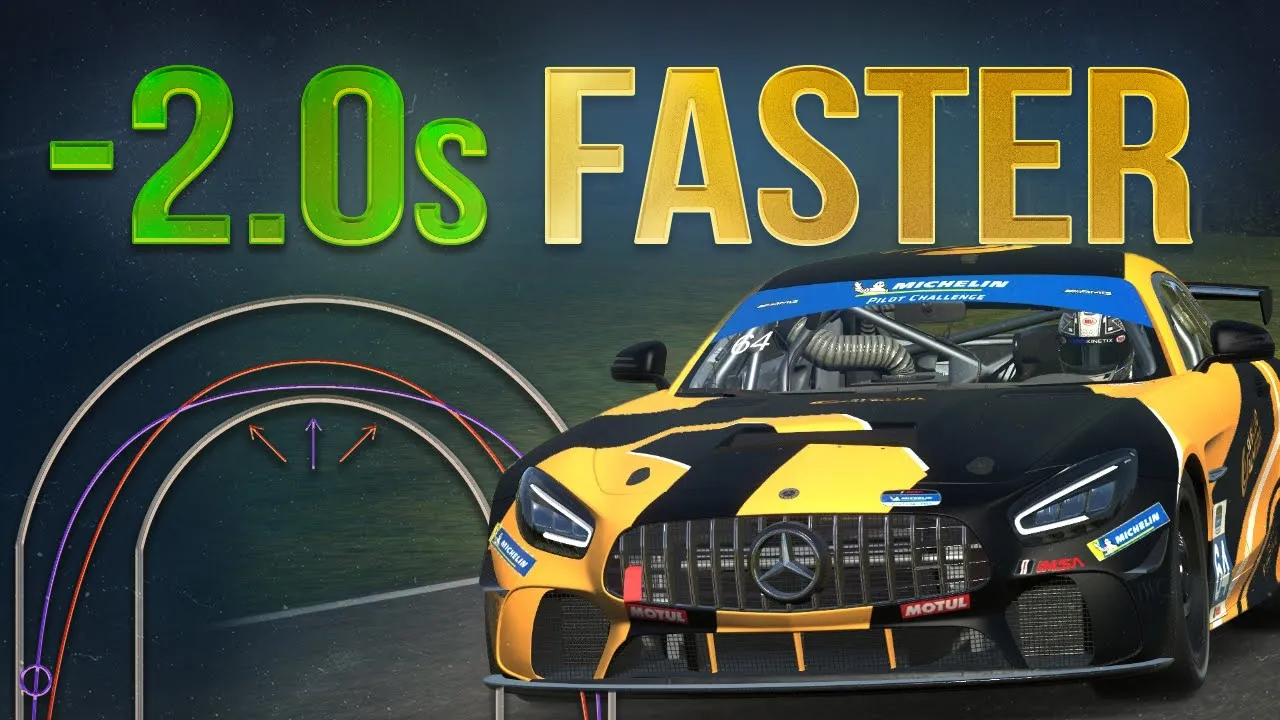
How One Coaching Session Found 2 Seconds — Trail Braking and Vision Breakdown
Suellio Almeida
•
Thursday, September 14, 2023
The Problem: Fast Straights, Slow Corners
The student came in running the Radical SR10 at Spa — solid iRating, decent pace, but something was off. He was quick on the straights, hitting good speeds, but bleeding time in every braking zone.
First lap review: immediate red flags. He was late on the brakes. Not slightly late — catastrophically late. Committing to the corner with way too much entry speed, then fighting understeer all the way to the apex.
You know what that feels like. The car won't turn. You're scrubbing speed mid-corner. The exit is compromised before you even get there.
This wasn't a skill issue. This was a timing and vision issue.
What the Telemetry Showed
I pulled up the telemetry overlay. The problem was obvious.
Turn 1 (La Source hairpin): He was braking at the 50-meter board. Way, way too late. By the time he reached the apex, he was still on the brakes — trail braking through necessity, not technique. The car was understeering because he asked it to turn while still carrying ridiculous entry speed.
He wasn't rotating the car. He was pushing it.
Eau Rouge/Raidillon: Same story. Braking too late into Eau Rouge, fighting the car uphill, losing all momentum for the long Kemmel straight.
Pouhon: Again — late braking, understeer, compromised exit.
The pattern was consistent: brake late, turn in with too much speed, fight understeer, lose exit speed, repeat.
Here's what I told him:
"You're giving up 2 seconds by braking 10-15 meters too late in every heavy braking zone. You think you're being aggressive. You're actually being slow."
The Fix: Brake Earlier, Turn Faster
I gave him one instruction for the next lap:
Brake 10 meters earlier. Every corner.
That's it. No setup changes. No advanced trail braking technique yet. Just brake earlier.
He was skeptical. Every driver is. Braking earlier feels slow. It feels like you're giving up time.
But here's the physics:
When you brake too late, you're asking the tires to do two things at once — maximum braking AND maximum turning. Tires have a finite grip budget. You can use 100% for braking, 100% for turning, or some combination — but you can't exceed 100%.
Braking late forces you to brake harder while turning. The front tires are maxed out stopping the car. They have nothing left for rotation. Result: understeer, scrubbed speed, slow corner.
Braking earlier means you can finish most of your braking in a straight line. The tires have grip left over when you turn in. The car rotates. You get a better apex. You can get on the throttle sooner. The exit is faster.
The corner isn't won at turn-in. It's won at the exit.
The Result: 2 Seconds in 3 Laps
Next lap out:
Turn 1: He braked at the 60-meter board instead of the 50. The car turned in clean. No understeer. He carried more speed through the apex because the car was actually pointing the right direction.
Eau Rouge: Braking earlier meant he could get back on the gas earlier up the hill. He gained 3 tenths just from Eau Rouge to Kemmel.
Pouhon: Same thing. Earlier braking, better rotation, faster exit onto the back straight.
Three laps later, he'd dropped 1.8 seconds.
No setup changes. No magic technique. Just braking where the lap time actually is.
Why This Happens (And Why It's Costing You)
Here's the thing: most drivers learn to brake from watching onboards. You see a fast driver brake at the 50-meter board, so you try to brake at the 50-meter board.
But you're not watching when they started braking. You're watching when they're finishing the braking phase. By the time you see their brake lights, they've already done 80% of the work.
You think braking later = faster. But braking later only works if you can trail brake efficiently and manage weight transfer through the corner. If you can't, you're just understeering and losing time.
The other issue: target fixation.
This student was staring at the apex. That's where he wanted to go, so that's where he looked. But when you stare at the apex, your brain delays your inputs. You brake late because you're not seeing the braking zone coming. You turn in late because you're reacting, not anticipating.
I had him shift his vision forward. Don't look at the apex — look at the exit. Your eyes should always be 2-3 seconds ahead of the car.
When he did that, his braking points naturally moved earlier. His turn-in became smoother. The lap time fell.
The Second Layer: Trail Braking Properly
Once he was braking earlier and getting cleaner turn-in, we added the next layer: proper trail braking.
Trail braking isn't about keeping your foot on the brake as long as possible. It's about progressively releasing brake pressure as you increase steering input.
Think of it as a balance:
100% braking, 0% steering → straight-line stop
70% braking, 30% steering → early turn-in
30% braking, 70% steering → apex approach
0% braking, 100% steering → apex (or throttle)
The transition is what matters. Smooth, progressive, coordinated.
When you trail brake correctly, you're using brake pressure to load the front tires and help the car rotate. You're not fighting understeer — you're controlling it.
I had him focus on brake release timing. Don't slam off the brakes. Peel off gradually as you add steering. The car should feel like it's rolling into the corner, not being forced.
Next session, we'll work on throttle application timing and finding the exact moment to transition from trail braking to acceleration. But the foundation is there now.
He's not fighting the car anymore. He's driving it.
What You Should Take From This
If you're stuck, if your lap times aren't dropping, if you feel like you're driving hard but not going fast — you're probably braking too late.
Most drivers are.
Braking earlier feels wrong. It feels slow. But the stopwatch doesn't lie.
Try this next session:
1. Pick one corner. Just one.
2. Brake 10 meters earlier than you normally do.
3. Focus on clean turn-in and early throttle application.
4. Compare the lap time.
You'll find time. I guarantee it.
And if you want someone to watch your telemetry and tell you exactly where you're losing time — not guessing, not estimating, but pointing at the data and showing you the problem — that's what coaching is for.
What If You Could Find 2 Seconds Every Session?
Here's the question: how long are you going to keep guessing?
You're putting in the laps. You're studying the track. You're watching faster drivers. But without objective feedback, you're reinforcing the same mistakes every session.
This student found 2 seconds because someone looked at his data and said: "You're braking too late. Here's where. Here's why. Here's the fix."
No guesswork. No trial and error. Just diagnosis and correction.
How much time are you leaving on the table right now? Half a second? A full second? More?
What if you could see exactly where it's going — and get it back in one session?
That's what 1:1 coaching does. You send footage and telemetry. We analyze it. We get on a call. We fix the problem. You go faster.
Starting at $55 for a session with our team, or book directly with me — IMSA TCR driver, top 0.03% iRacing, 5,000+ hours coaching everyone from beginners to F1 engineers.
If you're serious about getting faster, stop guessing. Let's find your 2 seconds.
Sim Racing Academy Membership
Everything you need to stop guessing and start getting faster.
Starting at
$25
/mo
Car Handling Online Course
4 levels, full curriculum. Aimed to get you to top 1% in driving pace.
Racecraft Online Course
Overtaking, Defending, Race Strategy
Live coaching + on-track practice
Bi-weekly pro-coach workshops (recorded — never miss one) plus on-track Pit Parties to practice racecraft with a coach.
Plus These Bonuses
13,000+ Member Community
League Racing
Advanced MX-5 Mini Course
Racing Technique Development Guide
The Motor Racing Book (260 pages)
Think & Behave Like a Pro Driver — Mini eBook
How One Coaching Session Found 2 Seconds — Trail Braking and Vision Breakdown
Suellio Almeida
•
Thursday, September 14, 2023
The Problem: Fast Straights, Slow Corners
The student came in running the Radical SR10 at Spa — solid iRating, decent pace, but something was off. He was quick on the straights, hitting good speeds, but bleeding time in every braking zone.
First lap review: immediate red flags. He was late on the brakes. Not slightly late — catastrophically late. Committing to the corner with way too much entry speed, then fighting understeer all the way to the apex.
You know what that feels like. The car won't turn. You're scrubbing speed mid-corner. The exit is compromised before you even get there.
This wasn't a skill issue. This was a timing and vision issue.
What the Telemetry Showed
I pulled up the telemetry overlay. The problem was obvious.
Turn 1 (La Source hairpin): He was braking at the 50-meter board. Way, way too late. By the time he reached the apex, he was still on the brakes — trail braking through necessity, not technique. The car was understeering because he asked it to turn while still carrying ridiculous entry speed.
He wasn't rotating the car. He was pushing it.
Eau Rouge/Raidillon: Same story. Braking too late into Eau Rouge, fighting the car uphill, losing all momentum for the long Kemmel straight.
Pouhon: Again — late braking, understeer, compromised exit.
The pattern was consistent: brake late, turn in with too much speed, fight understeer, lose exit speed, repeat.
Here's what I told him:
"You're giving up 2 seconds by braking 10-15 meters too late in every heavy braking zone. You think you're being aggressive. You're actually being slow."
The Fix: Brake Earlier, Turn Faster
I gave him one instruction for the next lap:
Brake 10 meters earlier. Every corner.
That's it. No setup changes. No advanced trail braking technique yet. Just brake earlier.
He was skeptical. Every driver is. Braking earlier feels slow. It feels like you're giving up time.
But here's the physics:
When you brake too late, you're asking the tires to do two things at once — maximum braking AND maximum turning. Tires have a finite grip budget. You can use 100% for braking, 100% for turning, or some combination — but you can't exceed 100%.
Braking late forces you to brake harder while turning. The front tires are maxed out stopping the car. They have nothing left for rotation. Result: understeer, scrubbed speed, slow corner.
Braking earlier means you can finish most of your braking in a straight line. The tires have grip left over when you turn in. The car rotates. You get a better apex. You can get on the throttle sooner. The exit is faster.
The corner isn't won at turn-in. It's won at the exit.
The Result: 2 Seconds in 3 Laps
Next lap out:
Turn 1: He braked at the 60-meter board instead of the 50. The car turned in clean. No understeer. He carried more speed through the apex because the car was actually pointing the right direction.
Eau Rouge: Braking earlier meant he could get back on the gas earlier up the hill. He gained 3 tenths just from Eau Rouge to Kemmel.
Pouhon: Same thing. Earlier braking, better rotation, faster exit onto the back straight.
Three laps later, he'd dropped 1.8 seconds.
No setup changes. No magic technique. Just braking where the lap time actually is.
Why This Happens (And Why It's Costing You)
Here's the thing: most drivers learn to brake from watching onboards. You see a fast driver brake at the 50-meter board, so you try to brake at the 50-meter board.
But you're not watching when they started braking. You're watching when they're finishing the braking phase. By the time you see their brake lights, they've already done 80% of the work.
You think braking later = faster. But braking later only works if you can trail brake efficiently and manage weight transfer through the corner. If you can't, you're just understeering and losing time.
The other issue: target fixation.
This student was staring at the apex. That's where he wanted to go, so that's where he looked. But when you stare at the apex, your brain delays your inputs. You brake late because you're not seeing the braking zone coming. You turn in late because you're reacting, not anticipating.
I had him shift his vision forward. Don't look at the apex — look at the exit. Your eyes should always be 2-3 seconds ahead of the car.
When he did that, his braking points naturally moved earlier. His turn-in became smoother. The lap time fell.
The Second Layer: Trail Braking Properly
Once he was braking earlier and getting cleaner turn-in, we added the next layer: proper trail braking.
Trail braking isn't about keeping your foot on the brake as long as possible. It's about progressively releasing brake pressure as you increase steering input.
Think of it as a balance:
100% braking, 0% steering → straight-line stop
70% braking, 30% steering → early turn-in
30% braking, 70% steering → apex approach
0% braking, 100% steering → apex (or throttle)
The transition is what matters. Smooth, progressive, coordinated.
When you trail brake correctly, you're using brake pressure to load the front tires and help the car rotate. You're not fighting understeer — you're controlling it.
I had him focus on brake release timing. Don't slam off the brakes. Peel off gradually as you add steering. The car should feel like it's rolling into the corner, not being forced.
Next session, we'll work on throttle application timing and finding the exact moment to transition from trail braking to acceleration. But the foundation is there now.
He's not fighting the car anymore. He's driving it.
What You Should Take From This
If you're stuck, if your lap times aren't dropping, if you feel like you're driving hard but not going fast — you're probably braking too late.
Most drivers are.
Braking earlier feels wrong. It feels slow. But the stopwatch doesn't lie.
Try this next session:
1. Pick one corner. Just one.
2. Brake 10 meters earlier than you normally do.
3. Focus on clean turn-in and early throttle application.
4. Compare the lap time.
You'll find time. I guarantee it.
And if you want someone to watch your telemetry and tell you exactly where you're losing time — not guessing, not estimating, but pointing at the data and showing you the problem — that's what coaching is for.
What If You Could Find 2 Seconds Every Session?
Here's the question: how long are you going to keep guessing?
You're putting in the laps. You're studying the track. You're watching faster drivers. But without objective feedback, you're reinforcing the same mistakes every session.
This student found 2 seconds because someone looked at his data and said: "You're braking too late. Here's where. Here's why. Here's the fix."
No guesswork. No trial and error. Just diagnosis and correction.
How much time are you leaving on the table right now? Half a second? A full second? More?
What if you could see exactly where it's going — and get it back in one session?
That's what 1:1 coaching does. You send footage and telemetry. We analyze it. We get on a call. We fix the problem. You go faster.
Starting at $55 for a session with our team, or book directly with me — IMSA TCR driver, top 0.03% iRacing, 5,000+ hours coaching everyone from beginners to F1 engineers.
If you're serious about getting faster, stop guessing. Let's find your 2 seconds.
Sim Racing Academy Membership
Everything you need to stop guessing and start getting faster.
Starting at
$25
/mo
Car Handling Online Course
4 levels, full curriculum. Aimed to get you to top 1% in driving pace.
Racecraft Online Course
Overtaking, Defending, Race Strategy
Live coaching + on-track practice
Bi-weekly pro-coach workshops (recorded — never miss one) plus on-track Pit Parties to practice racecraft with a coach.
Plus These Bonuses
13,000+ Member Community
League Racing
Advanced MX-5 Mini Course
Racing Technique Development Guide
The Motor Racing Book (260 pages)
Think & Behave Like a Pro Driver — Mini eBook
How One Coaching Session Found 2 Seconds — Trail Braking and Vision Breakdown
Suellio Almeida
•
Thursday, September 14, 2023
The Problem: Fast Straights, Slow Corners
The student came in running the Radical SR10 at Spa — solid iRating, decent pace, but something was off. He was quick on the straights, hitting good speeds, but bleeding time in every braking zone.
First lap review: immediate red flags. He was late on the brakes. Not slightly late — catastrophically late. Committing to the corner with way too much entry speed, then fighting understeer all the way to the apex.
You know what that feels like. The car won't turn. You're scrubbing speed mid-corner. The exit is compromised before you even get there.
This wasn't a skill issue. This was a timing and vision issue.
What the Telemetry Showed
I pulled up the telemetry overlay. The problem was obvious.
Turn 1 (La Source hairpin): He was braking at the 50-meter board. Way, way too late. By the time he reached the apex, he was still on the brakes — trail braking through necessity, not technique. The car was understeering because he asked it to turn while still carrying ridiculous entry speed.
He wasn't rotating the car. He was pushing it.
Eau Rouge/Raidillon: Same story. Braking too late into Eau Rouge, fighting the car uphill, losing all momentum for the long Kemmel straight.
Pouhon: Again — late braking, understeer, compromised exit.
The pattern was consistent: brake late, turn in with too much speed, fight understeer, lose exit speed, repeat.
Here's what I told him:
"You're giving up 2 seconds by braking 10-15 meters too late in every heavy braking zone. You think you're being aggressive. You're actually being slow."
The Fix: Brake Earlier, Turn Faster
I gave him one instruction for the next lap:
Brake 10 meters earlier. Every corner.
That's it. No setup changes. No advanced trail braking technique yet. Just brake earlier.
He was skeptical. Every driver is. Braking earlier feels slow. It feels like you're giving up time.
But here's the physics:
When you brake too late, you're asking the tires to do two things at once — maximum braking AND maximum turning. Tires have a finite grip budget. You can use 100% for braking, 100% for turning, or some combination — but you can't exceed 100%.
Braking late forces you to brake harder while turning. The front tires are maxed out stopping the car. They have nothing left for rotation. Result: understeer, scrubbed speed, slow corner.
Braking earlier means you can finish most of your braking in a straight line. The tires have grip left over when you turn in. The car rotates. You get a better apex. You can get on the throttle sooner. The exit is faster.
The corner isn't won at turn-in. It's won at the exit.
The Result: 2 Seconds in 3 Laps
Next lap out:
Turn 1: He braked at the 60-meter board instead of the 50. The car turned in clean. No understeer. He carried more speed through the apex because the car was actually pointing the right direction.
Eau Rouge: Braking earlier meant he could get back on the gas earlier up the hill. He gained 3 tenths just from Eau Rouge to Kemmel.
Pouhon: Same thing. Earlier braking, better rotation, faster exit onto the back straight.
Three laps later, he'd dropped 1.8 seconds.
No setup changes. No magic technique. Just braking where the lap time actually is.
Why This Happens (And Why It's Costing You)
Here's the thing: most drivers learn to brake from watching onboards. You see a fast driver brake at the 50-meter board, so you try to brake at the 50-meter board.
But you're not watching when they started braking. You're watching when they're finishing the braking phase. By the time you see their brake lights, they've already done 80% of the work.
You think braking later = faster. But braking later only works if you can trail brake efficiently and manage weight transfer through the corner. If you can't, you're just understeering and losing time.
The other issue: target fixation.
This student was staring at the apex. That's where he wanted to go, so that's where he looked. But when you stare at the apex, your brain delays your inputs. You brake late because you're not seeing the braking zone coming. You turn in late because you're reacting, not anticipating.
I had him shift his vision forward. Don't look at the apex — look at the exit. Your eyes should always be 2-3 seconds ahead of the car.
When he did that, his braking points naturally moved earlier. His turn-in became smoother. The lap time fell.
The Second Layer: Trail Braking Properly
Once he was braking earlier and getting cleaner turn-in, we added the next layer: proper trail braking.
Trail braking isn't about keeping your foot on the brake as long as possible. It's about progressively releasing brake pressure as you increase steering input.
Think of it as a balance:
100% braking, 0% steering → straight-line stop
70% braking, 30% steering → early turn-in
30% braking, 70% steering → apex approach
0% braking, 100% steering → apex (or throttle)
The transition is what matters. Smooth, progressive, coordinated.
When you trail brake correctly, you're using brake pressure to load the front tires and help the car rotate. You're not fighting understeer — you're controlling it.
I had him focus on brake release timing. Don't slam off the brakes. Peel off gradually as you add steering. The car should feel like it's rolling into the corner, not being forced.
Next session, we'll work on throttle application timing and finding the exact moment to transition from trail braking to acceleration. But the foundation is there now.
He's not fighting the car anymore. He's driving it.
What You Should Take From This
If you're stuck, if your lap times aren't dropping, if you feel like you're driving hard but not going fast — you're probably braking too late.
Most drivers are.
Braking earlier feels wrong. It feels slow. But the stopwatch doesn't lie.
Try this next session:
1. Pick one corner. Just one.
2. Brake 10 meters earlier than you normally do.
3. Focus on clean turn-in and early throttle application.
4. Compare the lap time.
You'll find time. I guarantee it.
And if you want someone to watch your telemetry and tell you exactly where you're losing time — not guessing, not estimating, but pointing at the data and showing you the problem — that's what coaching is for.
What If You Could Find 2 Seconds Every Session?
Here's the question: how long are you going to keep guessing?
You're putting in the laps. You're studying the track. You're watching faster drivers. But without objective feedback, you're reinforcing the same mistakes every session.
This student found 2 seconds because someone looked at his data and said: "You're braking too late. Here's where. Here's why. Here's the fix."
No guesswork. No trial and error. Just diagnosis and correction.
How much time are you leaving on the table right now? Half a second? A full second? More?
What if you could see exactly where it's going — and get it back in one session?
That's what 1:1 coaching does. You send footage and telemetry. We analyze it. We get on a call. We fix the problem. You go faster.
Starting at $55 for a session with our team, or book directly with me — IMSA TCR driver, top 0.03% iRacing, 5,000+ hours coaching everyone from beginners to F1 engineers.
If you're serious about getting faster, stop guessing. Let's find your 2 seconds.
Sim Racing Academy Membership
Everything you need to stop guessing and start getting faster.
Starting at
$25
/mo
Car Handling Online Course
4 levels, full curriculum. Aimed to get you to top 1% in driving pace.
Racecraft Online Course
Overtaking, Defending, Race Strategy
Live coaching + on-track practice
Bi-weekly pro-coach workshops (recorded — never miss one) plus on-track Pit Parties to practice racecraft with a coach.
Plus These Bonuses
13,000+ Member Community
League Racing
Advanced MX-5 Mini Course
Racing Technique Development Guide
The Motor Racing Book (260 pages)
Think & Behave Like a Pro Driver — Mini eBook