
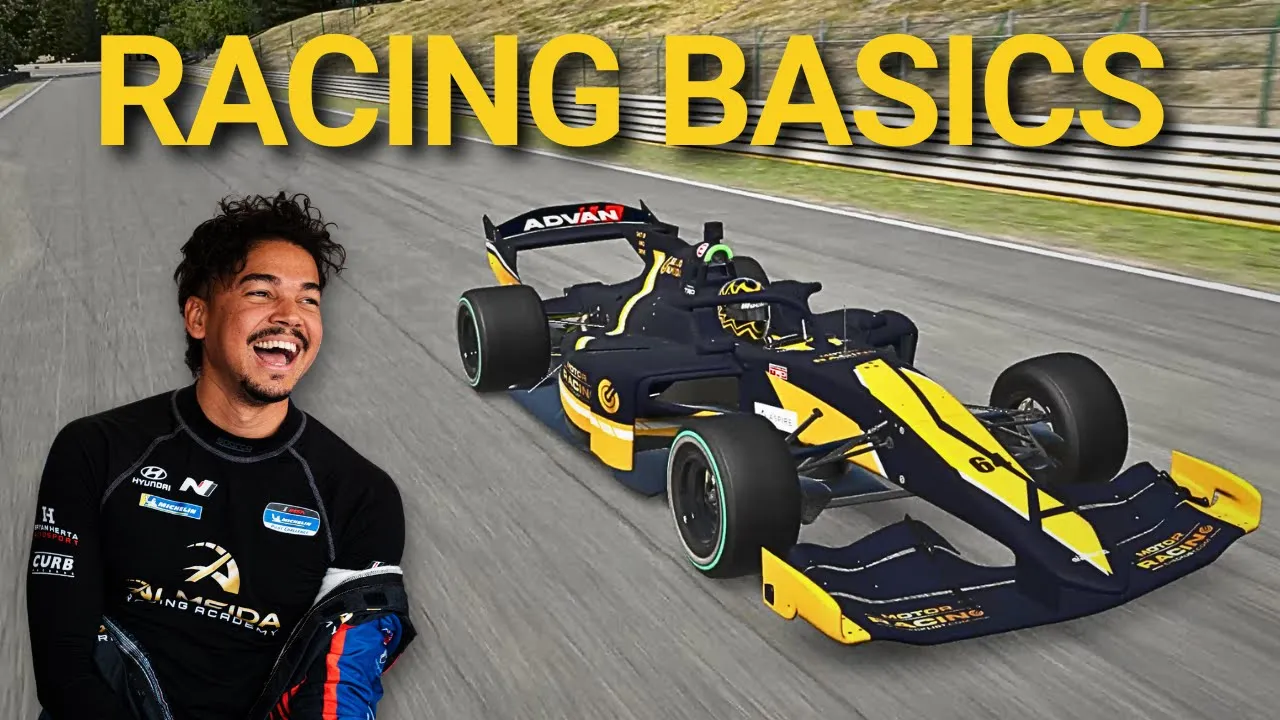
What Makes You Fast in Racing? The 3 Core Skills That Actually Matter
Suellio Almeida
•
Saturday, November 29, 2025
You're Not Slow Because You Lack Talent
Here's the truth: most drivers aren't slow because they lack natural ability.
They're slow because they're working on the wrong things.
You see someone crushing lap times and think, "They're just gifted." But what you're actually watching is the result of three specific skills, trained deliberately, in the right sequence.
Most drivers never learn what these skills are. They jump straight to racecraft or car setup without building the foundation. Then they wonder why their progress stalls.
The Three Core Skills of Fast Driving
Speed in racing comes down to three abilities:
1. Car control — Your ability to manipulate the car's platform and balance.
2. Consistency — Your ability to repeat the same inputs, lap after lap.
3. Racecraft — Your ability to execute overtakes, defend position, and race wheel-to-wheel.
These aren't random skills. They're a hierarchy.
You can't build consistency without car control. You can't execute racecraft without consistency. Skip a step and you'll hit a ceiling you can't break through.
Let's go deeper.
Skill 1: Car Control — The Foundation of Everything
Car control is your ability to make the car do what you want, when you want.
It's not about going fast. It's about manipulating weight transfer, rotation, and grip to place the car exactly where it needs to be.
Think about this: if you can't control the car at 90% pace, how will you control it at 100%?
Most drivers focus on lap times before they've mastered the platform. They're fighting the car instead of using it. The result? Inconsistent corner entries. Unpredictable exits. Lap times that bounce around.
Car control means understanding:
Trail braking — How brake pressure affects rotation and where the car points.
Throttle application — How you load the rear tires and manage traction.
Weight transfer — How the car's balance shifts through every phase of the corner.
Vision and steering inputs — How small adjustments keep the car stable or destabilize it.
This is the skill you build first. Alone. In practice sessions. Not in races.
If you're making mistakes under pressure, it's because your car control isn't automatic yet. You're still thinking about it. And in racing, if you have to think about it, you're already too slow.
Skill 2: Consistency — The Multiplier of Speed
Once you have car control, consistency is what turns it into performance.
Consistency is your ability to repeat the same inputs with minimal variation, lap after lap.
Here's why this matters: a driver who can run 1:30.5 every lap will beat a driver who alternates between 1:30.0 and 1:31.0. The fast lap doesn't matter if you can't replicate it.
Consistency is what makes you:
Predictable — Other drivers can race you cleanly because they know where you'll be.
Reliable under pressure — You don't lose time when someone's on your tail.
Faster in races — Consistent pace compounds. One tenth per lap over 20 laps is two seconds.
Most drivers chase the hero lap. They go for one perfect sector and bin it in the next corner. That's not speed. That's gambling.
Consistency comes from:
Locked-in brake points — You hit the same marker every time.
Repeatable turn-in points — Your steering input happens at the same spot.
Smooth throttle application — No stabbing, no lifting mid-corner.
Mental discipline — You resist the urge to overdrive.
This is where most drivers fail. They have the car control but lack the discipline to execute it the same way every lap.
If your lap times vary by more than a few tenths in clean air, you're not consistent enough yet. Fix that before you worry about racecraft.
Skill 3: Racecraft — Where Speed Meets Strategy
Racecraft is what you do with car control and consistency when someone else is on track.
It's the art of positioning, timing, and execution in traffic.
You can be the fastest driver in practice and lose races if your racecraft is weak. Because racing isn't about being fast alone — it's about being fast relative to someone trying to stop you.
Racecraft includes:
Overtaking — Setting up passes, creating opportunities, executing cleanly.
Defending — Closing doors, forcing mistakes, not giving up the inside.
Situational awareness — Knowing where other cars are without looking.
Risk management — When to push, when to wait, when to back out.
But here's the thing: racecraft only works if your car control and consistency are already dialed.
If you can't place the car within inches of the ideal line, you can't defend effectively. If your lap times bounce around, you can't execute a pass that requires two perfect corners in a row.
Racecraft is the final layer. It's the skill that wins races. But it's built on top of the other two.
Why Most Drivers Get the Order Wrong
Here's the mistake I see constantly:
Drivers jump into online races before they've built car control. They chase wheel-to-wheel action before they're consistent. Then they wonder why they can't make progress.
You can't build a house starting with the roof.
If you're crashing in races, it's because your car control isn't automatic under pressure. If you're getting passed on the last lap, it's because your consistency falls apart when it matters. If you're frustrated that you "should be faster," it's because you skipped a step.
The drivers who improve the fastest? They work on these skills in order.
They spend weeks in solo practice mastering car control. They run 20-lap stints focused purely on consistency. Only then do they take their speed into races and refine racecraft.
That's the difference between random improvement and deliberate progress.
What's Your Weakest Link?
So where are you in this hierarchy?
Be honest. Not where you want to be. Where you actually are.
If you're fighting the car in corners, you need car control.
If your lap times are all over the place, you need consistency.
If you're fast in practice but struggle in races, you need racecraft.
Most drivers know their weakest link. They just don't want to admit it because fixing it means slowing down temporarily. It means going back to basics.
But here's the reality: if you don't fix the foundation, you'll never build higher.
You'll stay stuck at the same iRating. The same lap times. The same frustrating races where you know you should be faster but can't figure out why.
Speed isn't magic. It's method.
Ready to Build Speed the Right Way?
How long are you going to keep guessing at what's holding you back?
You know your lap times could be better. You know your consistency isn't where it needs to be. You know there's a gap between where you are and where you should be.
The question is: what are you actually doing about it?
Almeida Racing Academy exists because drivers deserve better than YouTube tips and guesswork. We teach car control, consistency, and racecraft in the exact order that creates results. Structured lessons. Real technique. No filler.
Start with a free account and see the difference deliberate training makes: Join Almeida Racing Academy Free
Sim Racing Academy Membership
Everything you need to stop guessing and start getting faster.
Starting at
$25
/mo
Car Handling Online Course
4 levels, full curriculum. Aimed to get you to top 1% in driving pace.
Racecraft Online Course
Overtaking, Defending, Race Strategy
Live coaching + on-track practice
Bi-weekly pro-coach workshops (recorded — never miss one) plus on-track Pit Parties to practice racecraft with a coach.
Plus These Bonuses
13,000+ Member Community
League Racing
Advanced MX-5 Mini Course
Racing Technique Development Guide
The Motor Racing Book (260 pages)
Think & Behave Like a Pro Driver — Mini eBook
What Makes You Fast in Racing? The 3 Core Skills That Actually Matter
Suellio Almeida
•
Saturday, November 29, 2025
You're Not Slow Because You Lack Talent
Here's the truth: most drivers aren't slow because they lack natural ability.
They're slow because they're working on the wrong things.
You see someone crushing lap times and think, "They're just gifted." But what you're actually watching is the result of three specific skills, trained deliberately, in the right sequence.
Most drivers never learn what these skills are. They jump straight to racecraft or car setup without building the foundation. Then they wonder why their progress stalls.
The Three Core Skills of Fast Driving
Speed in racing comes down to three abilities:
1. Car control — Your ability to manipulate the car's platform and balance.
2. Consistency — Your ability to repeat the same inputs, lap after lap.
3. Racecraft — Your ability to execute overtakes, defend position, and race wheel-to-wheel.
These aren't random skills. They're a hierarchy.
You can't build consistency without car control. You can't execute racecraft without consistency. Skip a step and you'll hit a ceiling you can't break through.
Let's go deeper.
Skill 1: Car Control — The Foundation of Everything
Car control is your ability to make the car do what you want, when you want.
It's not about going fast. It's about manipulating weight transfer, rotation, and grip to place the car exactly where it needs to be.
Think about this: if you can't control the car at 90% pace, how will you control it at 100%?
Most drivers focus on lap times before they've mastered the platform. They're fighting the car instead of using it. The result? Inconsistent corner entries. Unpredictable exits. Lap times that bounce around.
Car control means understanding:
Trail braking — How brake pressure affects rotation and where the car points.
Throttle application — How you load the rear tires and manage traction.
Weight transfer — How the car's balance shifts through every phase of the corner.
Vision and steering inputs — How small adjustments keep the car stable or destabilize it.
This is the skill you build first. Alone. In practice sessions. Not in races.
If you're making mistakes under pressure, it's because your car control isn't automatic yet. You're still thinking about it. And in racing, if you have to think about it, you're already too slow.
Skill 2: Consistency — The Multiplier of Speed
Once you have car control, consistency is what turns it into performance.
Consistency is your ability to repeat the same inputs with minimal variation, lap after lap.
Here's why this matters: a driver who can run 1:30.5 every lap will beat a driver who alternates between 1:30.0 and 1:31.0. The fast lap doesn't matter if you can't replicate it.
Consistency is what makes you:
Predictable — Other drivers can race you cleanly because they know where you'll be.
Reliable under pressure — You don't lose time when someone's on your tail.
Faster in races — Consistent pace compounds. One tenth per lap over 20 laps is two seconds.
Most drivers chase the hero lap. They go for one perfect sector and bin it in the next corner. That's not speed. That's gambling.
Consistency comes from:
Locked-in brake points — You hit the same marker every time.
Repeatable turn-in points — Your steering input happens at the same spot.
Smooth throttle application — No stabbing, no lifting mid-corner.
Mental discipline — You resist the urge to overdrive.
This is where most drivers fail. They have the car control but lack the discipline to execute it the same way every lap.
If your lap times vary by more than a few tenths in clean air, you're not consistent enough yet. Fix that before you worry about racecraft.
Skill 3: Racecraft — Where Speed Meets Strategy
Racecraft is what you do with car control and consistency when someone else is on track.
It's the art of positioning, timing, and execution in traffic.
You can be the fastest driver in practice and lose races if your racecraft is weak. Because racing isn't about being fast alone — it's about being fast relative to someone trying to stop you.
Racecraft includes:
Overtaking — Setting up passes, creating opportunities, executing cleanly.
Defending — Closing doors, forcing mistakes, not giving up the inside.
Situational awareness — Knowing where other cars are without looking.
Risk management — When to push, when to wait, when to back out.
But here's the thing: racecraft only works if your car control and consistency are already dialed.
If you can't place the car within inches of the ideal line, you can't defend effectively. If your lap times bounce around, you can't execute a pass that requires two perfect corners in a row.
Racecraft is the final layer. It's the skill that wins races. But it's built on top of the other two.
Why Most Drivers Get the Order Wrong
Here's the mistake I see constantly:
Drivers jump into online races before they've built car control. They chase wheel-to-wheel action before they're consistent. Then they wonder why they can't make progress.
You can't build a house starting with the roof.
If you're crashing in races, it's because your car control isn't automatic under pressure. If you're getting passed on the last lap, it's because your consistency falls apart when it matters. If you're frustrated that you "should be faster," it's because you skipped a step.
The drivers who improve the fastest? They work on these skills in order.
They spend weeks in solo practice mastering car control. They run 20-lap stints focused purely on consistency. Only then do they take their speed into races and refine racecraft.
That's the difference between random improvement and deliberate progress.
What's Your Weakest Link?
So where are you in this hierarchy?
Be honest. Not where you want to be. Where you actually are.
If you're fighting the car in corners, you need car control.
If your lap times are all over the place, you need consistency.
If you're fast in practice but struggle in races, you need racecraft.
Most drivers know their weakest link. They just don't want to admit it because fixing it means slowing down temporarily. It means going back to basics.
But here's the reality: if you don't fix the foundation, you'll never build higher.
You'll stay stuck at the same iRating. The same lap times. The same frustrating races where you know you should be faster but can't figure out why.
Speed isn't magic. It's method.
Ready to Build Speed the Right Way?
How long are you going to keep guessing at what's holding you back?
You know your lap times could be better. You know your consistency isn't where it needs to be. You know there's a gap between where you are and where you should be.
The question is: what are you actually doing about it?
Almeida Racing Academy exists because drivers deserve better than YouTube tips and guesswork. We teach car control, consistency, and racecraft in the exact order that creates results. Structured lessons. Real technique. No filler.
Start with a free account and see the difference deliberate training makes: Join Almeida Racing Academy Free
Sim Racing Academy Membership
Everything you need to stop guessing and start getting faster.
Starting at
$25
/mo
Car Handling Online Course
4 levels, full curriculum. Aimed to get you to top 1% in driving pace.
Racecraft Online Course
Overtaking, Defending, Race Strategy
Live coaching + on-track practice
Bi-weekly pro-coach workshops (recorded — never miss one) plus on-track Pit Parties to practice racecraft with a coach.
Plus These Bonuses
13,000+ Member Community
League Racing
Advanced MX-5 Mini Course
Racing Technique Development Guide
The Motor Racing Book (260 pages)
Think & Behave Like a Pro Driver — Mini eBook
What Makes You Fast in Racing? The 3 Core Skills That Actually Matter
Suellio Almeida
•
Saturday, November 29, 2025
You're Not Slow Because You Lack Talent
Here's the truth: most drivers aren't slow because they lack natural ability.
They're slow because they're working on the wrong things.
You see someone crushing lap times and think, "They're just gifted." But what you're actually watching is the result of three specific skills, trained deliberately, in the right sequence.
Most drivers never learn what these skills are. They jump straight to racecraft or car setup without building the foundation. Then they wonder why their progress stalls.
The Three Core Skills of Fast Driving
Speed in racing comes down to three abilities:
1. Car control — Your ability to manipulate the car's platform and balance.
2. Consistency — Your ability to repeat the same inputs, lap after lap.
3. Racecraft — Your ability to execute overtakes, defend position, and race wheel-to-wheel.
These aren't random skills. They're a hierarchy.
You can't build consistency without car control. You can't execute racecraft without consistency. Skip a step and you'll hit a ceiling you can't break through.
Let's go deeper.
Skill 1: Car Control — The Foundation of Everything
Car control is your ability to make the car do what you want, when you want.
It's not about going fast. It's about manipulating weight transfer, rotation, and grip to place the car exactly where it needs to be.
Think about this: if you can't control the car at 90% pace, how will you control it at 100%?
Most drivers focus on lap times before they've mastered the platform. They're fighting the car instead of using it. The result? Inconsistent corner entries. Unpredictable exits. Lap times that bounce around.
Car control means understanding:
Trail braking — How brake pressure affects rotation and where the car points.
Throttle application — How you load the rear tires and manage traction.
Weight transfer — How the car's balance shifts through every phase of the corner.
Vision and steering inputs — How small adjustments keep the car stable or destabilize it.
This is the skill you build first. Alone. In practice sessions. Not in races.
If you're making mistakes under pressure, it's because your car control isn't automatic yet. You're still thinking about it. And in racing, if you have to think about it, you're already too slow.
Skill 2: Consistency — The Multiplier of Speed
Once you have car control, consistency is what turns it into performance.
Consistency is your ability to repeat the same inputs with minimal variation, lap after lap.
Here's why this matters: a driver who can run 1:30.5 every lap will beat a driver who alternates between 1:30.0 and 1:31.0. The fast lap doesn't matter if you can't replicate it.
Consistency is what makes you:
Predictable — Other drivers can race you cleanly because they know where you'll be.
Reliable under pressure — You don't lose time when someone's on your tail.
Faster in races — Consistent pace compounds. One tenth per lap over 20 laps is two seconds.
Most drivers chase the hero lap. They go for one perfect sector and bin it in the next corner. That's not speed. That's gambling.
Consistency comes from:
Locked-in brake points — You hit the same marker every time.
Repeatable turn-in points — Your steering input happens at the same spot.
Smooth throttle application — No stabbing, no lifting mid-corner.
Mental discipline — You resist the urge to overdrive.
This is where most drivers fail. They have the car control but lack the discipline to execute it the same way every lap.
If your lap times vary by more than a few tenths in clean air, you're not consistent enough yet. Fix that before you worry about racecraft.
Skill 3: Racecraft — Where Speed Meets Strategy
Racecraft is what you do with car control and consistency when someone else is on track.
It's the art of positioning, timing, and execution in traffic.
You can be the fastest driver in practice and lose races if your racecraft is weak. Because racing isn't about being fast alone — it's about being fast relative to someone trying to stop you.
Racecraft includes:
Overtaking — Setting up passes, creating opportunities, executing cleanly.
Defending — Closing doors, forcing mistakes, not giving up the inside.
Situational awareness — Knowing where other cars are without looking.
Risk management — When to push, when to wait, when to back out.
But here's the thing: racecraft only works if your car control and consistency are already dialed.
If you can't place the car within inches of the ideal line, you can't defend effectively. If your lap times bounce around, you can't execute a pass that requires two perfect corners in a row.
Racecraft is the final layer. It's the skill that wins races. But it's built on top of the other two.
Why Most Drivers Get the Order Wrong
Here's the mistake I see constantly:
Drivers jump into online races before they've built car control. They chase wheel-to-wheel action before they're consistent. Then they wonder why they can't make progress.
You can't build a house starting with the roof.
If you're crashing in races, it's because your car control isn't automatic under pressure. If you're getting passed on the last lap, it's because your consistency falls apart when it matters. If you're frustrated that you "should be faster," it's because you skipped a step.
The drivers who improve the fastest? They work on these skills in order.
They spend weeks in solo practice mastering car control. They run 20-lap stints focused purely on consistency. Only then do they take their speed into races and refine racecraft.
That's the difference between random improvement and deliberate progress.
What's Your Weakest Link?
So where are you in this hierarchy?
Be honest. Not where you want to be. Where you actually are.
If you're fighting the car in corners, you need car control.
If your lap times are all over the place, you need consistency.
If you're fast in practice but struggle in races, you need racecraft.
Most drivers know their weakest link. They just don't want to admit it because fixing it means slowing down temporarily. It means going back to basics.
But here's the reality: if you don't fix the foundation, you'll never build higher.
You'll stay stuck at the same iRating. The same lap times. The same frustrating races where you know you should be faster but can't figure out why.
Speed isn't magic. It's method.
Ready to Build Speed the Right Way?
How long are you going to keep guessing at what's holding you back?
You know your lap times could be better. You know your consistency isn't where it needs to be. You know there's a gap between where you are and where you should be.
The question is: what are you actually doing about it?
Almeida Racing Academy exists because drivers deserve better than YouTube tips and guesswork. We teach car control, consistency, and racecraft in the exact order that creates results. Structured lessons. Real technique. No filler.
Start with a free account and see the difference deliberate training makes: Join Almeida Racing Academy Free
Sim Racing Academy Membership
Everything you need to stop guessing and start getting faster.
Starting at
$25
/mo
Car Handling Online Course
4 levels, full curriculum. Aimed to get you to top 1% in driving pace.
Racecraft Online Course
Overtaking, Defending, Race Strategy
Live coaching + on-track practice
Bi-weekly pro-coach workshops (recorded — never miss one) plus on-track Pit Parties to practice racecraft with a coach.
Plus These Bonuses
13,000+ Member Community
League Racing
Advanced MX-5 Mini Course
Racing Technique Development Guide
The Motor Racing Book (260 pages)
Think & Behave Like a Pro Driver — Mini eBook