
Last to Survive Challenge: What This Chaotic Race Reveals About Real Racecraft
Suellio Almeida
•
Sunday, December 17, 2023
The Format: Every Lap Someone Dies
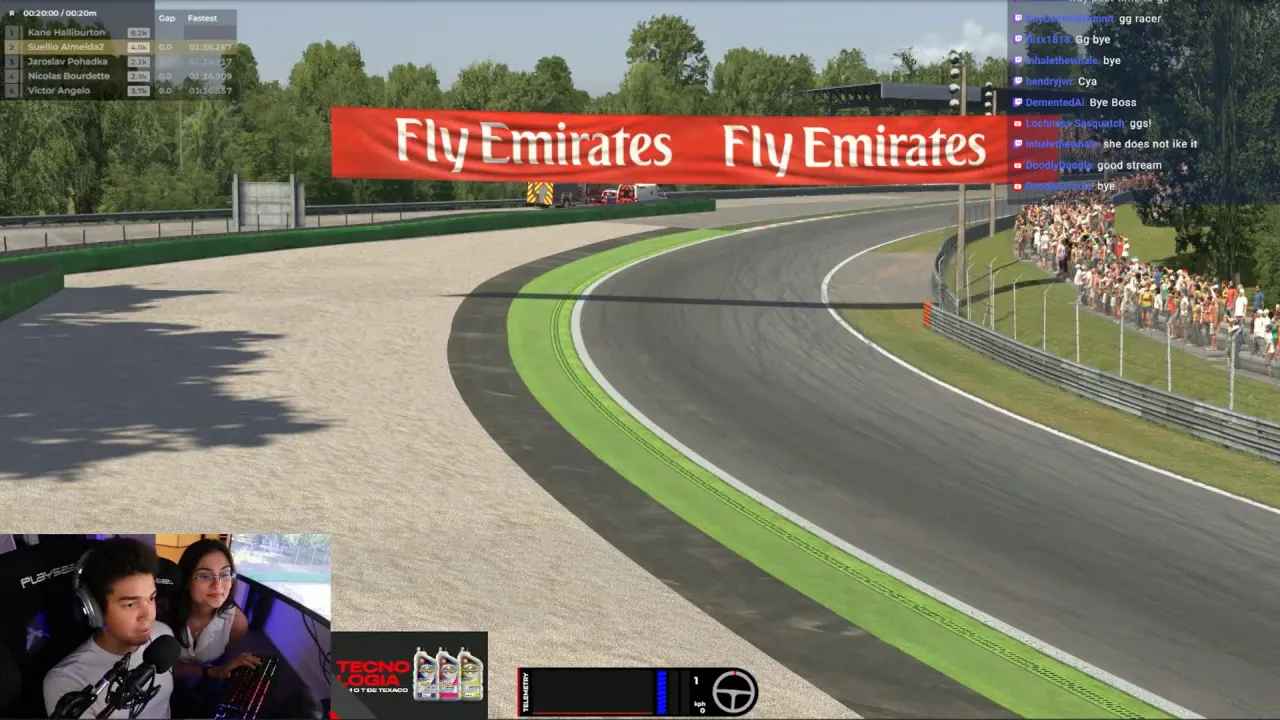
Last to Survive is simple. Twenty drivers. One track. Every lap, the slowest car gets eliminated. No do-overs. No second chances.
You're not just racing for position — you're racing to not be last. The psychology changes immediately. You can't afford a single mistake. You can't afford to give anyone space. You can't afford to think.
That pressure? That's where racecraft lives.
Early Laps: Positioning Over Pace
The first few laps weren't about outright speed. They were about chaos management.
Twenty cars crammed into corners designed for twelve. Contact everywhere. Spins. Dive bombs. Panic braking. If you're thinking about the optimal racing line, you're already last.
I focused on one thing: stay out of trouble zones. Don't defend the inside if it means getting sandwiched. Don't fight for a position if the gap ahead is closing. Give yourself escape routes.
Early elimination wasn't about being slow. It was about being in the wrong place when someone else made a mistake.
This is real racecraft. Not the textbook kind. The kind that keeps you alive when nineteen other drivers are trying to survive too.
Mid-Race: The Field Thins, Aggression Rises
As cars got eliminated, the pace ramped up. Fewer obstacles. Cleaner racing. But also — less room for error.
Now it wasn't about dodging chaos. It was about hunting. Every lap mattered. Every tenth mattered. You had to attack while staying defensively sound.
I started using advanced positioning tricks:
Late apex entries to protect the inside from desperate dive bombs.
Compression braking zones — braking earlier than optimal to force the car behind into a decision: lift or crash.
Aggressive corner exits — sacrificing mid-corner speed for exit momentum, making it harder to get passed on the next straight.
This is where most drivers crack. They focus on going fast and forget that in elimination racing, relative pace beats absolute pace. You don't need to set the fastest lap. You need to not be slowest.
The Final Five: Mental Warfare
Down to five cars. Every mistake is terminal.
At this point, racecraft becomes psychology. You're reading the other drivers. Who's overdriving? Who's defending too hard? Who's cracking under pressure?
I spotted one driver getting loose on exit. Another braking too early. That's information. That's opportunity.
But here's the trap: you start thinking about who you're racing instead of how you're racing. Your focus splits. Your inputs get messy. You brake five meters too late because you're watching the guy next to you instead of your braking marker.
I forced myself back to fundamentals. Vision. Smooth inputs. Hit your marks. Let them make the mistake.
What Elimination Racing Teaches You
This format strips away everything but pressure execution. No tire strategy. No fuel saving. No multi-class traffic. Just you, the car, and the knowledge that one bad corner ends it.
Here's what it revealed:
1. Aggression without stupidity is a skill.
You have to be willing to send it, but not that willing. The line between brave and eliminated is about six inches of track position.
2. Defensive racecraft isn't passive.
Protecting position isn't just covering the inside. It's controlling braking zones, forcing bad angles, making the pass attempt harder than it's worth.
3. Mental reset speed wins races.
You will make mistakes. You will get squeezed. You will lose time. The drivers who recover fastest — who don't spiral — are the ones who survive.
4. Relative performance > absolute performance.
In most races, you're chasing a lap time. In elimination racing, you're chasing other drivers. The skills don't fully overlap. You need both.
The Finish: Lessons from Chaos
I didn't win. But I made it deep. And every lap was a racecraft laboratory.
You can't simulate this pressure in practice. You can't learn it from hotlapping. You need real competition. Real consequences. Real stakes.
That's why I push drivers to race — not just practice. Join leagues. Enter challenges. Put yourself in situations where one mistake costs you.
Because when you're in a real race — door-to-door, high stakes, no room for error — your brain will do what you've trained it to do under pressure.
And if you've only trained it to hotlap? You're going to crack.
Ready to Build Real Racecraft That Holds Under Pressure?
You just saw what happens when twenty drivers fight for survival. The ones who lasted weren't the fastest — they were the smartest, the calmest, the most adaptable.
That racecraft doesn't come from YouTube videos or random practice sessions. It comes from structured training, competition experience, and coaching that pushes you past your comfort zone.
So here's the question: Are you actually training for racecraft, or just hoping it clicks?
Almeida Racing Academy was built for drivers who want to compete — not just participate. Our Gold Membership gives you access to 8 courses, 80 lessons, coach-led workshops, competitive leagues, and challenges designed to put you under real pressure. Plus monthly setups from Garage 61 Pro. All for $25/mo with code WINTER.
You can practice alone forever. Or you can train with structure, compete with purpose, and build skills that hold when it matters.
Sim Racing Academy Membership
Everything you need to stop guessing and start getting faster.
Starting at
$25
/mo
Car Handling Online Course
4 levels, full curriculum. Aimed to get you to top 1% in driving pace.
Racecraft Online Course
Overtaking, Defending, Race Strategy
Live coaching + on-track practice
Bi-weekly pro-coach workshops (recorded — never miss one) plus on-track Pit Parties to practice racecraft with a coach.
Plus These Bonuses
13,000+ Member Community
League Racing
Advanced MX-5 Mini Course
Racing Technique Development Guide
The Motor Racing Book (260 pages)
Think & Behave Like a Pro Driver — Mini eBook
Last to Survive Challenge: What This Chaotic Race Reveals About Real Racecraft
Suellio Almeida
•
Sunday, December 17, 2023
The Format: Every Lap Someone Dies
Last to Survive is simple. Twenty drivers. One track. Every lap, the slowest car gets eliminated. No do-overs. No second chances.
You're not just racing for position — you're racing to not be last. The psychology changes immediately. You can't afford a single mistake. You can't afford to give anyone space. You can't afford to think.
That pressure? That's where racecraft lives.
Early Laps: Positioning Over Pace
The first few laps weren't about outright speed. They were about chaos management.
Twenty cars crammed into corners designed for twelve. Contact everywhere. Spins. Dive bombs. Panic braking. If you're thinking about the optimal racing line, you're already last.
I focused on one thing: stay out of trouble zones. Don't defend the inside if it means getting sandwiched. Don't fight for a position if the gap ahead is closing. Give yourself escape routes.
Early elimination wasn't about being slow. It was about being in the wrong place when someone else made a mistake.
This is real racecraft. Not the textbook kind. The kind that keeps you alive when nineteen other drivers are trying to survive too.
Mid-Race: The Field Thins, Aggression Rises
As cars got eliminated, the pace ramped up. Fewer obstacles. Cleaner racing. But also — less room for error.
Now it wasn't about dodging chaos. It was about hunting. Every lap mattered. Every tenth mattered. You had to attack while staying defensively sound.
I started using advanced positioning tricks:
Late apex entries to protect the inside from desperate dive bombs.
Compression braking zones — braking earlier than optimal to force the car behind into a decision: lift or crash.
Aggressive corner exits — sacrificing mid-corner speed for exit momentum, making it harder to get passed on the next straight.
This is where most drivers crack. They focus on going fast and forget that in elimination racing, relative pace beats absolute pace. You don't need to set the fastest lap. You need to not be slowest.
The Final Five: Mental Warfare
Down to five cars. Every mistake is terminal.
At this point, racecraft becomes psychology. You're reading the other drivers. Who's overdriving? Who's defending too hard? Who's cracking under pressure?
I spotted one driver getting loose on exit. Another braking too early. That's information. That's opportunity.
But here's the trap: you start thinking about who you're racing instead of how you're racing. Your focus splits. Your inputs get messy. You brake five meters too late because you're watching the guy next to you instead of your braking marker.
I forced myself back to fundamentals. Vision. Smooth inputs. Hit your marks. Let them make the mistake.
What Elimination Racing Teaches You
This format strips away everything but pressure execution. No tire strategy. No fuel saving. No multi-class traffic. Just you, the car, and the knowledge that one bad corner ends it.
Here's what it revealed:
1. Aggression without stupidity is a skill.
You have to be willing to send it, but not that willing. The line between brave and eliminated is about six inches of track position.
2. Defensive racecraft isn't passive.
Protecting position isn't just covering the inside. It's controlling braking zones, forcing bad angles, making the pass attempt harder than it's worth.
3. Mental reset speed wins races.
You will make mistakes. You will get squeezed. You will lose time. The drivers who recover fastest — who don't spiral — are the ones who survive.
4. Relative performance > absolute performance.
In most races, you're chasing a lap time. In elimination racing, you're chasing other drivers. The skills don't fully overlap. You need both.
The Finish: Lessons from Chaos
I didn't win. But I made it deep. And every lap was a racecraft laboratory.
You can't simulate this pressure in practice. You can't learn it from hotlapping. You need real competition. Real consequences. Real stakes.
That's why I push drivers to race — not just practice. Join leagues. Enter challenges. Put yourself in situations where one mistake costs you.
Because when you're in a real race — door-to-door, high stakes, no room for error — your brain will do what you've trained it to do under pressure.
And if you've only trained it to hotlap? You're going to crack.
Ready to Build Real Racecraft That Holds Under Pressure?
You just saw what happens when twenty drivers fight for survival. The ones who lasted weren't the fastest — they were the smartest, the calmest, the most adaptable.
That racecraft doesn't come from YouTube videos or random practice sessions. It comes from structured training, competition experience, and coaching that pushes you past your comfort zone.
So here's the question: Are you actually training for racecraft, or just hoping it clicks?
Almeida Racing Academy was built for drivers who want to compete — not just participate. Our Gold Membership gives you access to 8 courses, 80 lessons, coach-led workshops, competitive leagues, and challenges designed to put you under real pressure. Plus monthly setups from Garage 61 Pro. All for $25/mo with code WINTER.
You can practice alone forever. Or you can train with structure, compete with purpose, and build skills that hold when it matters.
Sim Racing Academy Membership
Everything you need to stop guessing and start getting faster.
Starting at
$25
/mo
Car Handling Online Course
4 levels, full curriculum. Aimed to get you to top 1% in driving pace.
Racecraft Online Course
Overtaking, Defending, Race Strategy
Live coaching + on-track practice
Bi-weekly pro-coach workshops (recorded — never miss one) plus on-track Pit Parties to practice racecraft with a coach.
Plus These Bonuses
13,000+ Member Community
League Racing
Advanced MX-5 Mini Course
Racing Technique Development Guide
The Motor Racing Book (260 pages)
Think & Behave Like a Pro Driver — Mini eBook
Last to Survive Challenge: What This Chaotic Race Reveals About Real Racecraft
Suellio Almeida
•
Sunday, December 17, 2023
The Format: Every Lap Someone Dies
Last to Survive is simple. Twenty drivers. One track. Every lap, the slowest car gets eliminated. No do-overs. No second chances.
You're not just racing for position — you're racing to not be last. The psychology changes immediately. You can't afford a single mistake. You can't afford to give anyone space. You can't afford to think.
That pressure? That's where racecraft lives.
Early Laps: Positioning Over Pace
The first few laps weren't about outright speed. They were about chaos management.
Twenty cars crammed into corners designed for twelve. Contact everywhere. Spins. Dive bombs. Panic braking. If you're thinking about the optimal racing line, you're already last.
I focused on one thing: stay out of trouble zones. Don't defend the inside if it means getting sandwiched. Don't fight for a position if the gap ahead is closing. Give yourself escape routes.
Early elimination wasn't about being slow. It was about being in the wrong place when someone else made a mistake.
This is real racecraft. Not the textbook kind. The kind that keeps you alive when nineteen other drivers are trying to survive too.
Mid-Race: The Field Thins, Aggression Rises
As cars got eliminated, the pace ramped up. Fewer obstacles. Cleaner racing. But also — less room for error.
Now it wasn't about dodging chaos. It was about hunting. Every lap mattered. Every tenth mattered. You had to attack while staying defensively sound.
I started using advanced positioning tricks:
Late apex entries to protect the inside from desperate dive bombs.
Compression braking zones — braking earlier than optimal to force the car behind into a decision: lift or crash.
Aggressive corner exits — sacrificing mid-corner speed for exit momentum, making it harder to get passed on the next straight.
This is where most drivers crack. They focus on going fast and forget that in elimination racing, relative pace beats absolute pace. You don't need to set the fastest lap. You need to not be slowest.
The Final Five: Mental Warfare
Down to five cars. Every mistake is terminal.
At this point, racecraft becomes psychology. You're reading the other drivers. Who's overdriving? Who's defending too hard? Who's cracking under pressure?
I spotted one driver getting loose on exit. Another braking too early. That's information. That's opportunity.
But here's the trap: you start thinking about who you're racing instead of how you're racing. Your focus splits. Your inputs get messy. You brake five meters too late because you're watching the guy next to you instead of your braking marker.
I forced myself back to fundamentals. Vision. Smooth inputs. Hit your marks. Let them make the mistake.
What Elimination Racing Teaches You
This format strips away everything but pressure execution. No tire strategy. No fuel saving. No multi-class traffic. Just you, the car, and the knowledge that one bad corner ends it.
Here's what it revealed:
1. Aggression without stupidity is a skill.
You have to be willing to send it, but not that willing. The line between brave and eliminated is about six inches of track position.
2. Defensive racecraft isn't passive.
Protecting position isn't just covering the inside. It's controlling braking zones, forcing bad angles, making the pass attempt harder than it's worth.
3. Mental reset speed wins races.
You will make mistakes. You will get squeezed. You will lose time. The drivers who recover fastest — who don't spiral — are the ones who survive.
4. Relative performance > absolute performance.
In most races, you're chasing a lap time. In elimination racing, you're chasing other drivers. The skills don't fully overlap. You need both.
The Finish: Lessons from Chaos
I didn't win. But I made it deep. And every lap was a racecraft laboratory.
You can't simulate this pressure in practice. You can't learn it from hotlapping. You need real competition. Real consequences. Real stakes.
That's why I push drivers to race — not just practice. Join leagues. Enter challenges. Put yourself in situations where one mistake costs you.
Because when you're in a real race — door-to-door, high stakes, no room for error — your brain will do what you've trained it to do under pressure.
And if you've only trained it to hotlap? You're going to crack.
Ready to Build Real Racecraft That Holds Under Pressure?
You just saw what happens when twenty drivers fight for survival. The ones who lasted weren't the fastest — they were the smartest, the calmest, the most adaptable.
That racecraft doesn't come from YouTube videos or random practice sessions. It comes from structured training, competition experience, and coaching that pushes you past your comfort zone.
So here's the question: Are you actually training for racecraft, or just hoping it clicks?
Almeida Racing Academy was built for drivers who want to compete — not just participate. Our Gold Membership gives you access to 8 courses, 80 lessons, coach-led workshops, competitive leagues, and challenges designed to put you under real pressure. Plus monthly setups from Garage 61 Pro. All for $25/mo with code WINTER.
You can practice alone forever. Or you can train with structure, compete with purpose, and build skills that hold when it matters.
Sim Racing Academy Membership
Everything you need to stop guessing and start getting faster.
Starting at
$25
/mo
Car Handling Online Course
4 levels, full curriculum. Aimed to get you to top 1% in driving pace.
Racecraft Online Course
Overtaking, Defending, Race Strategy
Live coaching + on-track practice
Bi-weekly pro-coach workshops (recorded — never miss one) plus on-track Pit Parties to practice racecraft with a coach.
Plus These Bonuses
13,000+ Member Community
League Racing
Advanced MX-5 Mini Course
Racing Technique Development Guide
The Motor Racing Book (260 pages)
Think & Behave Like a Pro Driver — Mini eBook