
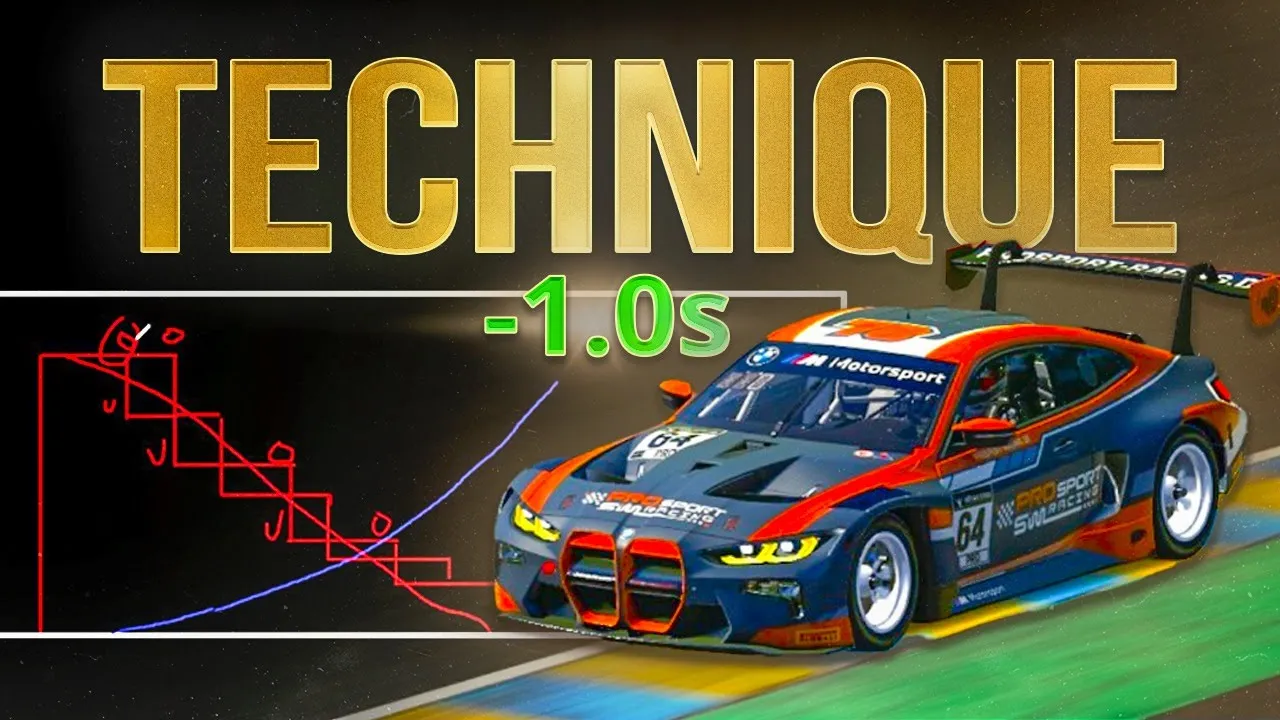
How a High-Level Sim Racer Found 1 Second Per Lap in a Single Coaching Session
Suellio Almeida
•
Tuesday, August 29, 2023
The Plateau Every Fast Driver Hits
You know the feeling. You're running competitive times. Your iRating is solid. You're not making obvious mistakes.
But you're not improving.
You watch your own replays. You study faster drivers. You try different techniques. Nothing sticks. The lap time won't budge.
Here's what most drivers don't realize: at a high level, the problems are invisible to you. They're baked into your muscle memory. You can't see them because you're doing them every single lap.
That's where coaching changes everything.
The Setup: Radical SR10 at Watkins Glen
The student in this session was already quick. Running consistent 1:26s at Watkins Glen in the Radical SR10. Not slow. Not making crash-inducing errors.
Just... stuck.
Watkins Glen is unforgiving. Fast, flowing corners that punish timing errors. If your rotation isn't precise, if your weight transfer is off by a fraction, you lose time in ways that don't feel obvious.
The car won't tell you it's wrong. It just won't be fast.
Turn 1: The Hidden Problem with Rotation Timing
First corner. Downhill, off-camber entry. The student was getting decent rotation.
But watch what happens: he's inducing rotation too early.
You see this all the time with experienced drivers. They know rotation is important, so they prioritize it. But they're creating it before the car is in position to use it.
What happens is the car rotates, but then you have to wait. The front tires are already pointed at the apex, but you're still in the entry phase. You're stuck. You can't add throttle yet because you're not at Maximum Rotation Point. You can't turn more because you've already used your steering.
You're just... coasting. Losing time.
The fix?
Delay the rotation input slightly. Let the car travel deeper into the corner before inducing that yaw. When you do rotate, it happens at Maximum Rotation Point, not before it.
Now your throttle application is immediate. The car flows through the corner instead of stuttering.
Half a tenth saved. Just from timing.
The Bus Stop: Platform Stability Under Heavy Braking
This is where most of the time was hiding.
The Bus Stop chicane — two tight direction changes under heavy braking. It's a car control nightmare. If your platform isn't stable, the car will slide, rotate unpredictably, or understeer when you need it to turn.
The student was braking hard, getting the car slowed down. But the platform was moving.
What does that mean?
The car was pitching, bouncing, shifting weight in multiple directions at once. When the platform is unstable, your inputs don't have consistent results. You turn the wheel — sometimes the car rotates, sometimes it doesn't. You add throttle — sometimes you get traction, sometimes you spin.
You're fighting the car instead of driving it.
Here's the principle: You need a stable platform before you can add rotation or throttle.
How do you create that?
Braking pressure control.
Instead of slamming the brake and holding it, you transition the pressure. Initial brake application compresses the front. Good. But then you need to release slightly as you approach the turn-in point.
This does two things:
1. Stops the platform from bouncing. The suspension settles into a stable position instead of oscillating.
2. Allows the rear to come down slightly, which gives you rear grip for rotation when you turn in.
The student was staying at 100% brake pressure too long. The car was bouncing on the nose. When he tried to turn in, the rear was light, the platform was moving, and the car wouldn't respond predictably.
We adjusted the brake release timing. Subtle. Maybe 10% less pressure just before turn-in.
The car sat down. The platform stabilized. Turn-in became precise. The first apex was hit perfectly. The second apex — which was a mess before — became clean.
Three tenths. Just from platform stability.
Turn 10: Throttle Application and Exit Speed
Fast sweeper onto the main straight. This corner determines your lap time because it feeds the longest straight on the track.
The student was getting through it. But he was waiting on the throttle.
Why?
Because the car wasn't stable at Maximum Rotation Point. He was inducing rotation, but the platform was still moving, so he didn't trust the car enough to apply throttle aggressively.
Here's the thing: throttle application isn't about bravery. It's about platform confidence.
If the car is stable at MRP, you can apply throttle immediately and smoothly. The rear squats, the weight transfers back, the car drives forward.
If the car is unstable at MRP, you hesitate. You wait for the car to settle. You're late on throttle. You lose exit speed. You lose straight-line speed for the next 10 seconds.
We fixed the platform through the earlier part of the corner — better brake release, better rotation timing. Now the car was stable at MRP.
Throttle application became instant. Exit speed jumped. Two tenths saved.
The Result: 1:26.0 to 1:25.0
A full second.
Not from some magic setup tweak. Not from a new technique he'd never heard of.
From timing. From platform stability. From refining the inputs he was already making.
This is high-level coaching. You're not relearning how to drive. You're adjusting the micro-details that separate fast from elite.
What Changes When You Can See Your Own Mistakes?
You've been driving the same way for months. Maybe years.
Your inputs feel right. They've always felt right. But the lap time won't drop.
How long are you going to keep running the same laps, hoping something clicks?
Here's what changes with coaching:
You see the invisible problems. The rotation timing you can't feel. The platform instability you've normalized. The throttle hesitation you don't realize you're doing.
You get a structured fix. Not a vague
Sim Racing Academy Membership
Everything you need to stop guessing and start getting faster.
Starting at
$25
/mo
Car Handling Online Course
4 levels, full curriculum. Aimed to get you to top 1% in driving pace.
Racecraft Online Course
Overtaking, Defending, Race Strategy
Live coaching + on-track practice
Bi-weekly pro-coach workshops (recorded — never miss one) plus on-track Pit Parties to practice racecraft with a coach.
Plus These Bonuses
13,000+ Member Community
League Racing
Advanced MX-5 Mini Course
Racing Technique Development Guide
The Motor Racing Book (260 pages)
Think & Behave Like a Pro Driver — Mini eBook
How a High-Level Sim Racer Found 1 Second Per Lap in a Single Coaching Session
Suellio Almeida
•
Tuesday, August 29, 2023
The Plateau Every Fast Driver Hits
You know the feeling. You're running competitive times. Your iRating is solid. You're not making obvious mistakes.
But you're not improving.
You watch your own replays. You study faster drivers. You try different techniques. Nothing sticks. The lap time won't budge.
Here's what most drivers don't realize: at a high level, the problems are invisible to you. They're baked into your muscle memory. You can't see them because you're doing them every single lap.
That's where coaching changes everything.
The Setup: Radical SR10 at Watkins Glen
The student in this session was already quick. Running consistent 1:26s at Watkins Glen in the Radical SR10. Not slow. Not making crash-inducing errors.
Just... stuck.
Watkins Glen is unforgiving. Fast, flowing corners that punish timing errors. If your rotation isn't precise, if your weight transfer is off by a fraction, you lose time in ways that don't feel obvious.
The car won't tell you it's wrong. It just won't be fast.
Turn 1: The Hidden Problem with Rotation Timing
First corner. Downhill, off-camber entry. The student was getting decent rotation.
But watch what happens: he's inducing rotation too early.
You see this all the time with experienced drivers. They know rotation is important, so they prioritize it. But they're creating it before the car is in position to use it.
What happens is the car rotates, but then you have to wait. The front tires are already pointed at the apex, but you're still in the entry phase. You're stuck. You can't add throttle yet because you're not at Maximum Rotation Point. You can't turn more because you've already used your steering.
You're just... coasting. Losing time.
The fix?
Delay the rotation input slightly. Let the car travel deeper into the corner before inducing that yaw. When you do rotate, it happens at Maximum Rotation Point, not before it.
Now your throttle application is immediate. The car flows through the corner instead of stuttering.
Half a tenth saved. Just from timing.
The Bus Stop: Platform Stability Under Heavy Braking
This is where most of the time was hiding.
The Bus Stop chicane — two tight direction changes under heavy braking. It's a car control nightmare. If your platform isn't stable, the car will slide, rotate unpredictably, or understeer when you need it to turn.
The student was braking hard, getting the car slowed down. But the platform was moving.
What does that mean?
The car was pitching, bouncing, shifting weight in multiple directions at once. When the platform is unstable, your inputs don't have consistent results. You turn the wheel — sometimes the car rotates, sometimes it doesn't. You add throttle — sometimes you get traction, sometimes you spin.
You're fighting the car instead of driving it.
Here's the principle: You need a stable platform before you can add rotation or throttle.
How do you create that?
Braking pressure control.
Instead of slamming the brake and holding it, you transition the pressure. Initial brake application compresses the front. Good. But then you need to release slightly as you approach the turn-in point.
This does two things:
1. Stops the platform from bouncing. The suspension settles into a stable position instead of oscillating.
2. Allows the rear to come down slightly, which gives you rear grip for rotation when you turn in.
The student was staying at 100% brake pressure too long. The car was bouncing on the nose. When he tried to turn in, the rear was light, the platform was moving, and the car wouldn't respond predictably.
We adjusted the brake release timing. Subtle. Maybe 10% less pressure just before turn-in.
The car sat down. The platform stabilized. Turn-in became precise. The first apex was hit perfectly. The second apex — which was a mess before — became clean.
Three tenths. Just from platform stability.
Turn 10: Throttle Application and Exit Speed
Fast sweeper onto the main straight. This corner determines your lap time because it feeds the longest straight on the track.
The student was getting through it. But he was waiting on the throttle.
Why?
Because the car wasn't stable at Maximum Rotation Point. He was inducing rotation, but the platform was still moving, so he didn't trust the car enough to apply throttle aggressively.
Here's the thing: throttle application isn't about bravery. It's about platform confidence.
If the car is stable at MRP, you can apply throttle immediately and smoothly. The rear squats, the weight transfers back, the car drives forward.
If the car is unstable at MRP, you hesitate. You wait for the car to settle. You're late on throttle. You lose exit speed. You lose straight-line speed for the next 10 seconds.
We fixed the platform through the earlier part of the corner — better brake release, better rotation timing. Now the car was stable at MRP.
Throttle application became instant. Exit speed jumped. Two tenths saved.
The Result: 1:26.0 to 1:25.0
A full second.
Not from some magic setup tweak. Not from a new technique he'd never heard of.
From timing. From platform stability. From refining the inputs he was already making.
This is high-level coaching. You're not relearning how to drive. You're adjusting the micro-details that separate fast from elite.
What Changes When You Can See Your Own Mistakes?
You've been driving the same way for months. Maybe years.
Your inputs feel right. They've always felt right. But the lap time won't drop.
How long are you going to keep running the same laps, hoping something clicks?
Here's what changes with coaching:
You see the invisible problems. The rotation timing you can't feel. The platform instability you've normalized. The throttle hesitation you don't realize you're doing.
You get a structured fix. Not a vague
Sim Racing Academy Membership
Everything you need to stop guessing and start getting faster.
Starting at
$25
/mo
Car Handling Online Course
4 levels, full curriculum. Aimed to get you to top 1% in driving pace.
Racecraft Online Course
Overtaking, Defending, Race Strategy
Live coaching + on-track practice
Bi-weekly pro-coach workshops (recorded — never miss one) plus on-track Pit Parties to practice racecraft with a coach.
Plus These Bonuses
13,000+ Member Community
League Racing
Advanced MX-5 Mini Course
Racing Technique Development Guide
The Motor Racing Book (260 pages)
Think & Behave Like a Pro Driver — Mini eBook
How a High-Level Sim Racer Found 1 Second Per Lap in a Single Coaching Session
Suellio Almeida
•
Tuesday, August 29, 2023
The Plateau Every Fast Driver Hits
You know the feeling. You're running competitive times. Your iRating is solid. You're not making obvious mistakes.
But you're not improving.
You watch your own replays. You study faster drivers. You try different techniques. Nothing sticks. The lap time won't budge.
Here's what most drivers don't realize: at a high level, the problems are invisible to you. They're baked into your muscle memory. You can't see them because you're doing them every single lap.
That's where coaching changes everything.
The Setup: Radical SR10 at Watkins Glen
The student in this session was already quick. Running consistent 1:26s at Watkins Glen in the Radical SR10. Not slow. Not making crash-inducing errors.
Just... stuck.
Watkins Glen is unforgiving. Fast, flowing corners that punish timing errors. If your rotation isn't precise, if your weight transfer is off by a fraction, you lose time in ways that don't feel obvious.
The car won't tell you it's wrong. It just won't be fast.
Turn 1: The Hidden Problem with Rotation Timing
First corner. Downhill, off-camber entry. The student was getting decent rotation.
But watch what happens: he's inducing rotation too early.
You see this all the time with experienced drivers. They know rotation is important, so they prioritize it. But they're creating it before the car is in position to use it.
What happens is the car rotates, but then you have to wait. The front tires are already pointed at the apex, but you're still in the entry phase. You're stuck. You can't add throttle yet because you're not at Maximum Rotation Point. You can't turn more because you've already used your steering.
You're just... coasting. Losing time.
The fix?
Delay the rotation input slightly. Let the car travel deeper into the corner before inducing that yaw. When you do rotate, it happens at Maximum Rotation Point, not before it.
Now your throttle application is immediate. The car flows through the corner instead of stuttering.
Half a tenth saved. Just from timing.
The Bus Stop: Platform Stability Under Heavy Braking
This is where most of the time was hiding.
The Bus Stop chicane — two tight direction changes under heavy braking. It's a car control nightmare. If your platform isn't stable, the car will slide, rotate unpredictably, or understeer when you need it to turn.
The student was braking hard, getting the car slowed down. But the platform was moving.
What does that mean?
The car was pitching, bouncing, shifting weight in multiple directions at once. When the platform is unstable, your inputs don't have consistent results. You turn the wheel — sometimes the car rotates, sometimes it doesn't. You add throttle — sometimes you get traction, sometimes you spin.
You're fighting the car instead of driving it.
Here's the principle: You need a stable platform before you can add rotation or throttle.
How do you create that?
Braking pressure control.
Instead of slamming the brake and holding it, you transition the pressure. Initial brake application compresses the front. Good. But then you need to release slightly as you approach the turn-in point.
This does two things:
1. Stops the platform from bouncing. The suspension settles into a stable position instead of oscillating.
2. Allows the rear to come down slightly, which gives you rear grip for rotation when you turn in.
The student was staying at 100% brake pressure too long. The car was bouncing on the nose. When he tried to turn in, the rear was light, the platform was moving, and the car wouldn't respond predictably.
We adjusted the brake release timing. Subtle. Maybe 10% less pressure just before turn-in.
The car sat down. The platform stabilized. Turn-in became precise. The first apex was hit perfectly. The second apex — which was a mess before — became clean.
Three tenths. Just from platform stability.
Turn 10: Throttle Application and Exit Speed
Fast sweeper onto the main straight. This corner determines your lap time because it feeds the longest straight on the track.
The student was getting through it. But he was waiting on the throttle.
Why?
Because the car wasn't stable at Maximum Rotation Point. He was inducing rotation, but the platform was still moving, so he didn't trust the car enough to apply throttle aggressively.
Here's the thing: throttle application isn't about bravery. It's about platform confidence.
If the car is stable at MRP, you can apply throttle immediately and smoothly. The rear squats, the weight transfers back, the car drives forward.
If the car is unstable at MRP, you hesitate. You wait for the car to settle. You're late on throttle. You lose exit speed. You lose straight-line speed for the next 10 seconds.
We fixed the platform through the earlier part of the corner — better brake release, better rotation timing. Now the car was stable at MRP.
Throttle application became instant. Exit speed jumped. Two tenths saved.
The Result: 1:26.0 to 1:25.0
A full second.
Not from some magic setup tweak. Not from a new technique he'd never heard of.
From timing. From platform stability. From refining the inputs he was already making.
This is high-level coaching. You're not relearning how to drive. You're adjusting the micro-details that separate fast from elite.
What Changes When You Can See Your Own Mistakes?
You've been driving the same way for months. Maybe years.
Your inputs feel right. They've always felt right. But the lap time won't drop.
How long are you going to keep running the same laps, hoping something clicks?
Here's what changes with coaching:
You see the invisible problems. The rotation timing you can't feel. The platform instability you've normalized. The throttle hesitation you don't realize you're doing.
You get a structured fix. Not a vague
Sim Racing Academy Membership
Everything you need to stop guessing and start getting faster.
Starting at
$25
/mo
Car Handling Online Course
4 levels, full curriculum. Aimed to get you to top 1% in driving pace.
Racecraft Online Course
Overtaking, Defending, Race Strategy
Live coaching + on-track practice
Bi-weekly pro-coach workshops (recorded — never miss one) plus on-track Pit Parties to practice racecraft with a coach.
Plus These Bonuses
13,000+ Member Community
League Racing
Advanced MX-5 Mini Course
Racing Technique Development Guide
The Motor Racing Book (260 pages)
Think & Behave Like a Pro Driver — Mini eBook