
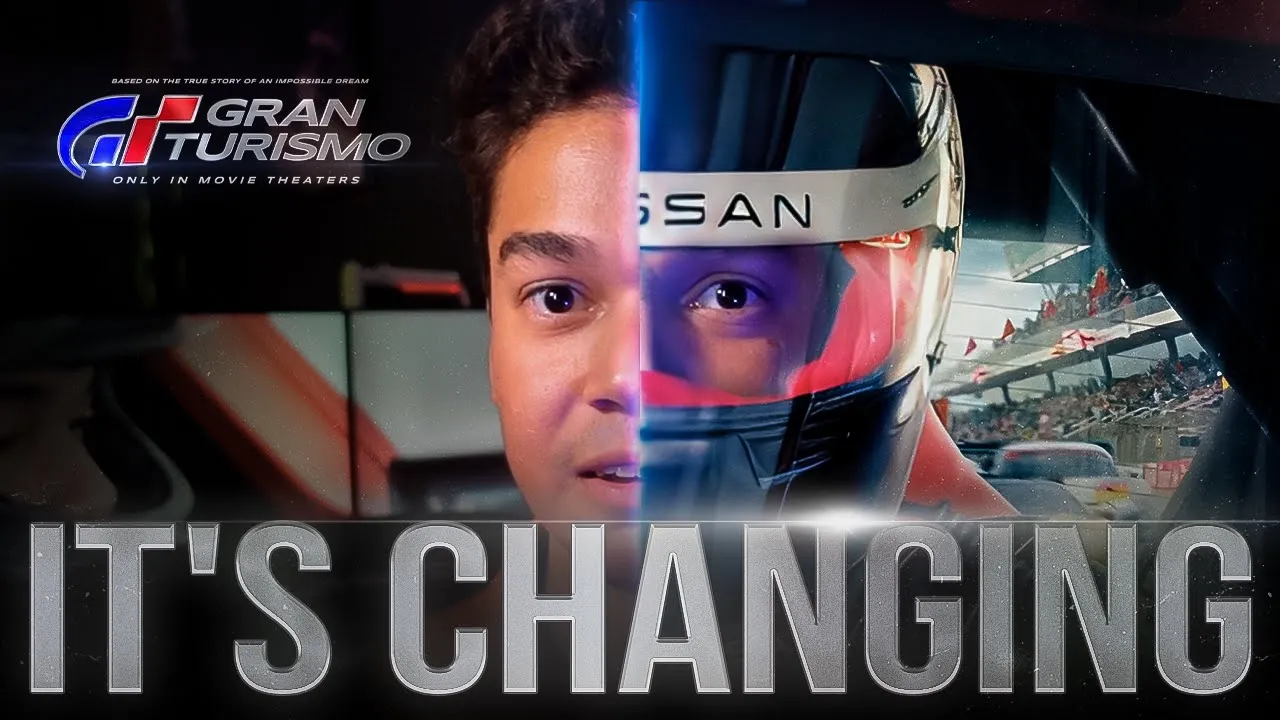
Gran Turismo Movie Review: A Pro Racing Coach's Take on Sim-to-Real Racing
Suellio Almeida
•
Friday, August 18, 2023
The Core Story Is Real — And It Matters
Let me start here: Jann Mardenborough's story is not Hollywood fiction.
He really did go from Gran Turismo player to GT Academy winner to professional racing driver. He competed in GP3, European F3, Super GT, and endurance racing at Le Mans. The trajectory is real.
And that matters.
Because for years, sim racing was treated like a video game hobby — something you did in your bedroom, not a legitimate training tool. Jann's journey, along with guys like Rudy van Buren and myself, proved that skills transfer. You can build real racecraft, real speed, real understanding of vehicle dynamics in a simulator.
The movie gets that foundational truth right. The rest? Let's talk about it.
What the Film Nails: The Emotional Weight of Racing
Here's where the Gran Turismo movie surprised me.
It doesn't just glamorize racing. It shows the consequences.
There's a crash scene in the film — and I won't spoil it — but it's based on a real accident Jann was involved in at the Nürburgring in 2015. A spectator died. The movie doesn't shy away from that weight. It shows Jann grappling with it, questioning whether he should continue racing.
That's the part of motorsports most people don't see. The risk is real. The danger is real. And when something goes wrong, it stays with you.
As racing drivers, we live with that. Every time you strap into a car — sim or real — you're managing speed, precision, and risk. The film captures that emotional reality better than most racing movies I've seen.
What It Gets Wrong: The Training Process
Now let's get into the stuff that made me cringe.
The movie compresses Jann's training into what feels like a few weeks. One montage, some time at Silverstone, and boom — he's in a race car competing at a professional level.
That's not how it works.
Jann spent months in GT Academy. He went through intensive physical training, mental conditioning, and on-track development. He didn't just hop from a gaming rig to a GT3 car overnight. He worked his way up through karting experience, then into GT cars, then into higher formulas.
The film also glosses over the actual difficulty of the transition.
Yes, sim racing builds foundational skills — racecraft, line choice, braking points, weight transfer understanding. But real-world racing has variables you can't replicate: G-forces, heat, vibration, physical endurance, the psychological pressure of knowing a mistake has real consequences.
When I made the jump from sim racing to real-world competition — Canadian Sim Racing Champion to US Radical Cup to IMSA TCR — I had years of preparation. I trained physically. I worked with coaches. I ran test days. I crashed. I learned.
The movie makes it look easier than it is.
The Simulator Scenes: Gran Turismo vs Reality
Let's talk about the elephant in the room.
The film revolves around Gran Turismo, which makes sense given Sony produced it. But here's the thing: Gran Turismo is a great racing game, but it's not the best training simulator.
If you want to transfer skills to real-world racing, you need a simulator with accurate physics, proper force feedback, and realistic tire modeling. That's where platforms like iRacing, Assetto Corsa Competizione, and rFactor 2 shine.
Gran Turismo has improved massively over the years — GT Sport and GT7 have much better physics than earlier versions — but it's still optimized for accessibility and fun, not surgical accuracy.
When I coach drivers, I push them toward sims that punish mistakes the way real cars do. If you can trail brake perfectly in iRacing, that skill translates to a real cockpit. If you're just playing GT casually with a controller, you're building awareness and racecraft, but not muscle memory.
The movie doesn't make that distinction. It treats Gran Turismo as the ultimate training tool, which oversells it.
The Real GT Academy Program
Here's what the film doesn't fully explain: GT Academy was brilliant because it was structured.
Nissan and Sony didn't just grab fast gamers and throw them in race cars. They built a filtering and development system:
1. Online competition — Thousands of players competed in Gran Turismo time trials.
2. Regional finals — Top players were brought to real-world tracks for assessment.
3. Race camp — The best were put through intensive training — fitness tests, simulator work, on-track driving, media training.
4. Elimination process — Only the fastest, most adaptable driver won a professional contract.
Jann won because he had raw speed AND the ability to learn. He wasn't just fast in the game — he absorbed coaching, adapted to real cars quickly, and had the mental toughness to handle pressure.
The film shows glimpses of this, but it doesn't emphasize how selective the process was. Thousands entered. One made it.
That's not a lottery. That's elite-level filtering.
The Role of Coaching: Orlando Bloom's Character
Orlando Bloom plays Jack Salter, a fictional version of Jann's real-world coaches and mentors.
The character is a composite — part old-school engineer, part skeptical racing veteran who doesn't believe a gamer can be a real driver.
What I appreciate about this portrayal: it shows that coaching matters.
You can have all the raw talent in the world, but without guidance, you'll plateau. You'll make the same mistakes on repeat. You won't know what you don't know.
When I founded Almeida Racing Academy, it was because I saw thousands of sim racers grinding alone — watching random YouTube tutorials, guessing at techniques, frustrated by their lack of progress. They had talent. They just didn't have a system.
Jann had mentors who gave him that system. The film gets that part right, even if it oversimplifies the process.
Does the Film Inspire or Mislead?
Here's my take.
The Gran Turismo movie will inspire people. It'll get casual gamers interested in sim racing. It'll make parents take their kids' racing dreams more seriously. It'll remind people that unconventional paths to motorsports exist.
That's good.
But it also risks creating unrealistic expectations.
You're not going to play Gran Turismo for a year, enter a competition, and become a professional racing driver. The odds are infinitesimal. The preparation required is massive. The investment — time, money, physical conditioning, mental toughness — is brutal.
Jann's story is real, but it's also an outlier.
What's more realistic? Using sim racing as a training tool to develop skills, improve consistency, learn tracks, and build racecraft — then using that foundation to compete in club-level motorsports, amateur leagues, or just become a better driver.
That's the path that's actually accessible.
The Sim-to-Real Journey: What It Actually Takes
I've coached over 36,000 students. Some are casual gamers. Some are competitive sim racers. Some are real-world drivers using sims for practice.
The ones who successfully transition to real motorsports share these traits:
1. They treat sim racing as training, not entertainment.
They run structured practice sessions. They review data. They work on specific techniques — trail braking, weight transfer, vision, consistency. They don't just hot lap for fun.
2. They invest in proper equipment.
A direct-drive wheelbase, load cell pedals, a solid rig — these aren't luxuries. They're essential for learning real car control. If you're serious about transferring skills, you need equipment that gives you accurate feedback.
3. They get coaching.
Every professional athlete has a coach. Racing is no different. You need someone who can watch your replays, analyze your data, and tell you exactly what's holding you back.
4. They put in the hours.
Jann didn't become fast overnight. Neither did I. Neither will you. This takes thousands of hours of deliberate practice.
5. They test in real cars when they can.
Rent a track day car. Do a racing school. Run a club race. You need to validate your sim skills in the real world and adjust.
The movie compresses all of this into a two-hour narrative. Real life doesn't work that way.
Final Verdict: Should You Watch It?
Yes.
Is it a perfect racing movie? No.
Does it oversimplify the sim-to-real transition? Absolutely.
But it's entertaining, it's emotionally honest about the risks of racing, and it puts sim racing in the mainstream spotlight.
If you're a sim racer, watch it for the inspiration. Then get back to work on your technique.
Because here's the truth: the skills Jann learned to become a pro driver are the same skills you can develop right now. Trail braking. Weight transfer. Consistency. Racecraft. Vision.
The difference isn't talent. It's structure. It's coaching. It's deliberate practice.
Jann had GT Academy. You have something better: a platform that lets you train anytime, with world-class coaching, for a fraction of what it costs to run a single track day.
What If You Trained Like a Pro Driver?
Here's the question the movie doesn't ask:
What would happen if you stopped treating sim racing like a game and started training like Jann did?
What if you had a structured program — step-by-step lessons on car control, weight transfer, advanced racecraft? What if you had access to coaches who've actually made the sim-to-real jump? What if you practiced with purpose instead of just grinding laps?
How much faster would you be in six months?
That's what we built Almeida Racing Academy for. Not to sell you a fantasy, but to give you the same training system that turns sim racers into real drivers.
Our Gold Membership gives you eight full courses, 80 lessons, coach-led workshops, and access to the ARA community — drivers who are actually improving, not just talking about it. Right now, you can get in for $25/month with code WINTER.
No lottery. No luck. Just the method that works.
Start training like a pro driver — join Gold Membership here
Sim Racing Academy Membership
Everything you need to stop guessing and start getting faster.
Starting at
$25
/mo
Car Handling Online Course
4 levels, full curriculum. Aimed to get you to top 1% in driving pace.
Racecraft Online Course
Overtaking, Defending, Race Strategy
Live coaching + on-track practice
Bi-weekly pro-coach workshops (recorded — never miss one) plus on-track Pit Parties to practice racecraft with a coach.
Plus These Bonuses
13,000+ Member Community
League Racing
Advanced MX-5 Mini Course
Racing Technique Development Guide
The Motor Racing Book (260 pages)
Think & Behave Like a Pro Driver — Mini eBook
Gran Turismo Movie Review: A Pro Racing Coach's Take on Sim-to-Real Racing
Suellio Almeida
•
Friday, August 18, 2023
The Core Story Is Real — And It Matters
Let me start here: Jann Mardenborough's story is not Hollywood fiction.
He really did go from Gran Turismo player to GT Academy winner to professional racing driver. He competed in GP3, European F3, Super GT, and endurance racing at Le Mans. The trajectory is real.
And that matters.
Because for years, sim racing was treated like a video game hobby — something you did in your bedroom, not a legitimate training tool. Jann's journey, along with guys like Rudy van Buren and myself, proved that skills transfer. You can build real racecraft, real speed, real understanding of vehicle dynamics in a simulator.
The movie gets that foundational truth right. The rest? Let's talk about it.
What the Film Nails: The Emotional Weight of Racing
Here's where the Gran Turismo movie surprised me.
It doesn't just glamorize racing. It shows the consequences.
There's a crash scene in the film — and I won't spoil it — but it's based on a real accident Jann was involved in at the Nürburgring in 2015. A spectator died. The movie doesn't shy away from that weight. It shows Jann grappling with it, questioning whether he should continue racing.
That's the part of motorsports most people don't see. The risk is real. The danger is real. And when something goes wrong, it stays with you.
As racing drivers, we live with that. Every time you strap into a car — sim or real — you're managing speed, precision, and risk. The film captures that emotional reality better than most racing movies I've seen.
What It Gets Wrong: The Training Process
Now let's get into the stuff that made me cringe.
The movie compresses Jann's training into what feels like a few weeks. One montage, some time at Silverstone, and boom — he's in a race car competing at a professional level.
That's not how it works.
Jann spent months in GT Academy. He went through intensive physical training, mental conditioning, and on-track development. He didn't just hop from a gaming rig to a GT3 car overnight. He worked his way up through karting experience, then into GT cars, then into higher formulas.
The film also glosses over the actual difficulty of the transition.
Yes, sim racing builds foundational skills — racecraft, line choice, braking points, weight transfer understanding. But real-world racing has variables you can't replicate: G-forces, heat, vibration, physical endurance, the psychological pressure of knowing a mistake has real consequences.
When I made the jump from sim racing to real-world competition — Canadian Sim Racing Champion to US Radical Cup to IMSA TCR — I had years of preparation. I trained physically. I worked with coaches. I ran test days. I crashed. I learned.
The movie makes it look easier than it is.
The Simulator Scenes: Gran Turismo vs Reality
Let's talk about the elephant in the room.
The film revolves around Gran Turismo, which makes sense given Sony produced it. But here's the thing: Gran Turismo is a great racing game, but it's not the best training simulator.
If you want to transfer skills to real-world racing, you need a simulator with accurate physics, proper force feedback, and realistic tire modeling. That's where platforms like iRacing, Assetto Corsa Competizione, and rFactor 2 shine.
Gran Turismo has improved massively over the years — GT Sport and GT7 have much better physics than earlier versions — but it's still optimized for accessibility and fun, not surgical accuracy.
When I coach drivers, I push them toward sims that punish mistakes the way real cars do. If you can trail brake perfectly in iRacing, that skill translates to a real cockpit. If you're just playing GT casually with a controller, you're building awareness and racecraft, but not muscle memory.
The movie doesn't make that distinction. It treats Gran Turismo as the ultimate training tool, which oversells it.
The Real GT Academy Program
Here's what the film doesn't fully explain: GT Academy was brilliant because it was structured.
Nissan and Sony didn't just grab fast gamers and throw them in race cars. They built a filtering and development system:
1. Online competition — Thousands of players competed in Gran Turismo time trials.
2. Regional finals — Top players were brought to real-world tracks for assessment.
3. Race camp — The best were put through intensive training — fitness tests, simulator work, on-track driving, media training.
4. Elimination process — Only the fastest, most adaptable driver won a professional contract.
Jann won because he had raw speed AND the ability to learn. He wasn't just fast in the game — he absorbed coaching, adapted to real cars quickly, and had the mental toughness to handle pressure.
The film shows glimpses of this, but it doesn't emphasize how selective the process was. Thousands entered. One made it.
That's not a lottery. That's elite-level filtering.
The Role of Coaching: Orlando Bloom's Character
Orlando Bloom plays Jack Salter, a fictional version of Jann's real-world coaches and mentors.
The character is a composite — part old-school engineer, part skeptical racing veteran who doesn't believe a gamer can be a real driver.
What I appreciate about this portrayal: it shows that coaching matters.
You can have all the raw talent in the world, but without guidance, you'll plateau. You'll make the same mistakes on repeat. You won't know what you don't know.
When I founded Almeida Racing Academy, it was because I saw thousands of sim racers grinding alone — watching random YouTube tutorials, guessing at techniques, frustrated by their lack of progress. They had talent. They just didn't have a system.
Jann had mentors who gave him that system. The film gets that part right, even if it oversimplifies the process.
Does the Film Inspire or Mislead?
Here's my take.
The Gran Turismo movie will inspire people. It'll get casual gamers interested in sim racing. It'll make parents take their kids' racing dreams more seriously. It'll remind people that unconventional paths to motorsports exist.
That's good.
But it also risks creating unrealistic expectations.
You're not going to play Gran Turismo for a year, enter a competition, and become a professional racing driver. The odds are infinitesimal. The preparation required is massive. The investment — time, money, physical conditioning, mental toughness — is brutal.
Jann's story is real, but it's also an outlier.
What's more realistic? Using sim racing as a training tool to develop skills, improve consistency, learn tracks, and build racecraft — then using that foundation to compete in club-level motorsports, amateur leagues, or just become a better driver.
That's the path that's actually accessible.
The Sim-to-Real Journey: What It Actually Takes
I've coached over 36,000 students. Some are casual gamers. Some are competitive sim racers. Some are real-world drivers using sims for practice.
The ones who successfully transition to real motorsports share these traits:
1. They treat sim racing as training, not entertainment.
They run structured practice sessions. They review data. They work on specific techniques — trail braking, weight transfer, vision, consistency. They don't just hot lap for fun.
2. They invest in proper equipment.
A direct-drive wheelbase, load cell pedals, a solid rig — these aren't luxuries. They're essential for learning real car control. If you're serious about transferring skills, you need equipment that gives you accurate feedback.
3. They get coaching.
Every professional athlete has a coach. Racing is no different. You need someone who can watch your replays, analyze your data, and tell you exactly what's holding you back.
4. They put in the hours.
Jann didn't become fast overnight. Neither did I. Neither will you. This takes thousands of hours of deliberate practice.
5. They test in real cars when they can.
Rent a track day car. Do a racing school. Run a club race. You need to validate your sim skills in the real world and adjust.
The movie compresses all of this into a two-hour narrative. Real life doesn't work that way.
Final Verdict: Should You Watch It?
Yes.
Is it a perfect racing movie? No.
Does it oversimplify the sim-to-real transition? Absolutely.
But it's entertaining, it's emotionally honest about the risks of racing, and it puts sim racing in the mainstream spotlight.
If you're a sim racer, watch it for the inspiration. Then get back to work on your technique.
Because here's the truth: the skills Jann learned to become a pro driver are the same skills you can develop right now. Trail braking. Weight transfer. Consistency. Racecraft. Vision.
The difference isn't talent. It's structure. It's coaching. It's deliberate practice.
Jann had GT Academy. You have something better: a platform that lets you train anytime, with world-class coaching, for a fraction of what it costs to run a single track day.
What If You Trained Like a Pro Driver?
Here's the question the movie doesn't ask:
What would happen if you stopped treating sim racing like a game and started training like Jann did?
What if you had a structured program — step-by-step lessons on car control, weight transfer, advanced racecraft? What if you had access to coaches who've actually made the sim-to-real jump? What if you practiced with purpose instead of just grinding laps?
How much faster would you be in six months?
That's what we built Almeida Racing Academy for. Not to sell you a fantasy, but to give you the same training system that turns sim racers into real drivers.
Our Gold Membership gives you eight full courses, 80 lessons, coach-led workshops, and access to the ARA community — drivers who are actually improving, not just talking about it. Right now, you can get in for $25/month with code WINTER.
No lottery. No luck. Just the method that works.
Start training like a pro driver — join Gold Membership here
Sim Racing Academy Membership
Everything you need to stop guessing and start getting faster.
Starting at
$25
/mo
Car Handling Online Course
4 levels, full curriculum. Aimed to get you to top 1% in driving pace.
Racecraft Online Course
Overtaking, Defending, Race Strategy
Live coaching + on-track practice
Bi-weekly pro-coach workshops (recorded — never miss one) plus on-track Pit Parties to practice racecraft with a coach.
Plus These Bonuses
13,000+ Member Community
League Racing
Advanced MX-5 Mini Course
Racing Technique Development Guide
The Motor Racing Book (260 pages)
Think & Behave Like a Pro Driver — Mini eBook
Gran Turismo Movie Review: A Pro Racing Coach's Take on Sim-to-Real Racing
Suellio Almeida
•
Friday, August 18, 2023
The Core Story Is Real — And It Matters
Let me start here: Jann Mardenborough's story is not Hollywood fiction.
He really did go from Gran Turismo player to GT Academy winner to professional racing driver. He competed in GP3, European F3, Super GT, and endurance racing at Le Mans. The trajectory is real.
And that matters.
Because for years, sim racing was treated like a video game hobby — something you did in your bedroom, not a legitimate training tool. Jann's journey, along with guys like Rudy van Buren and myself, proved that skills transfer. You can build real racecraft, real speed, real understanding of vehicle dynamics in a simulator.
The movie gets that foundational truth right. The rest? Let's talk about it.
What the Film Nails: The Emotional Weight of Racing
Here's where the Gran Turismo movie surprised me.
It doesn't just glamorize racing. It shows the consequences.
There's a crash scene in the film — and I won't spoil it — but it's based on a real accident Jann was involved in at the Nürburgring in 2015. A spectator died. The movie doesn't shy away from that weight. It shows Jann grappling with it, questioning whether he should continue racing.
That's the part of motorsports most people don't see. The risk is real. The danger is real. And when something goes wrong, it stays with you.
As racing drivers, we live with that. Every time you strap into a car — sim or real — you're managing speed, precision, and risk. The film captures that emotional reality better than most racing movies I've seen.
What It Gets Wrong: The Training Process
Now let's get into the stuff that made me cringe.
The movie compresses Jann's training into what feels like a few weeks. One montage, some time at Silverstone, and boom — he's in a race car competing at a professional level.
That's not how it works.
Jann spent months in GT Academy. He went through intensive physical training, mental conditioning, and on-track development. He didn't just hop from a gaming rig to a GT3 car overnight. He worked his way up through karting experience, then into GT cars, then into higher formulas.
The film also glosses over the actual difficulty of the transition.
Yes, sim racing builds foundational skills — racecraft, line choice, braking points, weight transfer understanding. But real-world racing has variables you can't replicate: G-forces, heat, vibration, physical endurance, the psychological pressure of knowing a mistake has real consequences.
When I made the jump from sim racing to real-world competition — Canadian Sim Racing Champion to US Radical Cup to IMSA TCR — I had years of preparation. I trained physically. I worked with coaches. I ran test days. I crashed. I learned.
The movie makes it look easier than it is.
The Simulator Scenes: Gran Turismo vs Reality
Let's talk about the elephant in the room.
The film revolves around Gran Turismo, which makes sense given Sony produced it. But here's the thing: Gran Turismo is a great racing game, but it's not the best training simulator.
If you want to transfer skills to real-world racing, you need a simulator with accurate physics, proper force feedback, and realistic tire modeling. That's where platforms like iRacing, Assetto Corsa Competizione, and rFactor 2 shine.
Gran Turismo has improved massively over the years — GT Sport and GT7 have much better physics than earlier versions — but it's still optimized for accessibility and fun, not surgical accuracy.
When I coach drivers, I push them toward sims that punish mistakes the way real cars do. If you can trail brake perfectly in iRacing, that skill translates to a real cockpit. If you're just playing GT casually with a controller, you're building awareness and racecraft, but not muscle memory.
The movie doesn't make that distinction. It treats Gran Turismo as the ultimate training tool, which oversells it.
The Real GT Academy Program
Here's what the film doesn't fully explain: GT Academy was brilliant because it was structured.
Nissan and Sony didn't just grab fast gamers and throw them in race cars. They built a filtering and development system:
1. Online competition — Thousands of players competed in Gran Turismo time trials.
2. Regional finals — Top players were brought to real-world tracks for assessment.
3. Race camp — The best were put through intensive training — fitness tests, simulator work, on-track driving, media training.
4. Elimination process — Only the fastest, most adaptable driver won a professional contract.
Jann won because he had raw speed AND the ability to learn. He wasn't just fast in the game — he absorbed coaching, adapted to real cars quickly, and had the mental toughness to handle pressure.
The film shows glimpses of this, but it doesn't emphasize how selective the process was. Thousands entered. One made it.
That's not a lottery. That's elite-level filtering.
The Role of Coaching: Orlando Bloom's Character
Orlando Bloom plays Jack Salter, a fictional version of Jann's real-world coaches and mentors.
The character is a composite — part old-school engineer, part skeptical racing veteran who doesn't believe a gamer can be a real driver.
What I appreciate about this portrayal: it shows that coaching matters.
You can have all the raw talent in the world, but without guidance, you'll plateau. You'll make the same mistakes on repeat. You won't know what you don't know.
When I founded Almeida Racing Academy, it was because I saw thousands of sim racers grinding alone — watching random YouTube tutorials, guessing at techniques, frustrated by their lack of progress. They had talent. They just didn't have a system.
Jann had mentors who gave him that system. The film gets that part right, even if it oversimplifies the process.
Does the Film Inspire or Mislead?
Here's my take.
The Gran Turismo movie will inspire people. It'll get casual gamers interested in sim racing. It'll make parents take their kids' racing dreams more seriously. It'll remind people that unconventional paths to motorsports exist.
That's good.
But it also risks creating unrealistic expectations.
You're not going to play Gran Turismo for a year, enter a competition, and become a professional racing driver. The odds are infinitesimal. The preparation required is massive. The investment — time, money, physical conditioning, mental toughness — is brutal.
Jann's story is real, but it's also an outlier.
What's more realistic? Using sim racing as a training tool to develop skills, improve consistency, learn tracks, and build racecraft — then using that foundation to compete in club-level motorsports, amateur leagues, or just become a better driver.
That's the path that's actually accessible.
The Sim-to-Real Journey: What It Actually Takes
I've coached over 36,000 students. Some are casual gamers. Some are competitive sim racers. Some are real-world drivers using sims for practice.
The ones who successfully transition to real motorsports share these traits:
1. They treat sim racing as training, not entertainment.
They run structured practice sessions. They review data. They work on specific techniques — trail braking, weight transfer, vision, consistency. They don't just hot lap for fun.
2. They invest in proper equipment.
A direct-drive wheelbase, load cell pedals, a solid rig — these aren't luxuries. They're essential for learning real car control. If you're serious about transferring skills, you need equipment that gives you accurate feedback.
3. They get coaching.
Every professional athlete has a coach. Racing is no different. You need someone who can watch your replays, analyze your data, and tell you exactly what's holding you back.
4. They put in the hours.
Jann didn't become fast overnight. Neither did I. Neither will you. This takes thousands of hours of deliberate practice.
5. They test in real cars when they can.
Rent a track day car. Do a racing school. Run a club race. You need to validate your sim skills in the real world and adjust.
The movie compresses all of this into a two-hour narrative. Real life doesn't work that way.
Final Verdict: Should You Watch It?
Yes.
Is it a perfect racing movie? No.
Does it oversimplify the sim-to-real transition? Absolutely.
But it's entertaining, it's emotionally honest about the risks of racing, and it puts sim racing in the mainstream spotlight.
If you're a sim racer, watch it for the inspiration. Then get back to work on your technique.
Because here's the truth: the skills Jann learned to become a pro driver are the same skills you can develop right now. Trail braking. Weight transfer. Consistency. Racecraft. Vision.
The difference isn't talent. It's structure. It's coaching. It's deliberate practice.
Jann had GT Academy. You have something better: a platform that lets you train anytime, with world-class coaching, for a fraction of what it costs to run a single track day.
What If You Trained Like a Pro Driver?
Here's the question the movie doesn't ask:
What would happen if you stopped treating sim racing like a game and started training like Jann did?
What if you had a structured program — step-by-step lessons on car control, weight transfer, advanced racecraft? What if you had access to coaches who've actually made the sim-to-real jump? What if you practiced with purpose instead of just grinding laps?
How much faster would you be in six months?
That's what we built Almeida Racing Academy for. Not to sell you a fantasy, but to give you the same training system that turns sim racers into real drivers.
Our Gold Membership gives you eight full courses, 80 lessons, coach-led workshops, and access to the ARA community — drivers who are actually improving, not just talking about it. Right now, you can get in for $25/month with code WINTER.
No lottery. No luck. Just the method that works.
Start training like a pro driver — join Gold Membership here
Sim Racing Academy Membership
Everything you need to stop guessing and start getting faster.
Starting at
$25
/mo
Car Handling Online Course
4 levels, full curriculum. Aimed to get you to top 1% in driving pace.
Racecraft Online Course
Overtaking, Defending, Race Strategy
Live coaching + on-track practice
Bi-weekly pro-coach workshops (recorded — never miss one) plus on-track Pit Parties to practice racecraft with a coach.
Plus These Bonuses
13,000+ Member Community
League Racing
Advanced MX-5 Mini Course
Racing Technique Development Guide
The Motor Racing Book (260 pages)
Think & Behave Like a Pro Driver — Mini eBook