
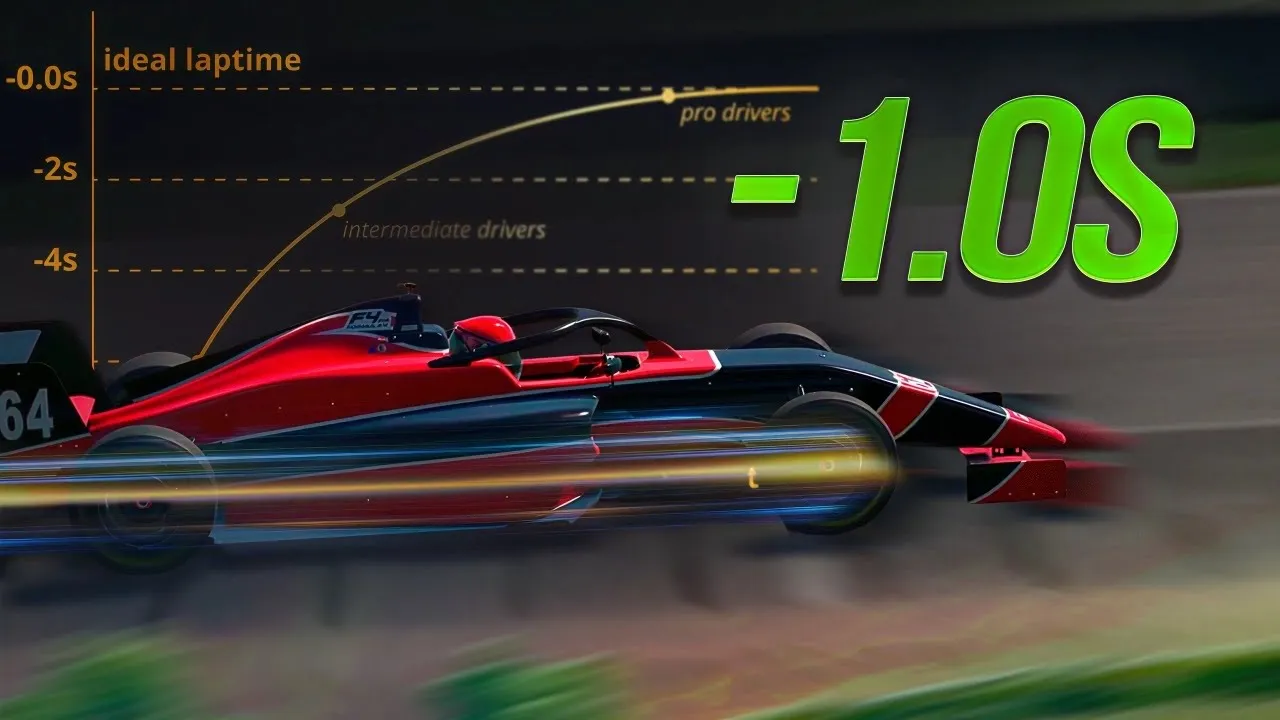
How to Find 1 Second Per Lap in High Downforce Cars — The Rotation Mistake Costing You Time
Suellio Almeida
•
Friday, June 6, 2025
You're Underestimating What High Downforce Actually Means
Here's the reality: most drivers treat high downforce cars like slightly grippier versions of low downforce machines. You brake a little later, carry a little more speed, and call it a day.
Wrong.
High downforce fundamentally changes how the car rotates. The aerodynamic load pressing down on your chassis doesn't just give you more grip — it compresses the suspension, alters weight transfer dynamics, and demands a completely different approach to the Maximum Rotation Point.
If you're driving a GT3, LMP2, or anything with serious aero, and you're not exploiting rotation at higher speeds, you're leaving time on the table. A lot of it.
The Problem: You're Trying to Rotate Too Late
Let's talk about what actually happened with the driver in question. He was losing a full second per lap in a high downforce prototype. His exits were clean. His braking zones were decent. But his mid-corner was a disaster.
Why?
He was waiting until the car slowed down to initiate rotation. Classic mistake.
In a low downforce car, you need to shed speed before you can aggressively rotate the platform. The mechanical grip can't support high-speed direction changes without the car sliding wide or snapping loose.
But in a high downforce car? The aero load is doing half the work for you at higher speeds. You can start rotating the car earlier in the corner, while you still have significant downforce compressing the chassis.
If you wait until you're at mechanical grip speeds, you've already lost the advantage. The car settles, the aero bleeds off, and now you're fighting understeer trying to point the nose where it needs to go.
The Fix: Rotate While the Downforce Is Still Active
Here's the shift: you need to hit your Maximum Rotation Point earlier and more aggressively than you think.
Let's break it down.
In a high downforce car, your braking phase compresses the front suspension through aero load and weight transfer. The car is planted, stable, and ready to change direction. This is your window.
As you transition from braking to turn-in, the downforce is still high because your speed is still high. The car's platform is compressed, the tires are loaded, and the chassis is ready to pivot.
This is where you rotate. Not when the car slows down. Not when you feel "comfortable." Right here, in the meat of the corner entry, when the physics are working for you.
The driver I coached was missing this entirely. He was entering corners, bleeding speed, and then trying to steer. By that point, the aero was gone, the car was understeering, and he was scrubbing speed trying to get the nose pointed.
We changed his approach: initiate rotation earlier, trust the downforce, and let the car pivot while it still has aero load. Instantly, he found cleaner lines, better exits, and that missing second per lap.
Why This Works: The Physics of Platform Rotation
Let's talk about what's actually happening under the car.
When you're carrying speed in a high downforce machine, the aero is pressing the chassis into the ground. The suspension is compressed, the center of gravity is effectively lowered, and the tire contact patches are maximized.
This is peak platform stability. The car is ready to rotate.
When you slow down too much before turning, you lose that aero load. The suspension extends, the platform rises, and the car becomes less responsive. Now you're asking the tires to do more work with less support from the chassis.
Result? Understeer. Scrubbing. Slow.
By rotating earlier — while the downforce is still active — you're using the car's mechanical and aerodynamic grip together. The front tires bite, the rear stays planted, and the car rotates cleanly around its axis.
This is how the fast guys do it. They're not magically smoother or braver. They're just using the tool the car gives them: high-speed rotation supported by aerodynamic load.
How to Apply This to Your Driving
Okay, so how do you actually implement this?
First, identify your corners. High-speed corners with heavy braking zones are where this matters most. Think Turn 1 at Sebring, the chicane at Road Atlanta, or any fast sweeper in an LMP or GT3.
Second, adjust your trail braking. You need to carry brake pressure deeper into the corner, but not for the reason you think. You're not braking later — you're braking longer to keep the platform compressed while you rotate.
Third, trust the grip. This is the mental shift. You need to turn the wheel more aggressively while you still have speed. It feels wrong at first. Your brain is screaming that you're going to understeer off track. But the downforce is there. The grip is there. Turn the car.
Fourth, monitor your minimum speed. If your minimum speed is dropping after this change, you've gone too far. You should be carrying more speed through the apex, not less. If you're slowing down excessively, you're over-rotating or turning too early.
Fifth, check your exits. The goal is a cleaner, straighter exit. If you're still fighting the car on exit, your rotation point is still off. Go back and analyze: are you rotating too late? Too early? Not enough steering input?
This is iterative. You're not going to nail it in one lap. But once you feel it — once the car pivots cleanly at higher speed and the corner opens up in front of you — you'll know.
The Data Doesn't Lie: 1 Second Per Lap Is Real
This isn't theory. This is measurable.
The driver I worked with dropped a full second per lap after adjusting his rotation timing. His minimum speeds went up. His exits improved. His tire wear decreased because he stopped scrubbing the fronts fighting understeer.
One second per lap in a high downforce car is massive. Over a 20-lap race, that's 20 seconds. That's the difference between a podium and a mid-pack finish.
And here's the thing: this wasn't about talent. It wasn't about reflexes or bravery. It was about understanding the tool and using it correctly.
High downforce cars reward drivers who exploit rotation at speed. If you're not doing that, you're not using the car.
What's Stopping You From Making This Change?
Here's the real question: how long are you going to keep driving high downforce cars like they're momentum machines?
You've invested time learning the tracks. You've dialed in your braking points. You've optimized your exits. But if you're still losing time in the mid-corner, it's because you're not rotating early enough.
The physics are clear. The method works. The results are proven.
So what's holding you back? Is it fear of losing the front? Is it habit? Is it because no one ever explained this to you before?
Because here's the reality: every lap you run without fixing this, you're reinforcing the wrong pattern. Your muscle memory is locking in a technique that's leaving you slower than you should be.
You can keep guessing, keep experimenting, keep hoping you'll stumble onto the answer. Or you can train with a method that's already proven to work for thousands of drivers.
Ready to Stop Leaving Time on the Table?
How many more races are you going to run before you fix the fundamentals?
You know the gap is there. You see it in the delta. You feel it in the mid-corner. But knowing the problem isn't the same as fixing it.
This is exactly why we built Almeida Racing Academy. Not more YouTube tips. Not generic tutorials. A structured, proven system that takes you from recognizing the problem to executing the solution — in high downforce cars, low downforce cars, any car.
Our Gold Membership gives you 8 full courses, 80 lessons, and direct access to the same techniques that took this driver from losing a second per lap to dominating his splits. Right now, it's $25/month with code WINTER.
No guessing. No trial and error. Just the method, explained, demonstrated, and reinforced until it's automatic.
Sim Racing Academy Membership
Everything you need to stop guessing and start getting faster.
Starting at
$25
/mo
Car Handling Online Course
4 levels, full curriculum. Aimed to get you to top 1% in driving pace.
Racecraft Online Course
Overtaking, Defending, Race Strategy
Live coaching + on-track practice
Bi-weekly pro-coach workshops (recorded — never miss one) plus on-track Pit Parties to practice racecraft with a coach.
Plus These Bonuses
13,000+ Member Community
League Racing
Advanced MX-5 Mini Course
Racing Technique Development Guide
The Motor Racing Book (260 pages)
Think & Behave Like a Pro Driver — Mini eBook
How to Find 1 Second Per Lap in High Downforce Cars — The Rotation Mistake Costing You Time
Suellio Almeida
•
Friday, June 6, 2025
You're Underestimating What High Downforce Actually Means
Here's the reality: most drivers treat high downforce cars like slightly grippier versions of low downforce machines. You brake a little later, carry a little more speed, and call it a day.
Wrong.
High downforce fundamentally changes how the car rotates. The aerodynamic load pressing down on your chassis doesn't just give you more grip — it compresses the suspension, alters weight transfer dynamics, and demands a completely different approach to the Maximum Rotation Point.
If you're driving a GT3, LMP2, or anything with serious aero, and you're not exploiting rotation at higher speeds, you're leaving time on the table. A lot of it.
The Problem: You're Trying to Rotate Too Late
Let's talk about what actually happened with the driver in question. He was losing a full second per lap in a high downforce prototype. His exits were clean. His braking zones were decent. But his mid-corner was a disaster.
Why?
He was waiting until the car slowed down to initiate rotation. Classic mistake.
In a low downforce car, you need to shed speed before you can aggressively rotate the platform. The mechanical grip can't support high-speed direction changes without the car sliding wide or snapping loose.
But in a high downforce car? The aero load is doing half the work for you at higher speeds. You can start rotating the car earlier in the corner, while you still have significant downforce compressing the chassis.
If you wait until you're at mechanical grip speeds, you've already lost the advantage. The car settles, the aero bleeds off, and now you're fighting understeer trying to point the nose where it needs to go.
The Fix: Rotate While the Downforce Is Still Active
Here's the shift: you need to hit your Maximum Rotation Point earlier and more aggressively than you think.
Let's break it down.
In a high downforce car, your braking phase compresses the front suspension through aero load and weight transfer. The car is planted, stable, and ready to change direction. This is your window.
As you transition from braking to turn-in, the downforce is still high because your speed is still high. The car's platform is compressed, the tires are loaded, and the chassis is ready to pivot.
This is where you rotate. Not when the car slows down. Not when you feel "comfortable." Right here, in the meat of the corner entry, when the physics are working for you.
The driver I coached was missing this entirely. He was entering corners, bleeding speed, and then trying to steer. By that point, the aero was gone, the car was understeering, and he was scrubbing speed trying to get the nose pointed.
We changed his approach: initiate rotation earlier, trust the downforce, and let the car pivot while it still has aero load. Instantly, he found cleaner lines, better exits, and that missing second per lap.
Why This Works: The Physics of Platform Rotation
Let's talk about what's actually happening under the car.
When you're carrying speed in a high downforce machine, the aero is pressing the chassis into the ground. The suspension is compressed, the center of gravity is effectively lowered, and the tire contact patches are maximized.
This is peak platform stability. The car is ready to rotate.
When you slow down too much before turning, you lose that aero load. The suspension extends, the platform rises, and the car becomes less responsive. Now you're asking the tires to do more work with less support from the chassis.
Result? Understeer. Scrubbing. Slow.
By rotating earlier — while the downforce is still active — you're using the car's mechanical and aerodynamic grip together. The front tires bite, the rear stays planted, and the car rotates cleanly around its axis.
This is how the fast guys do it. They're not magically smoother or braver. They're just using the tool the car gives them: high-speed rotation supported by aerodynamic load.
How to Apply This to Your Driving
Okay, so how do you actually implement this?
First, identify your corners. High-speed corners with heavy braking zones are where this matters most. Think Turn 1 at Sebring, the chicane at Road Atlanta, or any fast sweeper in an LMP or GT3.
Second, adjust your trail braking. You need to carry brake pressure deeper into the corner, but not for the reason you think. You're not braking later — you're braking longer to keep the platform compressed while you rotate.
Third, trust the grip. This is the mental shift. You need to turn the wheel more aggressively while you still have speed. It feels wrong at first. Your brain is screaming that you're going to understeer off track. But the downforce is there. The grip is there. Turn the car.
Fourth, monitor your minimum speed. If your minimum speed is dropping after this change, you've gone too far. You should be carrying more speed through the apex, not less. If you're slowing down excessively, you're over-rotating or turning too early.
Fifth, check your exits. The goal is a cleaner, straighter exit. If you're still fighting the car on exit, your rotation point is still off. Go back and analyze: are you rotating too late? Too early? Not enough steering input?
This is iterative. You're not going to nail it in one lap. But once you feel it — once the car pivots cleanly at higher speed and the corner opens up in front of you — you'll know.
The Data Doesn't Lie: 1 Second Per Lap Is Real
This isn't theory. This is measurable.
The driver I worked with dropped a full second per lap after adjusting his rotation timing. His minimum speeds went up. His exits improved. His tire wear decreased because he stopped scrubbing the fronts fighting understeer.
One second per lap in a high downforce car is massive. Over a 20-lap race, that's 20 seconds. That's the difference between a podium and a mid-pack finish.
And here's the thing: this wasn't about talent. It wasn't about reflexes or bravery. It was about understanding the tool and using it correctly.
High downforce cars reward drivers who exploit rotation at speed. If you're not doing that, you're not using the car.
What's Stopping You From Making This Change?
Here's the real question: how long are you going to keep driving high downforce cars like they're momentum machines?
You've invested time learning the tracks. You've dialed in your braking points. You've optimized your exits. But if you're still losing time in the mid-corner, it's because you're not rotating early enough.
The physics are clear. The method works. The results are proven.
So what's holding you back? Is it fear of losing the front? Is it habit? Is it because no one ever explained this to you before?
Because here's the reality: every lap you run without fixing this, you're reinforcing the wrong pattern. Your muscle memory is locking in a technique that's leaving you slower than you should be.
You can keep guessing, keep experimenting, keep hoping you'll stumble onto the answer. Or you can train with a method that's already proven to work for thousands of drivers.
Ready to Stop Leaving Time on the Table?
How many more races are you going to run before you fix the fundamentals?
You know the gap is there. You see it in the delta. You feel it in the mid-corner. But knowing the problem isn't the same as fixing it.
This is exactly why we built Almeida Racing Academy. Not more YouTube tips. Not generic tutorials. A structured, proven system that takes you from recognizing the problem to executing the solution — in high downforce cars, low downforce cars, any car.
Our Gold Membership gives you 8 full courses, 80 lessons, and direct access to the same techniques that took this driver from losing a second per lap to dominating his splits. Right now, it's $25/month with code WINTER.
No guessing. No trial and error. Just the method, explained, demonstrated, and reinforced until it's automatic.
Sim Racing Academy Membership
Everything you need to stop guessing and start getting faster.
Starting at
$25
/mo
Car Handling Online Course
4 levels, full curriculum. Aimed to get you to top 1% in driving pace.
Racecraft Online Course
Overtaking, Defending, Race Strategy
Live coaching + on-track practice
Bi-weekly pro-coach workshops (recorded — never miss one) plus on-track Pit Parties to practice racecraft with a coach.
Plus These Bonuses
13,000+ Member Community
League Racing
Advanced MX-5 Mini Course
Racing Technique Development Guide
The Motor Racing Book (260 pages)
Think & Behave Like a Pro Driver — Mini eBook
How to Find 1 Second Per Lap in High Downforce Cars — The Rotation Mistake Costing You Time
Suellio Almeida
•
Friday, June 6, 2025
You're Underestimating What High Downforce Actually Means
Here's the reality: most drivers treat high downforce cars like slightly grippier versions of low downforce machines. You brake a little later, carry a little more speed, and call it a day.
Wrong.
High downforce fundamentally changes how the car rotates. The aerodynamic load pressing down on your chassis doesn't just give you more grip — it compresses the suspension, alters weight transfer dynamics, and demands a completely different approach to the Maximum Rotation Point.
If you're driving a GT3, LMP2, or anything with serious aero, and you're not exploiting rotation at higher speeds, you're leaving time on the table. A lot of it.
The Problem: You're Trying to Rotate Too Late
Let's talk about what actually happened with the driver in question. He was losing a full second per lap in a high downforce prototype. His exits were clean. His braking zones were decent. But his mid-corner was a disaster.
Why?
He was waiting until the car slowed down to initiate rotation. Classic mistake.
In a low downforce car, you need to shed speed before you can aggressively rotate the platform. The mechanical grip can't support high-speed direction changes without the car sliding wide or snapping loose.
But in a high downforce car? The aero load is doing half the work for you at higher speeds. You can start rotating the car earlier in the corner, while you still have significant downforce compressing the chassis.
If you wait until you're at mechanical grip speeds, you've already lost the advantage. The car settles, the aero bleeds off, and now you're fighting understeer trying to point the nose where it needs to go.
The Fix: Rotate While the Downforce Is Still Active
Here's the shift: you need to hit your Maximum Rotation Point earlier and more aggressively than you think.
Let's break it down.
In a high downforce car, your braking phase compresses the front suspension through aero load and weight transfer. The car is planted, stable, and ready to change direction. This is your window.
As you transition from braking to turn-in, the downforce is still high because your speed is still high. The car's platform is compressed, the tires are loaded, and the chassis is ready to pivot.
This is where you rotate. Not when the car slows down. Not when you feel "comfortable." Right here, in the meat of the corner entry, when the physics are working for you.
The driver I coached was missing this entirely. He was entering corners, bleeding speed, and then trying to steer. By that point, the aero was gone, the car was understeering, and he was scrubbing speed trying to get the nose pointed.
We changed his approach: initiate rotation earlier, trust the downforce, and let the car pivot while it still has aero load. Instantly, he found cleaner lines, better exits, and that missing second per lap.
Why This Works: The Physics of Platform Rotation
Let's talk about what's actually happening under the car.
When you're carrying speed in a high downforce machine, the aero is pressing the chassis into the ground. The suspension is compressed, the center of gravity is effectively lowered, and the tire contact patches are maximized.
This is peak platform stability. The car is ready to rotate.
When you slow down too much before turning, you lose that aero load. The suspension extends, the platform rises, and the car becomes less responsive. Now you're asking the tires to do more work with less support from the chassis.
Result? Understeer. Scrubbing. Slow.
By rotating earlier — while the downforce is still active — you're using the car's mechanical and aerodynamic grip together. The front tires bite, the rear stays planted, and the car rotates cleanly around its axis.
This is how the fast guys do it. They're not magically smoother or braver. They're just using the tool the car gives them: high-speed rotation supported by aerodynamic load.
How to Apply This to Your Driving
Okay, so how do you actually implement this?
First, identify your corners. High-speed corners with heavy braking zones are where this matters most. Think Turn 1 at Sebring, the chicane at Road Atlanta, or any fast sweeper in an LMP or GT3.
Second, adjust your trail braking. You need to carry brake pressure deeper into the corner, but not for the reason you think. You're not braking later — you're braking longer to keep the platform compressed while you rotate.
Third, trust the grip. This is the mental shift. You need to turn the wheel more aggressively while you still have speed. It feels wrong at first. Your brain is screaming that you're going to understeer off track. But the downforce is there. The grip is there. Turn the car.
Fourth, monitor your minimum speed. If your minimum speed is dropping after this change, you've gone too far. You should be carrying more speed through the apex, not less. If you're slowing down excessively, you're over-rotating or turning too early.
Fifth, check your exits. The goal is a cleaner, straighter exit. If you're still fighting the car on exit, your rotation point is still off. Go back and analyze: are you rotating too late? Too early? Not enough steering input?
This is iterative. You're not going to nail it in one lap. But once you feel it — once the car pivots cleanly at higher speed and the corner opens up in front of you — you'll know.
The Data Doesn't Lie: 1 Second Per Lap Is Real
This isn't theory. This is measurable.
The driver I worked with dropped a full second per lap after adjusting his rotation timing. His minimum speeds went up. His exits improved. His tire wear decreased because he stopped scrubbing the fronts fighting understeer.
One second per lap in a high downforce car is massive. Over a 20-lap race, that's 20 seconds. That's the difference between a podium and a mid-pack finish.
And here's the thing: this wasn't about talent. It wasn't about reflexes or bravery. It was about understanding the tool and using it correctly.
High downforce cars reward drivers who exploit rotation at speed. If you're not doing that, you're not using the car.
What's Stopping You From Making This Change?
Here's the real question: how long are you going to keep driving high downforce cars like they're momentum machines?
You've invested time learning the tracks. You've dialed in your braking points. You've optimized your exits. But if you're still losing time in the mid-corner, it's because you're not rotating early enough.
The physics are clear. The method works. The results are proven.
So what's holding you back? Is it fear of losing the front? Is it habit? Is it because no one ever explained this to you before?
Because here's the reality: every lap you run without fixing this, you're reinforcing the wrong pattern. Your muscle memory is locking in a technique that's leaving you slower than you should be.
You can keep guessing, keep experimenting, keep hoping you'll stumble onto the answer. Or you can train with a method that's already proven to work for thousands of drivers.
Ready to Stop Leaving Time on the Table?
How many more races are you going to run before you fix the fundamentals?
You know the gap is there. You see it in the delta. You feel it in the mid-corner. But knowing the problem isn't the same as fixing it.
This is exactly why we built Almeida Racing Academy. Not more YouTube tips. Not generic tutorials. A structured, proven system that takes you from recognizing the problem to executing the solution — in high downforce cars, low downforce cars, any car.
Our Gold Membership gives you 8 full courses, 80 lessons, and direct access to the same techniques that took this driver from losing a second per lap to dominating his splits. Right now, it's $25/month with code WINTER.
No guessing. No trial and error. Just the method, explained, demonstrated, and reinforced until it's automatic.
Sim Racing Academy Membership
Everything you need to stop guessing and start getting faster.
Starting at
$25
/mo
Car Handling Online Course
4 levels, full curriculum. Aimed to get you to top 1% in driving pace.
Racecraft Online Course
Overtaking, Defending, Race Strategy
Live coaching + on-track practice
Bi-weekly pro-coach workshops (recorded — never miss one) plus on-track Pit Parties to practice racecraft with a coach.
Plus These Bonuses
13,000+ Member Community
League Racing
Advanced MX-5 Mini Course
Racing Technique Development Guide
The Motor Racing Book (260 pages)
Think & Behave Like a Pro Driver — Mini eBook