
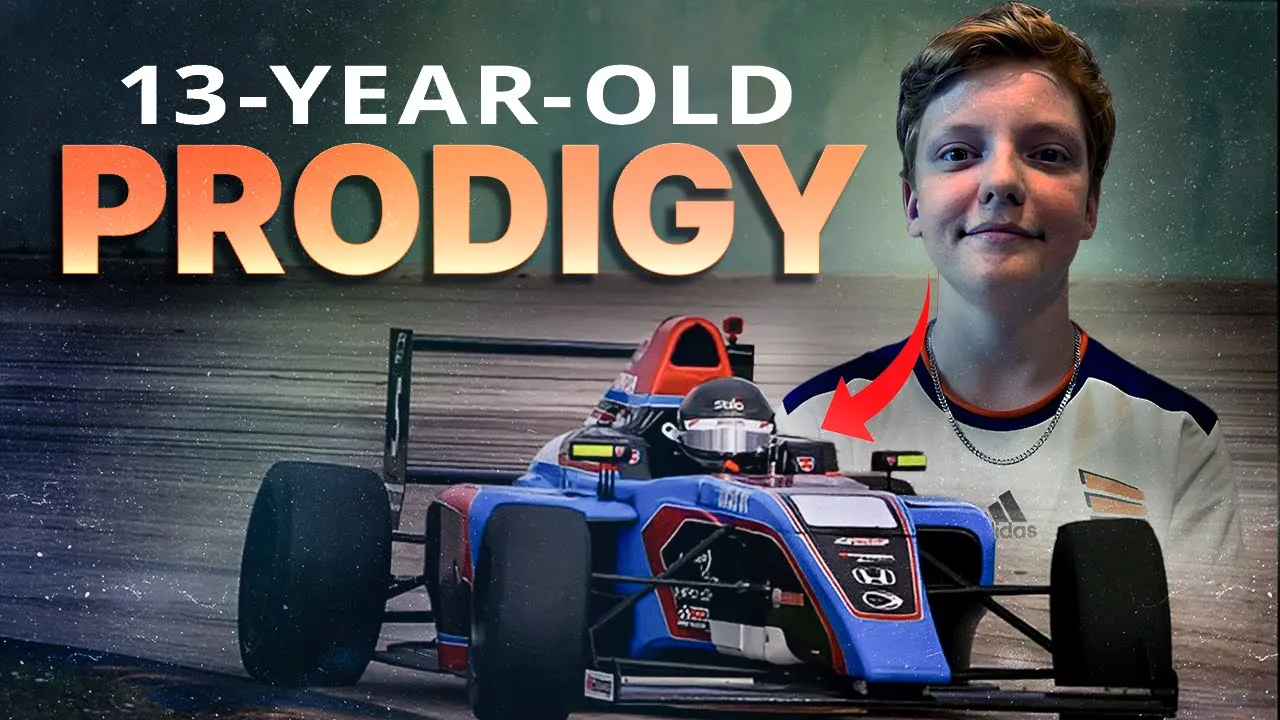
Coaching a 13-Year-Old Sim Racing Prodigy: Teaching Advanced Trail Braking at Brands Hatch
Suellio Almeida
•
Friday, March 24, 2023
Meet the Student: Young Talent, Real Potential
Twelve sessions in, and this kid still surprises me.
He's 13 years old. Driving the Porsche 992 GT3 Cup at Brands Hatch. Already competitive in his splits, but he knows there's time on the table. That self-awareness? That's what separates drivers who plateau from drivers who break through.
His issue wasn't car control or racecraft. It was precision. He was fast in some corners, inconsistent in others. Classic case of natural talent meeting the technical wall.
Time to fix it.
The Problem: Giving Up Rotation Too Early
I pulled up his telemetry against my reference lap. First corner, Paddock Hill Bend — one of the most iconic drops in sim racing.
He was losing two-tenths. Right there. One corner.
"You see this?" I pointed at his steering trace. "You're turning in, getting initial rotation, then immediately unwinding the wheel. You're cutting the corner short."
The issue wasn't his entry speed or his braking point. It was rotation management. He was releasing steering input before the car finished rotating through the apex. When you do that, you force yourself to take a tighter line later in the corner to avoid running wide.
That tighter line? It kills your exit speed.
"You need to hold the rotation longer," I told him. "Keep that steering angle through the Maximum Rotation Point. Let the car work for you."
This is where young drivers get trapped. They think turning the wheel less means being smoother. But smoothness isn't about minimal input — it's about precise input at the right time.
The Fix: Trail Braking and Steering Commitment
We went back to the fundamentals.
Trail braking isn't just about threshold braking into a corner. It's about using brake pressure to load the front tires, which gives you grip to rotate the car. The longer you trail brake, the longer you can hold steering angle without the car pushing wide.
Here's what I had him do:
1. Brake earlier — not harder, earlier. This gave him time to trail brake deeper into the corner.
2. Hold the steering input — no early unwinding. Commit to the angle through the apex.
3. Release brake pressure gradually — as the car rotates, let off the brake smoothly while maintaining steering. The car will naturally tighten its line.
4. Throttle application at the Maximum Rotation Point — not before, not after. Right when the car is pointed where you want to go.
First lap back out, I watched his inputs.
He held the steering. He trusted the rotation. He stayed on the brake longer.
Two-tenths. Gone.
"There you go," I said. "That's the lap time."
Why This Works: The Physics of Rotation
Let's break down what actually happened.
When you trail brake into a corner, you're transferring weight forward onto the front tires. More load = more grip. That front-end grip is what allows the car to rotate.
But if you release the brake too early and unwind the steering, you're removing the load before the rotation is complete. The rear tires regain grip too soon, and the car stops rotating. Now you're stuck on a wider line, scrubbing speed, and you have to compensate later in the corner.
Holding the steering input while trail braking keeps the car rotating through the apex. You're not forcing it — you're allowing the physics to work.
This is the difference between a 1:26 lap and a 1:25.8. It's not dramatic. It's not wheel-to-wheel heroics. It's just physics, executed correctly, every single lap.
The Result: Consistency and Confidence
By the end of the session, he wasn't just faster. He was consistent.
That's the real metric. Anyone can pull off one fast lap. Repeating it for 20 laps in a race? That's where trail braking discipline pays off.
We moved through the rest of the lap — Druids, Graham Hill Bend, Surtees. Same principle, different corners. Each time, I pointed out where he was giving up rotation too early, and each time, he corrected it.
Lap times dropped. Confidence went up.
This is what I tell every student: your natural talent gets you to the grid. Technique gets you on the podium.
What This Means for Your Driving
You don't have to be 13 to apply this.
If you're losing time in slow-to-medium speed corners, the problem is probably rotation. You're either:
Releasing the brake too early
Unwinding the steering too soon
Not committing to the Maximum Rotation Point
The fix is the same:
Trail brake deeper. Hold the steering. Trust the rotation.
Go into your telemetry. Compare your steering trace and brake pressure against a faster lap. Look for where you're unwinding early. That's your time.
This isn't theory. This is what I coach every single day — from 13-year-olds to F1 engineers. The physics don't change. The inputs don't change. Only the driver's willingness to execute them.
How Long Are You Going to Leave That Time on the Table?
You know the corners where you're slow. You've seen the delta. You've watched faster drivers and thought, "What am I missing?"
Usually, it's not one big thing. It's five small things. Braking point. Rotation management. Throttle application. Vision. Consistency.
And the frustrating part? You can't see your own mistakes while you're driving. You need a second set of eyes — someone who's analyzed thousands of laps and knows exactly where drivers give up time.
That's what 1:1 coaching does. We pull up your telemetry, compare it to a reference lap, and I show you the exact inputs you need to change. No guessing. No trial and error for six months. Just direct feedback from a coach who's been there.
Whether you're chasing iRating, preparing for league racing, or building skills for real-world motorsports, the method is the same. And it works.
Sim Racing Academy Membership
Everything you need to stop guessing and start getting faster.
Starting at
$25
/mo
Car Handling Online Course
4 levels, full curriculum. Aimed to get you to top 1% in driving pace.
Racecraft Online Course
Overtaking, Defending, Race Strategy
Live coaching + on-track practice
Bi-weekly pro-coach workshops (recorded — never miss one) plus on-track Pit Parties to practice racecraft with a coach.
Plus These Bonuses
13,000+ Member Community
League Racing
Advanced MX-5 Mini Course
Racing Technique Development Guide
The Motor Racing Book (260 pages)
Think & Behave Like a Pro Driver — Mini eBook
Coaching a 13-Year-Old Sim Racing Prodigy: Teaching Advanced Trail Braking at Brands Hatch
Suellio Almeida
•
Friday, March 24, 2023
Meet the Student: Young Talent, Real Potential
Twelve sessions in, and this kid still surprises me.
He's 13 years old. Driving the Porsche 992 GT3 Cup at Brands Hatch. Already competitive in his splits, but he knows there's time on the table. That self-awareness? That's what separates drivers who plateau from drivers who break through.
His issue wasn't car control or racecraft. It was precision. He was fast in some corners, inconsistent in others. Classic case of natural talent meeting the technical wall.
Time to fix it.
The Problem: Giving Up Rotation Too Early
I pulled up his telemetry against my reference lap. First corner, Paddock Hill Bend — one of the most iconic drops in sim racing.
He was losing two-tenths. Right there. One corner.
"You see this?" I pointed at his steering trace. "You're turning in, getting initial rotation, then immediately unwinding the wheel. You're cutting the corner short."
The issue wasn't his entry speed or his braking point. It was rotation management. He was releasing steering input before the car finished rotating through the apex. When you do that, you force yourself to take a tighter line later in the corner to avoid running wide.
That tighter line? It kills your exit speed.
"You need to hold the rotation longer," I told him. "Keep that steering angle through the Maximum Rotation Point. Let the car work for you."
This is where young drivers get trapped. They think turning the wheel less means being smoother. But smoothness isn't about minimal input — it's about precise input at the right time.
The Fix: Trail Braking and Steering Commitment
We went back to the fundamentals.
Trail braking isn't just about threshold braking into a corner. It's about using brake pressure to load the front tires, which gives you grip to rotate the car. The longer you trail brake, the longer you can hold steering angle without the car pushing wide.
Here's what I had him do:
1. Brake earlier — not harder, earlier. This gave him time to trail brake deeper into the corner.
2. Hold the steering input — no early unwinding. Commit to the angle through the apex.
3. Release brake pressure gradually — as the car rotates, let off the brake smoothly while maintaining steering. The car will naturally tighten its line.
4. Throttle application at the Maximum Rotation Point — not before, not after. Right when the car is pointed where you want to go.
First lap back out, I watched his inputs.
He held the steering. He trusted the rotation. He stayed on the brake longer.
Two-tenths. Gone.
"There you go," I said. "That's the lap time."
Why This Works: The Physics of Rotation
Let's break down what actually happened.
When you trail brake into a corner, you're transferring weight forward onto the front tires. More load = more grip. That front-end grip is what allows the car to rotate.
But if you release the brake too early and unwind the steering, you're removing the load before the rotation is complete. The rear tires regain grip too soon, and the car stops rotating. Now you're stuck on a wider line, scrubbing speed, and you have to compensate later in the corner.
Holding the steering input while trail braking keeps the car rotating through the apex. You're not forcing it — you're allowing the physics to work.
This is the difference between a 1:26 lap and a 1:25.8. It's not dramatic. It's not wheel-to-wheel heroics. It's just physics, executed correctly, every single lap.
The Result: Consistency and Confidence
By the end of the session, he wasn't just faster. He was consistent.
That's the real metric. Anyone can pull off one fast lap. Repeating it for 20 laps in a race? That's where trail braking discipline pays off.
We moved through the rest of the lap — Druids, Graham Hill Bend, Surtees. Same principle, different corners. Each time, I pointed out where he was giving up rotation too early, and each time, he corrected it.
Lap times dropped. Confidence went up.
This is what I tell every student: your natural talent gets you to the grid. Technique gets you on the podium.
What This Means for Your Driving
You don't have to be 13 to apply this.
If you're losing time in slow-to-medium speed corners, the problem is probably rotation. You're either:
Releasing the brake too early
Unwinding the steering too soon
Not committing to the Maximum Rotation Point
The fix is the same:
Trail brake deeper. Hold the steering. Trust the rotation.
Go into your telemetry. Compare your steering trace and brake pressure against a faster lap. Look for where you're unwinding early. That's your time.
This isn't theory. This is what I coach every single day — from 13-year-olds to F1 engineers. The physics don't change. The inputs don't change. Only the driver's willingness to execute them.
How Long Are You Going to Leave That Time on the Table?
You know the corners where you're slow. You've seen the delta. You've watched faster drivers and thought, "What am I missing?"
Usually, it's not one big thing. It's five small things. Braking point. Rotation management. Throttle application. Vision. Consistency.
And the frustrating part? You can't see your own mistakes while you're driving. You need a second set of eyes — someone who's analyzed thousands of laps and knows exactly where drivers give up time.
That's what 1:1 coaching does. We pull up your telemetry, compare it to a reference lap, and I show you the exact inputs you need to change. No guessing. No trial and error for six months. Just direct feedback from a coach who's been there.
Whether you're chasing iRating, preparing for league racing, or building skills for real-world motorsports, the method is the same. And it works.
Sim Racing Academy Membership
Everything you need to stop guessing and start getting faster.
Starting at
$25
/mo
Car Handling Online Course
4 levels, full curriculum. Aimed to get you to top 1% in driving pace.
Racecraft Online Course
Overtaking, Defending, Race Strategy
Live coaching + on-track practice
Bi-weekly pro-coach workshops (recorded — never miss one) plus on-track Pit Parties to practice racecraft with a coach.
Plus These Bonuses
13,000+ Member Community
League Racing
Advanced MX-5 Mini Course
Racing Technique Development Guide
The Motor Racing Book (260 pages)
Think & Behave Like a Pro Driver — Mini eBook
Coaching a 13-Year-Old Sim Racing Prodigy: Teaching Advanced Trail Braking at Brands Hatch
Suellio Almeida
•
Friday, March 24, 2023
Meet the Student: Young Talent, Real Potential
Twelve sessions in, and this kid still surprises me.
He's 13 years old. Driving the Porsche 992 GT3 Cup at Brands Hatch. Already competitive in his splits, but he knows there's time on the table. That self-awareness? That's what separates drivers who plateau from drivers who break through.
His issue wasn't car control or racecraft. It was precision. He was fast in some corners, inconsistent in others. Classic case of natural talent meeting the technical wall.
Time to fix it.
The Problem: Giving Up Rotation Too Early
I pulled up his telemetry against my reference lap. First corner, Paddock Hill Bend — one of the most iconic drops in sim racing.
He was losing two-tenths. Right there. One corner.
"You see this?" I pointed at his steering trace. "You're turning in, getting initial rotation, then immediately unwinding the wheel. You're cutting the corner short."
The issue wasn't his entry speed or his braking point. It was rotation management. He was releasing steering input before the car finished rotating through the apex. When you do that, you force yourself to take a tighter line later in the corner to avoid running wide.
That tighter line? It kills your exit speed.
"You need to hold the rotation longer," I told him. "Keep that steering angle through the Maximum Rotation Point. Let the car work for you."
This is where young drivers get trapped. They think turning the wheel less means being smoother. But smoothness isn't about minimal input — it's about precise input at the right time.
The Fix: Trail Braking and Steering Commitment
We went back to the fundamentals.
Trail braking isn't just about threshold braking into a corner. It's about using brake pressure to load the front tires, which gives you grip to rotate the car. The longer you trail brake, the longer you can hold steering angle without the car pushing wide.
Here's what I had him do:
1. Brake earlier — not harder, earlier. This gave him time to trail brake deeper into the corner.
2. Hold the steering input — no early unwinding. Commit to the angle through the apex.
3. Release brake pressure gradually — as the car rotates, let off the brake smoothly while maintaining steering. The car will naturally tighten its line.
4. Throttle application at the Maximum Rotation Point — not before, not after. Right when the car is pointed where you want to go.
First lap back out, I watched his inputs.
He held the steering. He trusted the rotation. He stayed on the brake longer.
Two-tenths. Gone.
"There you go," I said. "That's the lap time."
Why This Works: The Physics of Rotation
Let's break down what actually happened.
When you trail brake into a corner, you're transferring weight forward onto the front tires. More load = more grip. That front-end grip is what allows the car to rotate.
But if you release the brake too early and unwind the steering, you're removing the load before the rotation is complete. The rear tires regain grip too soon, and the car stops rotating. Now you're stuck on a wider line, scrubbing speed, and you have to compensate later in the corner.
Holding the steering input while trail braking keeps the car rotating through the apex. You're not forcing it — you're allowing the physics to work.
This is the difference between a 1:26 lap and a 1:25.8. It's not dramatic. It's not wheel-to-wheel heroics. It's just physics, executed correctly, every single lap.
The Result: Consistency and Confidence
By the end of the session, he wasn't just faster. He was consistent.
That's the real metric. Anyone can pull off one fast lap. Repeating it for 20 laps in a race? That's where trail braking discipline pays off.
We moved through the rest of the lap — Druids, Graham Hill Bend, Surtees. Same principle, different corners. Each time, I pointed out where he was giving up rotation too early, and each time, he corrected it.
Lap times dropped. Confidence went up.
This is what I tell every student: your natural talent gets you to the grid. Technique gets you on the podium.
What This Means for Your Driving
You don't have to be 13 to apply this.
If you're losing time in slow-to-medium speed corners, the problem is probably rotation. You're either:
Releasing the brake too early
Unwinding the steering too soon
Not committing to the Maximum Rotation Point
The fix is the same:
Trail brake deeper. Hold the steering. Trust the rotation.
Go into your telemetry. Compare your steering trace and brake pressure against a faster lap. Look for where you're unwinding early. That's your time.
This isn't theory. This is what I coach every single day — from 13-year-olds to F1 engineers. The physics don't change. The inputs don't change. Only the driver's willingness to execute them.
How Long Are You Going to Leave That Time on the Table?
You know the corners where you're slow. You've seen the delta. You've watched faster drivers and thought, "What am I missing?"
Usually, it's not one big thing. It's five small things. Braking point. Rotation management. Throttle application. Vision. Consistency.
And the frustrating part? You can't see your own mistakes while you're driving. You need a second set of eyes — someone who's analyzed thousands of laps and knows exactly where drivers give up time.
That's what 1:1 coaching does. We pull up your telemetry, compare it to a reference lap, and I show you the exact inputs you need to change. No guessing. No trial and error for six months. Just direct feedback from a coach who's been there.
Whether you're chasing iRating, preparing for league racing, or building skills for real-world motorsports, the method is the same. And it works.
Sim Racing Academy Membership
Everything you need to stop guessing and start getting faster.
Starting at
$25
/mo
Car Handling Online Course
4 levels, full curriculum. Aimed to get you to top 1% in driving pace.
Racecraft Online Course
Overtaking, Defending, Race Strategy
Live coaching + on-track practice
Bi-weekly pro-coach workshops (recorded — never miss one) plus on-track Pit Parties to practice racecraft with a coach.
Plus These Bonuses
13,000+ Member Community
League Racing
Advanced MX-5 Mini Course
Racing Technique Development Guide
The Motor Racing Book (260 pages)
Think & Behave Like a Pro Driver — Mini eBook