
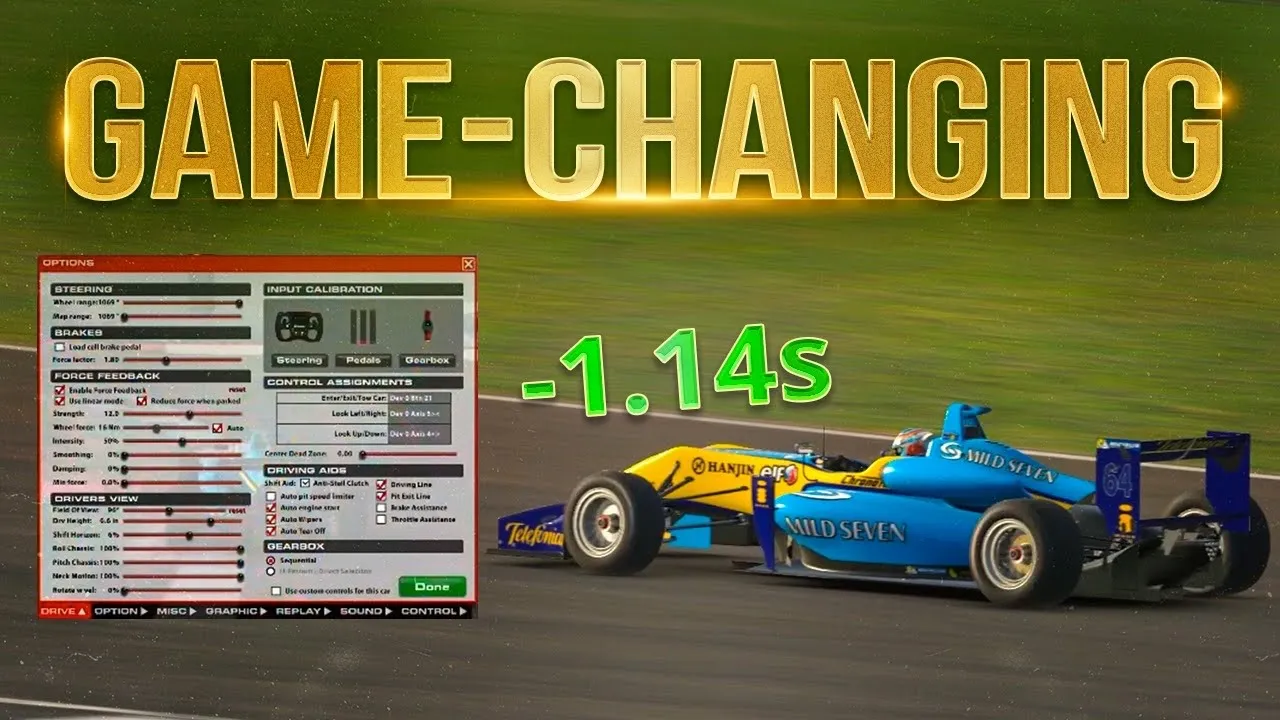
How a Beginner Found 1.14 Seconds in One Coaching Session — Sim Racing Technique Breakdown
Suellio Almeida
•
Friday, February 9, 2024
The Student: Zero Experience, One Goal
This student came to me with almost no sim racing background. No idea about racing lines. No understanding of weight transfer. Just a wheel, a dream, and a 1:42 lap time at Watkins Glen in the MX-5.
He knew he was slow. He didn't know why.
That's the gap most beginners face. You can feel you're leaving time on the table, but you can't see where. You brake where it feels safe. You turn in where it feels right. You accelerate when the car feels stable.
And you stay stuck.
The First Look: What the Data Said
I pulled up his telemetry next to a reference lap. The problem showed up immediately.
He was braking too early. Not by a little — by a lot. Turn 1, Turn 5, Turn 6 — every major braking zone, he was on the brakes 20 to 30 meters before he needed to be.
Then he was coasting. Mid-corner, no throttle, no brake. Just... waiting.
Waiting for what? Waiting for the car to feel safe enough to accelerate.
That's where 1.14 seconds disappears. Not in one dramatic mistake. In dozens of tiny hesitations.
The Real Problem: Braking Too Early, Braking Too Long
Let me explain what happens when you brake too early.
You scrub speed before you need to. You enter the corner slower than the car can handle. Now you're coasting mid-corner, waiting for the apex, waiting to get back on power.
But here's the thing: the longer you coast, the more speed you lose. And the slower you exit, the slower you are down the entire next straight.
One early brake point costs you three corners later.
I told him: "You need to brake later. A lot later. And when you do brake, brake harder."
His response? "But I'll lock up."
No. You won't. Because right now, you're not even close to the limit.
The Fix: Trust the Data, Not the Fear
We started with Turn 1.
I showed him the reference brake point: 30 meters later than where he was braking. I told him to aim for that marker, brake hard, and hold it.
"What if I miss the apex?"
"Then you miss the apex. But you'll learn where the limit is."
He did it. Braked later. Braked harder. And guess what?
He made the corner. Cleanly.
That's the moment most beginners break through. When they realize the car can do more than they thought.
Turn 5: The Big One
Turn 5 at Watkins Glen is a fast downhill right-hander. Most beginners are terrified of it.
He was braking at 200 meters. The reference lap? 170 meters.
That's a 30-meter gap. At race speed, that's half a second. In one corner.
I told him: "Brake at 170. Commit to it. The car will stick."
He tried it. First lap, he braked at 180. Still early, but better.
Second lap, 175.
Third lap, 170.
And the car held. No drama. No spin. Just speed.
"Why does this work?" he asked.
Because you're using the grip the tires already have. You're not asking the car to do something impossible. You're asking it to do what it was designed to do.
Weight Transfer: The Missing Piece
Braking later solved half the problem. But there was still time on the table.
Mid-corner, he was still coasting. Not on the brakes, not on the throttle. Just... drifting.
That's a weight transfer problem.
When you brake, weight shifts forward. The front tires get loaded, the rear gets light. That's when the car rotates.
When you let off the brakes too early, that weight shifts back. The front loses grip. The car understeers.
So now you're coasting, waiting for the car to rotate, and it never does.
The fix? Trail braking.
Hold the brakes longer. Not hard — just a light, consistent pressure. Keep the weight on the front tires. Let the car rotate through the apex. Then get on the throttle.
I showed him the difference on the telemetry. Reference lap: braking all the way to the apex. His lap: brakes off 20 meters before the apex, then coasting.
"Try it again. This time, hold the brakes longer."
He did.
The car turned in sharper. The apex came faster. He was on throttle earlier.
0.3 seconds. Gone.
The Result: 1:42.3 to 1:41.1
By the end of the session, he'd dropped 1.14 seconds.
Same car. Same track. Same driver.
Different approach.
He wasn't faster because he practiced more. He was faster because he practiced right.
He learned where to brake. How to brake. How to use weight transfer to rotate the car. How to carry speed through corners instead of bleeding it off in fear.
And here's the thing: this wasn't a one-time fluke. Once you understand the principles, you apply them everywhere. Turn 1, Turn 5, Turn 10. Watkins Glen, Spa, Monza.
The technique scales.
What Most Beginners Get Wrong
You think speed comes from bravery. From sending it into corners and hoping for the best.
It doesn't.
Speed comes from precision. From understanding where the limit is and driving right up to it. Not over it. Right up to it.
You think you need more practice. More laps. More hours.
Maybe. But what you really need is feedback. Someone who can look at your data and say: "You're braking here. You should be braking there. Here's why."
Without that, you're just reinforcing bad habits.
Why This Works for Every Beginner
This student wasn't special. He didn't have natural talent. He didn't have thousands of hours in other sims.
He just had coaching.
And coaching works because it shortcuts the trial-and-error phase. Instead of spending 100 laps figuring out the right brake point, someone who's already driven 10,000 laps tells you where it is.
Then you practice that. You refine it. You internalize it.
That's how you improve fast.
What You Should Take From This
If you're stuck at a lap time and you don't know why, it's probably one of these:
1. You're braking too early. Push your brake points back. Use reference laps. The car can handle more than you think.
2. You're coasting mid-corner. Trail braking fixes this. Hold the brakes longer, keep weight on the front, let the car rotate.
3. You're guessing instead of measuring. Without telemetry, you're flying blind. You need data.
This student found 1.14 seconds in one session because we addressed all three.
How much time are you leaving on the table?
What If You Could Stop Guessing?
You've been running laps for weeks. Maybe months. You know you're slow, but you don't know where.
You watch YouTube tutorials. You try to copy faster drivers. You brake where they brake, turn where they turn. But your lap times don't move.
Why?
Because without feedback, you can't see what you're doing wrong. You're reinforcing mistakes you don't even know you're making.
What would change if someone looked at your telemetry, pointed at the exact corner where you're losing time, and told you how to fix it?
That's what coaching is. Not vague tips. Not generic advice. Specific, targeted fixes for your driving.
This beginner dropped 1.14 seconds in a single session. You could do the same.
Sim Racing Academy Membership
Everything you need to stop guessing and start getting faster.
Starting at
$25
/mo
Car Handling Online Course
4 levels, full curriculum. Aimed to get you to top 1% in driving pace.
Racecraft Online Course
Overtaking, Defending, Race Strategy
Live coaching + on-track practice
Bi-weekly pro-coach workshops (recorded — never miss one) plus on-track Pit Parties to practice racecraft with a coach.
Plus These Bonuses
13,000+ Member Community
League Racing
Advanced MX-5 Mini Course
Racing Technique Development Guide
The Motor Racing Book (260 pages)
Think & Behave Like a Pro Driver — Mini eBook
How a Beginner Found 1.14 Seconds in One Coaching Session — Sim Racing Technique Breakdown
Suellio Almeida
•
Friday, February 9, 2024
The Student: Zero Experience, One Goal
This student came to me with almost no sim racing background. No idea about racing lines. No understanding of weight transfer. Just a wheel, a dream, and a 1:42 lap time at Watkins Glen in the MX-5.
He knew he was slow. He didn't know why.
That's the gap most beginners face. You can feel you're leaving time on the table, but you can't see where. You brake where it feels safe. You turn in where it feels right. You accelerate when the car feels stable.
And you stay stuck.
The First Look: What the Data Said
I pulled up his telemetry next to a reference lap. The problem showed up immediately.
He was braking too early. Not by a little — by a lot. Turn 1, Turn 5, Turn 6 — every major braking zone, he was on the brakes 20 to 30 meters before he needed to be.
Then he was coasting. Mid-corner, no throttle, no brake. Just... waiting.
Waiting for what? Waiting for the car to feel safe enough to accelerate.
That's where 1.14 seconds disappears. Not in one dramatic mistake. In dozens of tiny hesitations.
The Real Problem: Braking Too Early, Braking Too Long
Let me explain what happens when you brake too early.
You scrub speed before you need to. You enter the corner slower than the car can handle. Now you're coasting mid-corner, waiting for the apex, waiting to get back on power.
But here's the thing: the longer you coast, the more speed you lose. And the slower you exit, the slower you are down the entire next straight.
One early brake point costs you three corners later.
I told him: "You need to brake later. A lot later. And when you do brake, brake harder."
His response? "But I'll lock up."
No. You won't. Because right now, you're not even close to the limit.
The Fix: Trust the Data, Not the Fear
We started with Turn 1.
I showed him the reference brake point: 30 meters later than where he was braking. I told him to aim for that marker, brake hard, and hold it.
"What if I miss the apex?"
"Then you miss the apex. But you'll learn where the limit is."
He did it. Braked later. Braked harder. And guess what?
He made the corner. Cleanly.
That's the moment most beginners break through. When they realize the car can do more than they thought.
Turn 5: The Big One
Turn 5 at Watkins Glen is a fast downhill right-hander. Most beginners are terrified of it.
He was braking at 200 meters. The reference lap? 170 meters.
That's a 30-meter gap. At race speed, that's half a second. In one corner.
I told him: "Brake at 170. Commit to it. The car will stick."
He tried it. First lap, he braked at 180. Still early, but better.
Second lap, 175.
Third lap, 170.
And the car held. No drama. No spin. Just speed.
"Why does this work?" he asked.
Because you're using the grip the tires already have. You're not asking the car to do something impossible. You're asking it to do what it was designed to do.
Weight Transfer: The Missing Piece
Braking later solved half the problem. But there was still time on the table.
Mid-corner, he was still coasting. Not on the brakes, not on the throttle. Just... drifting.
That's a weight transfer problem.
When you brake, weight shifts forward. The front tires get loaded, the rear gets light. That's when the car rotates.
When you let off the brakes too early, that weight shifts back. The front loses grip. The car understeers.
So now you're coasting, waiting for the car to rotate, and it never does.
The fix? Trail braking.
Hold the brakes longer. Not hard — just a light, consistent pressure. Keep the weight on the front tires. Let the car rotate through the apex. Then get on the throttle.
I showed him the difference on the telemetry. Reference lap: braking all the way to the apex. His lap: brakes off 20 meters before the apex, then coasting.
"Try it again. This time, hold the brakes longer."
He did.
The car turned in sharper. The apex came faster. He was on throttle earlier.
0.3 seconds. Gone.
The Result: 1:42.3 to 1:41.1
By the end of the session, he'd dropped 1.14 seconds.
Same car. Same track. Same driver.
Different approach.
He wasn't faster because he practiced more. He was faster because he practiced right.
He learned where to brake. How to brake. How to use weight transfer to rotate the car. How to carry speed through corners instead of bleeding it off in fear.
And here's the thing: this wasn't a one-time fluke. Once you understand the principles, you apply them everywhere. Turn 1, Turn 5, Turn 10. Watkins Glen, Spa, Monza.
The technique scales.
What Most Beginners Get Wrong
You think speed comes from bravery. From sending it into corners and hoping for the best.
It doesn't.
Speed comes from precision. From understanding where the limit is and driving right up to it. Not over it. Right up to it.
You think you need more practice. More laps. More hours.
Maybe. But what you really need is feedback. Someone who can look at your data and say: "You're braking here. You should be braking there. Here's why."
Without that, you're just reinforcing bad habits.
Why This Works for Every Beginner
This student wasn't special. He didn't have natural talent. He didn't have thousands of hours in other sims.
He just had coaching.
And coaching works because it shortcuts the trial-and-error phase. Instead of spending 100 laps figuring out the right brake point, someone who's already driven 10,000 laps tells you where it is.
Then you practice that. You refine it. You internalize it.
That's how you improve fast.
What You Should Take From This
If you're stuck at a lap time and you don't know why, it's probably one of these:
1. You're braking too early. Push your brake points back. Use reference laps. The car can handle more than you think.
2. You're coasting mid-corner. Trail braking fixes this. Hold the brakes longer, keep weight on the front, let the car rotate.
3. You're guessing instead of measuring. Without telemetry, you're flying blind. You need data.
This student found 1.14 seconds in one session because we addressed all three.
How much time are you leaving on the table?
What If You Could Stop Guessing?
You've been running laps for weeks. Maybe months. You know you're slow, but you don't know where.
You watch YouTube tutorials. You try to copy faster drivers. You brake where they brake, turn where they turn. But your lap times don't move.
Why?
Because without feedback, you can't see what you're doing wrong. You're reinforcing mistakes you don't even know you're making.
What would change if someone looked at your telemetry, pointed at the exact corner where you're losing time, and told you how to fix it?
That's what coaching is. Not vague tips. Not generic advice. Specific, targeted fixes for your driving.
This beginner dropped 1.14 seconds in a single session. You could do the same.
Sim Racing Academy Membership
Everything you need to stop guessing and start getting faster.
Starting at
$25
/mo
Car Handling Online Course
4 levels, full curriculum. Aimed to get you to top 1% in driving pace.
Racecraft Online Course
Overtaking, Defending, Race Strategy
Live coaching + on-track practice
Bi-weekly pro-coach workshops (recorded — never miss one) plus on-track Pit Parties to practice racecraft with a coach.
Plus These Bonuses
13,000+ Member Community
League Racing
Advanced MX-5 Mini Course
Racing Technique Development Guide
The Motor Racing Book (260 pages)
Think & Behave Like a Pro Driver — Mini eBook
How a Beginner Found 1.14 Seconds in One Coaching Session — Sim Racing Technique Breakdown
Suellio Almeida
•
Friday, February 9, 2024
The Student: Zero Experience, One Goal
This student came to me with almost no sim racing background. No idea about racing lines. No understanding of weight transfer. Just a wheel, a dream, and a 1:42 lap time at Watkins Glen in the MX-5.
He knew he was slow. He didn't know why.
That's the gap most beginners face. You can feel you're leaving time on the table, but you can't see where. You brake where it feels safe. You turn in where it feels right. You accelerate when the car feels stable.
And you stay stuck.
The First Look: What the Data Said
I pulled up his telemetry next to a reference lap. The problem showed up immediately.
He was braking too early. Not by a little — by a lot. Turn 1, Turn 5, Turn 6 — every major braking zone, he was on the brakes 20 to 30 meters before he needed to be.
Then he was coasting. Mid-corner, no throttle, no brake. Just... waiting.
Waiting for what? Waiting for the car to feel safe enough to accelerate.
That's where 1.14 seconds disappears. Not in one dramatic mistake. In dozens of tiny hesitations.
The Real Problem: Braking Too Early, Braking Too Long
Let me explain what happens when you brake too early.
You scrub speed before you need to. You enter the corner slower than the car can handle. Now you're coasting mid-corner, waiting for the apex, waiting to get back on power.
But here's the thing: the longer you coast, the more speed you lose. And the slower you exit, the slower you are down the entire next straight.
One early brake point costs you three corners later.
I told him: "You need to brake later. A lot later. And when you do brake, brake harder."
His response? "But I'll lock up."
No. You won't. Because right now, you're not even close to the limit.
The Fix: Trust the Data, Not the Fear
We started with Turn 1.
I showed him the reference brake point: 30 meters later than where he was braking. I told him to aim for that marker, brake hard, and hold it.
"What if I miss the apex?"
"Then you miss the apex. But you'll learn where the limit is."
He did it. Braked later. Braked harder. And guess what?
He made the corner. Cleanly.
That's the moment most beginners break through. When they realize the car can do more than they thought.
Turn 5: The Big One
Turn 5 at Watkins Glen is a fast downhill right-hander. Most beginners are terrified of it.
He was braking at 200 meters. The reference lap? 170 meters.
That's a 30-meter gap. At race speed, that's half a second. In one corner.
I told him: "Brake at 170. Commit to it. The car will stick."
He tried it. First lap, he braked at 180. Still early, but better.
Second lap, 175.
Third lap, 170.
And the car held. No drama. No spin. Just speed.
"Why does this work?" he asked.
Because you're using the grip the tires already have. You're not asking the car to do something impossible. You're asking it to do what it was designed to do.
Weight Transfer: The Missing Piece
Braking later solved half the problem. But there was still time on the table.
Mid-corner, he was still coasting. Not on the brakes, not on the throttle. Just... drifting.
That's a weight transfer problem.
When you brake, weight shifts forward. The front tires get loaded, the rear gets light. That's when the car rotates.
When you let off the brakes too early, that weight shifts back. The front loses grip. The car understeers.
So now you're coasting, waiting for the car to rotate, and it never does.
The fix? Trail braking.
Hold the brakes longer. Not hard — just a light, consistent pressure. Keep the weight on the front tires. Let the car rotate through the apex. Then get on the throttle.
I showed him the difference on the telemetry. Reference lap: braking all the way to the apex. His lap: brakes off 20 meters before the apex, then coasting.
"Try it again. This time, hold the brakes longer."
He did.
The car turned in sharper. The apex came faster. He was on throttle earlier.
0.3 seconds. Gone.
The Result: 1:42.3 to 1:41.1
By the end of the session, he'd dropped 1.14 seconds.
Same car. Same track. Same driver.
Different approach.
He wasn't faster because he practiced more. He was faster because he practiced right.
He learned where to brake. How to brake. How to use weight transfer to rotate the car. How to carry speed through corners instead of bleeding it off in fear.
And here's the thing: this wasn't a one-time fluke. Once you understand the principles, you apply them everywhere. Turn 1, Turn 5, Turn 10. Watkins Glen, Spa, Monza.
The technique scales.
What Most Beginners Get Wrong
You think speed comes from bravery. From sending it into corners and hoping for the best.
It doesn't.
Speed comes from precision. From understanding where the limit is and driving right up to it. Not over it. Right up to it.
You think you need more practice. More laps. More hours.
Maybe. But what you really need is feedback. Someone who can look at your data and say: "You're braking here. You should be braking there. Here's why."
Without that, you're just reinforcing bad habits.
Why This Works for Every Beginner
This student wasn't special. He didn't have natural talent. He didn't have thousands of hours in other sims.
He just had coaching.
And coaching works because it shortcuts the trial-and-error phase. Instead of spending 100 laps figuring out the right brake point, someone who's already driven 10,000 laps tells you where it is.
Then you practice that. You refine it. You internalize it.
That's how you improve fast.
What You Should Take From This
If you're stuck at a lap time and you don't know why, it's probably one of these:
1. You're braking too early. Push your brake points back. Use reference laps. The car can handle more than you think.
2. You're coasting mid-corner. Trail braking fixes this. Hold the brakes longer, keep weight on the front, let the car rotate.
3. You're guessing instead of measuring. Without telemetry, you're flying blind. You need data.
This student found 1.14 seconds in one session because we addressed all three.
How much time are you leaving on the table?
What If You Could Stop Guessing?
You've been running laps for weeks. Maybe months. You know you're slow, but you don't know where.
You watch YouTube tutorials. You try to copy faster drivers. You brake where they brake, turn where they turn. But your lap times don't move.
Why?
Because without feedback, you can't see what you're doing wrong. You're reinforcing mistakes you don't even know you're making.
What would change if someone looked at your telemetry, pointed at the exact corner where you're losing time, and told you how to fix it?
That's what coaching is. Not vague tips. Not generic advice. Specific, targeted fixes for your driving.
This beginner dropped 1.14 seconds in a single session. You could do the same.
Sim Racing Academy Membership
Everything you need to stop guessing and start getting faster.
Starting at
$25
/mo
Car Handling Online Course
4 levels, full curriculum. Aimed to get you to top 1% in driving pace.
Racecraft Online Course
Overtaking, Defending, Race Strategy
Live coaching + on-track practice
Bi-weekly pro-coach workshops (recorded — never miss one) plus on-track Pit Parties to practice racecraft with a coach.
Plus These Bonuses
13,000+ Member Community
League Racing
Advanced MX-5 Mini Course
Racing Technique Development Guide
The Motor Racing Book (260 pages)
Think & Behave Like a Pro Driver — Mini eBook