
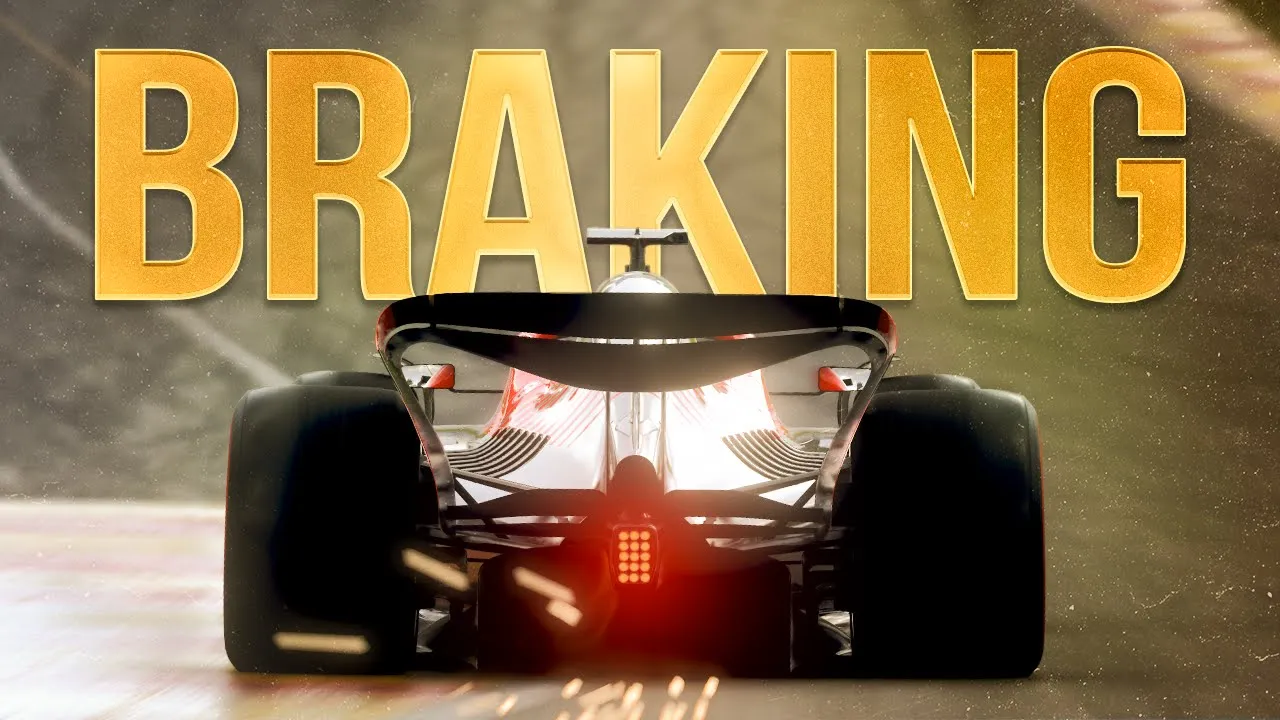
5 Steps to Finally Master Trail Braking in Sim Racing (And Stop Losing Time on Entry)
Suellio Almeida
•
Thursday, July 13, 2023
Why You're Still Getting Trail Braking Wrong
Most drivers think trail braking is about "braking into the corner."
That's not wrong. But it's incomplete.
Trail braking isn't just carrying brake pressure deeper. It's a weight transfer control system. You're manipulating front grip, rotating the car, and setting up your exit — all simultaneously. Miss one piece, and you're either understeering wide or spinning on entry.
The gap between understanding trail braking conceptually and executing it lap after lap? That's where most drivers live. Let's close it.
Step 1: Understand What Trail Braking Actually Does
When you brake hard in a straight line, weight transfers forward. The front tires compress. Front grip increases dramatically.
When you release the brakes completely and turn in? That weight shifts back. Front grip drops. The car wants to understeer.
Trail braking bridges that gap. You maintain brake pressure as you turn in, keeping weight on the front, keeping the nose planted. You're borrowing front grip to rotate the car while still slowing down.
But here's the critical part: you're not just holding pressure. You're releasing it progressively as the steering angle increases. Think of it like a seesaw — as steering goes up, brake pressure comes down.
Get that balance wrong? Understeer or snap oversteer. Get it right? The car rotates smoothly, you hit your apex with precision, and you're already rolling speed for the exit.
Step 2: Find Your Maximum Rotation Point
Every corner has a Maximum Rotation Point — the exact moment where the car needs to rotate the most to hit the apex.
This is your reference. This is where you're releasing the majority of your brake pressure.
Too early? You're still carrying too much brake into the mid-corner. The car understeers or feels sluggish.
Too late? You release too quickly at turn-in, the front washes out, and you're wide.
How do you find it?
Watch your inputs. The point where your steering angle peaks — that's usually close to your Maximum Rotation Point. For most corners, this happens just after the initial turn-in, as you're transitioning to the apex.
Start there. Mark it mentally. That's your brake release target.
Step 3: Match Brake Release to Steering Angle
This is the coordination piece most drivers butcher.
You need to release brake pressure in proportion to steering angle. As you add more steering, you remove more brake. Not all at once. Gradually.
Why? Because the tire only has so much grip. You can use it for braking OR turning, but not both at maximum. The friction circle — if you're using 100% braking grip, you have zero turning grip. If you want to turn harder, you need to reduce brake.
What this looks like in practice:
1. Initial brake application — Hard, straight-line braking. Maximum deceleration.
2. Turn-in — You start unwinding brake pressure as you begin turning the wheel. Slowly at first.
3. Approach to apex — Steering angle increases, brake pressure decreases proportionally. Most of your braking is done by now.
4. Apex — Minimal or zero brake pressure. You're transitioning to maintenance throttle or early acceleration.
The mistake? Releasing too fast, or holding too long. Either extreme costs you time and balance.
Step 4: Feel the Car's Response (Not Just Your Inputs)
You can nail the technique on paper and still trail brake poorly.
Why? Because every corner is different. Every car is different. And track conditions change.
You need to read the car's feedback in real-time.
What are you feeling for?
Front end bite — Does the nose tuck in when you turn? Or does it push wide? If it pushes, you released brake too early or too much. The front needs more weight.
Rotation — Is the car rotating smoothly toward the apex? Or is the rear getting loose? Too much brake pressure too late into the corner can overload the front and snap the rear.
Platform stability — Does the car feel planted mid-corner, or does it feel like you're fighting it? A good trail brake leaves the car settled and predictable at the apex.
This is where practice becomes skill. You're training your brain to connect input to outcome. When you feel understeer, you know: "I need to carry more brake next lap." When you feel snap rotation, you know: "I released too late."
Adjust. Repeat. Refine.
Step 5: Build the Habit Through Repetition
Trail braking doesn't become consistent through understanding. It becomes consistent through repetition under focus.
You need reps. Lots of them. But not mindless laps.
Here's how to train it:
Pick one corner. Just one. Run 20 laps focused ONLY on trail braking through that single corner. Not your lap time. Not the whole track. Just that corner.
Focus on one variable at a time. First session: nail the release timing to your Maximum Rotation Point. Don't worry about perfect pressure yet. Next session: refine the pressure curve. Then the coordination with steering.
Use telemetry if available. Look at your brake trace. Is it smooth? Or are you stabby? Compare your trace to a faster driver's. Where are they releasing? How gradual is their curve?
Run different cars. Trail braking feels different in a front-engine GT3 versus a mid-engine LMP2. The principles stay the same, but the application changes. This forces you to adapt, not just memorize.
After a few focused sessions? Your muscle memory takes over. You stop thinking about it. You just do it.
That's when trail braking becomes a weapon.
Why Most Drivers Never Actually Master This
Because they treat trail braking like a technique to learn once and check off.
It's not.
It's a skill you refine forever. Even at the highest levels — IMSA, F1, top-split iRacing — drivers are still adjusting their trail braking lap to lap. Track temp changes. Tire wear changes. The line changes.
The difference between a 2k iRating driver and a 6k driver isn't that the 6k driver learned trail braking once. It's that they continuously refine it. They feel the car better. They adapt faster. They've put in the reps.
You want to get faster?
Stop looking for the next magic technique. Master the fundamentals. Make trail braking second nature. Then everything else — racecraft, consistency, laptimes — starts to click.
What If You Could Train This With a System That Actually Works?
How many laps have you run this month?
How many of those laps were focused practice versus just hot lapping and hoping?
Here's the truth: most sim racers never improve because they don't train with structure. They watch videos, understand the concepts, then jump into a race and wonder why it doesn't stick.
Trail braking isn't something you learn from a YouTube video. It's something you build through deliberate practice. The kind of practice that targets specific skills, gives you feedback, and forces you to refine.
That's what Gold Membership at Almeida Racing Academy does. You get structured courses that break down techniques like trail braking into actionable drills. You get coach-led workshops where we analyze YOUR driving. You get challenges and leagues that force you to apply what you've learned under pressure.
No more guessing. No more hoping. Just a clear path to faster, more consistent driving.
Start your Gold Membership here — first month $25 with code WINTER
Sim Racing Academy Membership
Everything you need to stop guessing and start getting faster.
Starting at
$25
/mo
Car Handling Online Course
4 levels, full curriculum. Aimed to get you to top 1% in driving pace.
Racecraft Online Course
Overtaking, Defending, Race Strategy
Live coaching + on-track practice
Bi-weekly pro-coach workshops (recorded — never miss one) plus on-track Pit Parties to practice racecraft with a coach.
Plus These Bonuses
13,000+ Member Community
League Racing
Advanced MX-5 Mini Course
Racing Technique Development Guide
The Motor Racing Book (260 pages)
Think & Behave Like a Pro Driver — Mini eBook
5 Steps to Finally Master Trail Braking in Sim Racing (And Stop Losing Time on Entry)
Suellio Almeida
•
Thursday, July 13, 2023
Why You're Still Getting Trail Braking Wrong
Most drivers think trail braking is about "braking into the corner."
That's not wrong. But it's incomplete.
Trail braking isn't just carrying brake pressure deeper. It's a weight transfer control system. You're manipulating front grip, rotating the car, and setting up your exit — all simultaneously. Miss one piece, and you're either understeering wide or spinning on entry.
The gap between understanding trail braking conceptually and executing it lap after lap? That's where most drivers live. Let's close it.
Step 1: Understand What Trail Braking Actually Does
When you brake hard in a straight line, weight transfers forward. The front tires compress. Front grip increases dramatically.
When you release the brakes completely and turn in? That weight shifts back. Front grip drops. The car wants to understeer.
Trail braking bridges that gap. You maintain brake pressure as you turn in, keeping weight on the front, keeping the nose planted. You're borrowing front grip to rotate the car while still slowing down.
But here's the critical part: you're not just holding pressure. You're releasing it progressively as the steering angle increases. Think of it like a seesaw — as steering goes up, brake pressure comes down.
Get that balance wrong? Understeer or snap oversteer. Get it right? The car rotates smoothly, you hit your apex with precision, and you're already rolling speed for the exit.
Step 2: Find Your Maximum Rotation Point
Every corner has a Maximum Rotation Point — the exact moment where the car needs to rotate the most to hit the apex.
This is your reference. This is where you're releasing the majority of your brake pressure.
Too early? You're still carrying too much brake into the mid-corner. The car understeers or feels sluggish.
Too late? You release too quickly at turn-in, the front washes out, and you're wide.
How do you find it?
Watch your inputs. The point where your steering angle peaks — that's usually close to your Maximum Rotation Point. For most corners, this happens just after the initial turn-in, as you're transitioning to the apex.
Start there. Mark it mentally. That's your brake release target.
Step 3: Match Brake Release to Steering Angle
This is the coordination piece most drivers butcher.
You need to release brake pressure in proportion to steering angle. As you add more steering, you remove more brake. Not all at once. Gradually.
Why? Because the tire only has so much grip. You can use it for braking OR turning, but not both at maximum. The friction circle — if you're using 100% braking grip, you have zero turning grip. If you want to turn harder, you need to reduce brake.
What this looks like in practice:
1. Initial brake application — Hard, straight-line braking. Maximum deceleration.
2. Turn-in — You start unwinding brake pressure as you begin turning the wheel. Slowly at first.
3. Approach to apex — Steering angle increases, brake pressure decreases proportionally. Most of your braking is done by now.
4. Apex — Minimal or zero brake pressure. You're transitioning to maintenance throttle or early acceleration.
The mistake? Releasing too fast, or holding too long. Either extreme costs you time and balance.
Step 4: Feel the Car's Response (Not Just Your Inputs)
You can nail the technique on paper and still trail brake poorly.
Why? Because every corner is different. Every car is different. And track conditions change.
You need to read the car's feedback in real-time.
What are you feeling for?
Front end bite — Does the nose tuck in when you turn? Or does it push wide? If it pushes, you released brake too early or too much. The front needs more weight.
Rotation — Is the car rotating smoothly toward the apex? Or is the rear getting loose? Too much brake pressure too late into the corner can overload the front and snap the rear.
Platform stability — Does the car feel planted mid-corner, or does it feel like you're fighting it? A good trail brake leaves the car settled and predictable at the apex.
This is where practice becomes skill. You're training your brain to connect input to outcome. When you feel understeer, you know: "I need to carry more brake next lap." When you feel snap rotation, you know: "I released too late."
Adjust. Repeat. Refine.
Step 5: Build the Habit Through Repetition
Trail braking doesn't become consistent through understanding. It becomes consistent through repetition under focus.
You need reps. Lots of them. But not mindless laps.
Here's how to train it:
Pick one corner. Just one. Run 20 laps focused ONLY on trail braking through that single corner. Not your lap time. Not the whole track. Just that corner.
Focus on one variable at a time. First session: nail the release timing to your Maximum Rotation Point. Don't worry about perfect pressure yet. Next session: refine the pressure curve. Then the coordination with steering.
Use telemetry if available. Look at your brake trace. Is it smooth? Or are you stabby? Compare your trace to a faster driver's. Where are they releasing? How gradual is their curve?
Run different cars. Trail braking feels different in a front-engine GT3 versus a mid-engine LMP2. The principles stay the same, but the application changes. This forces you to adapt, not just memorize.
After a few focused sessions? Your muscle memory takes over. You stop thinking about it. You just do it.
That's when trail braking becomes a weapon.
Why Most Drivers Never Actually Master This
Because they treat trail braking like a technique to learn once and check off.
It's not.
It's a skill you refine forever. Even at the highest levels — IMSA, F1, top-split iRacing — drivers are still adjusting their trail braking lap to lap. Track temp changes. Tire wear changes. The line changes.
The difference between a 2k iRating driver and a 6k driver isn't that the 6k driver learned trail braking once. It's that they continuously refine it. They feel the car better. They adapt faster. They've put in the reps.
You want to get faster?
Stop looking for the next magic technique. Master the fundamentals. Make trail braking second nature. Then everything else — racecraft, consistency, laptimes — starts to click.
What If You Could Train This With a System That Actually Works?
How many laps have you run this month?
How many of those laps were focused practice versus just hot lapping and hoping?
Here's the truth: most sim racers never improve because they don't train with structure. They watch videos, understand the concepts, then jump into a race and wonder why it doesn't stick.
Trail braking isn't something you learn from a YouTube video. It's something you build through deliberate practice. The kind of practice that targets specific skills, gives you feedback, and forces you to refine.
That's what Gold Membership at Almeida Racing Academy does. You get structured courses that break down techniques like trail braking into actionable drills. You get coach-led workshops where we analyze YOUR driving. You get challenges and leagues that force you to apply what you've learned under pressure.
No more guessing. No more hoping. Just a clear path to faster, more consistent driving.
Start your Gold Membership here — first month $25 with code WINTER
Sim Racing Academy Membership
Everything you need to stop guessing and start getting faster.
Starting at
$25
/mo
Car Handling Online Course
4 levels, full curriculum. Aimed to get you to top 1% in driving pace.
Racecraft Online Course
Overtaking, Defending, Race Strategy
Live coaching + on-track practice
Bi-weekly pro-coach workshops (recorded — never miss one) plus on-track Pit Parties to practice racecraft with a coach.
Plus These Bonuses
13,000+ Member Community
League Racing
Advanced MX-5 Mini Course
Racing Technique Development Guide
The Motor Racing Book (260 pages)
Think & Behave Like a Pro Driver — Mini eBook
5 Steps to Finally Master Trail Braking in Sim Racing (And Stop Losing Time on Entry)
Suellio Almeida
•
Thursday, July 13, 2023
Why You're Still Getting Trail Braking Wrong
Most drivers think trail braking is about "braking into the corner."
That's not wrong. But it's incomplete.
Trail braking isn't just carrying brake pressure deeper. It's a weight transfer control system. You're manipulating front grip, rotating the car, and setting up your exit — all simultaneously. Miss one piece, and you're either understeering wide or spinning on entry.
The gap between understanding trail braking conceptually and executing it lap after lap? That's where most drivers live. Let's close it.
Step 1: Understand What Trail Braking Actually Does
When you brake hard in a straight line, weight transfers forward. The front tires compress. Front grip increases dramatically.
When you release the brakes completely and turn in? That weight shifts back. Front grip drops. The car wants to understeer.
Trail braking bridges that gap. You maintain brake pressure as you turn in, keeping weight on the front, keeping the nose planted. You're borrowing front grip to rotate the car while still slowing down.
But here's the critical part: you're not just holding pressure. You're releasing it progressively as the steering angle increases. Think of it like a seesaw — as steering goes up, brake pressure comes down.
Get that balance wrong? Understeer or snap oversteer. Get it right? The car rotates smoothly, you hit your apex with precision, and you're already rolling speed for the exit.
Step 2: Find Your Maximum Rotation Point
Every corner has a Maximum Rotation Point — the exact moment where the car needs to rotate the most to hit the apex.
This is your reference. This is where you're releasing the majority of your brake pressure.
Too early? You're still carrying too much brake into the mid-corner. The car understeers or feels sluggish.
Too late? You release too quickly at turn-in, the front washes out, and you're wide.
How do you find it?
Watch your inputs. The point where your steering angle peaks — that's usually close to your Maximum Rotation Point. For most corners, this happens just after the initial turn-in, as you're transitioning to the apex.
Start there. Mark it mentally. That's your brake release target.
Step 3: Match Brake Release to Steering Angle
This is the coordination piece most drivers butcher.
You need to release brake pressure in proportion to steering angle. As you add more steering, you remove more brake. Not all at once. Gradually.
Why? Because the tire only has so much grip. You can use it for braking OR turning, but not both at maximum. The friction circle — if you're using 100% braking grip, you have zero turning grip. If you want to turn harder, you need to reduce brake.
What this looks like in practice:
1. Initial brake application — Hard, straight-line braking. Maximum deceleration.
2. Turn-in — You start unwinding brake pressure as you begin turning the wheel. Slowly at first.
3. Approach to apex — Steering angle increases, brake pressure decreases proportionally. Most of your braking is done by now.
4. Apex — Minimal or zero brake pressure. You're transitioning to maintenance throttle or early acceleration.
The mistake? Releasing too fast, or holding too long. Either extreme costs you time and balance.
Step 4: Feel the Car's Response (Not Just Your Inputs)
You can nail the technique on paper and still trail brake poorly.
Why? Because every corner is different. Every car is different. And track conditions change.
You need to read the car's feedback in real-time.
What are you feeling for?
Front end bite — Does the nose tuck in when you turn? Or does it push wide? If it pushes, you released brake too early or too much. The front needs more weight.
Rotation — Is the car rotating smoothly toward the apex? Or is the rear getting loose? Too much brake pressure too late into the corner can overload the front and snap the rear.
Platform stability — Does the car feel planted mid-corner, or does it feel like you're fighting it? A good trail brake leaves the car settled and predictable at the apex.
This is where practice becomes skill. You're training your brain to connect input to outcome. When you feel understeer, you know: "I need to carry more brake next lap." When you feel snap rotation, you know: "I released too late."
Adjust. Repeat. Refine.
Step 5: Build the Habit Through Repetition
Trail braking doesn't become consistent through understanding. It becomes consistent through repetition under focus.
You need reps. Lots of them. But not mindless laps.
Here's how to train it:
Pick one corner. Just one. Run 20 laps focused ONLY on trail braking through that single corner. Not your lap time. Not the whole track. Just that corner.
Focus on one variable at a time. First session: nail the release timing to your Maximum Rotation Point. Don't worry about perfect pressure yet. Next session: refine the pressure curve. Then the coordination with steering.
Use telemetry if available. Look at your brake trace. Is it smooth? Or are you stabby? Compare your trace to a faster driver's. Where are they releasing? How gradual is their curve?
Run different cars. Trail braking feels different in a front-engine GT3 versus a mid-engine LMP2. The principles stay the same, but the application changes. This forces you to adapt, not just memorize.
After a few focused sessions? Your muscle memory takes over. You stop thinking about it. You just do it.
That's when trail braking becomes a weapon.
Why Most Drivers Never Actually Master This
Because they treat trail braking like a technique to learn once and check off.
It's not.
It's a skill you refine forever. Even at the highest levels — IMSA, F1, top-split iRacing — drivers are still adjusting their trail braking lap to lap. Track temp changes. Tire wear changes. The line changes.
The difference between a 2k iRating driver and a 6k driver isn't that the 6k driver learned trail braking once. It's that they continuously refine it. They feel the car better. They adapt faster. They've put in the reps.
You want to get faster?
Stop looking for the next magic technique. Master the fundamentals. Make trail braking second nature. Then everything else — racecraft, consistency, laptimes — starts to click.
What If You Could Train This With a System That Actually Works?
How many laps have you run this month?
How many of those laps were focused practice versus just hot lapping and hoping?
Here's the truth: most sim racers never improve because they don't train with structure. They watch videos, understand the concepts, then jump into a race and wonder why it doesn't stick.
Trail braking isn't something you learn from a YouTube video. It's something you build through deliberate practice. The kind of practice that targets specific skills, gives you feedback, and forces you to refine.
That's what Gold Membership at Almeida Racing Academy does. You get structured courses that break down techniques like trail braking into actionable drills. You get coach-led workshops where we analyze YOUR driving. You get challenges and leagues that force you to apply what you've learned under pressure.
No more guessing. No more hoping. Just a clear path to faster, more consistent driving.
Start your Gold Membership here — first month $25 with code WINTER
Sim Racing Academy Membership
Everything you need to stop guessing and start getting faster.
Starting at
$25
/mo
Car Handling Online Course
4 levels, full curriculum. Aimed to get you to top 1% in driving pace.
Racecraft Online Course
Overtaking, Defending, Race Strategy
Live coaching + on-track practice
Bi-weekly pro-coach workshops (recorded — never miss one) plus on-track Pit Parties to practice racecraft with a coach.
Plus These Bonuses
13,000+ Member Community
League Racing
Advanced MX-5 Mini Course
Racing Technique Development Guide
The Motor Racing Book (260 pages)
Think & Behave Like a Pro Driver — Mini eBook