
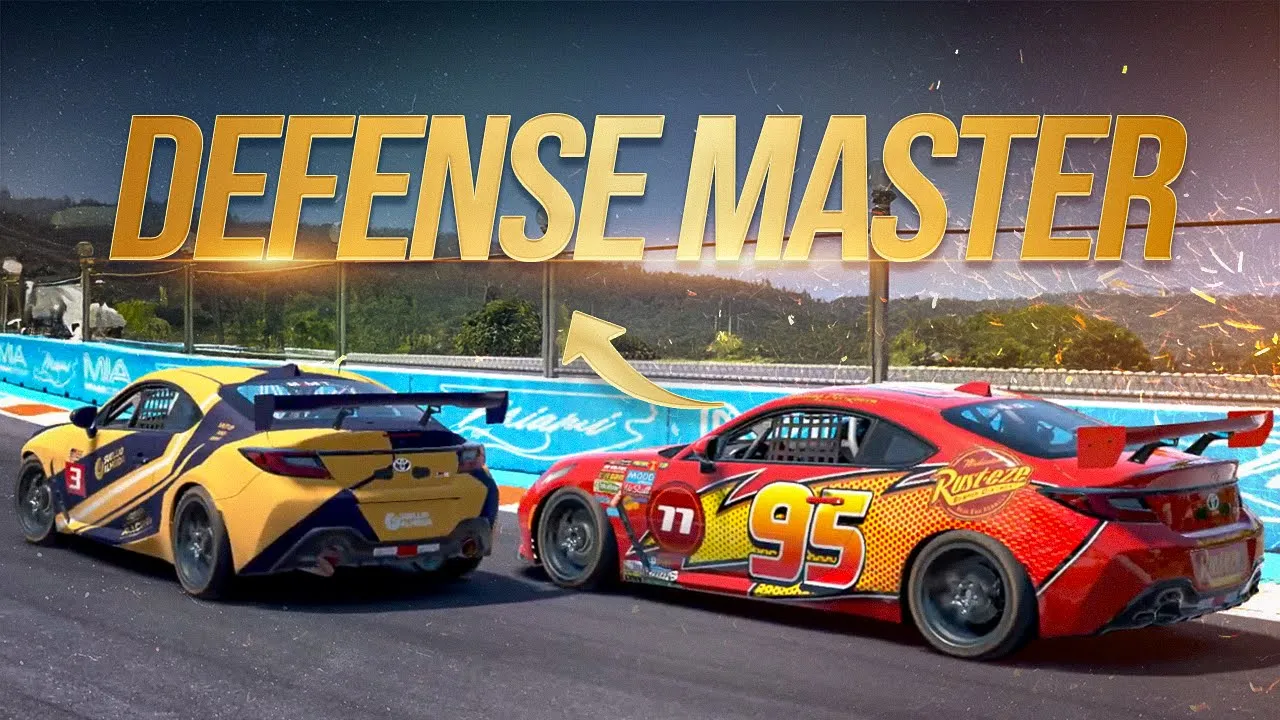
What a 13-Year-Old Taught Me About Real Racing Pressure
Suellio Almeida
•
Friday, January 2, 2026
You Think You Know Pressure Until Someone Half Your Age Is Hunting You Down
I was running a GT4 race at Watkins Glen. Clean start, good pace, holding P2. Standard stuff.
Then I checked my relative timing and saw a name I recognized. One of my students. A 13-year-old kid. And he was closing fast.
Most drivers think pressure is just "being nervous." But real racing pressure is specific. It's when you know the person behind you is capable. When you know they're studying your mistakes. When you realize one slip and they're through.
That's what this kid brought. Not just speed — intent.
The Mistake That Almost Cost Me Everything
Watkins Glen has a rhythm. Sectors 1 and 2 are technical — tight corners, heavy braking zones, lots of places to lose time. Sector 3 is fast and flowing. That's where you make up ground if you're chasing.
I knew he was faster than me in Sector 1. I could see it on the delta. So I pushed harder through the bus stop, tried to brake deeper into Turn 1.
Big mistake.
I locked the fronts, ran wide, lost rotation. The car pushed. I had to lift mid-corner to recover. And suddenly he was right there.
This is what happens under pressure. You abandon your process. You stop driving your own race and start reacting to theirs. Your inputs get sharper. Your vision narrows. You make mistakes you'd never make in practice.
The thing is, he didn't even have to overtake me to win. He just had to make me drive scared.
When Your Student Becomes Your Mirror
Here's what made this stressful: I coach this kid. I teach him exactly how to apply pressure. Where to position the car. How to force defenders into mistakes. When to feint and when to commit.
And now he was using it on me.
Every time I checked my mirror, he was there. Not divebombing. Not overdriving. Just present. Close enough to threaten. Far enough to stay clean. Exactly like I teach.
This is what good racecraft looks like. You don't need to be faster everywhere. You just need to be faster in the places that matter. And you need to make the other driver think about you instead of their own driving.
He nailed it.
The Physics of Pressure
Let's talk about what actually happens to your driving under pressure.
Your vision collapses. Instead of scanning corner exits and reference points, you fixate on the car behind. Your brain prioritizes the threat over the task.
Your inputs get aggressive. More steering angle. Sharper braking. You're trying to create gap through force instead of efficiency. But the car doesn't respond to force — it responds to load transfer and platform stability.
Your trail braking suffers. This is the first thing to go. You either brake too deep (like I did) or release too early because you're scared of understeer. Either way, you lose rotation and carry less speed through the apex.
The result? You get slower. Not because you're not trying hard enough. Because you're trying too hard.
How I Held Position (Barely)
I had to force myself back into process. Stop thinking about him. Start thinking about my own driving.
Step one: Vision reset. Eyes up. Corner exit focus. If I'm looking at him in my mirror, I'm already beaten.
Step two: Breathing. Sounds basic, but when you hold your breath under pressure, your inputs get tense. Exhale through braking zones. It forces your body to relax.
Step three: Commit to my lines. Stop second-guessing. If he's faster through Turn 1, fine. I'll make it up in the high-speed stuff where I'm more comfortable.
The last three laps were a battle. Not door-to-door — he was too smart for that. But close. Every corner mattered. Every braking point had to be perfect.
He stayed within half a second the entire time.
I held position. Barely.
What This Race Taught Me About Coaching
After the race, I messaged him. Told him he drove brilliantly. Asked what his plan was.
He said: "I knew I was faster in Sector 1, so I just kept the pressure on and waited for you to make a mistake."
Exactly right.
This is why I love coaching. You teach someone a concept — racecraft, pressure application, defensive positioning — and then you get to see them execute it. Even when it's against you.
Most drivers never learn how to race under pressure because they never put themselves in those situations. They hotlap. They run safe splits. They avoid contact.
But real racing skill is built when someone capable is hunting you down and you have to perform anyway.
That's where you learn what actually works. Where your technique holds up. Where your process breaks down.
Why Most Sim Racers Can't Handle Real Pressure
Here's the truth: most sim racers are fast in isolation. Put them on track alone, they'll set great lap times. Give them a setup, they'll optimize it.
But put someone on their bumper who knows what they're doing? They collapse.
Because they've spent thousands of hours practicing speed, not racecraft.
Speed is about physics. Racecraft is about psychology.
Speed is braking points and throttle application. Racecraft is knowing when to defend, when to concede, when to pressure, when to wait.
Speed you can learn from data. Racecraft you learn from racing people who are better than you.
This 13-year-old has done hundreds of races. He's lost. He's been pressured. He's learned. And now he's using that experience against drivers twice his age.
That's the gap.
The Only Way to Learn Pressure Is to Feel It
You can't simulate pressure in practice. You can't manufacture it in time trials.
You have to race.
Not against AI. Not in safe splits where everyone gives you space. Against real drivers who want to beat you.
And you have to race people who are close to your level. Not so much faster that you get destroyed. Not so much slower that you cruise.
Close. Uncomfortable. Uncertain.
That's where growth happens.
Every time you hold off someone faster, you learn something about your defense. Every time you chase someone down, you learn something about racecraft. Every time you make a mistake under pressure, you learn where your process breaks.
This kid made my race stressful because he put me in a situation I couldn't control. And that's exactly what racing is — managing chaos under pressure.
If you're not training for that, you're not training for racing.
Are You Actually Training for Real Racing, or Just Hotlapping?
Be honest. When was the last time you raced someone who genuinely challenged you?
Not someone you could easily pass. Not someone who made mistakes and handed you position. Someone who made you work for every tenth, every corner, every lap.
Most sim racers avoid that. They protect their iRating. They run safe splits. They practice alone.
And then they wonder why their racecraft doesn't match their pace.
The Almeida Racing Academy was built for drivers who want to close that gap. Not just get faster in isolation — but learn how to perform when it matters. We run weekly workshops where you race against other committed drivers. We teach defensive positioning, pressure application, tire management under attack. The stuff that actually decides races.
Gold Membership gets you access to all of it — 8 courses, 80 lessons, coach-led race workshops, and a community of drivers who show up to race, not cruise. Right now it's $25/month with code WINTER.
The question is: how much longer are you going to avoid real pressure?
Sim Racing Academy Membership
Everything you need to stop guessing and start getting faster.
Starting at
$25
/mo
Car Handling Online Course
4 levels, full curriculum. Aimed to get you to top 1% in driving pace.
Racecraft Online Course
Overtaking, Defending, Race Strategy
Live coaching + on-track practice
Bi-weekly pro-coach workshops (recorded — never miss one) plus on-track Pit Parties to practice racecraft with a coach.
Plus These Bonuses
13,000+ Member Community
League Racing
Advanced MX-5 Mini Course
Racing Technique Development Guide
The Motor Racing Book (260 pages)
Think & Behave Like a Pro Driver — Mini eBook
What a 13-Year-Old Taught Me About Real Racing Pressure
Suellio Almeida
•
Friday, January 2, 2026
You Think You Know Pressure Until Someone Half Your Age Is Hunting You Down
I was running a GT4 race at Watkins Glen. Clean start, good pace, holding P2. Standard stuff.
Then I checked my relative timing and saw a name I recognized. One of my students. A 13-year-old kid. And he was closing fast.
Most drivers think pressure is just "being nervous." But real racing pressure is specific. It's when you know the person behind you is capable. When you know they're studying your mistakes. When you realize one slip and they're through.
That's what this kid brought. Not just speed — intent.
The Mistake That Almost Cost Me Everything
Watkins Glen has a rhythm. Sectors 1 and 2 are technical — tight corners, heavy braking zones, lots of places to lose time. Sector 3 is fast and flowing. That's where you make up ground if you're chasing.
I knew he was faster than me in Sector 1. I could see it on the delta. So I pushed harder through the bus stop, tried to brake deeper into Turn 1.
Big mistake.
I locked the fronts, ran wide, lost rotation. The car pushed. I had to lift mid-corner to recover. And suddenly he was right there.
This is what happens under pressure. You abandon your process. You stop driving your own race and start reacting to theirs. Your inputs get sharper. Your vision narrows. You make mistakes you'd never make in practice.
The thing is, he didn't even have to overtake me to win. He just had to make me drive scared.
When Your Student Becomes Your Mirror
Here's what made this stressful: I coach this kid. I teach him exactly how to apply pressure. Where to position the car. How to force defenders into mistakes. When to feint and when to commit.
And now he was using it on me.
Every time I checked my mirror, he was there. Not divebombing. Not overdriving. Just present. Close enough to threaten. Far enough to stay clean. Exactly like I teach.
This is what good racecraft looks like. You don't need to be faster everywhere. You just need to be faster in the places that matter. And you need to make the other driver think about you instead of their own driving.
He nailed it.
The Physics of Pressure
Let's talk about what actually happens to your driving under pressure.
Your vision collapses. Instead of scanning corner exits and reference points, you fixate on the car behind. Your brain prioritizes the threat over the task.
Your inputs get aggressive. More steering angle. Sharper braking. You're trying to create gap through force instead of efficiency. But the car doesn't respond to force — it responds to load transfer and platform stability.
Your trail braking suffers. This is the first thing to go. You either brake too deep (like I did) or release too early because you're scared of understeer. Either way, you lose rotation and carry less speed through the apex.
The result? You get slower. Not because you're not trying hard enough. Because you're trying too hard.
How I Held Position (Barely)
I had to force myself back into process. Stop thinking about him. Start thinking about my own driving.
Step one: Vision reset. Eyes up. Corner exit focus. If I'm looking at him in my mirror, I'm already beaten.
Step two: Breathing. Sounds basic, but when you hold your breath under pressure, your inputs get tense. Exhale through braking zones. It forces your body to relax.
Step three: Commit to my lines. Stop second-guessing. If he's faster through Turn 1, fine. I'll make it up in the high-speed stuff where I'm more comfortable.
The last three laps were a battle. Not door-to-door — he was too smart for that. But close. Every corner mattered. Every braking point had to be perfect.
He stayed within half a second the entire time.
I held position. Barely.
What This Race Taught Me About Coaching
After the race, I messaged him. Told him he drove brilliantly. Asked what his plan was.
He said: "I knew I was faster in Sector 1, so I just kept the pressure on and waited for you to make a mistake."
Exactly right.
This is why I love coaching. You teach someone a concept — racecraft, pressure application, defensive positioning — and then you get to see them execute it. Even when it's against you.
Most drivers never learn how to race under pressure because they never put themselves in those situations. They hotlap. They run safe splits. They avoid contact.
But real racing skill is built when someone capable is hunting you down and you have to perform anyway.
That's where you learn what actually works. Where your technique holds up. Where your process breaks down.
Why Most Sim Racers Can't Handle Real Pressure
Here's the truth: most sim racers are fast in isolation. Put them on track alone, they'll set great lap times. Give them a setup, they'll optimize it.
But put someone on their bumper who knows what they're doing? They collapse.
Because they've spent thousands of hours practicing speed, not racecraft.
Speed is about physics. Racecraft is about psychology.
Speed is braking points and throttle application. Racecraft is knowing when to defend, when to concede, when to pressure, when to wait.
Speed you can learn from data. Racecraft you learn from racing people who are better than you.
This 13-year-old has done hundreds of races. He's lost. He's been pressured. He's learned. And now he's using that experience against drivers twice his age.
That's the gap.
The Only Way to Learn Pressure Is to Feel It
You can't simulate pressure in practice. You can't manufacture it in time trials.
You have to race.
Not against AI. Not in safe splits where everyone gives you space. Against real drivers who want to beat you.
And you have to race people who are close to your level. Not so much faster that you get destroyed. Not so much slower that you cruise.
Close. Uncomfortable. Uncertain.
That's where growth happens.
Every time you hold off someone faster, you learn something about your defense. Every time you chase someone down, you learn something about racecraft. Every time you make a mistake under pressure, you learn where your process breaks.
This kid made my race stressful because he put me in a situation I couldn't control. And that's exactly what racing is — managing chaos under pressure.
If you're not training for that, you're not training for racing.
Are You Actually Training for Real Racing, or Just Hotlapping?
Be honest. When was the last time you raced someone who genuinely challenged you?
Not someone you could easily pass. Not someone who made mistakes and handed you position. Someone who made you work for every tenth, every corner, every lap.
Most sim racers avoid that. They protect their iRating. They run safe splits. They practice alone.
And then they wonder why their racecraft doesn't match their pace.
The Almeida Racing Academy was built for drivers who want to close that gap. Not just get faster in isolation — but learn how to perform when it matters. We run weekly workshops where you race against other committed drivers. We teach defensive positioning, pressure application, tire management under attack. The stuff that actually decides races.
Gold Membership gets you access to all of it — 8 courses, 80 lessons, coach-led race workshops, and a community of drivers who show up to race, not cruise. Right now it's $25/month with code WINTER.
The question is: how much longer are you going to avoid real pressure?
Sim Racing Academy Membership
Everything you need to stop guessing and start getting faster.
Starting at
$25
/mo
Car Handling Online Course
4 levels, full curriculum. Aimed to get you to top 1% in driving pace.
Racecraft Online Course
Overtaking, Defending, Race Strategy
Live coaching + on-track practice
Bi-weekly pro-coach workshops (recorded — never miss one) plus on-track Pit Parties to practice racecraft with a coach.
Plus These Bonuses
13,000+ Member Community
League Racing
Advanced MX-5 Mini Course
Racing Technique Development Guide
The Motor Racing Book (260 pages)
Think & Behave Like a Pro Driver — Mini eBook
What a 13-Year-Old Taught Me About Real Racing Pressure
Suellio Almeida
•
Friday, January 2, 2026
You Think You Know Pressure Until Someone Half Your Age Is Hunting You Down
I was running a GT4 race at Watkins Glen. Clean start, good pace, holding P2. Standard stuff.
Then I checked my relative timing and saw a name I recognized. One of my students. A 13-year-old kid. And he was closing fast.
Most drivers think pressure is just "being nervous." But real racing pressure is specific. It's when you know the person behind you is capable. When you know they're studying your mistakes. When you realize one slip and they're through.
That's what this kid brought. Not just speed — intent.
The Mistake That Almost Cost Me Everything
Watkins Glen has a rhythm. Sectors 1 and 2 are technical — tight corners, heavy braking zones, lots of places to lose time. Sector 3 is fast and flowing. That's where you make up ground if you're chasing.
I knew he was faster than me in Sector 1. I could see it on the delta. So I pushed harder through the bus stop, tried to brake deeper into Turn 1.
Big mistake.
I locked the fronts, ran wide, lost rotation. The car pushed. I had to lift mid-corner to recover. And suddenly he was right there.
This is what happens under pressure. You abandon your process. You stop driving your own race and start reacting to theirs. Your inputs get sharper. Your vision narrows. You make mistakes you'd never make in practice.
The thing is, he didn't even have to overtake me to win. He just had to make me drive scared.
When Your Student Becomes Your Mirror
Here's what made this stressful: I coach this kid. I teach him exactly how to apply pressure. Where to position the car. How to force defenders into mistakes. When to feint and when to commit.
And now he was using it on me.
Every time I checked my mirror, he was there. Not divebombing. Not overdriving. Just present. Close enough to threaten. Far enough to stay clean. Exactly like I teach.
This is what good racecraft looks like. You don't need to be faster everywhere. You just need to be faster in the places that matter. And you need to make the other driver think about you instead of their own driving.
He nailed it.
The Physics of Pressure
Let's talk about what actually happens to your driving under pressure.
Your vision collapses. Instead of scanning corner exits and reference points, you fixate on the car behind. Your brain prioritizes the threat over the task.
Your inputs get aggressive. More steering angle. Sharper braking. You're trying to create gap through force instead of efficiency. But the car doesn't respond to force — it responds to load transfer and platform stability.
Your trail braking suffers. This is the first thing to go. You either brake too deep (like I did) or release too early because you're scared of understeer. Either way, you lose rotation and carry less speed through the apex.
The result? You get slower. Not because you're not trying hard enough. Because you're trying too hard.
How I Held Position (Barely)
I had to force myself back into process. Stop thinking about him. Start thinking about my own driving.
Step one: Vision reset. Eyes up. Corner exit focus. If I'm looking at him in my mirror, I'm already beaten.
Step two: Breathing. Sounds basic, but when you hold your breath under pressure, your inputs get tense. Exhale through braking zones. It forces your body to relax.
Step three: Commit to my lines. Stop second-guessing. If he's faster through Turn 1, fine. I'll make it up in the high-speed stuff where I'm more comfortable.
The last three laps were a battle. Not door-to-door — he was too smart for that. But close. Every corner mattered. Every braking point had to be perfect.
He stayed within half a second the entire time.
I held position. Barely.
What This Race Taught Me About Coaching
After the race, I messaged him. Told him he drove brilliantly. Asked what his plan was.
He said: "I knew I was faster in Sector 1, so I just kept the pressure on and waited for you to make a mistake."
Exactly right.
This is why I love coaching. You teach someone a concept — racecraft, pressure application, defensive positioning — and then you get to see them execute it. Even when it's against you.
Most drivers never learn how to race under pressure because they never put themselves in those situations. They hotlap. They run safe splits. They avoid contact.
But real racing skill is built when someone capable is hunting you down and you have to perform anyway.
That's where you learn what actually works. Where your technique holds up. Where your process breaks down.
Why Most Sim Racers Can't Handle Real Pressure
Here's the truth: most sim racers are fast in isolation. Put them on track alone, they'll set great lap times. Give them a setup, they'll optimize it.
But put someone on their bumper who knows what they're doing? They collapse.
Because they've spent thousands of hours practicing speed, not racecraft.
Speed is about physics. Racecraft is about psychology.
Speed is braking points and throttle application. Racecraft is knowing when to defend, when to concede, when to pressure, when to wait.
Speed you can learn from data. Racecraft you learn from racing people who are better than you.
This 13-year-old has done hundreds of races. He's lost. He's been pressured. He's learned. And now he's using that experience against drivers twice his age.
That's the gap.
The Only Way to Learn Pressure Is to Feel It
You can't simulate pressure in practice. You can't manufacture it in time trials.
You have to race.
Not against AI. Not in safe splits where everyone gives you space. Against real drivers who want to beat you.
And you have to race people who are close to your level. Not so much faster that you get destroyed. Not so much slower that you cruise.
Close. Uncomfortable. Uncertain.
That's where growth happens.
Every time you hold off someone faster, you learn something about your defense. Every time you chase someone down, you learn something about racecraft. Every time you make a mistake under pressure, you learn where your process breaks.
This kid made my race stressful because he put me in a situation I couldn't control. And that's exactly what racing is — managing chaos under pressure.
If you're not training for that, you're not training for racing.
Are You Actually Training for Real Racing, or Just Hotlapping?
Be honest. When was the last time you raced someone who genuinely challenged you?
Not someone you could easily pass. Not someone who made mistakes and handed you position. Someone who made you work for every tenth, every corner, every lap.
Most sim racers avoid that. They protect their iRating. They run safe splits. They practice alone.
And then they wonder why their racecraft doesn't match their pace.
The Almeida Racing Academy was built for drivers who want to close that gap. Not just get faster in isolation — but learn how to perform when it matters. We run weekly workshops where you race against other committed drivers. We teach defensive positioning, pressure application, tire management under attack. The stuff that actually decides races.
Gold Membership gets you access to all of it — 8 courses, 80 lessons, coach-led race workshops, and a community of drivers who show up to race, not cruise. Right now it's $25/month with code WINTER.
The question is: how much longer are you going to avoid real pressure?
Sim Racing Academy Membership
Everything you need to stop guessing and start getting faster.
Starting at
$25
/mo
Car Handling Online Course
4 levels, full curriculum. Aimed to get you to top 1% in driving pace.
Racecraft Online Course
Overtaking, Defending, Race Strategy
Live coaching + on-track practice
Bi-weekly pro-coach workshops (recorded — never miss one) plus on-track Pit Parties to practice racecraft with a coach.
Plus These Bonuses
13,000+ Member Community
League Racing
Advanced MX-5 Mini Course
Racing Technique Development Guide
The Motor Racing Book (260 pages)
Think & Behave Like a Pro Driver — Mini eBook